Have you ever woken up and found that something from before changed your whole day? Maybe it rained last night, so the grass is wet this morning. Time is all around us. Things that happened before, things happening now, and things that will happen later can all change our daily life.
We use special time words to talk about when things happen. The past means before now. The present means now. The future means later. These words help us understand how events come one after another.
If you ate breakfast this morning, that is in the past. If you are listening to a story right now, that is in the present. If you will take a nap later, that is in the future. These words help us talk about change and order.
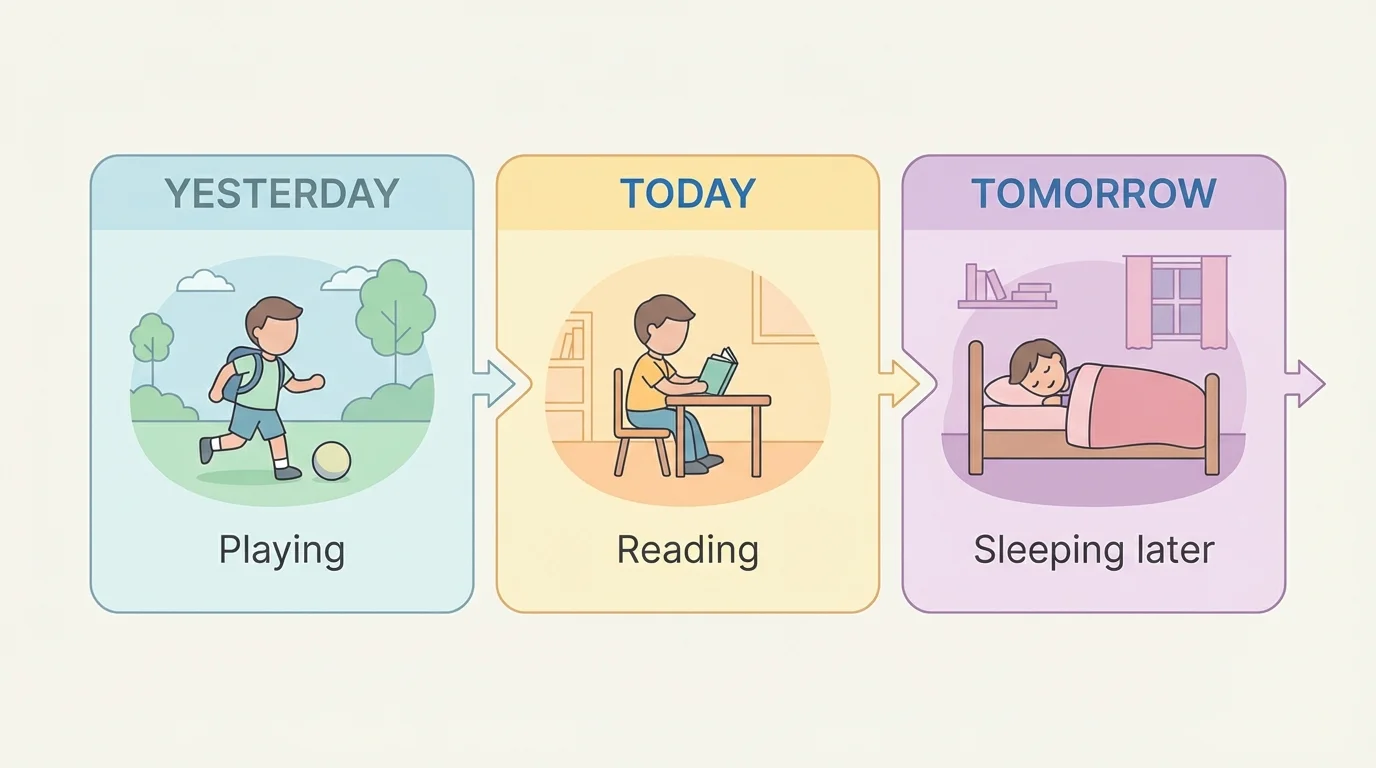
Previous means something that happened before. Current means something happening now. Future means something that has not happened yet but will happen later. Sequence means the order in which things happen.
[Figure 1] Sometimes we also say yesterday, today, and tomorrow. These are easy ways to talk about time. When we learn these words, we can tell stories in the right order and understand why plans change.
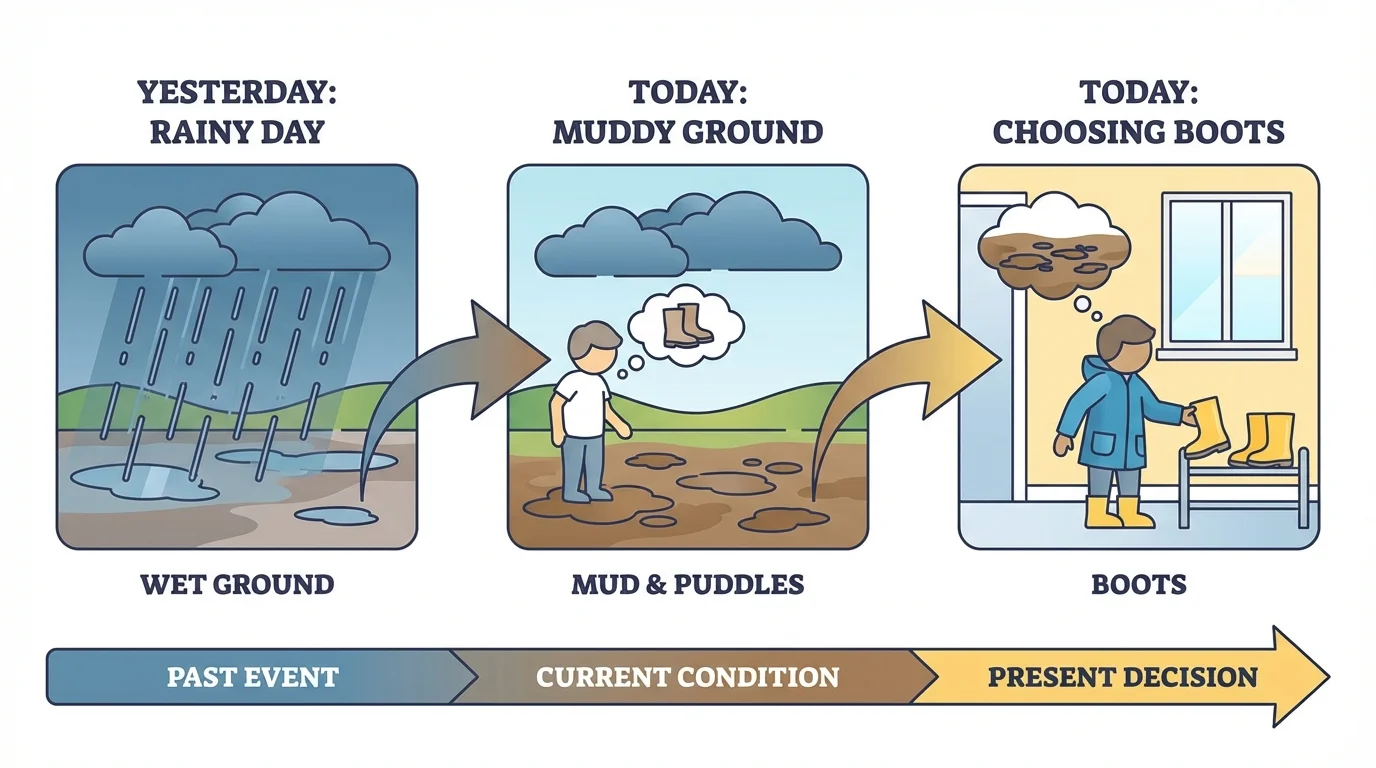
[Figure 2] Things that happened before can affect what we do now. If it rained yesterday, you may wear boots today. If you stayed up late before, you may feel sleepy now. If someone baked bread earlier, the kitchen may smell good now.
This means the past is not gone completely. Past events can leave signs, feelings, and changes. A family trip last week can mean you have photos to look at today. A haircut yesterday can mean you look different today. A lost toy yesterday may mean you spend time looking for it today.
Events can cause other events. When one thing happens, it may change what comes next. A cold day can lead to wearing a coat. A birthday party last weekend can mean there is still cake in the fridge this week. Time helps us notice these connections.
Families often make choices because of earlier events. If a doctor visit happened this morning, the rest of the day may be quieter. If a grandparent visited last month, you may remember that visit when you look at a picture today. As we saw in [Figure 1], time moves in order, and each part can affect the next part.
What is happening now can also shape what happens later. If you put your toys away today, your room may be tidy tomorrow. If you water a plant today, it may look fresh tomorrow. If a family buys groceries today, there may be fruit to eat later this week.
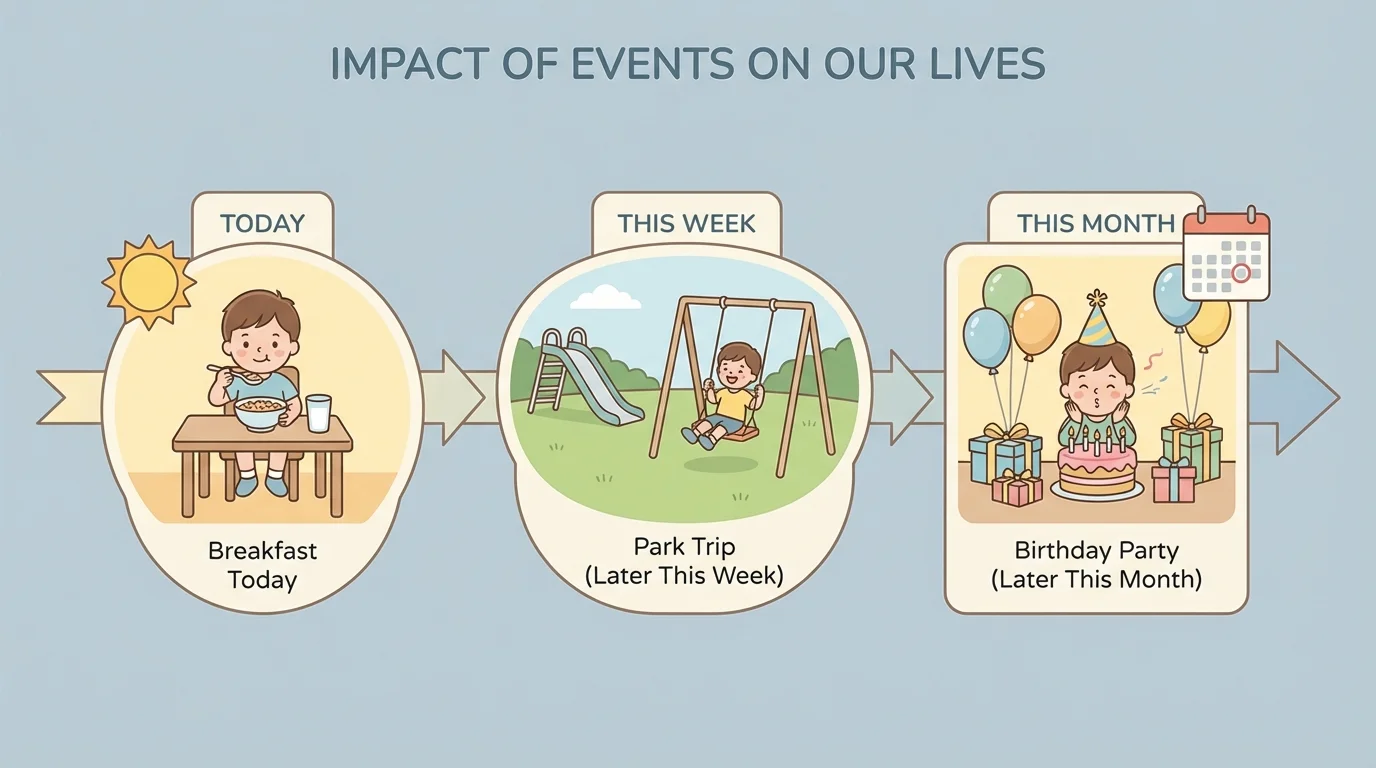
Current events can affect a day, a week, or even a month. A library trip today may mean you have books to read all week. Marking a birthday on the calendar this week helps a family get ready for a party later in the month. One small thing now can lead to a bigger change later.
Real-life examples of time changing plans
Step 1: A child feels sick today.
The family stays home and rests.
Step 2: Because of that, tomorrow may be different.
The child might miss a playtime and visit the doctor instead.
Step 3: Later in the week, things can change again.
When the child feels better, normal routines can return.
This is why calendars, routines, and plans matter. They help us remember what already happened, notice what is happening now, and get ready for what comes next.
[Figure 3] Order words help us talk about sequence. We can say first, next, and last. We can also use a timeline to place events in order.
For example, first you wake up. Next you eat breakfast. Last you go to sleep. Events can also be placed in order across a day, a week, and a month. Over a week, first there is Monday, next come other days, and later there may be a weekend visit to the park. Over a month, a family may wait for a holiday, a birthday, or a special trip.
| Time | Example Event | How it can affect life |
|---|---|---|
| Day | Rain in the morning | Playtime may move indoors |
| Week | Family shopping trip | Meals and snacks are ready for several days |
| Month | Birthday coming soon | Family plans a cake, cards, or a visit |
Table 1. Examples of events over a day, week, and month and how they affect everyday life.
When we understand sequence, we understand stories and schedules better. We know that washing hands comes before eating. We know that planting seeds comes before seeing flowers grow. Later, when we look again at [Figure 3], we can see how a timeline helps us notice both order and change.
Some events are personal, like losing a shoe or visiting a cousin. Some are family events, like moving to a new home or welcoming a new baby. Some are community events, like a parade, a storm, or a holiday. All of these can change our routine.
If a storm happened before, the park may be closed today. If a holiday is coming soon, families may decorate this week. If school starts next month, families may prepare clothes, bags, and bedtime routines now. Time is not only about clocks. It is also about how life changes from one moment to the next.
Many people use calendars at home to remember important future events, but calendars also help us look back at previous events, such as a trip, a birthday, or a doctor visit.
When children learn to notice yesterday, today, and tomorrow, they begin to understand history in a simple way. History is about change over time. Even in a small life story, we can see that what happened before matters now, and what we do now matters later.
