Have you ever noticed that a child can belong to many groups in one day? At home, you are with family. Outside, you see neighbors. At school, you are part of a class. On the playground or in a game, you may be part of a team. People belong to groups because groups help us live, learn, and have fun together.
A group is a set of people who belong together in some way. They may live together, learn together, play together, work together, or help one another. When you are part of a group, you are a member. That means you belong.
Belong means to be part of something. A member is a person in a group. A community is a place where people live and do things together.
You can be in more than one group at the same time. A child can be in a family, a class, a neighborhood, and a soccer team. Each group is important in a different way.
[Figure 1] A family is a group that cares for one another. Families may have a mother, father, grandparent, aunt, uncle, brother, sister, foster parent, or other caring adults and children. Some families are big. Some families are small. Families do not all look the same.
Families help with food, hugs, rest, safety, and love. In a family, people often have jobs. A grown-up may cook. A child may put toys away. A baby may need help. Everyone matters.
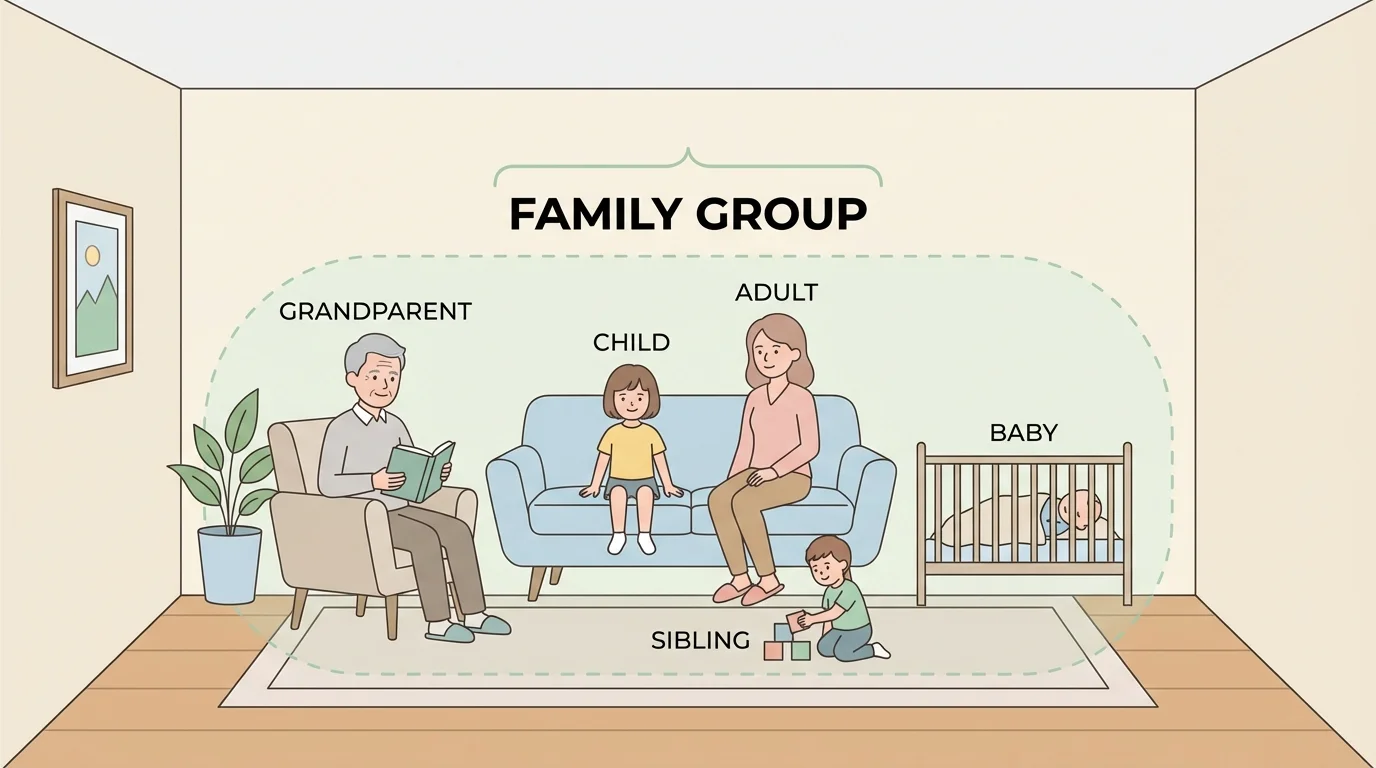
You are a member of your family. Being in a family means learning how to care, share, listen, and help. When families talk kindly and help each other, the group becomes stronger.
Families around the world can eat different foods, speak different languages, and celebrate different holidays, but they all help children grow and feel loved.
Later, when we think about different kinds of groups, [Figure 1] reminds us that groups do not all have the same people or the same size. What makes a family a family is care and belonging.
[Figure 2] Your neighborhood is the place around your home where people live near one another. A neighborhood may have homes, streets, trees, parks, stores, or a library. The people there are neighbors.
Neighbors are part of a local community. Some neighbors wave hello. Some help carry groceries. Some keep places clean. Community helpers, like crossing guards, firefighters, and mail carriers, may also work in the neighborhood.
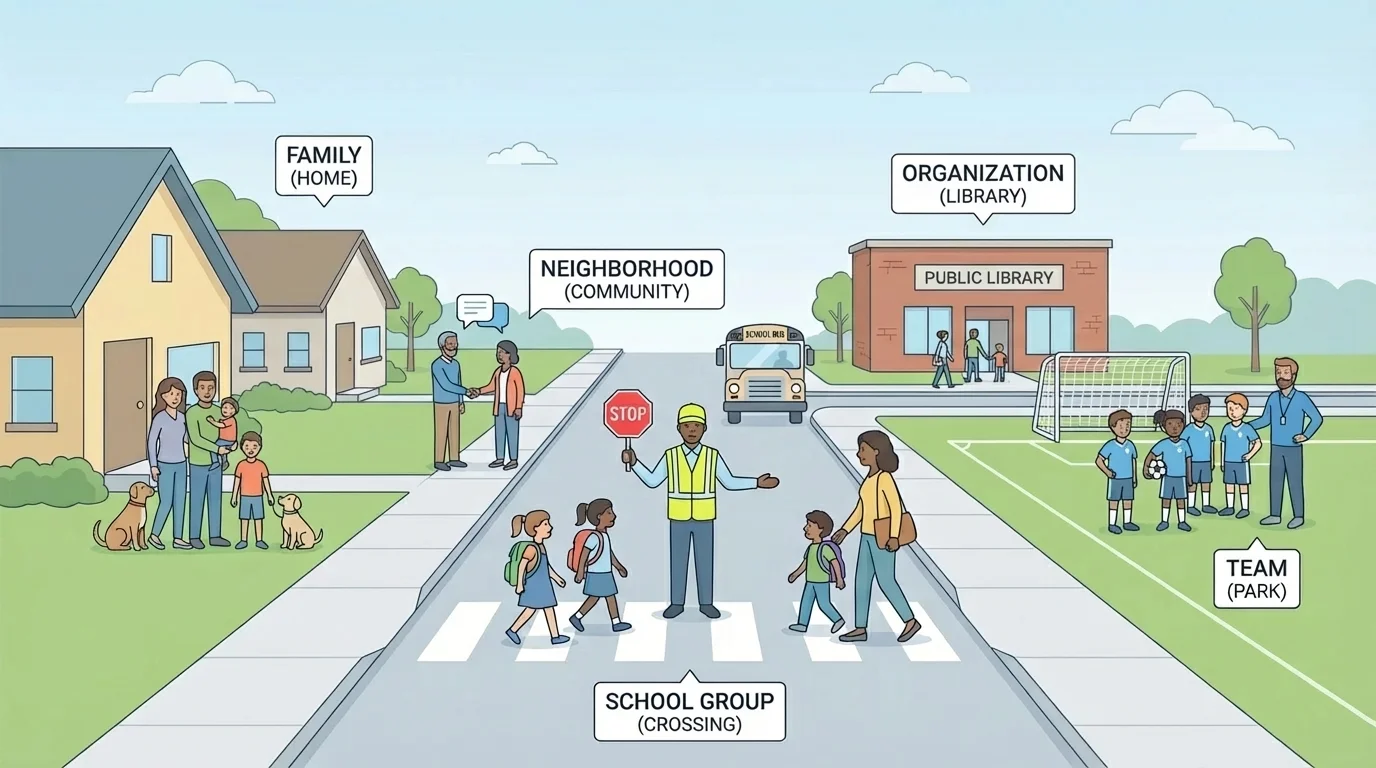
Being part of a neighborhood means learning simple ways to care for the place and the people in it. You can use walking feet, pick up trash, wait your turn at the park, and speak kindly.
Neighborhoods can be different. One neighborhood may have tall buildings. Another may have farms or small houses. Some are busy and loud. Some are quiet. Even when neighborhoods are different, the people in them still belong to a community.
Groups help people live together. A family helps at home. A neighborhood helps nearby people share spaces. A school helps children learn. A team helps people play or work together. Each group has a purpose, and members help that purpose happen.
When you look again at [Figure 2], you can see that belonging is not only about one house. It is also about the nearby places and people who share the same area.
[Figure 3] A school is a place where children and adults learn together. Your class is a group inside the school. Teachers, helpers, cooks, and office workers are also part of the school community.
School groups have rules and routines. Children may sit on a rug, line up, wash their hands, and listen for directions. These routines help everyone stay safe and learn together.
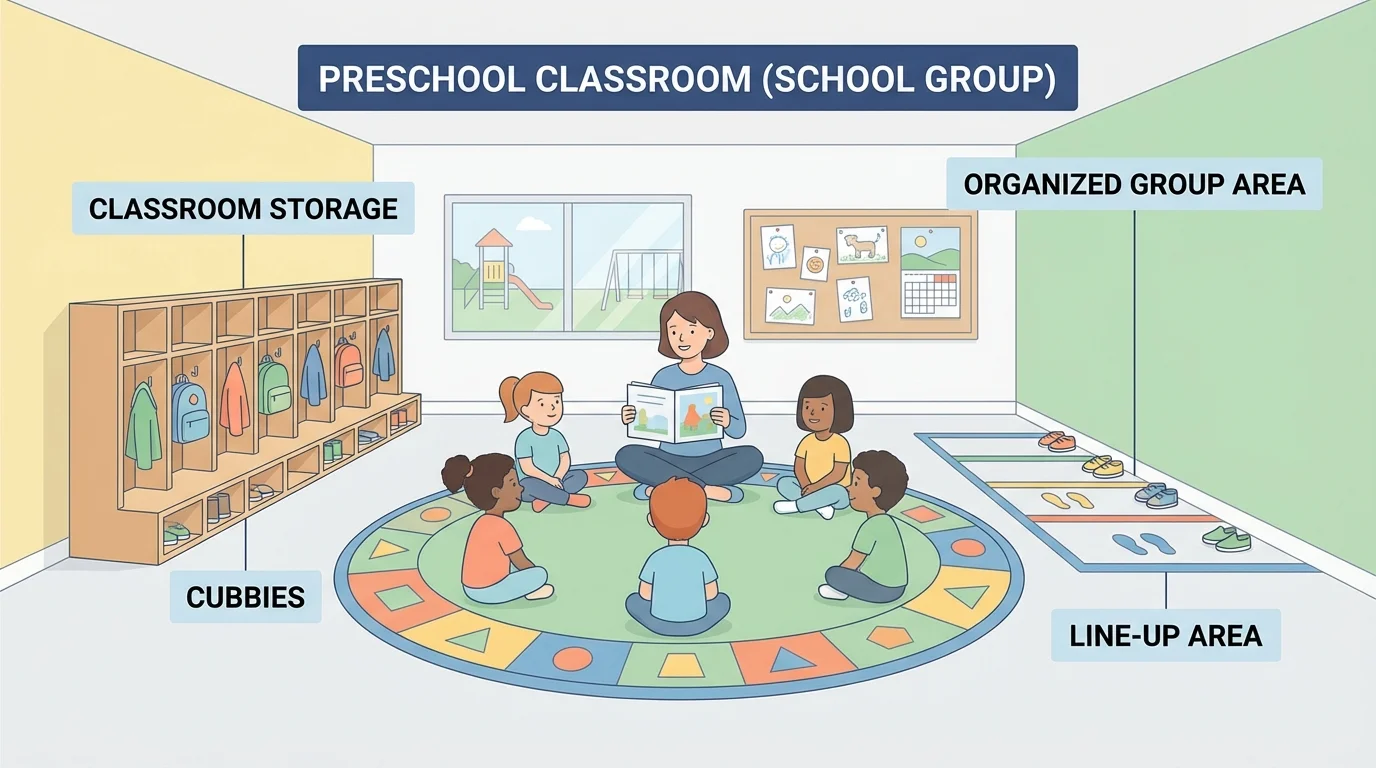
When you say, "This is my class," you are showing that you belong to that group. You may have a name tag, a cubby, or a place to sit. Those things can help you recognize that you are part of the class.
Schools have many groups. There may be a class group, a lunch group, a music group, and a playground group. Sometimes children move from one group to another during the day.
Example: Recognizing a school group
Mina hangs up her backpack, sits with her class, and sings with her teacher.
Step 1: Mina hangs up her backpack in her cubby.
Step 2: She joins the other children on the rug.
Step 3: She follows the class routine.
Mina is showing that she is a member of her class group.
When children follow class rules, they help the whole group. Looking back at [Figure 3], we can see that school groups work best when members listen, take turns, and help one another.
Some children belong to a team, and some belong to other organized groups. A team is a group of people who play or work together. A soccer team, dance group, music circle, or story group is an example of this kind of group.
[Figure 4] Teams and groups often do something special together. A sports team practices. A singing group makes music. A playgroup shares toys. A faith group may gather to learn and celebrate. A club might build, read, or explore together.
People may join a group because they like the same activity, live in the same place, or go to the same school. Some groups wear the same shirt or color. Some groups have a leader. Some groups meet every day, and some meet only sometimes.
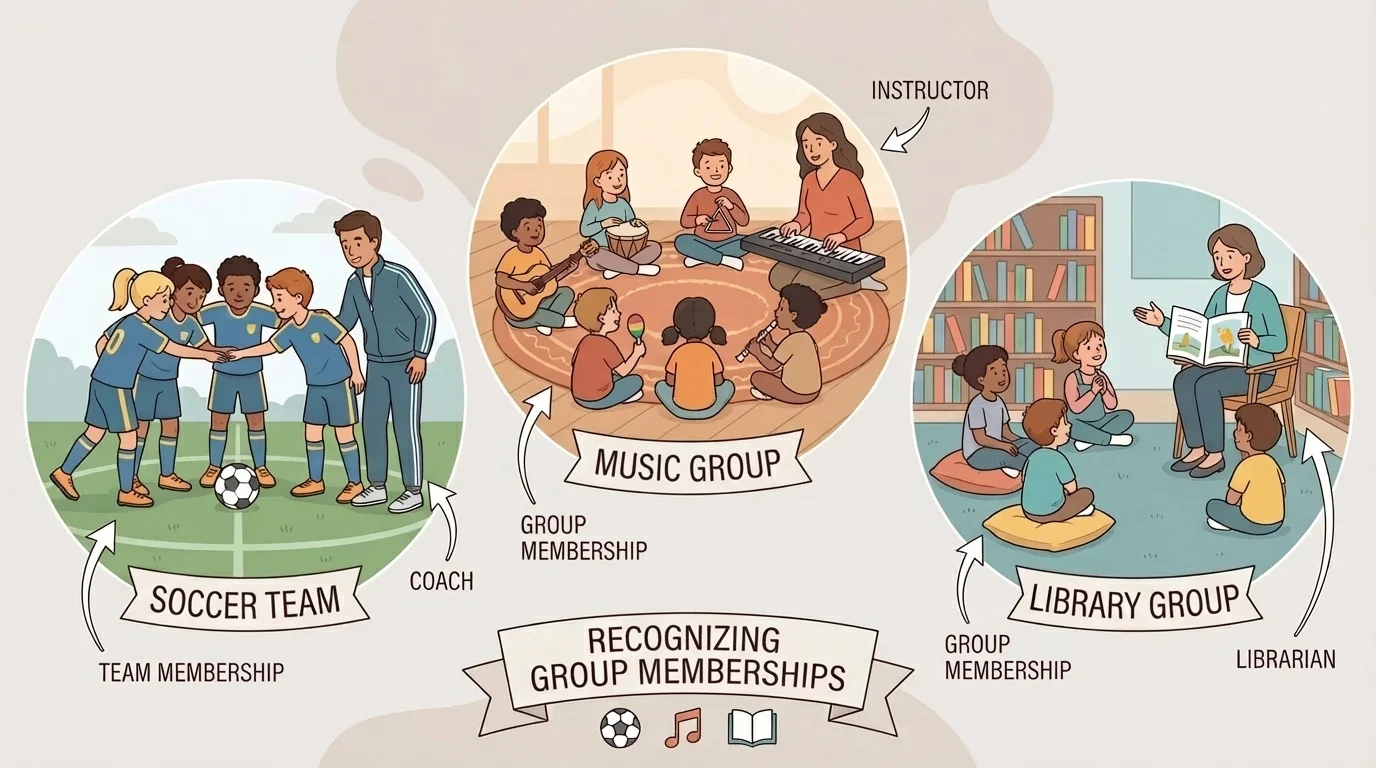
Even when groups do different things, they still need the same caring actions: sharing, listening, waiting, helping, and including others. Those actions help everyone feel that they belong.
We can use [Figure 4] to compare groups. A soccer team moves and plays. A music circle sings and listens. A story group sits and looks at books. Each group is different, but all are made of members who belong together for a purpose.
| Group | What the group does | How a child can help |
|---|---|---|
| Family | Cares for one another at home | Help clean up |
| Neighborhood | Shares places nearby | Be kind to neighbors |
| School/Class | Learns together | Listen and take turns |
| Team or club | Plays or works together | Cooperate with others |
Table 1. Examples of groups, what they do, and how children can help as members.
Not all groups are the same. Families can look different. Neighborhoods can sound different. Schools can have different rules. Teams can play different games. These differences are a normal part of community life.
People can be alike in some ways and different in other ways. Being different does not make someone less important. Every person deserves care and respect.
Respect means treating others kindly and fairly. You can respect differences by using kind words, listening, making room for others, and not laughing at what is different. If someone speaks another language, eats different food, or celebrates different holidays, that is part of who they are.
Children do not have to be exactly the same to belong. A group can include people with different clothes, homes, languages, abilities, and traditions. A caring group makes space for everyone.
Every member can help a group. A child can carry a napkin to the table, hold the door, put books away, or wait patiently for a turn. These small actions show responsibility.
Helping in groups also means following simple rules. Rules are shared directions that help people stay safe and work together. In a family, a rule might be washing hands before eating. In school, a rule might be using gentle hands. On a team, a rule might be taking turns.
"We all belong, and we all can help."
When you recognize the groups you belong to, you understand more about yourself and the people around you. You are not alone. You are part of family, community, and other groups that learn, care, and grow together.
