Have you ever seen a drum shake, a window buzz, or tiny bits of paper jump when music plays? That is an important scientific clue. Things that make sound often move back and forth, and sound can also make other things move. Scientists do not just guess why this happens. They do simple tests to find out what the evidence shows.
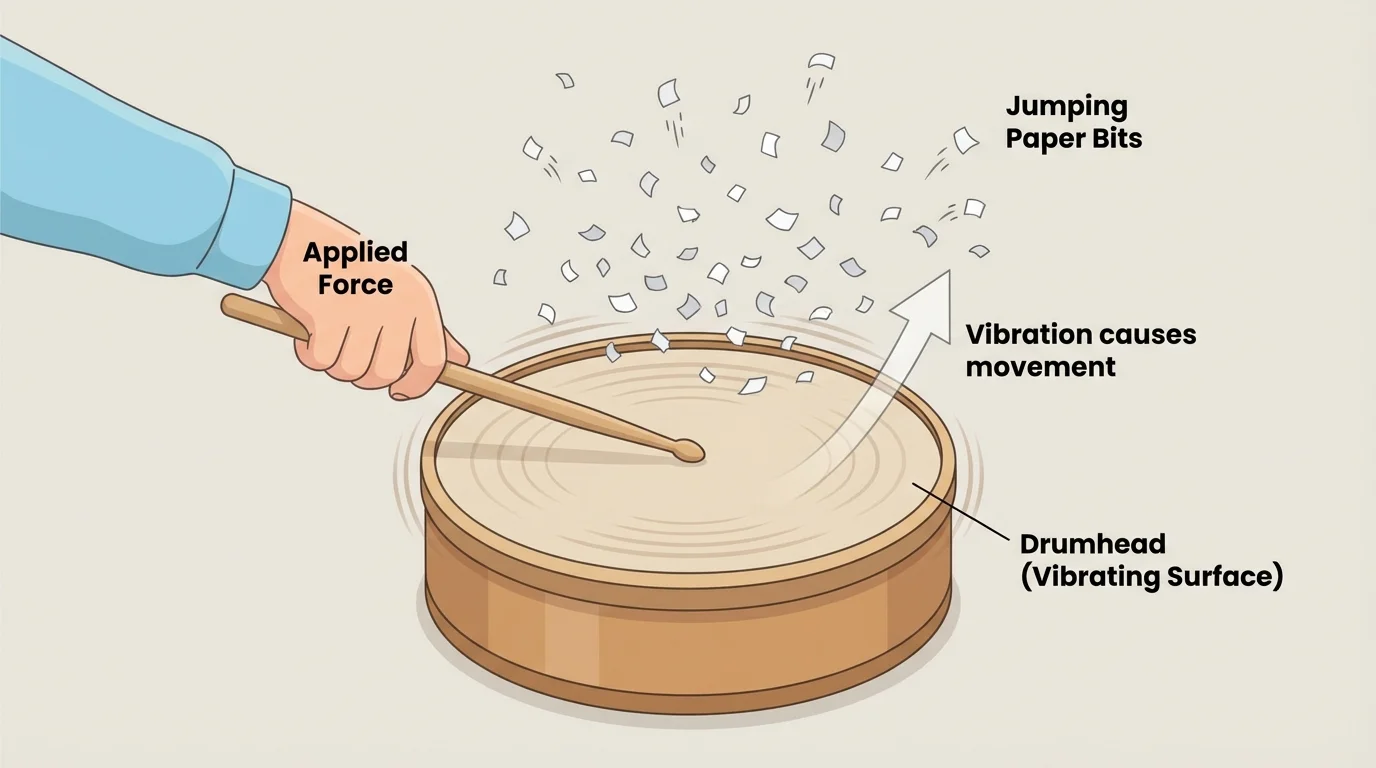
A scientist starts with an idea. [Figure 1] A child might say, "The drum makes sound because I hit it," or "The paper moved because the music was loud." Those are ideas about a cause. A cause is why something happens. In science, we can test an idea instead of only wondering about it.
When we do a test, we look and listen carefully. We gather evidence. Evidence is what we notice in a test. It helps us decide whether an idea is supported or not supported. Sometimes the evidence supports an idea. Sometimes it refutes an idea, which means the test shows the idea does not match what really happened.
Cause is why something happens. Evidence is what we observe that helps us decide if an idea is supported or refuted. Vibration is a quick back-and-forth movement.
Good science ideas can be tested. If an idea cannot be checked by looking, listening, or measuring in some simple way, it is hard to know if it is correct.
Sound begins when something vibrates. A guitar string wiggles. A drum skin shakes. A ruler hanging off a table can bounce up and down. These vibrations make sound, and the vibration can sometimes be seen with a drum and moving paper pieces.
Sound can also make another material vibrate. If you put tiny paper bits on a drum and tap the drum, the paper may jump. If music plays near thin plastic wrap with a few grains of rice on top, the rice may wiggle. That happens because sound is traveling and making the material move.
We usually cannot see sound itself, but we can often see what sound does. We can hear the sound and watch objects move. That makes sound a great topic for simple tests.
Some sounds are so strong that you can feel them in your chest. That feeling is another clue that something is vibrating.
When a bell rings, the metal shakes. When a speaker plays music, a part inside the speaker moves back and forth. Many sound-making tools work because something is vibrating.
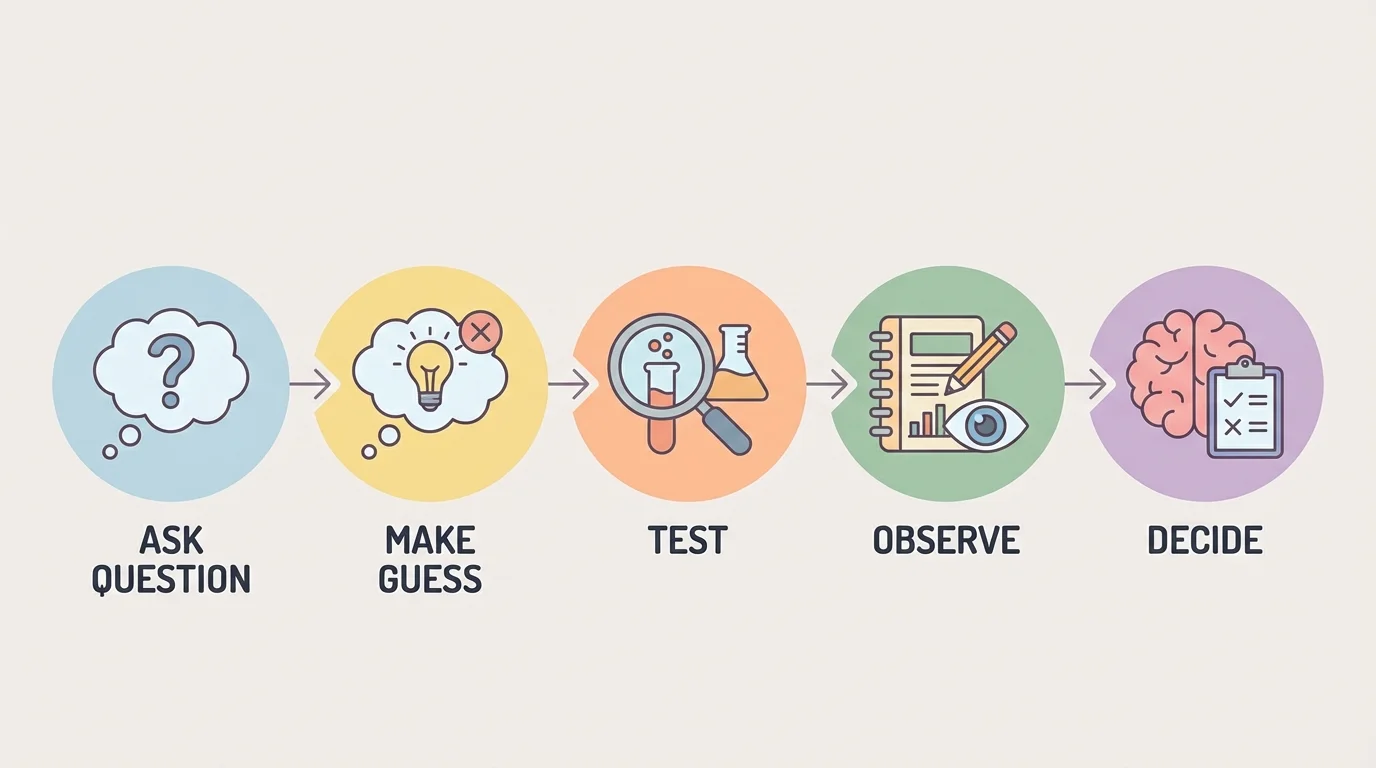
Scientists use steps to gather evidence, and [Figure 2] shows a simple order for these steps. First, ask a question. Next, make a prediction. Then do a test. After that, observe what happens. Last, decide whether the evidence supports or refutes the idea.
A simple test should change one thing and keep other things the same. For example, if you want to know whether a harder tap makes a drum sound louder, you try to use the same drum and the same stick. You only change how gently or strongly you tap.
This helps make the test a fair test. A fair test is important because it helps us know what caused the change. If many things change at once, it is hard to know the real cause.
We can also compare what happens in two situations. One might have sound, and the other might have no sound. If the material moves only when there is sound, that is important evidence.
How a simple test helps
A simple test does not have to be complicated. It just needs a clear question, careful observing, and a way to compare results. When we compare what happened, we can tell whether our first idea matches the evidence.
Sometimes we repeat a test more than one time. If the same thing happens again and again, we can trust the evidence more.
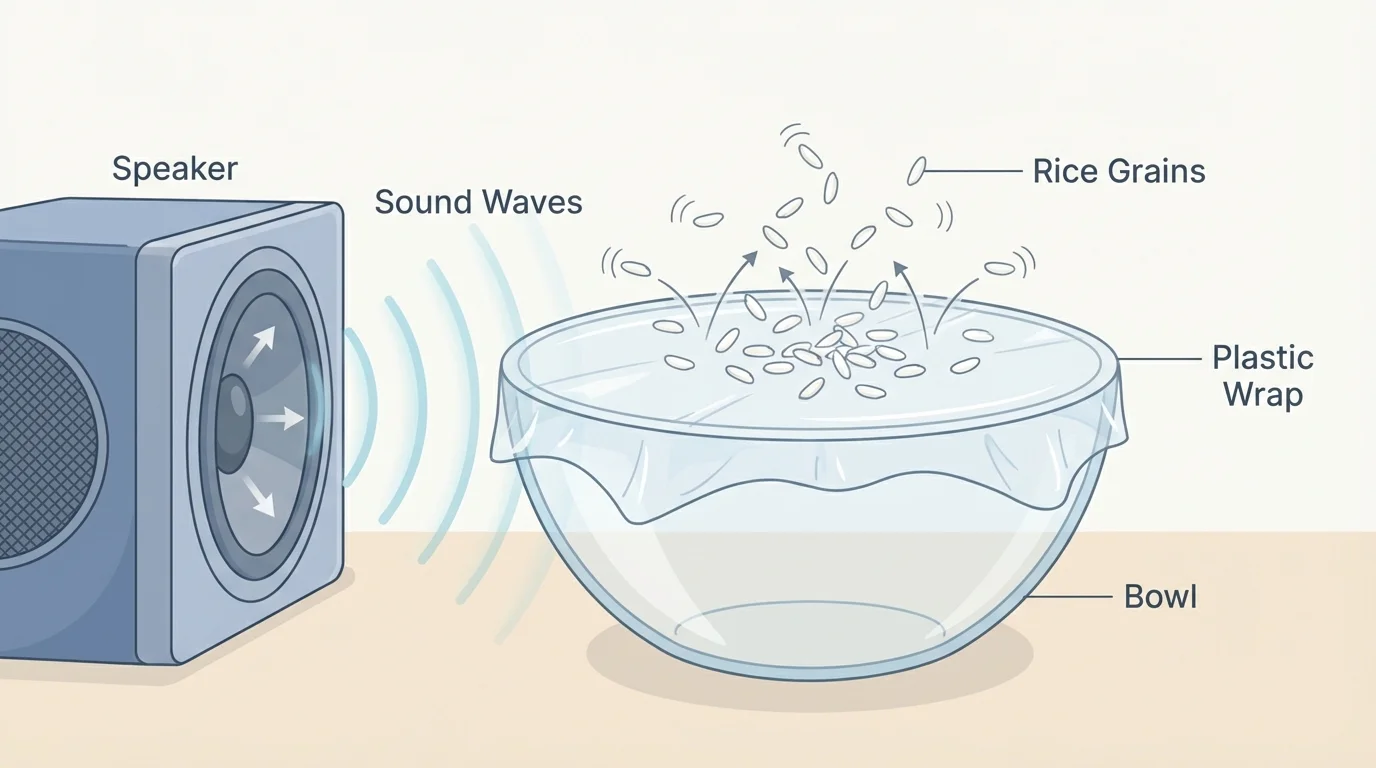
[Figure 3] Different tests can help us check what causes movement. One strong example is sound from a speaker making rice grains move. Each test gives us evidence about whether vibrations and sound are the cause.
Example 1: Does a vibrating ruler make sound?
Step 1: Put part of a ruler over the edge of a table and hold the other part down.
Step 2: Pluck the end that hangs over the edge.
Step 3: Watch and listen. The ruler moves back and forth and makes a sound.
The evidence supports the idea that a vibrating ruler makes sound.
If the ruler does not move, there is no sound from that pluck. This comparison helps us connect the motion to the sound.
Example 2: Does hitting a drum make the drum skin vibrate?
Step 1: Place a few tiny paper bits on the drum.
Step 2: Tap the drum gently.
Step 3: Watch the paper bits. They jump because the drum skin vibrates.
The evidence supports the idea that the drum skin vibrates when the drum is tapped.
This is like the drum in [Figure 1]. The moving paper gives us something easy to see, even if the vibration is too fast for our eyes to follow well.
Example 3: Can sound make another material vibrate?
Step 1: Stretch plastic wrap over a bowl and place a few rice grains on top.
Step 2: Put the bowl near a speaker.
Step 3: Play sound and observe whether the rice moves.
If the rice moves when sound plays, the evidence supports the idea that sound can make the plastic wrap vibrate.
If the sound stops and the rice stops moving, that gives even more evidence. The sound seems to be the cause of the movement.
Sometimes our first idea is correct. Sometimes it is not. That is okay. Science is about learning from evidence. A child might think, "The rice moved because the bowl was blue." But if the rice moves only when the speaker plays sound, then the color is not the cause.
To support an idea means the evidence matches the idea. To refute an idea means the evidence shows the idea does not fit. If paper bits jump when a drum is tapped, the evidence supports the idea that the vibrating drum skin made them move. If paper bits do not jump when the drum is untouched, that refutes the idea that they jump all by themselves.
The sequence of steps in [Figure 2] helps here too. We ask, test, observe, and decide. We do not choose an answer first and then ignore what happened.
You already know that we use our senses to learn about the world. In science, seeing, hearing, and feeling carefully are ways to gather evidence.
Even young students can do real science thinking. You can ask, "What changed?" "What stayed the same?" and "What does that tell me?" Those questions help you use evidence well.
Sound science is all around us. Musical instruments work because parts vibrate. A drum skin vibrates. A violin string vibrates. A speaker vibrates to make music. Our ears help us detect these vibrations as sound.
When a bus rumbles by and a window buzzes, the sound can make the window vibrate. The rice-on-plastic-wrap test from [Figure 3] is a smaller version of that same idea. Sound can cause materials to move.
These real-world examples matter because they show that simple tests are not just school activities. They help us understand the world. We can gather evidence, compare what happens, and decide what the likely cause is.
"Look carefully at what happens. The evidence helps tell the story."
When we test ideas about sound, we learn two big science truths: vibrating materials can make sound, and sound can make materials vibrate. We also learn how science works: use simple tests to gather evidence and decide whether an idea is supported or refuted.
