A dripping sink, a drafty door, or paper tossed into the trash may seem like small things, but they can add up to a big problem. Young engineers look at the world and ask, How can I help? When we build something to fix a problem, we are using ideas, tools, and materials in a smart way.
A problem is something that needs to be fixed or made better. Some problems happen in our homes, schools, or parks. If water drips and drips from a sink, clean water is being wasted. If lights stay on in an empty room, energy is being wasted. If paper and bottles are mixed with trash, useful materials may be lost.
People can design things to help. A child might make a bright sign near a sink that reminds everyone, "Turn me off tightly." Another child might help build a simple sorter for paper and plastic. These are not just crafts. They are solutions to real problems.
A device is something people make or use to do a job. A device can be very simple, like a cardboard tray that sorts paper, or more complex, like a rain barrel that catches water.
Design means planning how something will work before and during its construction.
When we solve problems this way, we think about what people need and what Earth needs too. That helps us make choices that are useful and kind to our environment.
A device is something made to help do a job. A bookmark is a simple device that helps you keep your place. A bird feeder is a device that holds food for birds. In science and engineering, a device solves a problem or helps people do something better.
To make a device, we often use a tool. Scissors, rulers, hole punches, and tape dispensers are tools. We also use materials such as cardboard, paper, string, cloth, plastic bottles, or wooden craft sticks. The tool helps us shape or join things. The material becomes part of what we build.
Some devices use energy too. A hand fan moves air when you wave it. A curtain over a sunny window can help keep a room cooler by blocking some heat from the Sun. That means smart designs can help save energy.
[Figure 1] A clear problem is easier to solve. Instead of saying, "Something is wrong," we can say, "Water is dripping from the classroom sink, and clean water is being wasted." A specific problem tells us what needs to change.
Good problem finding begins with looking closely. We ask questions such as: What is happening? Who does it affect? What resource is being wasted? Can a simple device help? If a faucet drips, maybe we need a small catch cup for a short time, a reminder sign, or a way to tell an adult quickly so it can be fixed.
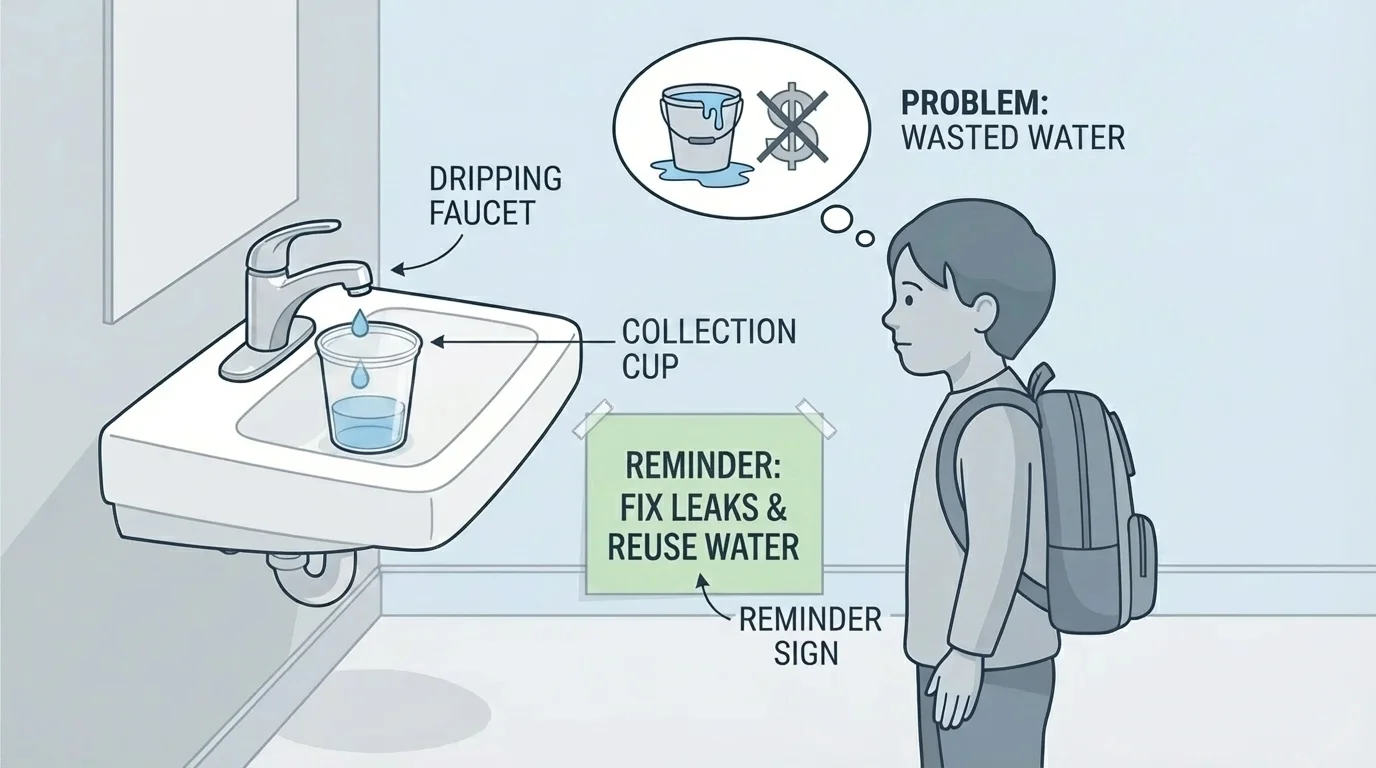
Local problems are all around us. In a playground, trash may blow out of an open bin. In a classroom, paper scraps may cover the floor because there is no easy paper-reuse tray. Near a door, cold air may enter through a gap. Each one is a chance to design a solution.
A faucet that drips many times can waste a surprising amount of water over time. Even a tiny drip matters because clean water is a natural resource that people, plants, and animals need.
When we name the problem clearly, we can think more carefully about what kind of device will help best.
[Figure 2] Different materials do different jobs. Cardboard can be stiff and good for making walls of a sorter. Cloth can be soft and good for blocking a draft. String can tie things together. A plastic bottle can hold water. Good designers choose materials that match the job.
We also think about size, strength, and safety. If something must stand up, we need a strong material. If it must soak up water, cloth or sponge may work better. If it needs to be light and easy to carry, paper or thin cardboard may help.
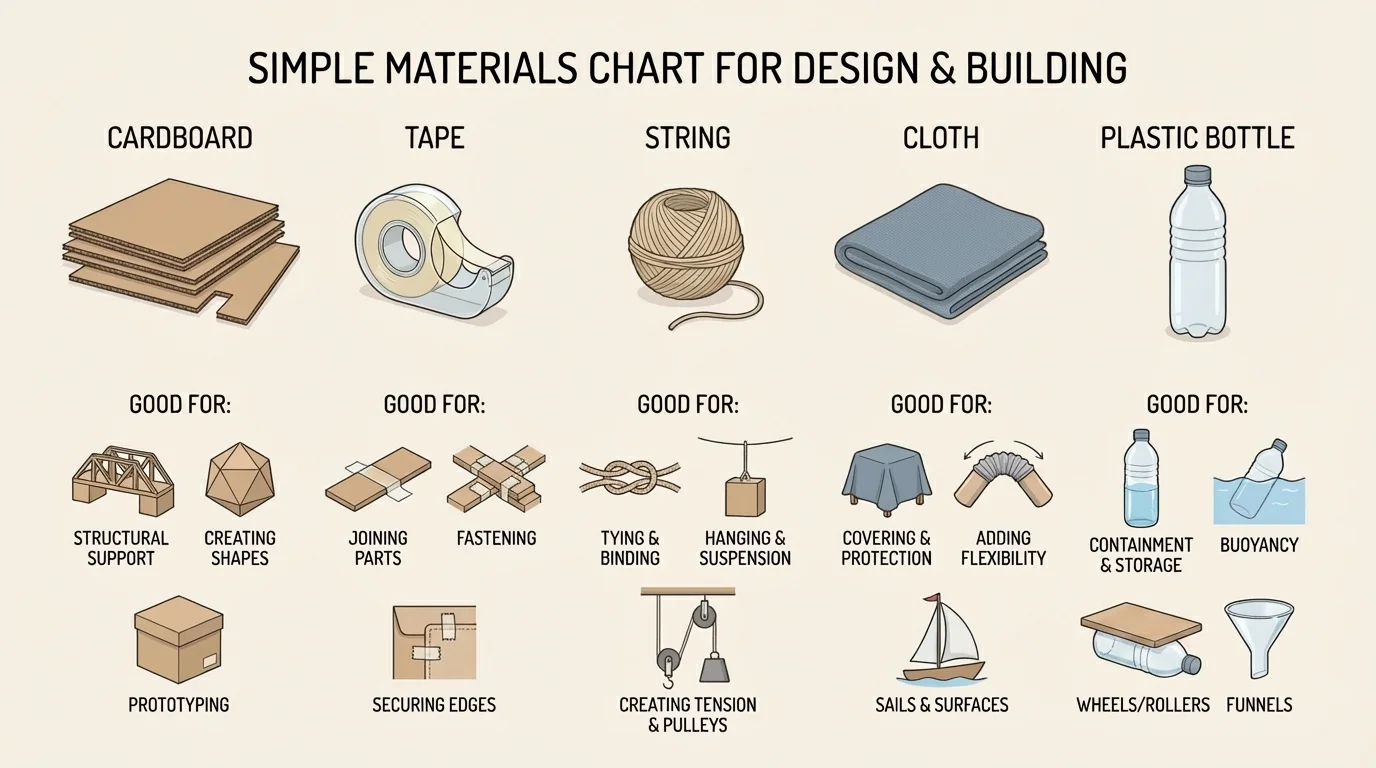
Tools help us use materials. Scissors cut. Tape joins. A ruler helps us measure and keep edges straight. Hands can fold, press, and hold. An adult may help with tools that need extra care.
Sometimes reusing old materials is part of the solution. A clean box can become a paper collection tray. A washed bottle can become part of a watering tool. Reusing materials can help reduce waste in the local environment.
[Figure 3] Before building, engineers make a plan. The plan can be a drawing, a list, or a simple model. The building process often goes in a circle: plan, build, test, and improve. If the first idea does not work well, that is okay. We can change it and try again.
A plan might say: "Use a shoe box, cut a slot, add a label, and make a tray for used paper that still has a blank side." That device can help save paper by reminding people to reuse it before recycling.
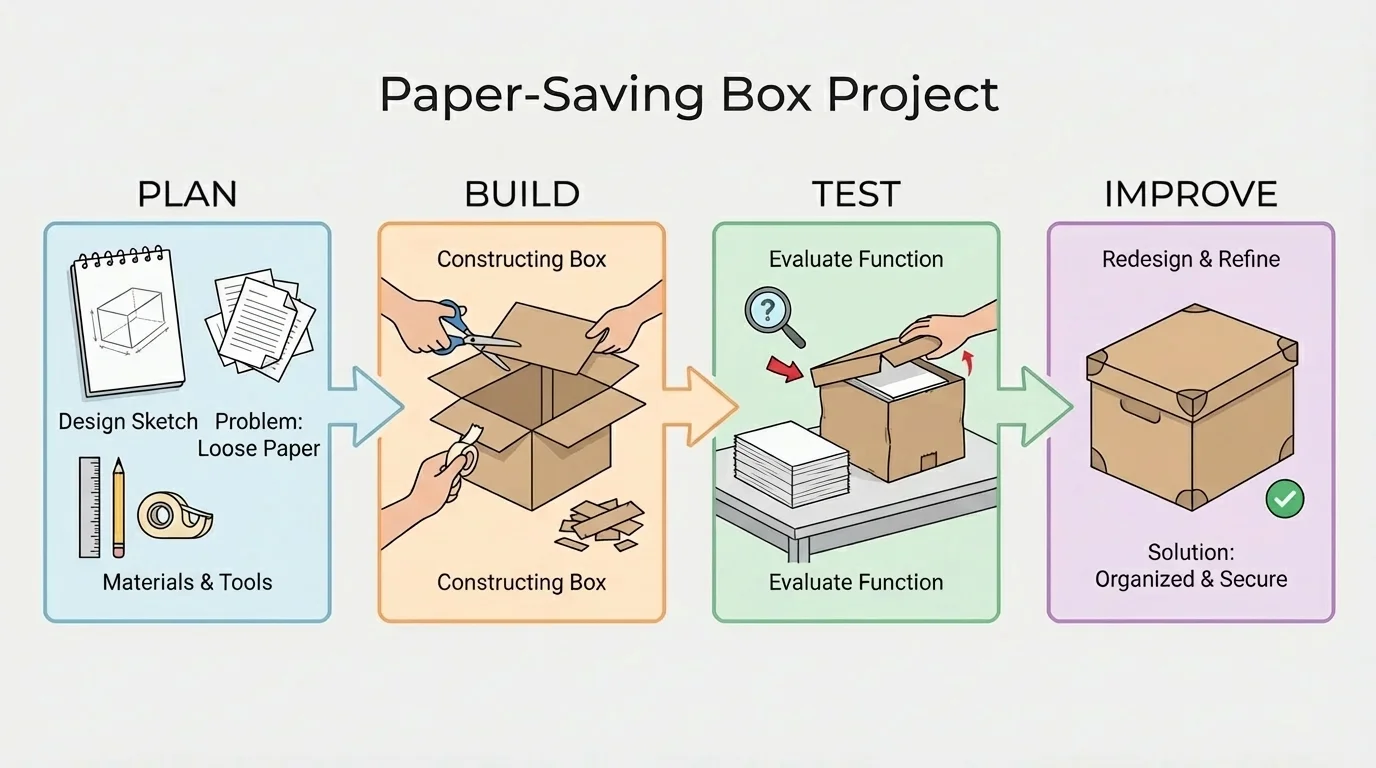
Testing means trying the device to see if it works. Does the sorter really hold paper? Does the sign stay attached? Does the cloth draft blocker cover the door gap? When we test, we learn what to fix.
Example: Building a paper-saving tray
Step 1: Name the problem.
Paper with one blank side is being thrown away.
Step 2: Plan the device.
Use a box lid as a tray and add a label that says "Use this side again."
Step 3: Build it.
Attach the label with tape and place the tray where students can reach it.
Step 4: Test and improve.
If papers slide off, add taller cardboard sides.
The device helps people save paper, which means fewer resources are wasted.
Improving a device is a smart part of engineering. A first version is not always the best version. A stronger base, a bigger opening, or a clearer label can make the device more helpful.
[Figure 4] Natural resources are things from Earth that people use, such as water, air, soil, trees, and sunlight. Helpful devices can protect these resources. A good solution helps people while also caring for the local environment.
A rain catcher, such as a barrel placed under a roof drain, can collect water for plants. A draft blocker at the bottom of a door can help keep warm air inside on a cold day. A sorting bin can help paper, cans, or bottles go to the right place. These simple designs can make a real difference.
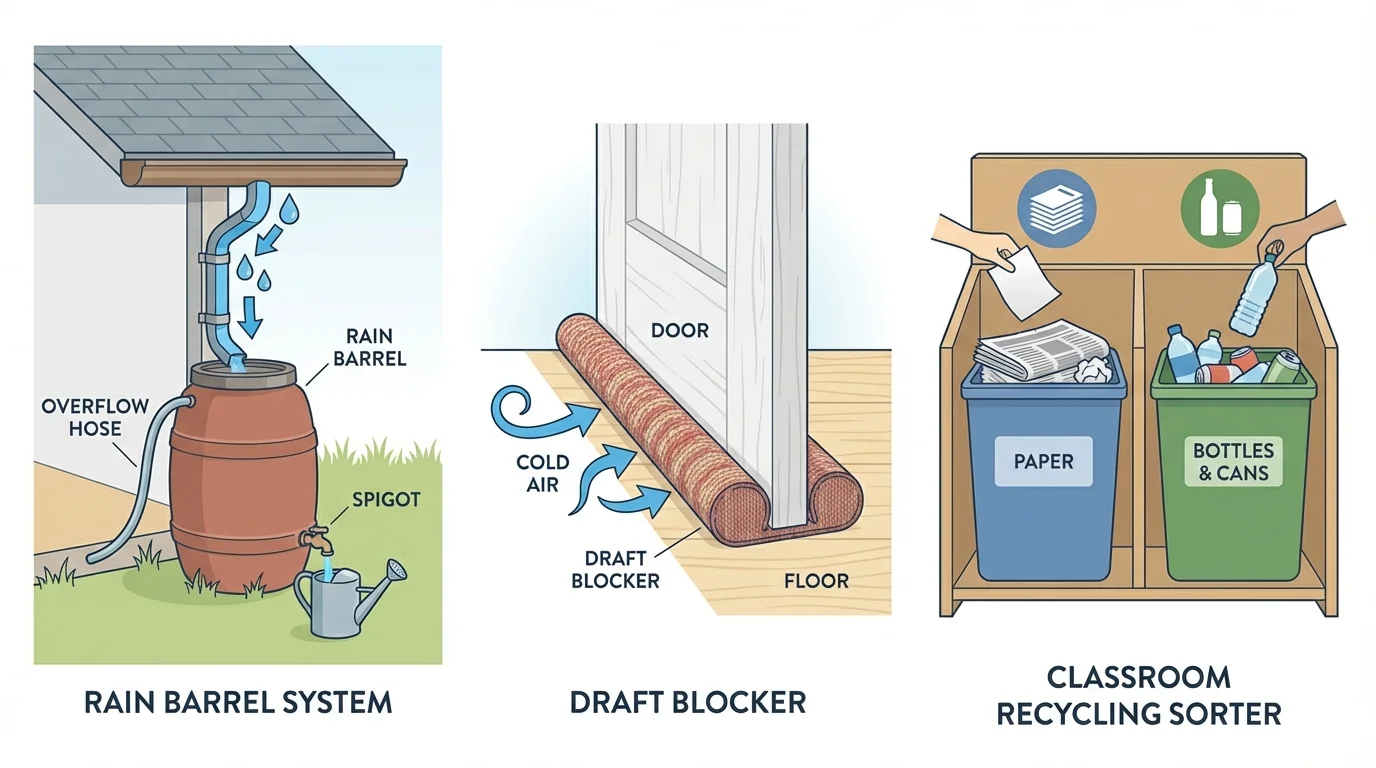
Saving resources matters because many people share the same Earth. When we waste less water, there is more clean water to use. When we save energy, we often burn less fuel. When we reuse or recycle materials, fewer things go to the landfill.
Why testing matters
A solution is only helpful if it really works. Testing helps us notice leaks, weak parts, or confusing labels. After testing, we can improve the design so it solves the problem better.
The same idea from [Figure 3] still matters here: plan, build, test, improve. The goal is not just to make something. The goal is to make something useful.
Here are some simple devices children may understand and talk about:
| Problem | Possible device | How it helps |
|---|---|---|
| Water is wasted | Rain catcher or sink reminder sign | Saves water |
| Paper is wasted | Reuse-paper tray | Saves trees and paper |
| Cold air comes in | Cloth draft blocker | Saves energy for heating |
| Trash blows away | Bin cover or sorting box | Keeps the area cleaner |
Table 1. Examples of local problems, simple devices, and the resources they help protect.
A device made by a child does not have to be fancy. It only has to solve a real problem in a useful way. The dripping sink in [Figure 1] reminds us that small local problems can lead to smart local solutions.
Some solutions are meant to remind people. Some are meant to catch, block, hold, sort, or carry. All of them begin with noticing a need and using materials carefully.
Building should always be safe. We carry scissors carefully, use tools the right way, and ask an adult for help when needed. We keep our work area neat so no one trips or slips.
Teamwork helps too. One person may notice the problem. Another may draw the plan. Another may test the device. Listening to each other can make the design better.
When children learn to solve problems with tools and materials, they are learning to care for both people and Earth. A useful device is a small idea that can make a big difference.
