Have you ever looked outside and seen dark clouds rolling in fast, then wondered, Is a storm coming? That wonder is the start of science. We learn a lot by looking carefully at the world and asking questions about what we see.
[Figure 1] When we use our eyes, ears, and sometimes touch to notice what is happening around us, we make an observation. We may see gray clouds, hear thunder, feel cold air, or watch tree branches move. These clues help us ask questions. Good questions help us find more information about the natural world.
Some questions start with: What? Why? How? and When? For example: What kind of clouds are those? Why is the wind getting stronger? How do people know that rain is coming? When should we go inside?
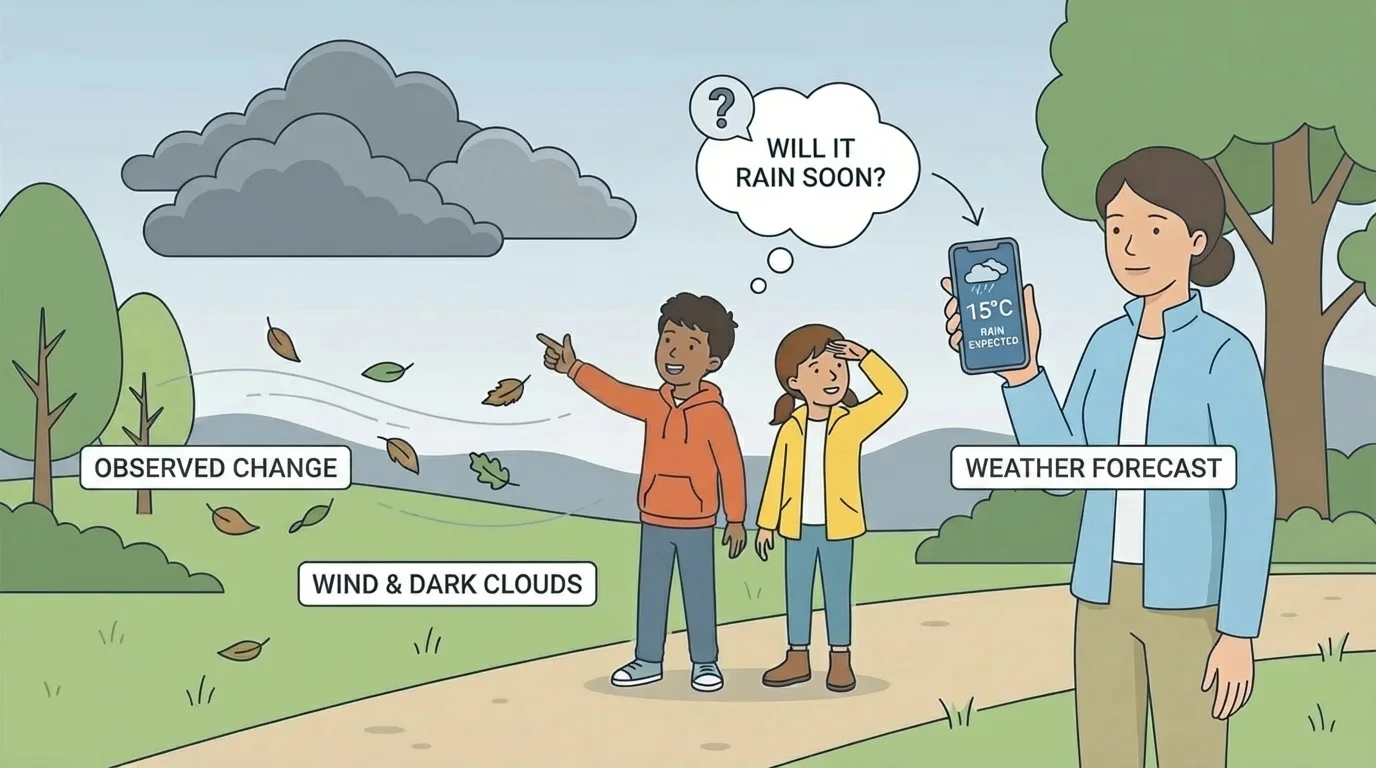
Observation means noticing something with your senses. Weather forecasting means using information about the weather to tell what the weather may be like soon. Severe weather is weather that can be dangerous, such as strong storms, heavy snow, or high winds.
Observations are important because they help us learn. If you see puddles on the ground, you might ask if it rained earlier. If you see people wearing coats, you might ask if the air is colder today. Scientists ask questions this way too.
A forecast is a prediction about future weather. People who study weather look at clouds, wind, temperature, rain, snow, and special tools. Then they tell others what the weather may be like next.
Weather forecasts help people decide what to do. A forecast may tell us to bring an umbrella, wear boots, or stay indoors. It can also help schools, families, pilots, farmers, and drivers make safe choices.
Some weather changes can happen very fast. A sunny morning can turn into a stormy afternoon, so forecasts help people get ready before the weather changes.
Forecasting is part of the designed world too. People make tools such as thermometers, rain gauges, weather maps, and computers to collect and share weather information. Humans design these tools so we can understand nature better.
[Figure 2] When we look at the sky and the air around us, we can ask many useful questions. The weather signs shown here give us clues that help us wonder and learn. Asking questions is a smart way to find out more.
Here are some examples of questions based on observations:
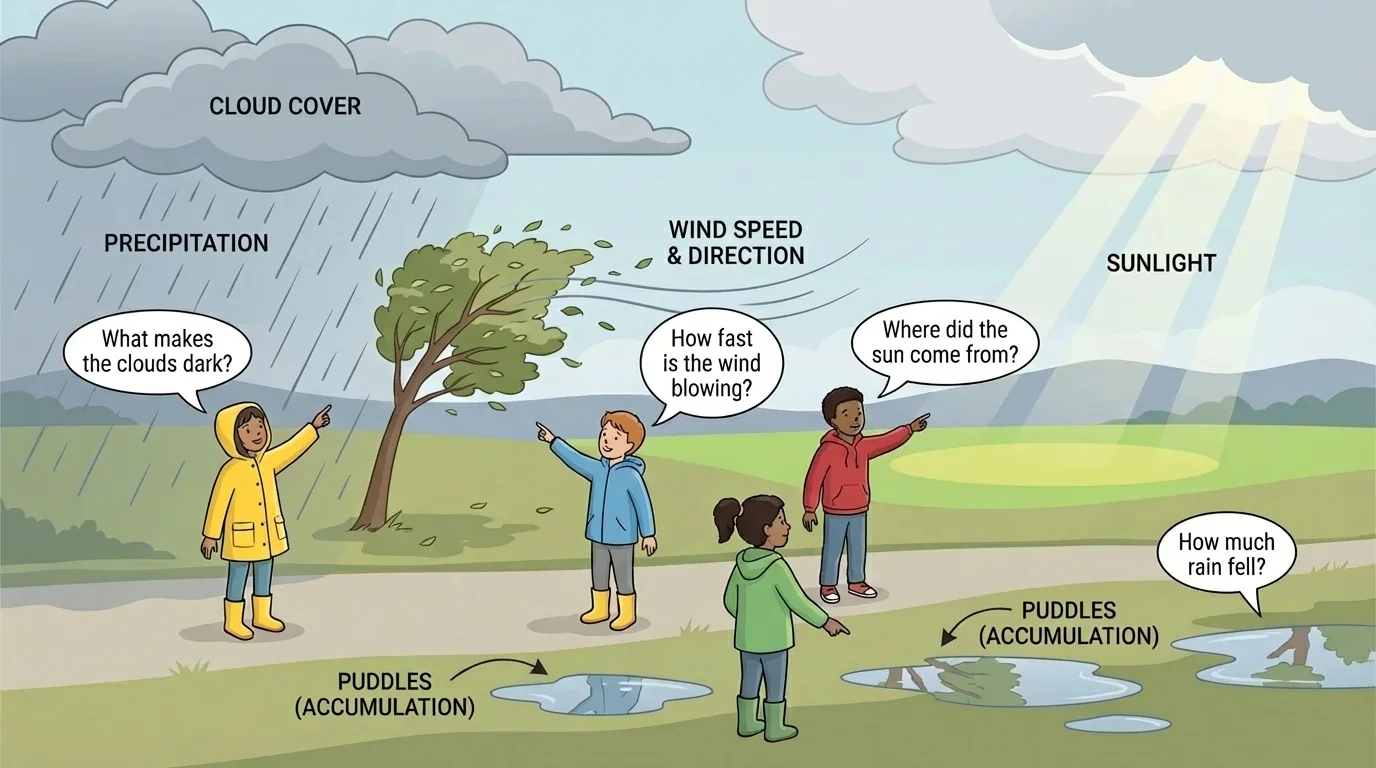
These are strong science questions because they come from something real that we notice. We do not ask random questions. We ask questions connected to evidence we can see, hear, or feel.
From clues to questions
Science often begins when we notice a clue. A clue might be dark clouds, a wet sidewalk, or leaves blowing quickly. Then we ask a question about that clue. Next, we look for more information. This helps us understand what may happen and what we should do.
For young students, this can be simple: I see dark clouds. I ask if rain is coming. I listen to the forecast. Then I take my raincoat. That is careful thinking.
[Figure 3] Sometimes weather is not just different; it can be dangerous. Severe weather can include thunderstorms, lightning, heavy rain, hail, strong wind, ice, or snowstorms. Forecasts help us prepare before bad weather arrives.
If a storm is coming, people may close windows, move inside, charge flashlights, put on appropriate clothing, or change travel plans. If there is snow or ice, roads may become slippery. During lightning, people should go indoors. Asking questions helps us know what information we still need.
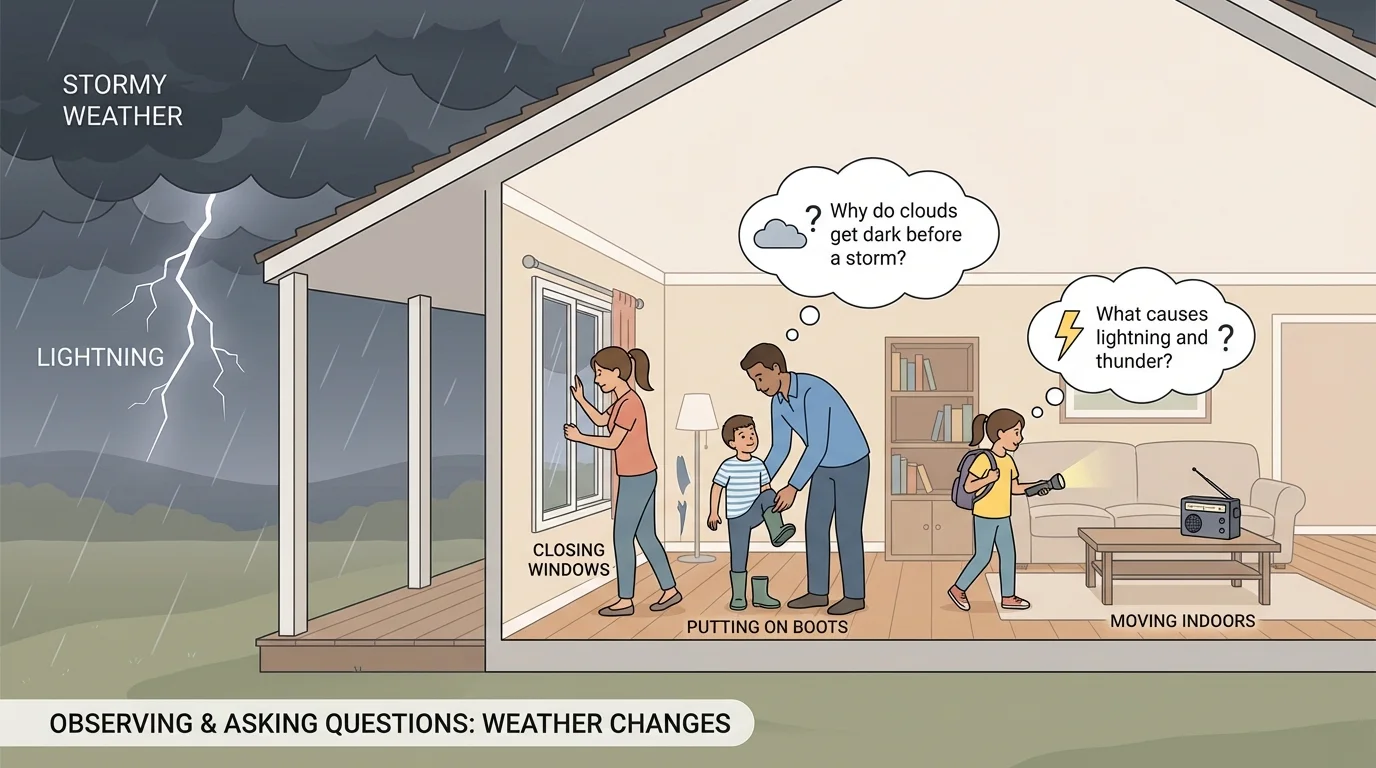
Good safety questions include: Is the storm close? Should we stay inside? What clothes do we need? Is it safe to travel? These questions are based on observations and forecasts, not on guessing.
Weather can change from day to day. Clouds, rain, sunshine, wind, and temperature are all parts of weather that we can observe.
People in many jobs depend on weather information. Farmers want to know if rain is coming. Bus drivers want to know if roads are icy. Families want to know if a storm may happen after school. Community helpers use forecasts to protect people.
Forecasts are useful because they help people plan ahead. A small change in weather may mean wearing a jacket. A bigger change may mean canceling a trip or moving an event indoors. The purpose of forecasting is not just to describe the weather. It is to help us prepare and respond.
We can connect observations to actions. If we notice bending trees and fast-moving clouds, we may ask if strong wind is coming. If the forecast says heavy rain, we may wear boots and stay out of deep puddles. As we saw earlier, weather clues around us can lead to smart questions and safe choices.
Real-world example: Getting ready for a storm
Step 1: Observe the weather.
A child sees dark clouds, hears thunder, and feels cool wind.
Step 2: Ask questions.
The child asks, "Is rain coming?" and "Should we go inside?"
Step 3: Find more information.
An adult checks the weather forecast.
Step 4: Make a safe choice.
The family goes indoors and brings in outdoor toys before the storm begins.
This is how observations, questions, and forecasts work together. The natural world gives clues. We ask questions and then use information to act safely.
Scientists and weather experts ask questions because questions help them learn more. Young students can do this too. If you notice the sky is bright and clear, you might ask if it will stay sunny. If you notice fog, you might ask how it changes what people can see. If you notice snow piling up, you might ask how it affects walking and driving.
The purpose of asking questions is not only to learn facts. It is also to help us make decisions. Forecasting is one way people use science in everyday life. Noticing weather signs and checking a forecast are connected steps in understanding the world.
When we observe carefully, ask useful questions, and listen to weather information, we become better at understanding nature and staying safe in it.
