A single storm can knock down trees, flood roads, wash soil away, and change where animals find food and shelter. That reveals an important idea in science: one event can cause many effects. Scientists pay close attention to these connections because they help explain why things change and how people can make safer choices.
When we study weather, nature, and communities, we often look for a cause and effect relationship. A cause is something that makes another thing happen. An effect is what happens because of that cause. If a strong wind blows a loose sign off a building, the wind is the cause and the fallen sign is the effect. If heavy rain soaks the ground and water flows into streets, the rain leads to flooding.
Cause and effect are not just ideas for science class. People use them when they decide where to build homes, how to protect schools, and how to prepare for storms. They also help us understand how changes in weather can affect habitats, which are the places where living things get what they need to survive.
Cause and effect means that one event, action, or condition leads to another. Scientists identify possible causes, test whether they really lead to certain effects, and use evidence to explain changes they observe.
A weather hazard is a kind of weather that can cause harm, such as flooding, hurricanes, tornadoes, blizzards, droughts, or severe thunderstorms.
A design solution is something people plan and build or do to solve a problem, such as a levee, storm drain, stronger roof, or warning system.
Sometimes the cause is easy to spot. If a window breaks right after a baseball hits it, the cause is clear. In nature, the causes can be more complicated. A flooded playground might happen because of heavy rain, but also because the ground is already full of water, or because drains are blocked. Scientists ask careful questions so they do not jump to the wrong answer.
To explain change, we often look for a chain of events. For example: dark clouds form, rain falls hard, water runs downhill, a creek rises, and nearby land floods. Each step can become the cause of the next step. This is one reason science is so powerful. It helps us trace a problem back through the chain and think of ways to stop or reduce the harmful effects.
We can also use cause and effect to make predictions. If a storm is coming and the weather report says very strong winds are likely, people may predict that weak tree branches could fall. That prediction is based on patterns people have seen before. If the prediction is correct again and again, it becomes useful for keeping people safe.
Some communities paint lines on streets or walls to show how high floodwater reached in the past. Those marks give evidence about the effects of earlier storms and help people plan for future ones.
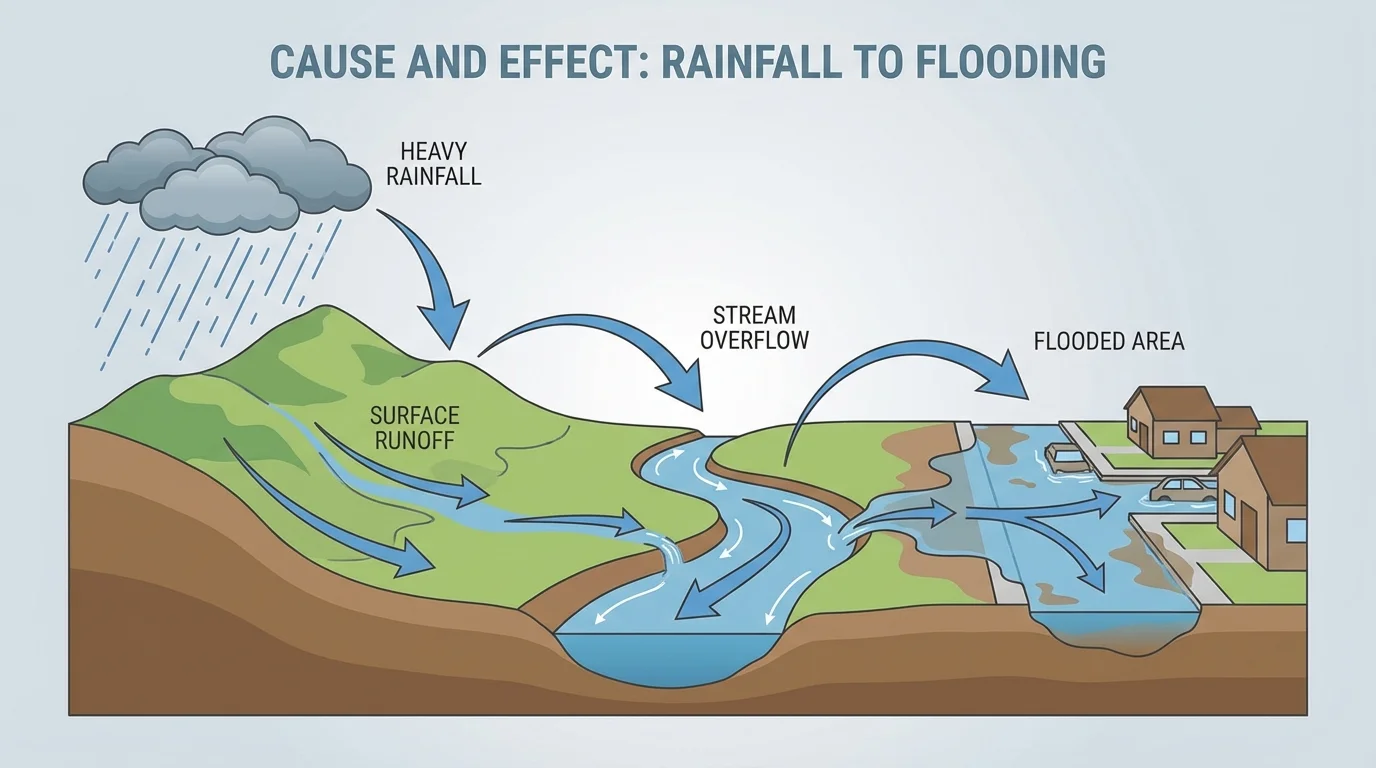
[Figure 1] Different weather hazards cause different kinds of changes. Heavy rain can cause a flood. Very strong wind can damage roofs, snap branches, and move loose objects. A long time without enough rain can cause drought, which dries soil and makes it hard for plants to grow. Snow and ice can make roads slippery and can damage trees and power lines.
During a storm, one cause can lead to many effects, with heavy rain, flowing water, and flooding near homes. Rain that falls faster than the ground can absorb it becomes runoff, which is water moving across the surface. Runoff often travels downhill, carrying soil with it. If enough water enters a stream or ditch, the water level can rise quickly and spill out onto land.
These effects matter for both people and the environment. Floodwater can damage houses, roads, farms, and schools. It can also move trash, mud, and other materials into rivers and ponds. When soil is washed away, that is called erosion. Erosion changes the shape of the land and can make it harder for plants to stay rooted.
Weather hazards also affect living things. If a pond becomes muddy after a storm, fish and frogs may have a harder time finding what they need. If strong wind knocks fruits, seeds, or branches off plants, animals may lose food or shelter. A dry season may cause a stream to shrink, so animals that depend on water must move or compete more for what remains.
Not every storm causes the same amount of damage. The effect depends on many conditions. A small amount of rain may cause little trouble if the land is dry and plants hold the soil in place. The same amount of rain may cause more trouble on a steep hill with loose soil. That is why scientists and engineers study both the hazard and the place where it happens.
It is important to identify the real cause, not just guess. Suppose a schoolyard floods after a storm. Was the problem only the rain? Maybe. But maybe the storm drain was blocked by leaves. Maybe the schoolyard surface was covered by materials that do not soak up much water. Maybe both things mattered. Scientists gather observations to learn which causes are most important.
One useful idea is a fair test. In a fair test, you change one main thing and keep other things as similar as possible. If you want to know whether plants help stop erosion, you can compare a tray of bare soil with a tray of soil covered with grass or roots. If both trays get the same amount of water poured on them, you can compare how much soil washes away.
Case study: Finding the cause of puddles on a playground
A class notices that puddles stay longer on one side of the playground after rain.
Step 1: Observe carefully.
Students notice that this side is lower than the rest and has fewer drains nearby.
Step 2: Compare conditions.
They compare the low side and the higher side after the same rainstorm.
Step 3: Look for evidence.
The low side keeps more standing water. Leaves also block one drain.
Step 4: Make a claim.
The puddles last longer because water collects in the lower area and a blocked drain slows the water from leaving.
This claim is stronger because it is based on observations, not just a guess.
Testing causes helps us find better solutions. If we decide the wrong cause, we may build something that does not help. For example, if flooding happens mostly because a drain is clogged, building a taller fence will not solve the problem. Cleaning and protecting the drain may work better.
[Figure 2] People often create a design solution to reduce the effects of dangerous weather. A design changes the chain of cause and effect. If rainwater is guided into a safe drainage channel, less water reaches a building. If a roof is built with stronger fasteners, strong wind is less likely to pull it apart. If trees or grasses are planted on a slope, their roots can help hold soil in place.
Some design solutions are large, and some are simple. Sandbags can help block shallow floodwater for a short time. Storm drains and ditches help carry water away. Raised buildings are safer in places that flood often. Warning systems and weather alerts are also solutions because they reduce harm by giving people time to move to safety.
To decide whether a solution is effective, we need evidence. An effective solution reduces the harmful impact. It does not have to remove all danger, but it should make things safer or lower the amount of damage.
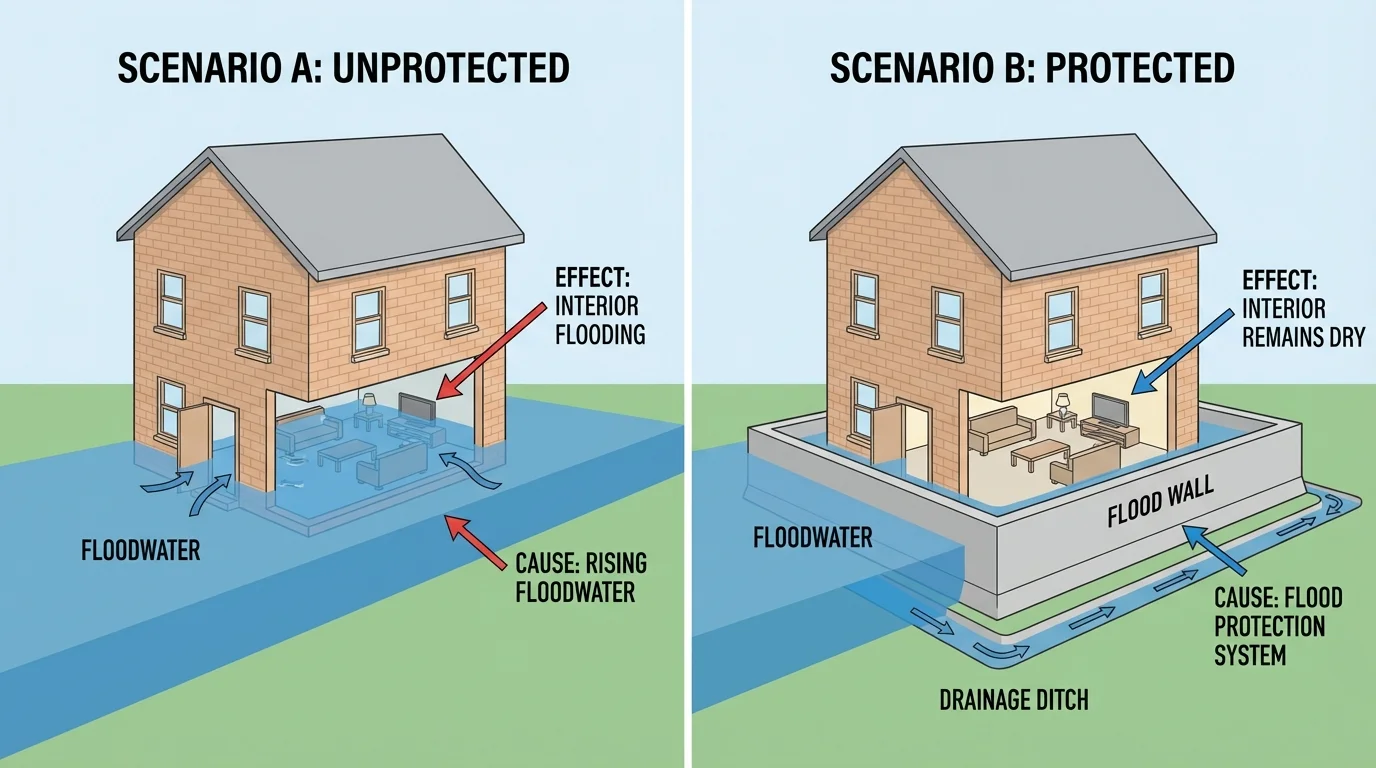
Consider a low wall placed around a garden near a stream. If the wall blocks some floodwater, the garden may stay drier during small floods. But if the flood is much deeper than the wall, water can still go over it. This teaches an important idea: a solution may work well in one situation and not as well in another. Scientists and engineers test solutions under different conditions.
Design solutions can also have trade-offs. A trade-off is a downside that comes with a benefit. For example, a tall wall may block water, but it may cost more money or block movement. A drainage ditch may move water away from one place but send it somewhere else, so planners must think carefully about the whole area.
How testing helps us trust a claim
A claim is stronger when it is supported by repeated observations, comparisons, or measurements. If a school installs a new drain and flooding becomes smaller after several similar storms, that evidence supports the claim that the drain helps. If the flooding stays the same, the claim is weaker.
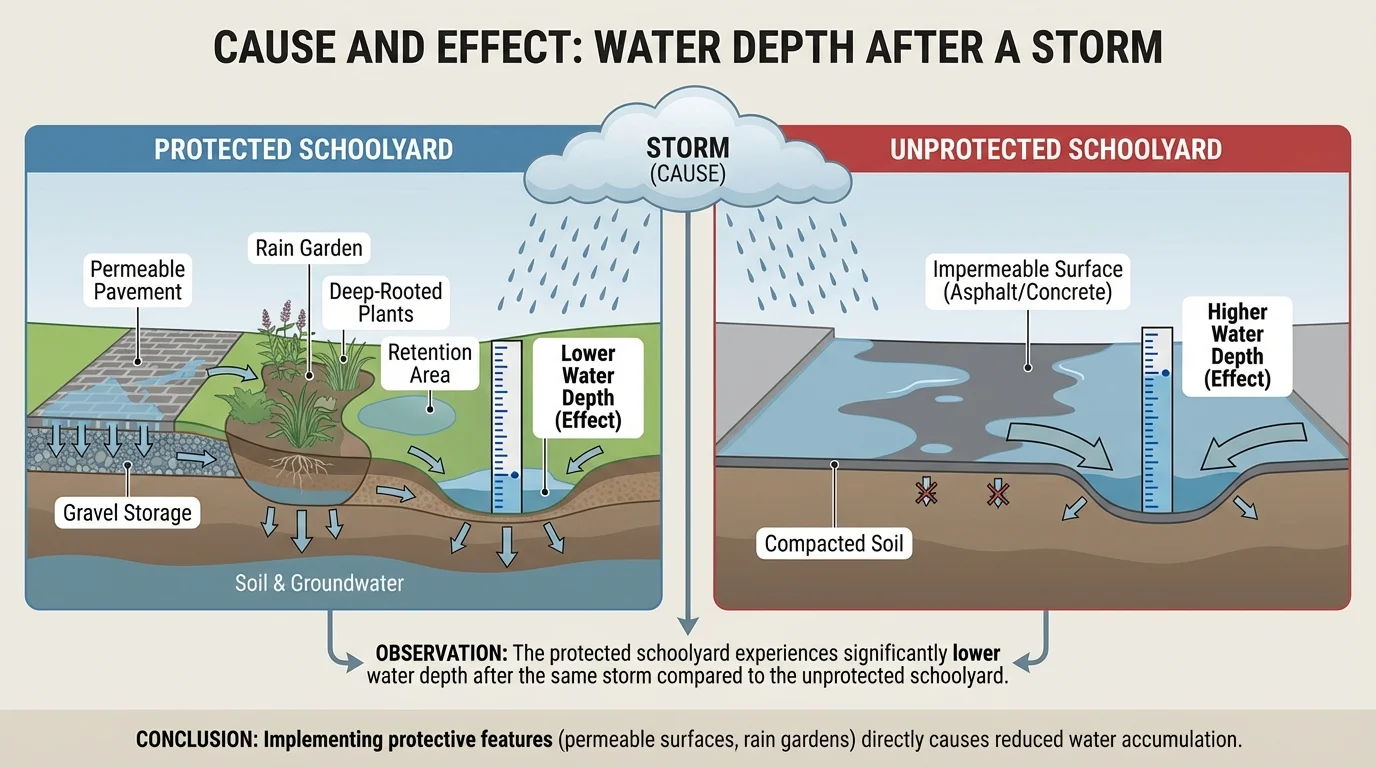
[Figure 3] When scientists compare solutions, they try to measure the effects. Evidence can include water depth, the amount of soil washed away, the number of damaged plants, or how long water stays in one place. A simple comparison chart can make it easier to see whether one area had less flooding than another after the same storm.
Suppose two schoolyards get the same heavy rain. One schoolyard has a drain and a small barrier. The other does not. After the storm, adults measure the water depth. In the protected schoolyard, the water is shallower and drains away faster. That evidence supports a claim that the design solution reduced the impact of the flood.
| Place | Protection used | Water depth after storm | What the evidence suggests |
|---|---|---|---|
| Schoolyard A | Drain and low barrier | \(4\ \textrm{cm}\) | Less flooding reached the yard |
| Schoolyard B | No added protection | \(12\ \textrm{cm}\) | More flooding stayed in the yard |
Table 1. Comparison of flood effects in two schoolyards after the same storm.
Because both places experienced the same storm, the comparison is more useful. The water depth in Schoolyard A is lower than in Schoolyard B. Since \(4 < 12\), the protected yard had less standing water. That does not prove the barrier and drain are perfect, but it is strong evidence that they helped.
Sometimes evidence shows that a solution needs to be improved. Maybe a barrier works for small storms but not larger ones. Maybe a drain helps in one part of a yard but not another. Good science does not stop at the first answer. It uses testing to improve ideas.
Case study: Making a claim about a flood barrier
A town places a small flood barrier near a road that often fills with water.
Step 1: Observe before the barrier.
In earlier storms, water covered the road and traffic had to stop.
Step 2: Observe after the barrier.
After a similar storm, less water reaches the road, and the road reopens sooner.
Step 3: Use evidence to make a claim.
The barrier is effective because it reduces the amount of floodwater on the road during storms of that size.
This claim is careful and specific. It says the barrier helps under certain conditions, based on evidence.
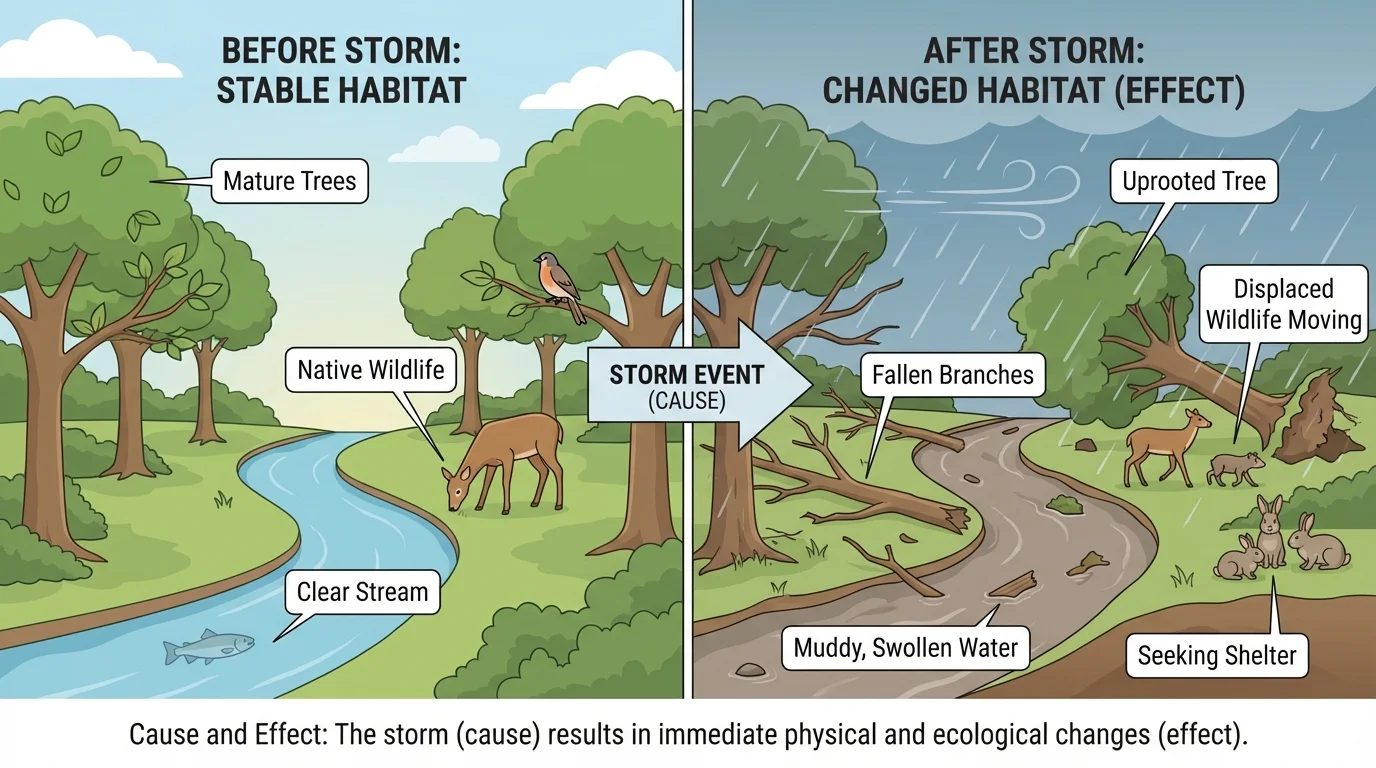
[Figure 4] Cause and effect also helps explain changes in ecosystems. A habitat includes the food, water, shelter, and space that living things need. When weather changes a habitat, living things may also change their behavior, numbers, or location. A storm can knock down branches, muddy water, and force animals to move to safer places.
For example, heavy rain may wash soil into a pond. The muddy water can block sunlight, and some water plants may not grow as well. If water plants decrease, small animals that depend on them may also decrease. Then animals that eat those smaller animals may need to find food elsewhere. One cause can start a whole chain of effects.
Drought causes different changes. Streams may shrink, grass may dry out, and some trees may lose leaves. Animals may move to places with more water. Plants with deep roots may survive better than plants with shallow roots. This does not mean weather acts on purpose. It means living things are affected by changes in their environment.
The same kind of thinking we used for flood barriers can help us understand habitats. If roots hold soil in place, then planting vegetation on a slope may reduce erosion. That could protect both human-built places and natural habitats. As shown earlier, water moves across land; when plants slow that movement, less soil may wash into streams and ponds.
Living things depend on other living things and on nonliving parts of their environment. When water, soil, sunlight, or shelter changes, organisms may also be affected.
Communities use cause-and-effect thinking when they prepare for weather hazards. They ask questions such as: What causes this problem? What evidence shows where the danger is greatest? Which design solution will likely reduce harm the most? These questions help leaders and families make wiser choices.
For example, if a neighborhood floods because water collects in low areas, people might improve drainage, build in safer places, or keep important objects above ground level. If strong winds damage roofs, builders may use stronger materials and safer designs. If erosion wears away a riverbank, people may plant vegetation, add barriers, or limit building too close to the edge.
Evidence matters because not all solutions work equally well. A warning system may be very effective at helping people move to safety, but it does not stop water from rising. A barrier may block some water, but it cannot help if people do not know a storm is coming. Often, the best protection comes from using more than one solution together.
Scientists, engineers, and community members all play a part. Scientists study weather patterns and collect data. Engineers design and test solutions. Community members share what they observe and decide which ideas fit their needs. When people understand cause and effect, they can explain change more clearly and choose actions that protect both people and habitats.
"Good evidence helps us tell the difference between a guess and a strong claim."
Cause and effect is one of the big ideas that helps science make sense of the world. It helps us trace what happened, predict what may happen next, and test ways to reduce harm. From a muddy schoolyard to a flooded street to a damaged habitat, understanding the causes of change helps people respond with smarter, safer solutions.
