A tsunami can cross an ocean faster than a car can travel on a highway, and the shaking from an earthquake can begin with no warning at all. Earth may look still and solid under our feet, but it is always changing. Mountains rise, oceans move, and molten rock pushes upward from deep underground. These natural processes are part of how our planet works. Sometimes, though, they can be dangerous for people.
Earth is not a motionless ball of rock. Deep inside, heat moves material slowly. At the surface, land can crack, shift, rise, and sink. Under the ocean, the seafloor can move too. These changes are natural, which means they happen as part of Earth's systems even when humans are not causing them.
Some natural events are small and cause little trouble. Others are powerful enough to damage homes, roads, schools, and habitats. A strong earthquake can knock down buildings. A tsunami can flood a coast. A volcanic eruption can cover land with ash or send lava flowing downhill. These events are called hazards when they can harm living things or places where people live.
Natural hazard is a natural event or process that can hurt people or damage property.
Impact means the effect something has. The impact of a hazard may include injuries, flooding, broken roads, power loss, or damage to homes.
Risk is the chance that a hazard will cause harm. Risk is often higher where many people live in places that are exposed and not well protected.
A hazard does not always become a disaster. For example, a volcano erupting on an uninhabited island may be amazing to study, but it may not harm many people. The same kind of eruption near a town could be much more serious. That is why scientists look at both the natural event and the human community nearby.
A natural hazard begins with a natural process. A natural process is something Earth does on its own, such as rocks moving, waves traveling, or molten rock rising. Humans cannot turn these processes off. No one can stop all earthquakes from happening or prevent every volcano from erupting.
But people are not powerless. Communities can learn where hazards are most likely to happen. They can build safer structures, make emergency plans, practice drills, and use warning systems. These actions do not remove the hazard, but they can lower the impact.
Some volcanoes can stay quiet for many years and then erupt again. Scientists keep watching them because a quiet volcano is not always extinct.
This idea is very important: Earth's natural processes create hazards, but human choices help determine how much damage occurs. Where people build, how they build, and how prepared they are all matter.
[Figure 1] An earthquake happens when rocks in Earth's crust suddenly move, often along a crack called a fault. Earth's outer shell is broken into huge pieces called tectonic plates. These plates move very slowly, but they can get stuck. When pressure builds up and the rocks finally slip, energy spreads out as shaking.
Earthquake shaking can be mild or very strong. A weak earthquake may only rattle dishes. A strong one may crack roads, topple walls, and make bridges unsafe. Sometimes the ground moves for only a few seconds, but those seconds can be powerful. After the main earthquake, smaller shakes called aftershocks can happen.
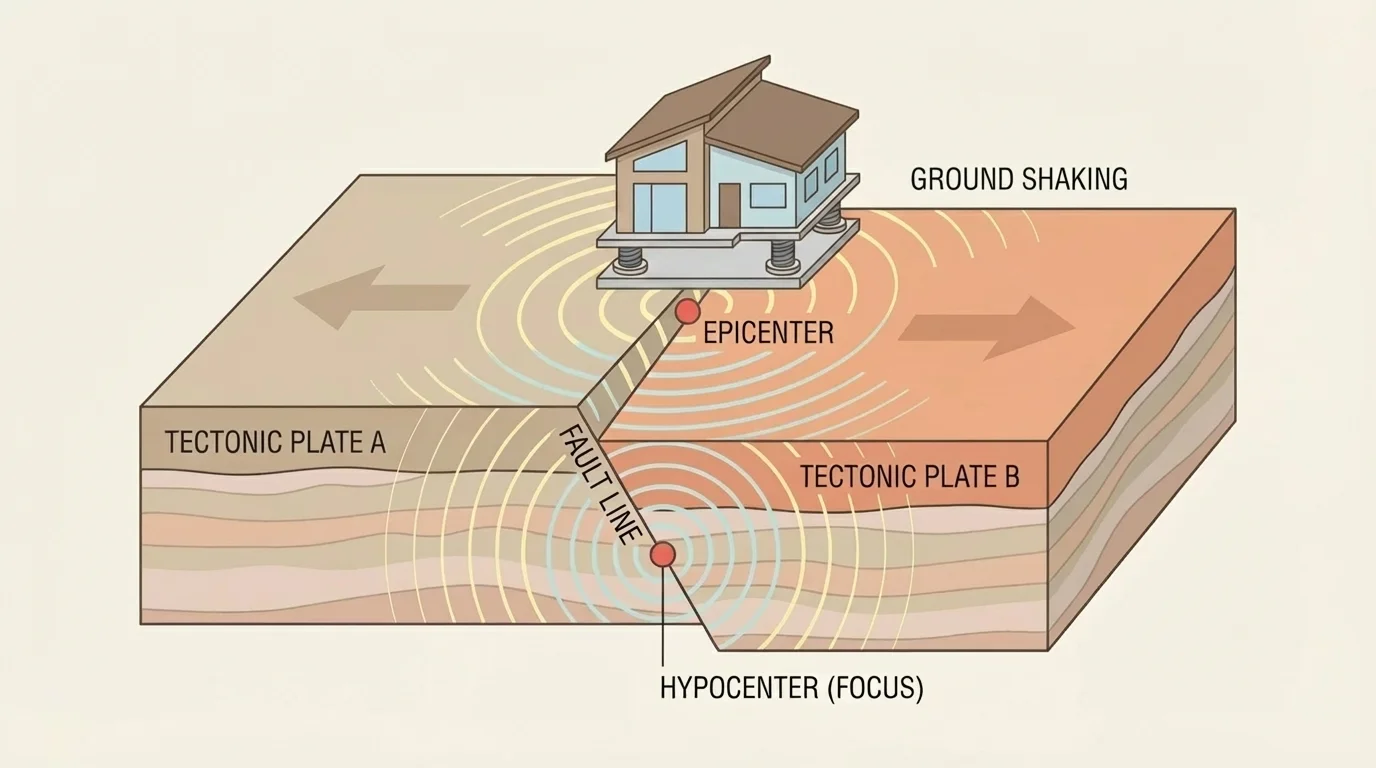
Earthquakes can happen on land or under the ocean. When they happen under the ocean, they can sometimes help cause tsunamis. This shows how one natural process can affect another part of Earth's system.
People cannot stop tectonic plates from moving, but they can make earthquake damage less severe. Engineers design some buildings to bend a little instead of breaking. Shelves can be attached to walls so they do not fall over easily. Families can keep heavy objects low to the ground.
Safety actions matter too. During earthquake shaking, people are often taught to drop, cover, and hold on. That means getting low, protecting the head and neck, and holding onto sturdy furniture if possible. Schools often practice this so students know what to do quickly.
Real-world example: making a classroom safer for earthquakes
Step 1: Identify objects that could fall.
Examples include tall bookshelves, hanging objects, and stacked supplies.
Step 2: Reduce danger before an earthquake happens.
Fasten shelves to walls, store heavy items on lower shelves, and keep walkways clear.
Step 3: Practice what to do during shaking.
Students learn where sturdy desks are and how to protect their heads.
These actions do not prevent an earthquake, but they reduce injuries and damage.
Scientists use tools to measure and study earthquakes. They map where quakes happen often, and they learn which places may need stronger buildings. As seen earlier in [Figure 1], the movement begins underground, but the impacts are often greatest where people have built towns and cities.
[Figure 2] A tsunami is a series of large ocean waves caused when a large volume of water is suddenly displaced. One common cause is a strong undersea earthquake. Underwater landslides and volcanic eruptions can also trigger tsunamis.
In deep ocean water, tsunami waves may be far apart and not look very tall. But as they move into shallow coastal water, they slow down and pile up higher. That is why they can become very dangerous near shore. A tsunami is not the same as a regular beach wave caused by wind.
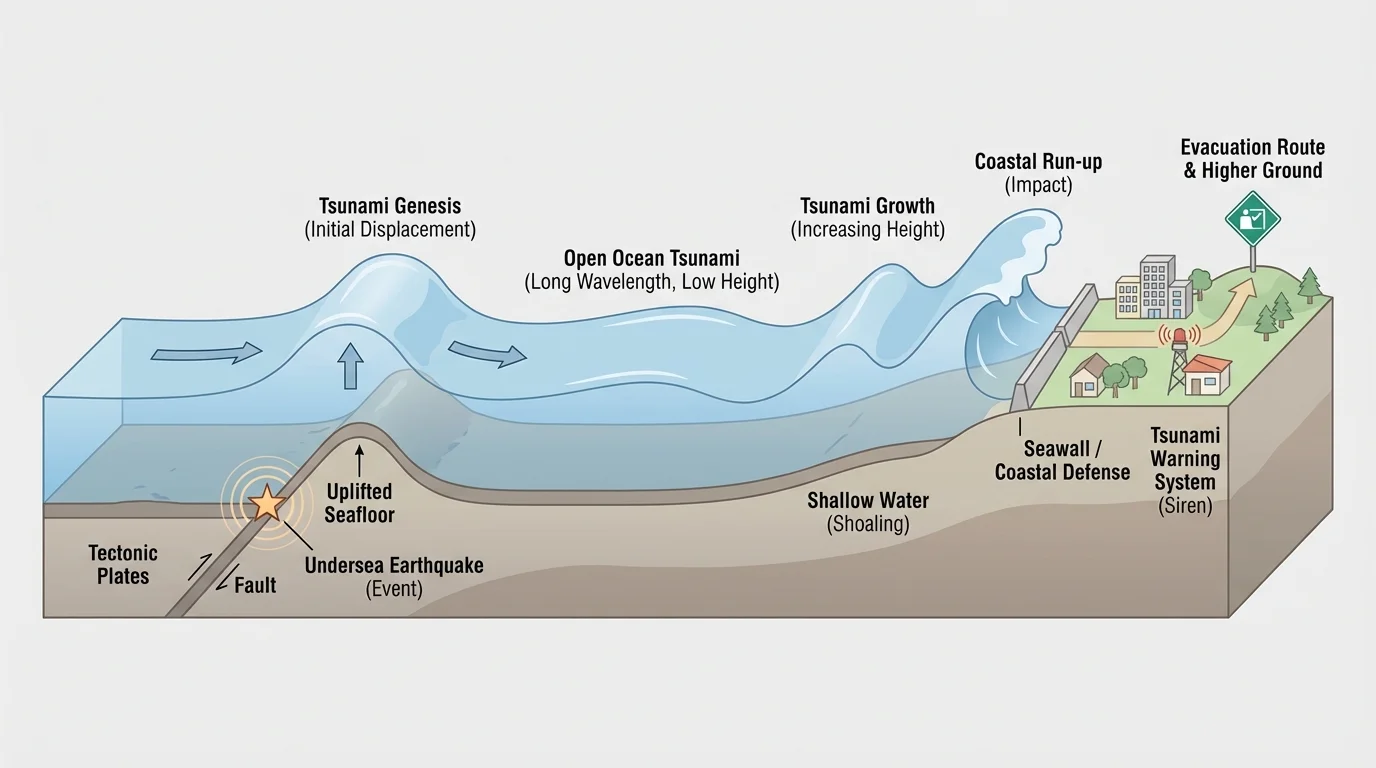
One warning sign can be a long, strong earthquake near the coast. Another sign is when the ocean suddenly pulls back farther than usual, exposing parts of the seafloor. If that happens, people should move quickly to higher ground. Waiting to watch can be very dangerous.
Communities in coastal areas often use sirens, text alerts, radio messages, and evacuation route signs. Some schools and towns practice moving away from the shore to safe places. These plans save time, and time is extremely important during a tsunami warning.
Why tsunami warnings matter
Tsunamis can travel across very large distances. A wave caused by an earthquake on one side of an ocean can reach shores far away hours later. Warning centers study earthquake data and ocean information to decide whether a tsunami may be coming, then send alerts so people can evacuate.
Places such as Japan, Indonesia, Hawaii, Alaska, and the west coasts of North and South America pay close attention to tsunami risk. A coastal town that has clear routes to high ground is usually better protected than one without a plan. Later, when we look at community preparation, [Figure 2] connects the ocean-floor movement to the flooding that can happen at the coast.
[Figure 3] A volcano is an opening in Earth's crust where molten rock, ash, and gases can escape. Molten rock below the surface is called magma, and once it reaches the surface it is called lava. Magma rises through openings in the crust.
Some eruptions are gentle, with lava flowing slowly. Others are explosive, blasting ash and rock high into the air. Volcanic ash is made of tiny sharp pieces of rock and glass. It can make breathing hard, reduce visibility, and cover roads, farms, and rooftops.
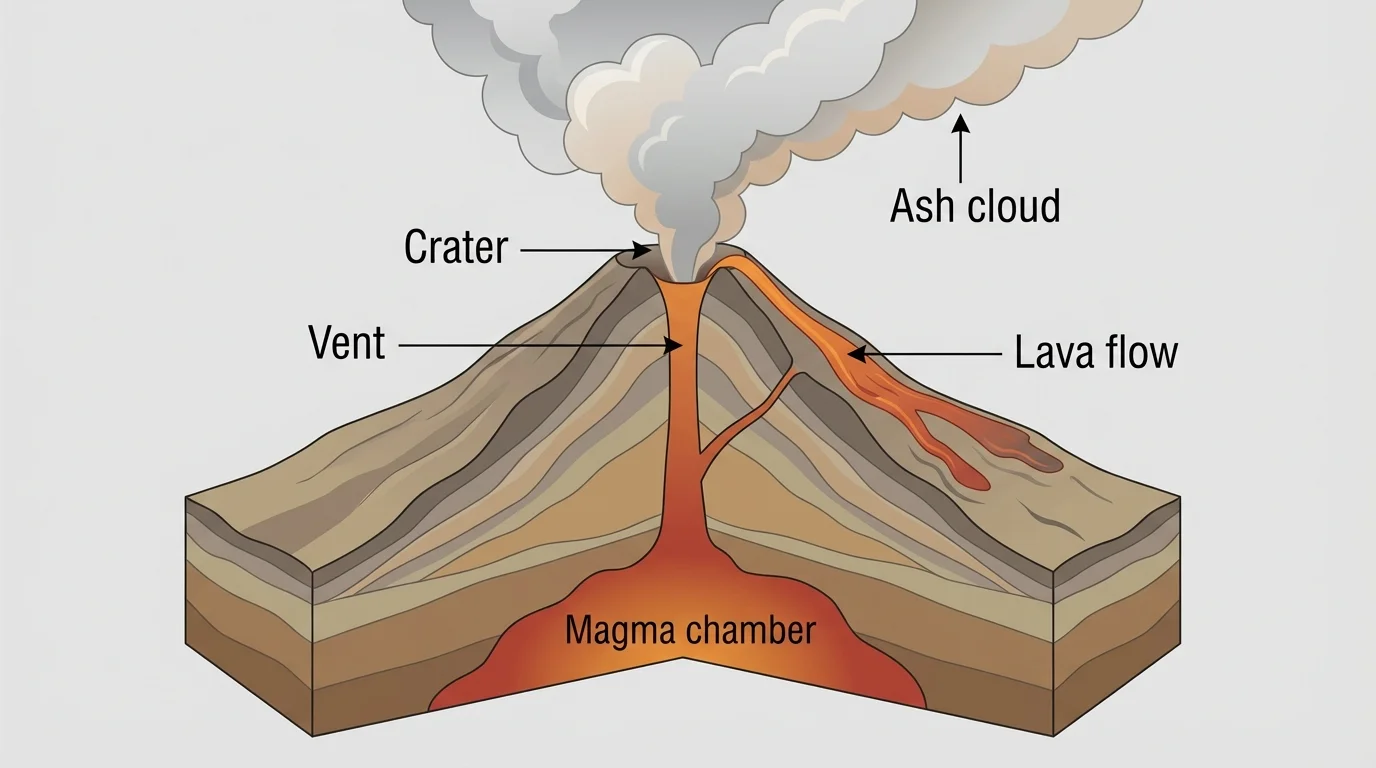
Volcanoes can create several different hazards. Lava can burn or bury land. Ash can damage crops and machinery. Hot clouds of ash and gas can move very fast down a volcano's sides. Mudflows can happen when ash mixes with water. Because volcanoes have many possible dangers, communities near them need careful plans.
Scientists watch volcanoes by measuring small earthquakes, changes in ground shape, and gases coming out. If a volcano begins to show signs of activity, officials may close nearby areas or tell people to evacuate. This does not stop the eruption, but it helps keep people safer.
Real-world example: living near an active volcano
Step 1: Scientists monitor the volcano.
They look for signs such as more small earthquakes and swelling ground.
Step 2: Leaders share warnings.
Residents may get messages telling them to prepare or leave.
Step 3: Families follow evacuation plans.
They take emergency supplies and move to safer areas away from ash and lava paths.
Planning ahead can greatly reduce the number of injuries and deaths.
Famous volcanic regions include Hawaii, Iceland, Italy, Indonesia, and parts of the Pacific Ring of Fire. When students hear about volcanoes in the news, it is useful to remember that the eruption comes from Earth's natural heat and movement. As shown in [Figure 3], the danger starts deep underground, but the impacts spread across the land and into the air.
The same kind of hazard can affect places in different ways. A strong earthquake in an area with sturdy buildings and good emergency response may cause less damage than a weaker earthquake in an area where buildings are not safe. This means a disaster is not only about the natural event itself. It is also about how exposed and prepared people are.
Population matters too. If many people live along a coast, a tsunami may put more lives at risk. If a volcano erupts near farms, it may affect food supplies. Roads, bridges, hospitals, and power lines can all be damaged, and that can make recovery harder.
Money, planning, and access to information also matter. Communities with warning systems, safe shelters, and strong public services usually recover faster. Communities without those resources may face bigger impacts for a longer time.
Earth has connected systems: land, water, air, and living things. A natural hazard often affects more than one system at once. An undersea earthquake can disturb the ocean, and volcanic ash can affect air, land, water, and living things.
This is why scientists, engineers, and leaders work together. They study natural processes, but they also think about where people live and what they need in order to stay safe.
[Figure 4] People cannot remove hazards from Earth, but they can reduce risk through planning, design, and warning systems. Reducing risk means making it less likely that a hazard will cause serious harm.
One important tool is monitoring. Scientists monitor earthquakes, volcanoes, and ocean conditions with instruments. Monitoring does not always predict the exact time of an event, but it helps experts recognize danger and send alerts.
Another tool is better construction. Buildings can be designed for local hazards. In earthquake regions, some buildings are made to handle shaking. In flood-prone coastal areas, important structures may be built higher above the ground. Roads and bridges can be planned with hazards in mind too.
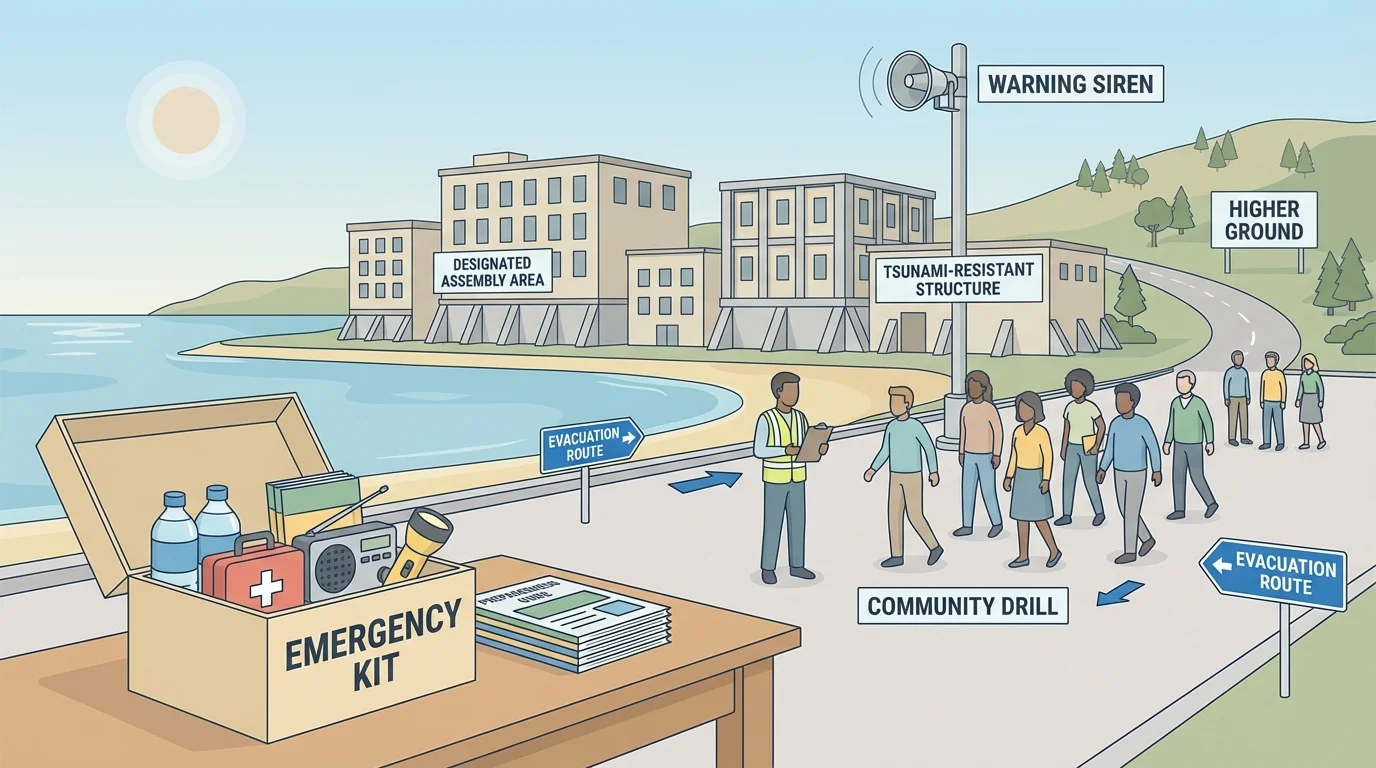
Emergency plans are just as important as strong buildings. Families can decide where to meet if they get separated. Schools can practice drills. Towns can mark evacuation routes and safe shelters. Emergency kits may include water, food, flashlights, batteries, medicines, and important phone numbers.
Clear communication saves lives. Warning messages need to be fast and easy to understand. Sirens, weather radios, phone alerts, and community announcements all help. Young students can help too by learning the plan and staying calm enough to follow directions.
Preparedness lowers impact
Preparedness means being ready before a hazard happens. It includes learning the danger, making a plan, practicing what to do, and keeping supplies ready. Preparedness cannot stop an earthquake or eruption, but it can reduce injuries, fear, and confusion.
Engineers, scientists, teachers, emergency workers, and families all play a part. [Figure 4] helps show how many protective actions fit together in one community.
Before a hazard happens, scientists study patterns and warning signs. Engineers design safer structures. Community leaders create evacuation routes and emergency plans. Teachers help students practice safety steps. Families prepare supplies and learn where to go.
During a hazard, people need to follow trusted instructions quickly. During an earthquake, students may drop, cover, and hold on. During a tsunami warning, people move to higher ground. During a volcanic emergency, families may evacuate or stay indoors to avoid ash, depending on the danger and local advice.
After a hazard, rescue teams help injured people, repair crews restore power and roads, and communities rebuild. Scientists also study what happened so people can prepare even better next time. Recovery can take days, months, or even years.
Japan holds regular earthquake and tsunami drills because it is in a region where these hazards happen often. Practicing helps people respond faster in a real emergency.
Working together is one of the strongest tools humans have. Even though people cannot control Earth's natural forces, they can share knowledge, make plans, and protect one another.
Natural hazards happen in many parts of the world, but not all places face the same ones. Japan experiences earthquakes, tsunamis, and volcanic activity because it lies near active plate boundaries. Hawaii has volcanoes because molten rock rises from deep inside Earth. Indonesia has many volcanoes and also faces earthquake and tsunami danger. The west coast of the United States faces earthquake and tsunami hazards along the Pacific Ocean.
These examples show that location matters. People who live near coasts may prepare for tsunamis. People near active volcanoes may learn ash safety and evacuation routes. People in earthquake zones may focus on sturdy buildings and indoor safety drills.
| Hazard | What causes it | Main dangers | Ways people reduce impact |
|---|---|---|---|
| Earthquake | Sudden movement of rocks along faults | Ground shaking, falling objects, broken buildings | Stronger buildings, drills, securing heavy furniture |
| Tsunami | Sudden movement of ocean water, often from undersea earthquakes | Coastal flooding, strong currents, debris | Warning systems, evacuation routes, moving to high ground |
| Volcanic eruption | Rising magma, gases, and pressure | Lava, ash, hot gas, mudflows | Monitoring, evacuations, masks or shelter from ash, hazard maps |
Table 1. A comparison of major natural hazards, their causes, their dangers, and ways people reduce their impacts.
No matter where people live, the big idea is the same: Earth's natural processes can create hazards, but preparation can protect lives. Learning about these hazards helps communities become safer and smarter.
