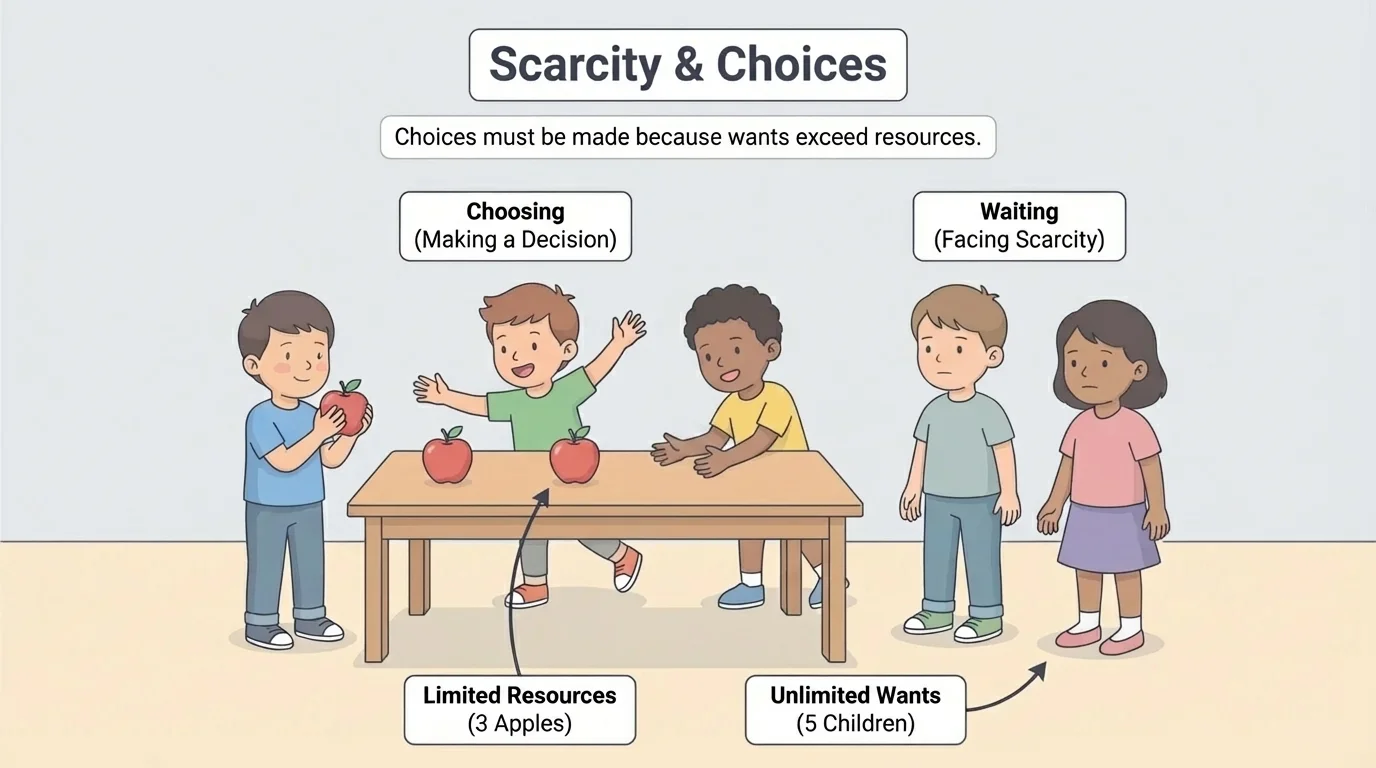
[Figure 1] What if there are only a few cookies left, but many people want one? Immediately, someone has to make a choice. That important idea is called scarcity. Scarcity means there is not enough of something for everyone to have all they want. People make choices every day because time, money, goods, and services can be limited.
Scarcity happens when people want or need something, but there is not enough for everyone. If there are only a few apples and many children, not everyone can get one right away. This does not mean apples are bad. It means the apples are limited.
Scarcity means there is not enough of something for everyone to have all they want. People must make choices because resources are limited.
Goods are things people can touch and use, like shoes, books, and food.
Services are jobs people do for others, like a doctor helping a patient or a bus driver taking children to school.
Scarcity can happen with many things. A store may have only a few bikes. A family may have only a certain amount of money. A class may have only one pair of scissors at a table. Even time can be scarce. If a child has only one hour after school, that child may not have time to play outside, read a book, and watch a show all in the same hour.
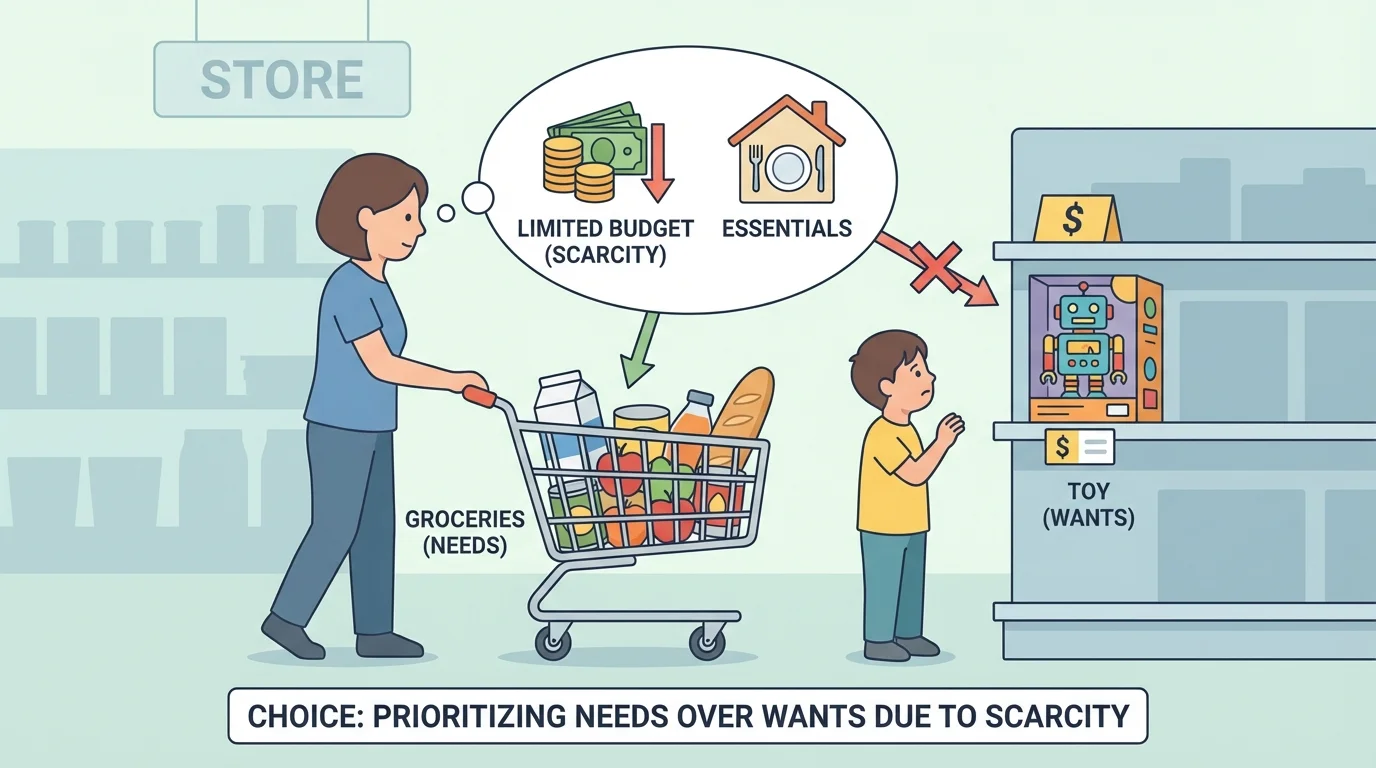
[Figure 2] Because of scarcity, people choose. They might wait, share, save, or pick something else. These choices happen at home, at school, in stores, and in the community.
Families make choices every day because money can be limited. If a family has enough money for groceries but not both groceries and a new toy, they may choose the groceries first. Food is something people need, so it often comes before a toy, which is usually a want.
A child may also make choices at home. If there is one banana left, the child may eat the banana now or save it for later. If there is enough money for one fun activity, the family may choose the zoo and skip the movie. If bedtime is soon, a child may choose to take a bath first and then have only a short time to play.
Sometimes scarcity means sharing. If two children want the same ball, they may take turns. If there is one tablet in the house, one child may use it now and another child may use it later. These are choices made because there is not enough for everyone to use the same thing at the same time.
Examples of choices at home
Step 1: A family has a little money for shopping.
Step 2: The family chooses milk, bread, and fruit before candy.
Step 3: The choice is made because money is limited.
This is a choice caused by scarcity.
People do not always choose the same way. One family may buy boots because it is cold outside. Another family may buy medicine first because someone is sick. In both cases, the idea is the same: they cannot buy everything at once.
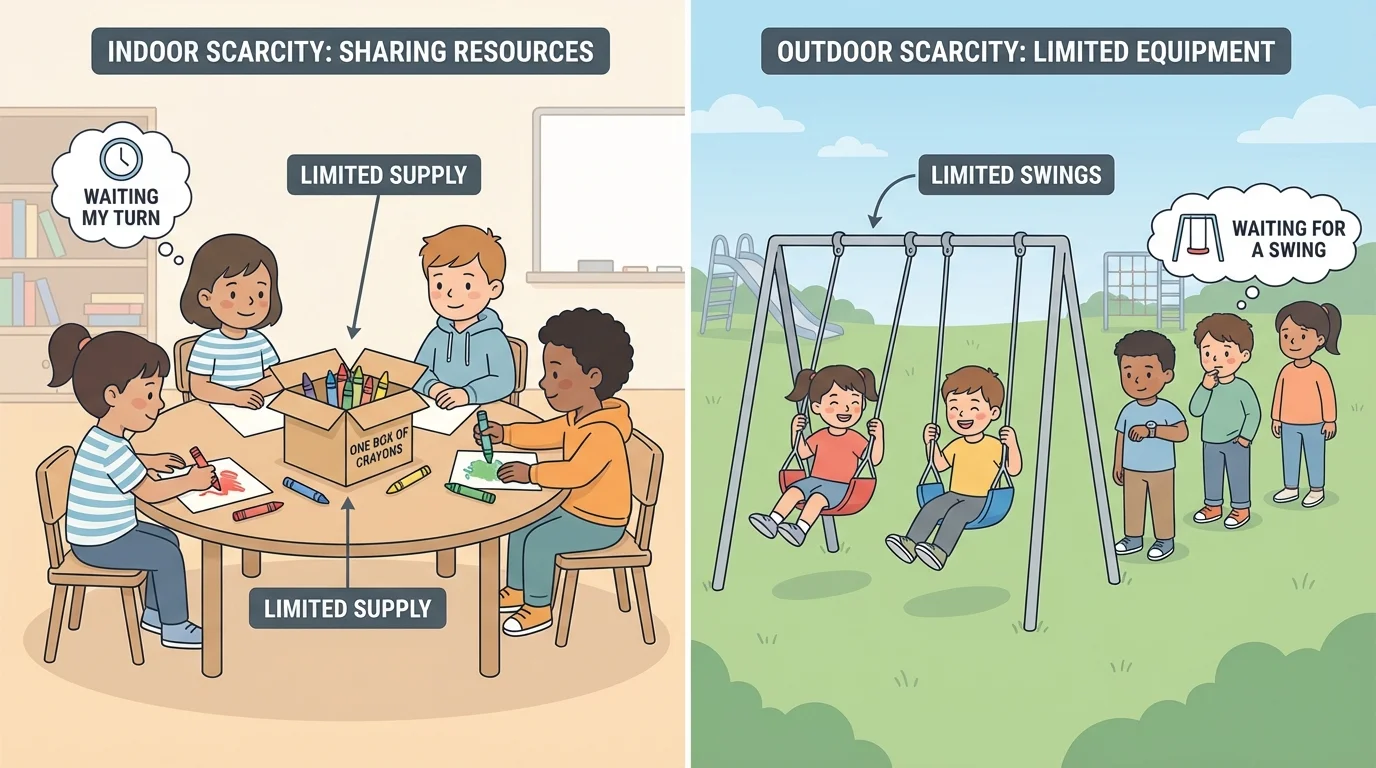
[Figure 3] Scarcity also happens at school. A class may have one box of markers for many students. Students may need to share colors, wait their turn, or choose crayons instead. If there are only a few library books about dinosaurs, some children may pick a different book while they wait.
At recess, there may be only two swings, but many children want to swing. Some children swing first, and others wait. In art class, there may be a limited number of glue sticks. The teacher helps students make fair choices so everyone can still learn and work.
Communities make choices too. A town may want a new park, better roads, and a bigger library, but there may not be enough money to do all of it at once. Leaders choose what to do first. They think about what people need most.
Time is a scarce resource too. Everyone gets 24 hours in a day, so choosing to do one activity means less time for another activity.
That is why communities often plan carefully. Just like a family chooses what to buy first, a community chooses what to build or fix first.
Needs are things people must have to live and stay safe, like food, water, clothing, and shelter. A want is something nice to have, like a game, a new stuffed animal, or extra dessert.
Scarcity helps people decide between needs and wants. If a family can buy only one thing, they may choose warm coats before a new toy. If a school can buy either more desks or fancy decorations, it will usually choose the desks first because students need places to sit and learn.
| Choice | Need or Want? | Why? |
|---|---|---|
| Buying bread | Need | Food helps people live and grow. |
| Buying a toy robot | Want | It is fun, but not necessary for living. |
| Fixing a roof | Need | Shelter keeps people safe and dry. |
| Getting extra candy | Want | It may be enjoyable, but it is not necessary. |
Table 1. Examples showing how people may choose needs before wants when resources are limited.
Needs often come first, but wants still matter. People enjoy fun things too. Scarcity does not mean people never get wants. It means they may have to wait, save money, or choose carefully.
When people choose one thing, they often give up another thing. That is called opportunity cost. For young learners, a simple way to say it is: what you do not choose.
Choosing one thing means not choosing another
If a child chooses to spend time drawing, that child may have less time to ride a bike. If a family buys school supplies first, it may wait to buy a game. The thing not chosen is what is given up.
For example, if you can choose one snack and you pick crackers, you do not get the apple at that time. If you choose to play on the slide, you are not using that same time on the swings. This idea helps us understand why choices matter.
The apple example from [Figure 1] also reminds us that when goods are limited, someone may need to wait or choose something else. The shopping scene in [Figure 2] shows the same idea with money, and the school-and-playground scene in [Figure 3] shows it with shared supplies and limited play equipment.
People do not all choose the same things because they do not all have the same needs. One child may choose boots because it is raining. Another may choose to eat lunch because they are hungry. One family may save money for rent. Another may save for a doctor visit. Scarcity is the reason choices must be made, but each person's situation helps decide which choice is best.
Resources are useful things people can use, such as money, time, water, food, and tools. When resources are limited, people think carefully. They may share, save, trade, wait, or choose the most important thing first.
When something is limited, people cannot always have everything at once. That is why making good choices is important.
Understanding scarcity helps children notice the world around them. At home, at school, and in the community, people are always making choices because goods, services, money, and time can be limited.
