Every day, people make choices about money. You might want a new toy, a sweet treat, or stickers. But your family also needs food, water, and a safe place to live. Knowing the difference helps you make smart decisions as you grow.
[Figure 1] A need is something you must have to live, stay safe, and stay healthy. Water, healthy food, clothes for the weather, and a home are needs. Without needs, life becomes hard or unsafe.
A want is something nice to have but not something you must have. A toy, a fancy dessert, glitter shoes, or a new game can be wants. Wants can be fun, but you can still be okay without them.
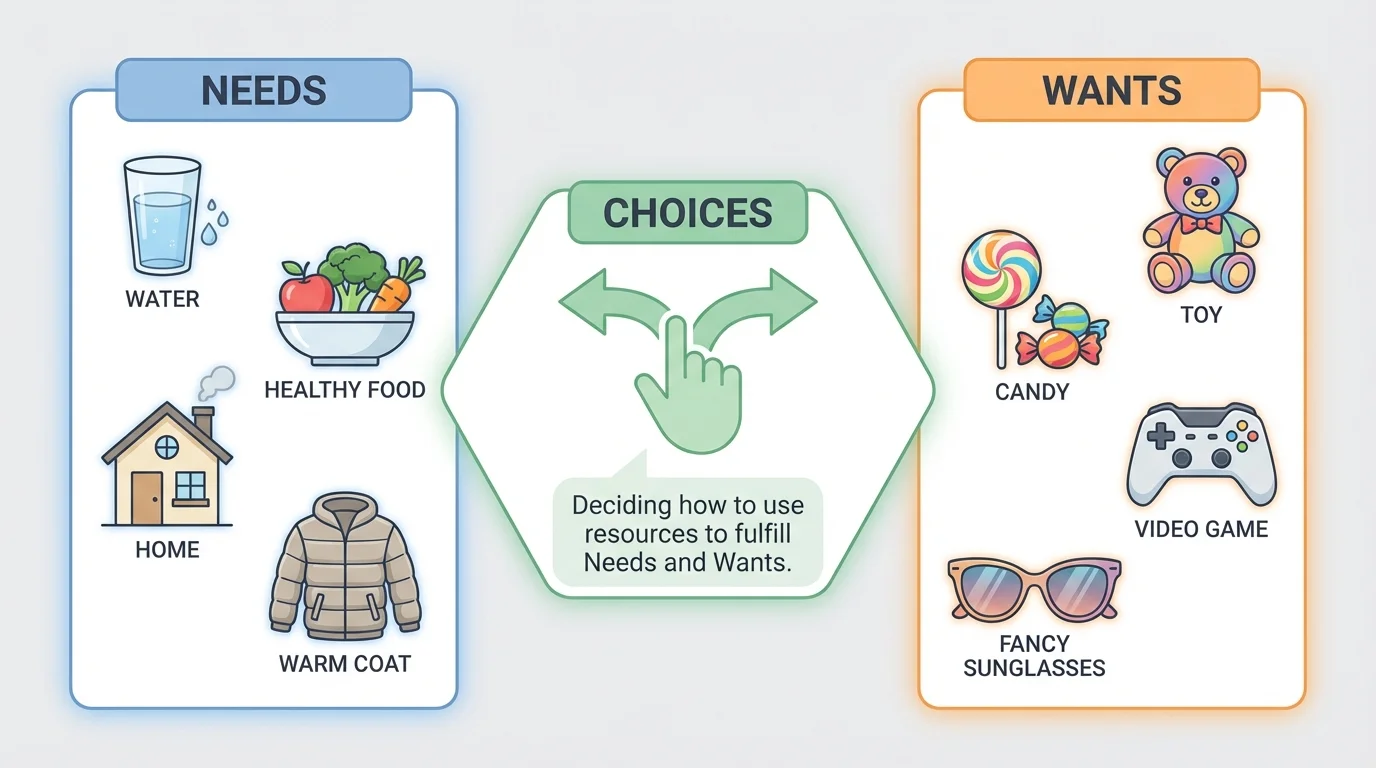
Need means something important for living, safety, or health.
Want means something extra that can bring fun or comfort, but you can live without it.
Choice means picking one thing from two or more options.
Sometimes one item can be a need or a want depending on the situation. Shoes are a need because you need to protect your feet. But a second pair of sparkly shoes when you already have shoes to wear is a want. This is why it helps to stop and think before deciding.
A choice happens when you decide what to do. If you have a little money, you may have to choose between buying a snack now or saving for something bigger later. You cannot always pick everything, so choices matter.
Good choices help you use money carefully. Poor choices can mean you spend all your money on wants and then do not have enough left for something important. You can practice this skill at home.
Your brain gets better at making decisions when you practice. Small choices today can help you make bigger, smarter choices when you are older.
When you ask, "Do I need this right now?" you are being thoughtful. That is an important financial habit.
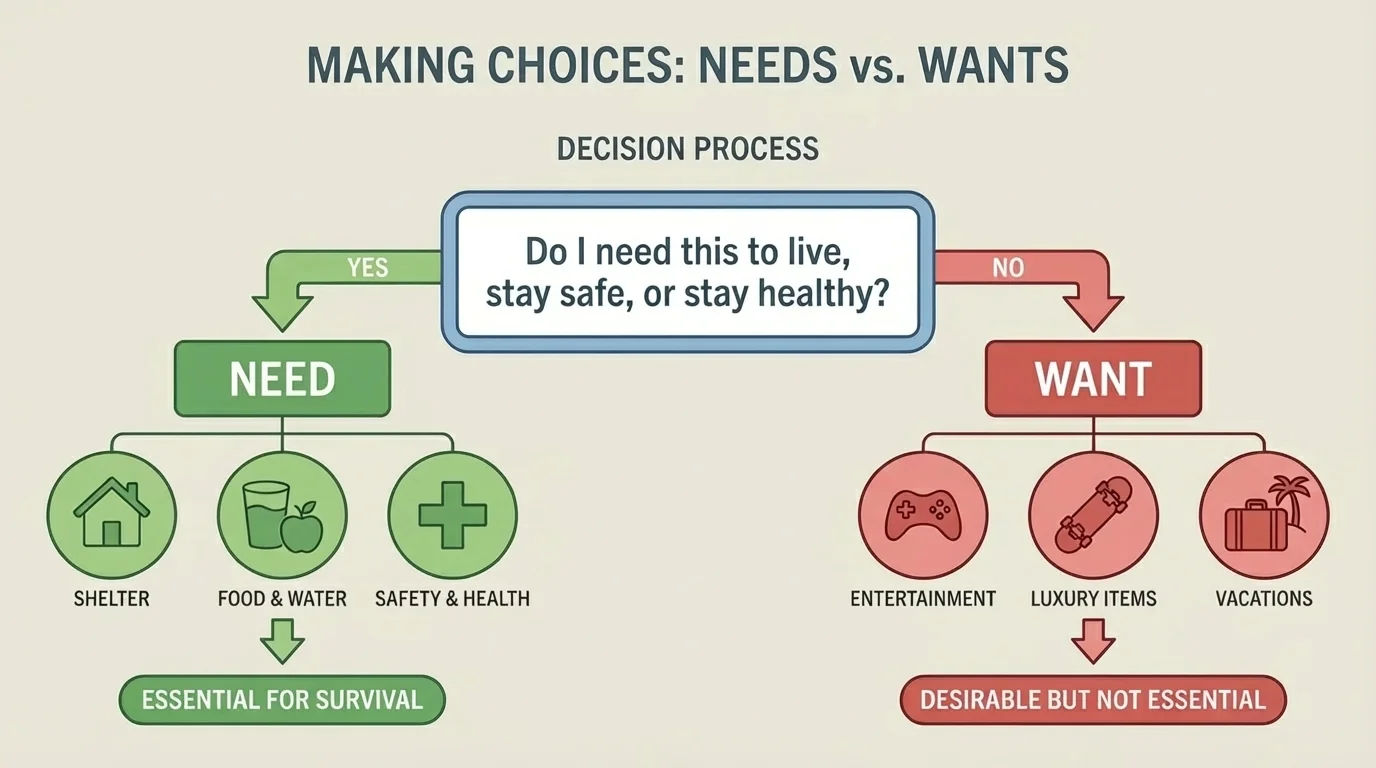
[Figure 2] It can feel tricky at first, but a simple decision-making guide can make it easier. You can ask easy questions before you spend money or ask an adult to buy something.
Step 1: Ask, "Do I need this to live?" Food and water are yes.
Step 2: Ask, "Do I need this to stay safe?" A coat in cold weather is yes.
Step 3: Ask, "Do I need this to stay healthy?" Soap or medicine can be yes.
Step 4: If the answer is no, it may be a want.
You can also ask, "Do I already have one that works?" If you already have crayons at home, a giant new crayon pack may be a want. If the crayons you use are broken and no longer work well, new crayons may be more important.
Sorting examples
Step 1: A glass of water
Water is a need because your body must have it.
Step 2: A teddy bear
A teddy bear is a want. It can be comforting and fun, but you do not need it to live.
Step 3: A raincoat on a rainy day
A raincoat can be a need if it helps keep you safe and warm.
Step 4: A second ice cream cone
That is a want. It is a treat, not something your body must have.
When you practice sorting things into needs and wants, choices become easier. The flowchart in [Figure 2] works best when you slow down and ask one question at a time.
[Figure 3] Needs, wants, and choices show up in real life all the time. When your family shops, they may buy bread, milk, fruit, and soap before buying cookies or a toy. That is because needs often come first. One small amount of money can lead to different choices.
If you have only a little money, you may need to decide whether to spend it now or save it for later. That choice can help you think about what matters most first.
If you get $5, you may want to spend all of it right away. For example, you could spend $2 on stickers and $3 on candy. Then your money is gone. But if you save the $5, you may be closer to something bigger you really want later.
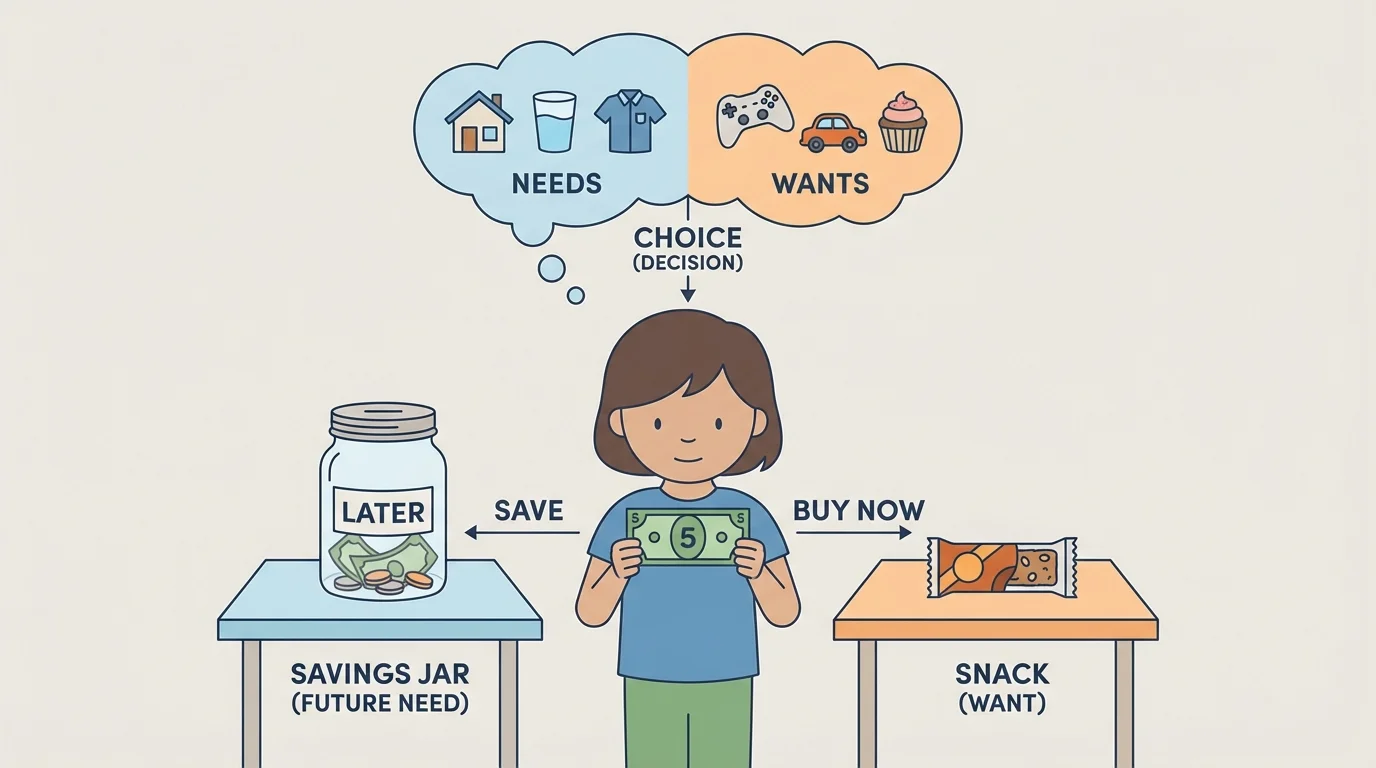
Saving means keeping money for later instead of spending it now. Saving can help with wants too, especially bigger ones. If a toy costs $10 and you have $5, then you still need \(10 - 5 = 5\) more dollars. Waiting can be hard, but saving helps you reach your goal.
Why needs usually come first
When people pay for needs first, they help themselves stay safe and healthy. After needs are covered, there may be money left for wants. This order helps families avoid bigger problems later.
Here is a simple comparison:
| Item | Need or Want? | Why? |
|---|---|---|
| Water | Need | Your body must have it. |
| Warm coat in winter | Need | It helps keep you safe and warm. |
| Toy robot | Want | It is fun, but not necessary. |
| An apple for a snack | Need | Food helps your body grow. |
| Extra candy | Want | It is a treat, not a must-have. |
Table 1. Examples of items sorted as needs or wants, with simple reasons.
Before you ask for something, stop and think. Ask yourself: "Is this a need or a want?" Then ask: "Do I need it now?" Last, ask: "Can I save for it?" These small questions help you make calmer choices.
You can use this when looking at books, snacks, clothes, art supplies, or games at home or in a store. The more you practice, the more confident you become.
"Use your money for what matters most first."
Making smart choices does not mean wants are bad. Wants can bring joy. The important part is knowing the difference and putting needs first. Later, when needs are covered, you can enjoy wants in a smart way.
