Have you ever used something and then looked back later and thought, "Who is going to put that away?" In a group, the answer is simple: everyone helps. When you share a table, art tools, game pieces, or an online group space, you also share the job of taking care of it. That is part of being responsible.
Responsibility means doing your part. It is not just an adult's job to fix every mess. It is not just one child's job either. When each person helps a little, the whole group space feels calmer, safer, and kinder.
Helping with cleanup and shared items is also part of being in a community. A community is a group of people who care for one another and the places they use together. Your family, a club, a sports team, a library group, or an online class group can all be communities.
Shared responsibility means that everyone helps care for things that belong to the group. Materials are the items people use, such as crayons, paper, books, or game pieces. Group space means a place people use together, like a table at home, a reading corner, or an online meeting space where people take turns and stay respectful.
When students share responsibility, they show respect. They also make it easier for everyone else to learn, play, and work. A clean space helps people find what they need. Returned materials help the next person be ready. Kind turn-taking helps everyone feel included.
[Figure 1] Sometimes shared things are easy to see. You might share markers with a sibling, use family scissors for a project, or sit at the same table where someone else will work later. You may also share digital group spaces, like a video call where everyone needs a turn to speak and listen.
There are three big parts of sharing responsibility: cleanup, materials, and group space. Cleanup means putting things away and leaving the area neat. Materials means using supplies carefully and returning them. Group space means keeping the place fair, calm, and ready for everyone.
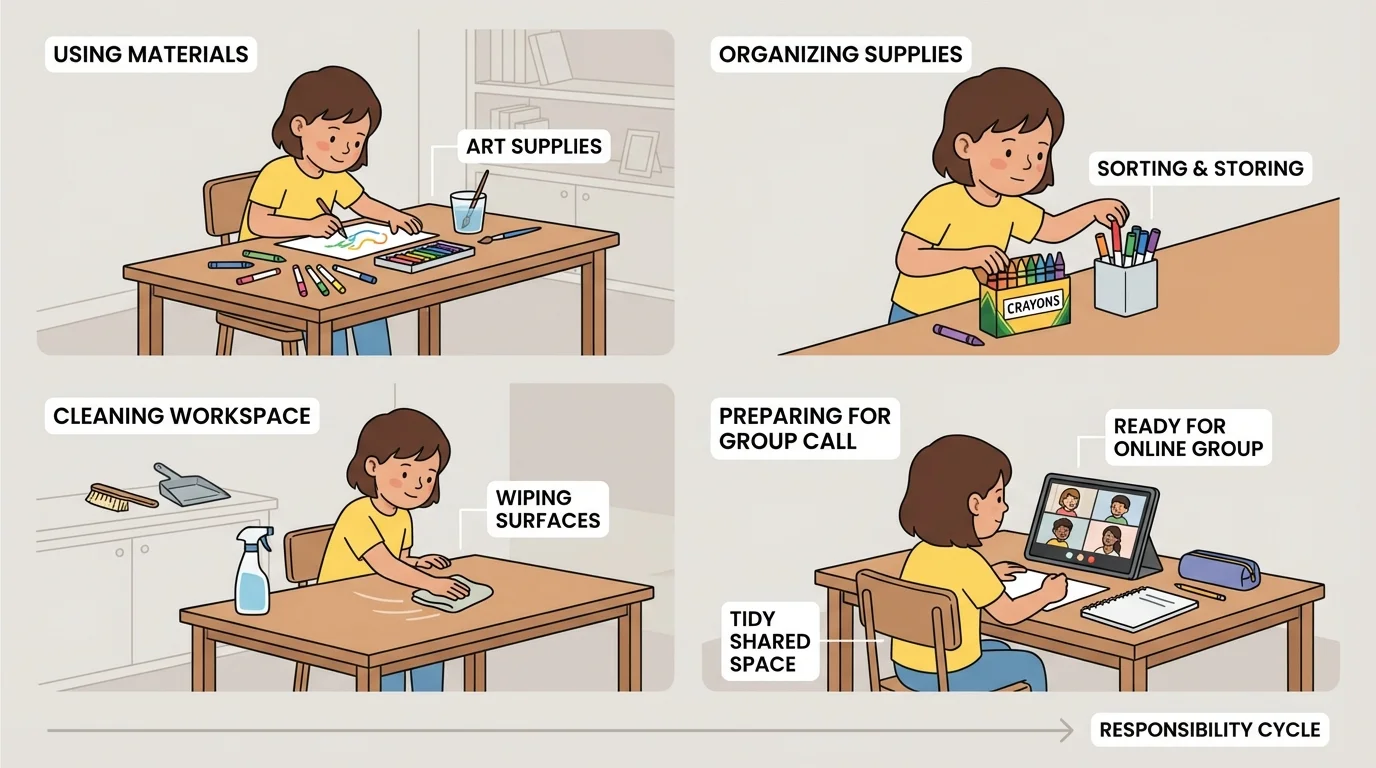
If you leave a mess behind, someone else must stop what they are doing to clean it. If you leave the glue cap off, the glue may dry up. If you talk over others in an online group, people may feel left out. Small choices can help or hurt the whole group.
Taking care of shared things does not mean being perfect. It means noticing what needs to be done and trying to help.
[Figure 2] There is a simple routine you can follow every time you use shared items: use it, clean it, return it, check the space. This routine works for crayons, books, craft tools, toys, and even digital spaces.
Before you begin, look at what you are using. Ask, "Do I have permission?" and "Where does this go when I am done?" Knowing the right place now makes cleanup easier later.
While you use it, be careful. Carry items with two hands if needed. Put lids back on. Keep pieces together. If you are in an online group, stay focused, mute when needed, and wait for your turn.
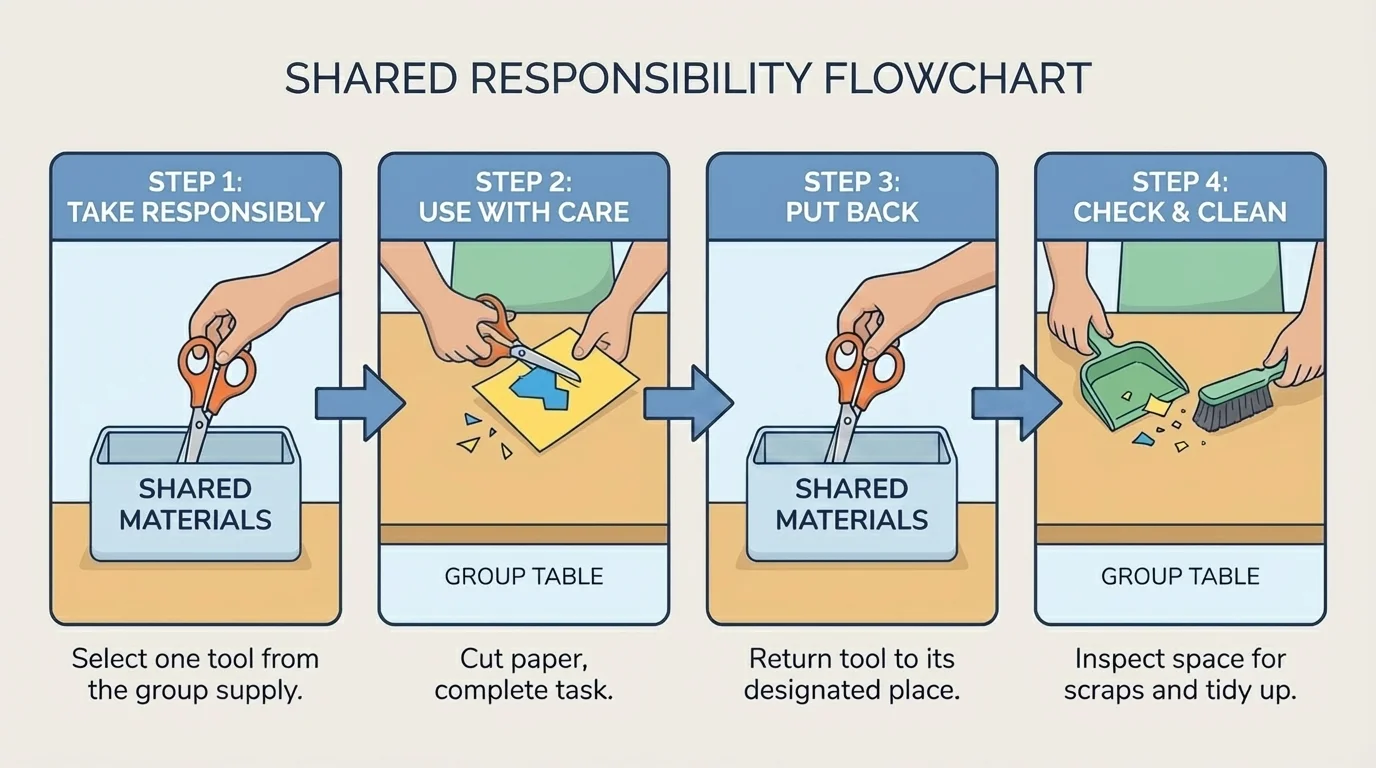
When you finish, do four quick things. First, put materials back where they belong. Second, throw away trash or scraps. Third, wipe or straighten the space if needed. Fourth, look around one more time. That final check is important. Sometimes one missing pencil or one forgotten paper is still part of your job.
Example: After an art activity at home
Step 1: Gather the supplies.
Pick up the crayons, glue, paper, and scissors.
Step 2: Put each item back.
Crayons go in the box. Scissors go in the drawer. Paper goes in the folder.
Step 3: Clean the area.
Throw away tiny scraps and wipe the table.
Step 4: Check your work.
Look under the chair and on the floor for anything left behind.
This helps the next person use the space right away.
A good helper does not wait to be told every single step. If you notice a mess that you helped make, start fixing it.
[Figure 3] Fairness means everyone gets a chance. In a shared space, being fair might mean taking turns with supplies, sharing speaking time on a video call, or letting another person use the table when you are done.
Sometimes fairness means waiting. You may want the favorite marker or the best seat right away. But if someone else is using it, the fair choice is to wait calmly or choose something else for now.
Sometimes fairness means helping. If another child is cleaning up blocks, you can carry a few too. If someone forgets where the markers belong, you can kindly show them. Helping does not mean bossing. It means working together.
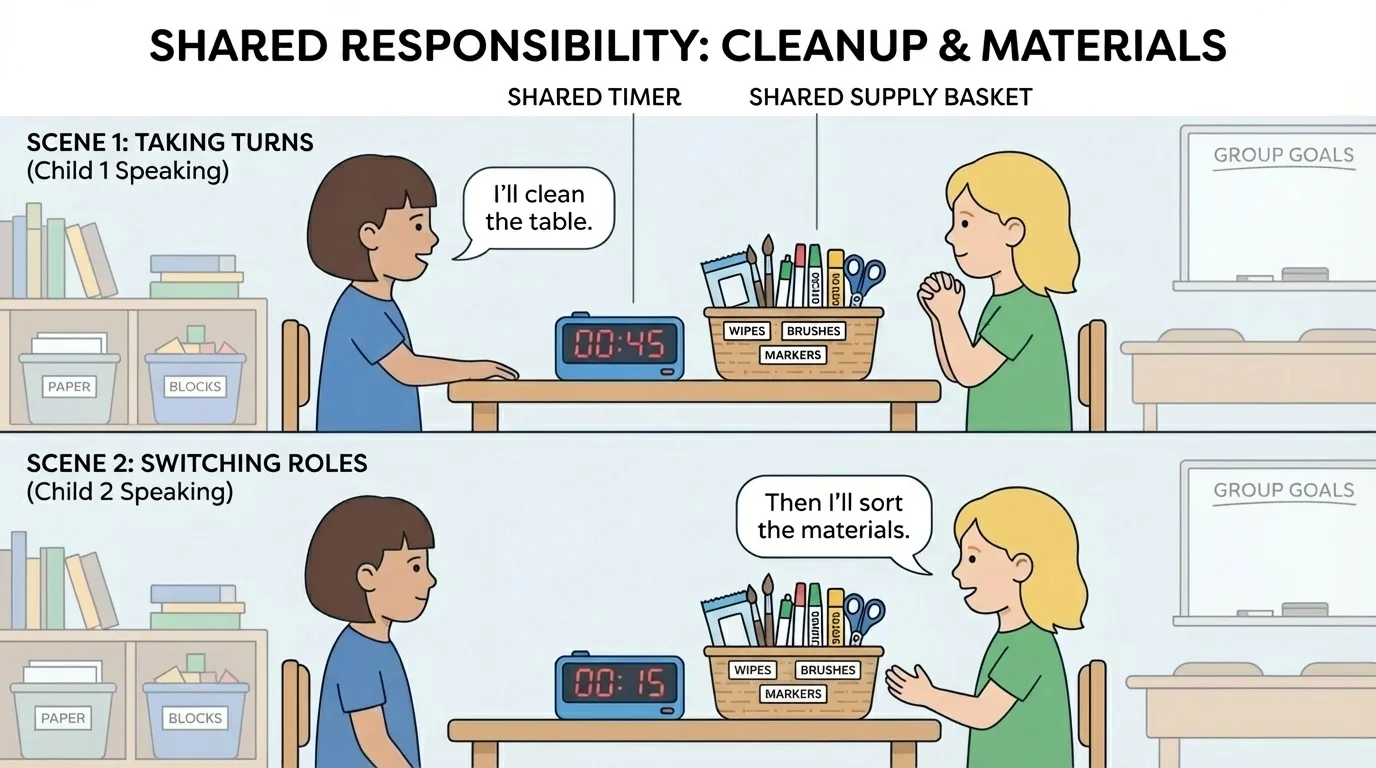
You can also use a simple turn-taking plan. One person uses an item first, then the next person uses it after. In an online group, one person talks, then stops so the next person can speak. That keeps the group calm and respectful.
Being fair does not always mean the exact same thing.
Sometimes two people need the same amount of time. Sometimes one person needs help first because they are cleaning up a bigger mess. Fairness means thinking about what helps the whole group, not only what you want at that moment.
Later, when you are part of bigger groups in your neighborhood, clubs, and teams, these same habits still matter. People trust group members who share, wait, and help.
[Figure 4] Shared responsibility matters because the results are easy to see. When everyone helps, spaces stay ready to use. When no one helps, things get messy, lost, or broken.
Think about two different afternoons. In the first one, children finish a project, close the markers, stack the papers, and wipe the table. The next person sits down and begins right away. In the second one, caps are off, scraps are everywhere, and supplies are missing. Now the next person must clean before they can start.
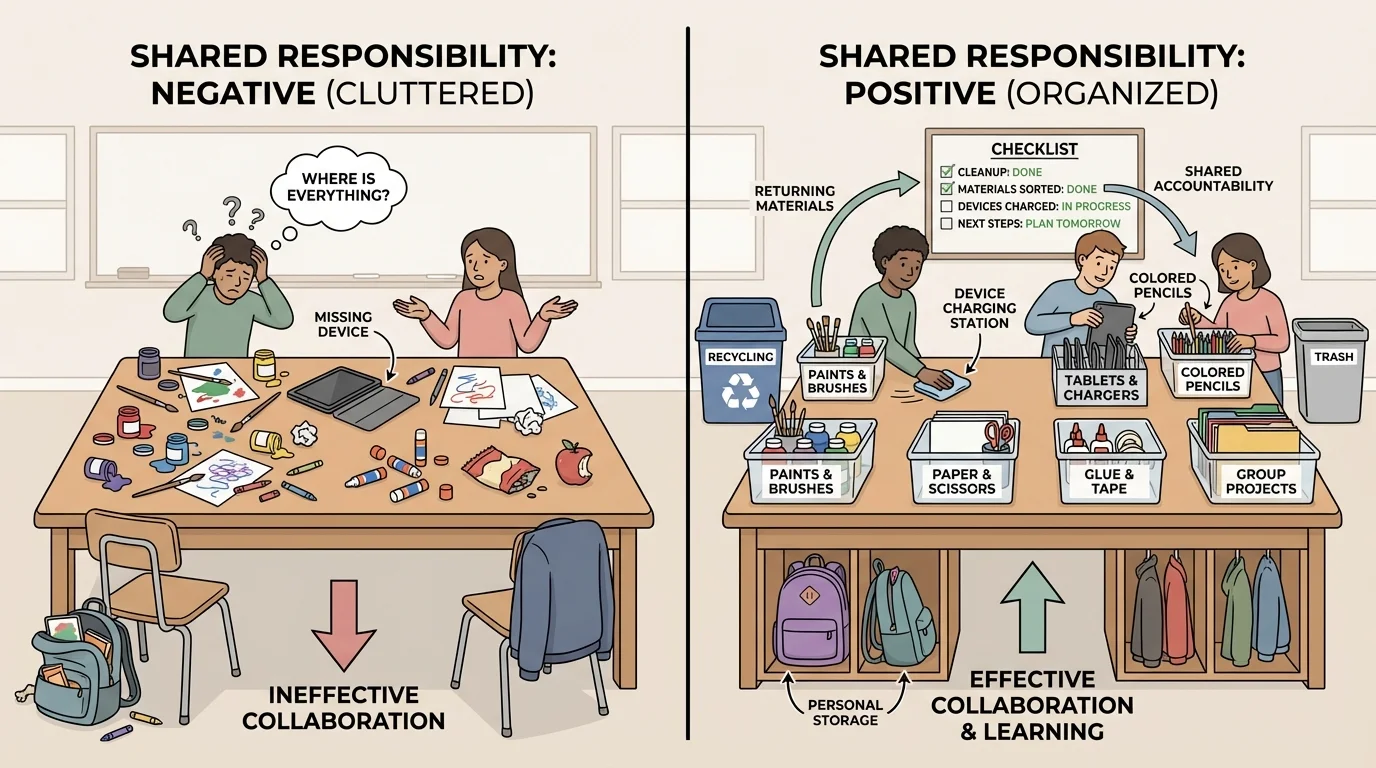
When people do not help, others may feel frustrated. Materials may get ruined. Time gets wasted. The group may have fewer supplies next time. But when people do help, everyone can find what they need, feel respected, and enjoy the space more.
Small jobs make a big difference. Putting away just one item, tossing one scrap, or waiting one quiet turn helps the whole group work better.
This is one way students practice being good citizens. Good citizens care for shared places and think about other people, not only themselves.
Sometimes responsibility sounds like action, and sometimes it sounds like words. You can use kind, clear words to make sharing easier.
Try saying: "I'm done. I'll put this back." "Can I use this when you finish?" "Let's clean up together." "It goes in this bin." "It's your turn now." These words are polite and helpful.
If there is a problem, stay calm. You can say, "We both need it. Let's take turns." If the space is messy, you can say, "I see scraps on the floor. I can help pick them up." These are responsible words because they help solve the problem.
The habits you practice now can grow stronger every year. Cleaning up after yourself, returning materials, and respecting group spaces are not just school skills. They are everyday life skills. You will use them at home, in clubs, on teams, at the library, and in your neighborhood.
As [Figure 1] shows, even simple acts like putting supplies back and wiping a table help everyone. The same idea grows bigger as you grow. Caring for shared things teaches trust. Taking turns teaches patience. Helping clean teaches that communities work best when people join in.
Try This: The next time you finish using a shared space, pause for a final look. Ask yourself three questions: Did I put things back? Did I clean my mess? Is the space ready for the next person? If the answer is yes, you have done your part.
"Do your part, even when it is a small part."
Responsibility often starts with a very small choice. Put away the pencil. Close the glue. Wait your turn. Listen when someone else speaks. Little choices like these help a whole group feel safe, fair, and cared for.
