A lot of people think being "independent" means handling everything alone. In real life, that idea can be harmful. Strong self-management is not about never needing help. It is about noticing what you can handle, using healthy strategies, and recognizing when the smart move is to bring in support before a problem gets worse.
If you are learning online from home, this matters even more. It can be easier for struggles to stay hidden when no one sees you in person every day. Missed assignments, disrupted sleep, panic before a video call, emotional shutdown, constant conflict at home, or feeling out of control on social media can build quietly. The key life skill is not pretending you are fine. The key life skill is evaluating the situation honestly and responding early.
Self-management includes how you organize your time, handle stress, regulate emotions, solve problems, recover from setbacks, and make safe decisions. You are expected to build these skills over time. You are not expected to handle every challenge by yourself, especially when the challenge starts affecting your health, safety, or ability to function.
Think about it this way: if your phone battery is draining too fast, you do not blame the phone for needing a charger. You connect it to power. People also need support systems. Trusted adults and professionals can help you see problems more clearly, make a plan, protect your safety, and get access to resources you may not be able to get on your own.
"Asking for help is not giving up. It is refusing to stay stuck."
When support is used well, problems often become more manageable faster. When support is delayed, smaller issues can grow into crises. That is why learning when to reach out is a practical life skill, not a weakness.
Some self-management problems are obvious, like missing deadlines for two weeks straight. Others are quieter. You may still be getting some work done, but only by sleeping too little, skipping meals, ignoring messages, or feeling constantly on edge. The challenge is not only what people can see. It is also what the struggle is costing you.
A self-management challenge can show up in different ways:
Not every challenge means you need professional help right away. Sometimes a reset in routines, sleep, boundaries, and support from a trusted adult is enough. But sometimes the pattern is bigger than a simple reset.
Trusted adult means a responsible person who cares about your well-being and can take action to support or protect you, such as a parent, guardian, relative, mentor, coach, youth leader, doctor, or school counselor connected to your online program.
Professional support means help from a trained person such as a therapist, counselor, psychologist, doctor, psychiatrist, social worker, or crisis specialist.
Urgent risk means a situation when someone's safety may be in immediate danger, including thoughts of self-harm, threats of violence, abuse, overdose, or a medical emergency.
The goal is to notice not only the challenge itself, but also its pattern: how often it happens, how intense it is, how long it lasts, and how much it interferes with your life.
[Figure 1] One of the most useful ways to judge a struggle is to ask three questions: How long has this been happening? How intense is it? How much is it affecting daily life? A rough week after a deadline pileup is different from a month of feeling unable to function.
Duration matters. If you are stressed for a day or two because of a project, that may be normal. If the same problem keeps showing up for weeks, the pattern deserves attention. Intensity matters too. Feeling nervous before a presentation is common. Having panic symptoms so strong that you cannot log in, speak, or recover afterward is different. Impact matters most of all. If the problem is hurting your sleep, health, learning, relationships, or safety, it has crossed an important line.
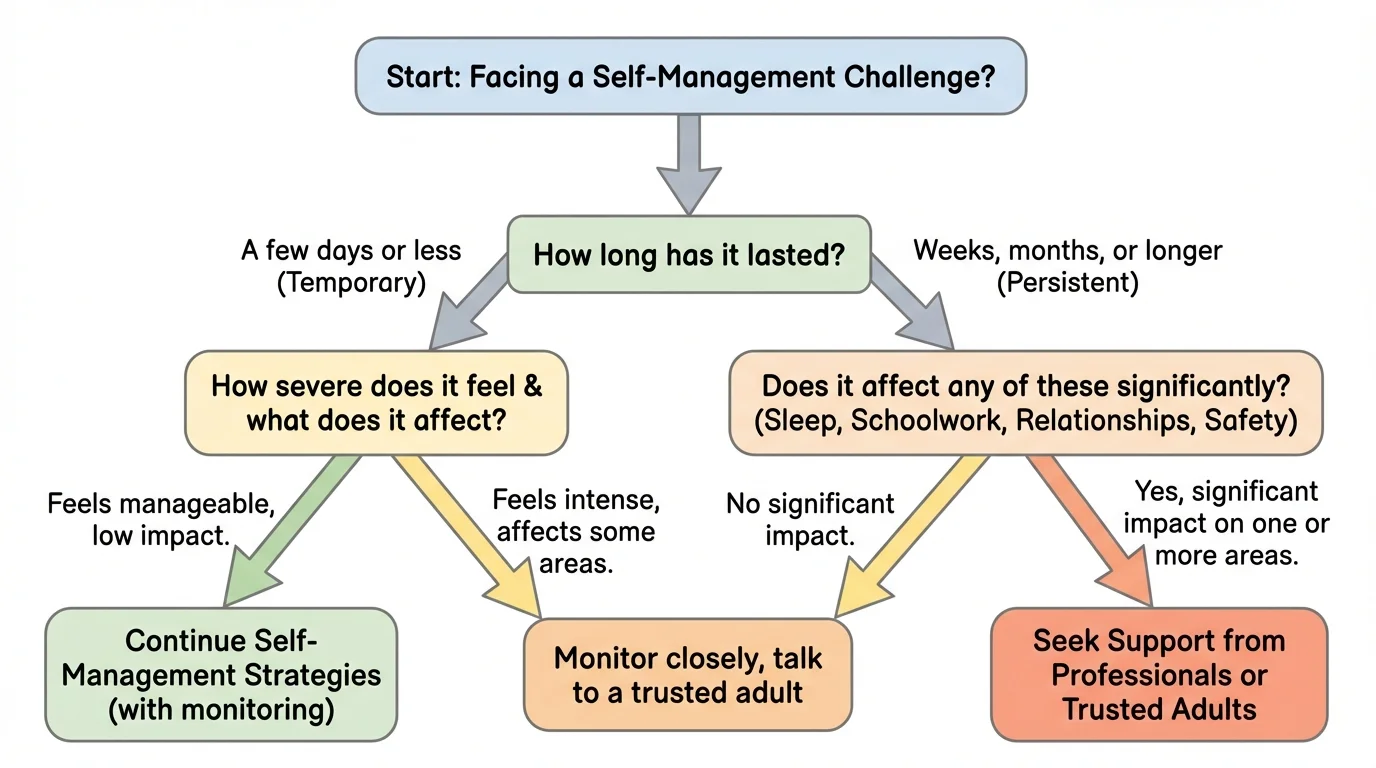
Here is a practical test: ask yourself whether your current strategies are actually working. If you have tried the basics for several days or weeks—sleeping more consistently, limiting distractions, taking breaks, using a planner, exercising, talking to someone you trust—and the problem is not improving, support is probably needed.
Another test is whether you are starting to lose control over important areas of life. Maybe you keep promising yourself you will catch up tomorrow, but that tomorrow never seems to come. Maybe your emotions feel so big that one small comment online ruins your whole day. Maybe you cannot focus because home stress is taking over everything. These are signs that self-management alone may not be enough.
Use the "duration, intensity, impact" filter. A challenge deserves extra support when it lasts longer than expected, feels stronger than you can regulate safely, or interferes with basic functioning. You do not need all three to be true. Even one can be enough if safety or health is affected.
You do not need a perfect diagnosis to ask for help. You only need enough honesty to admit, "This is affecting me more than I can manage well on my own."
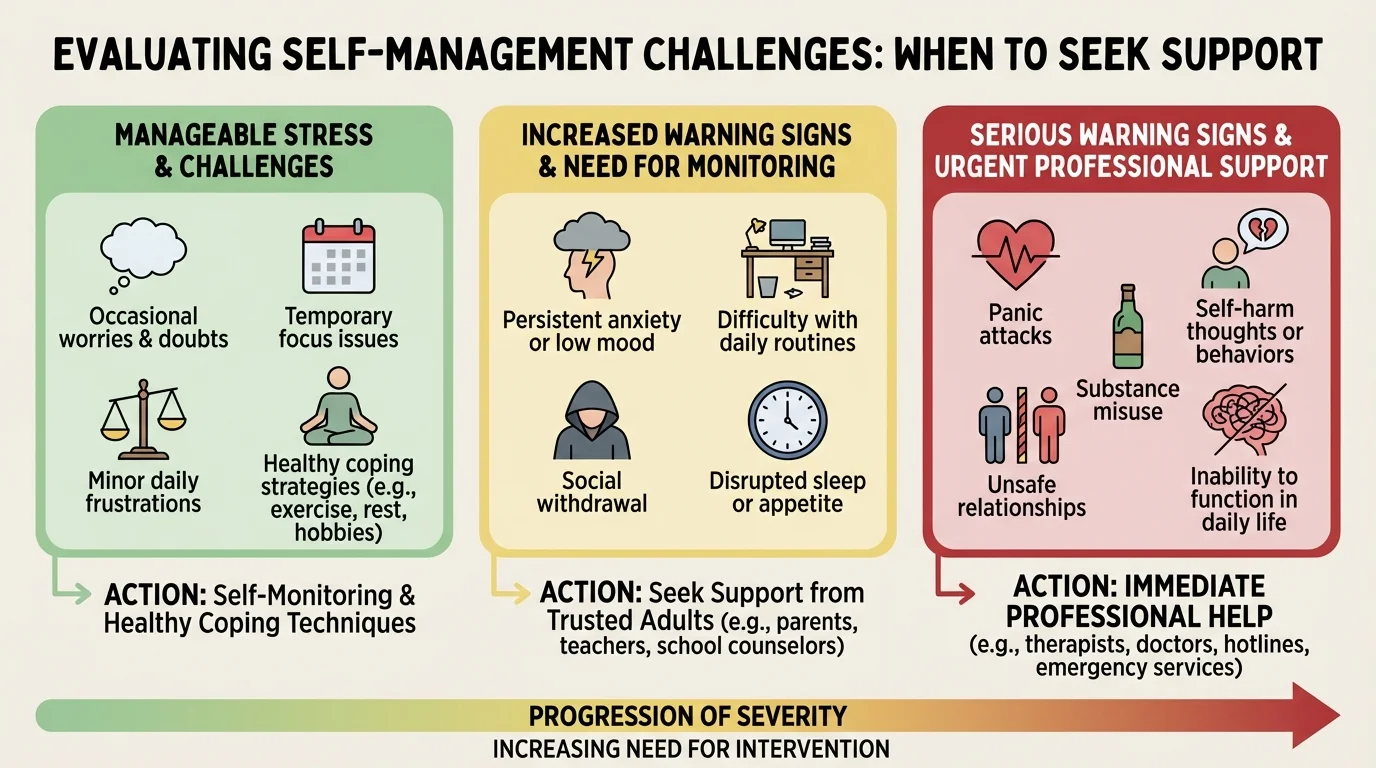
[Figure 2] Some situations move beyond "I am struggling" into "I should involve someone now." When safety concerns, severe mental health symptoms, or major loss of functioning appear, trusted adults or professionals should be involved quickly.
Red flags include thoughts of hurting yourself, thoughts of suicide, harming someone else, panic attacks that keep happening, not sleeping for long periods, severe depression, drastic eating changes, substance misuse, abusive relationships, sexual coercion, threats at home, or feeling unable to do basic daily tasks like getting out of bed, eating, showering, or responding to essential messages.
Another major warning sign is secrecy driven by fear. If part of you is thinking, "I cannot tell anyone because they will stop me," that may mean the situation is already unsafe. Problems grow in secrecy. Safety grows when responsible people know what is happening.
| Situation | Likely Support Needed |
|---|---|
| Temporary stress, mild frustration, a few missed tasks | Self-management strategies and check-in with a trusted adult if needed |
| Repeated overwhelm, frequent shutdowns, conflict, ongoing inability to keep up | Trusted adult support and possibly counseling or medical advice |
| Panic attacks, severe depression, dangerous coping, abuse, unsafe home situation | Immediate adult involvement and professional support |
| Self-harm thoughts, suicidal thoughts, threats of violence, overdose, medical emergency | Emergency help right away |
Table 1. Levels of concern and the type of support they usually require.
If you ever think you might act on a self-harm thought, or if someone else is in immediate danger, skip the "maybe I should wait" stage. Contact emergency services, a crisis line, a guardian, or another responsible adult immediately. Fast action is the correct action.
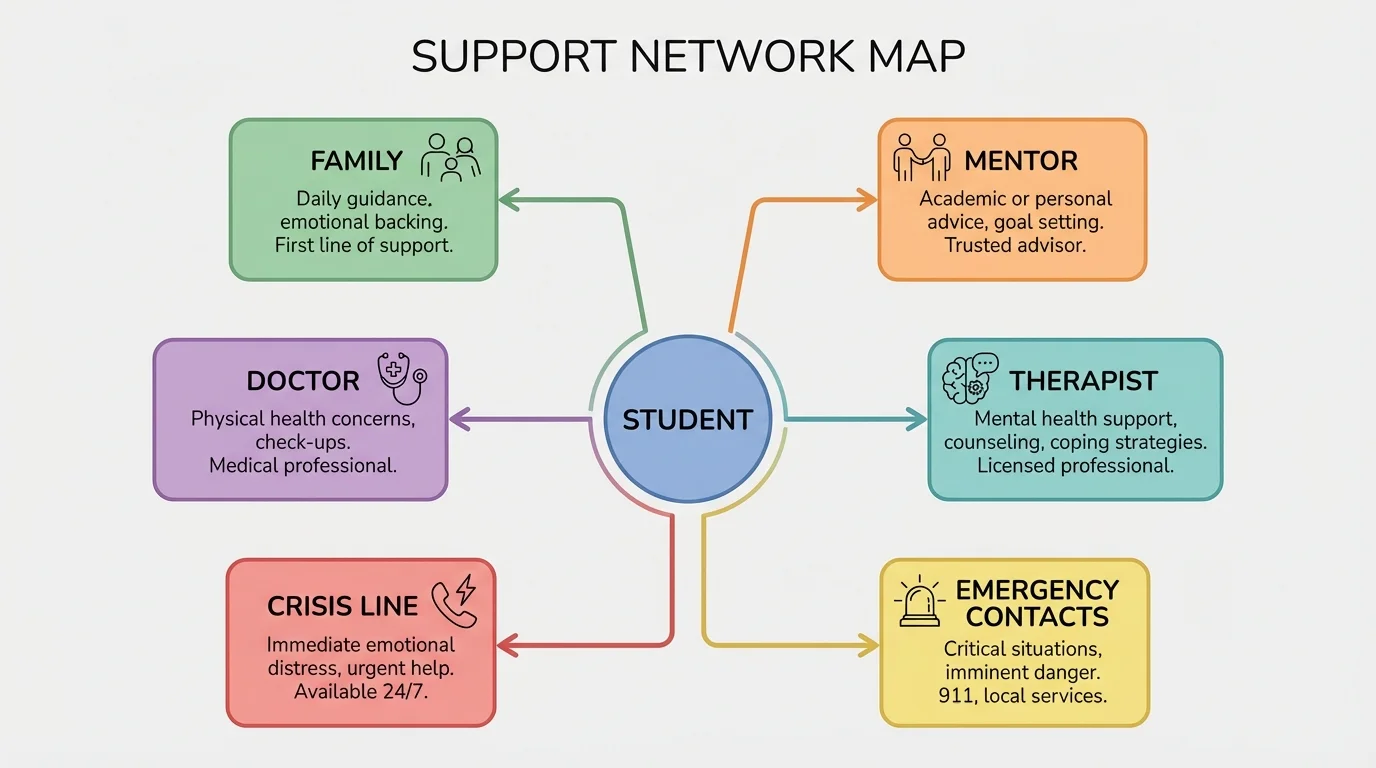
[Figure 3] Different problems need different kinds of support. A trusted adult can help with immediate stability: listening, helping you make a plan, contacting services, changing routines, setting boundaries, or stepping in if a situation is unsafe. A professional can offer assessment, treatment, coping strategies, medical care, or formal mental health support.
Your support options might include a parent or guardian, another relative, a mentor, your online school counselor, a teacher or advisor from your online program, a doctor, a therapist, a social worker, a youth leader, or a community mentor. If one person does not respond well, that does not mean help is unavailable. It means you may need a different support person.
Many people first reach out for mental health support because of a practical problem such as sleep trouble, falling behind, stomach pain, or constant irritability. Emotional struggles often show up through everyday functioning before a person has words for what is wrong.
Professionals do different jobs. A doctor can check whether physical issues like sleep disorders, hormone changes, medication side effects, or nutrition problems are affecting your mood or focus. A therapist or counselor can help with anxiety, depression, trauma, stress, coping skills, and relationships. A psychiatrist can assess whether medication may help in some cases. Crisis counselors focus on immediate safety and next steps.
It also helps to know what support cannot do. Adults cannot always fix everything instantly. But they can reduce isolation, improve safety, and help you move from confusion to a plan. That alone can change the situation.
When stress is high, decision-making gets harder. That is why a simple process helps. You do not need a perfect system. You need a repeatable one.
Use this decision process whenever a challenge feels too big, too long, too intense, or too risky.
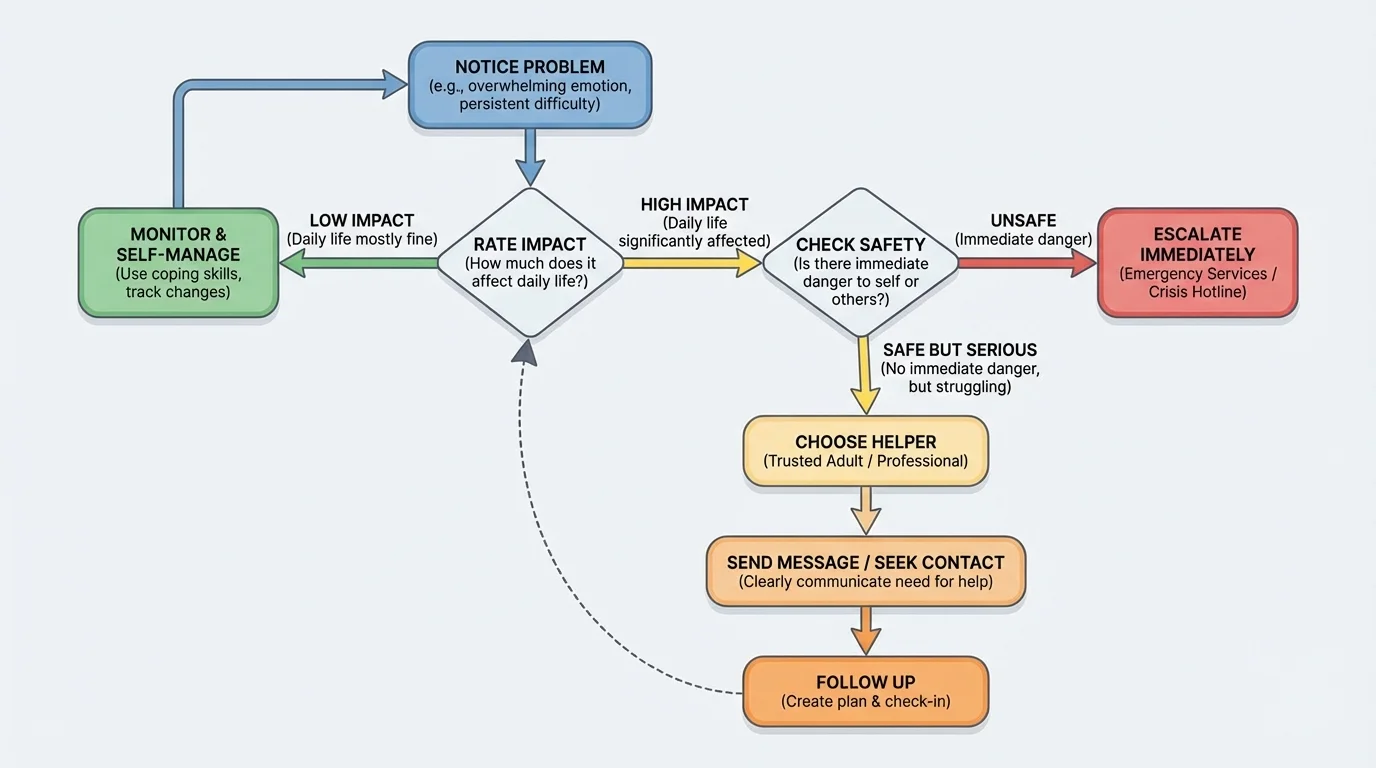
Step 1: Name the problem clearly. Instead of saying, "Everything is bad," try: "I have missed four assignments, I am sleeping only a few hours, and I feel anxious every night." Clear language makes help easier.
Step 2: Check safety first. Ask: "Am I safe? Is someone else safe?" If the answer is no, contact emergency help or a trusted adult immediately.
Step 3: Measure impact. Ask whether the problem is affecting sleep, eating, focus, health, relationships, or safety. The more areas affected, the more likely outside support is needed.
Step 4: Look at time. Has this lasted a day, a week, or several weeks? Longer patterns usually need more support.
Step 5: Choose the right helper. For workload stress, start with a trusted adult or school contact. For persistent anxiety, depression, or trauma, involve a mental health professional. For safety issues, involve emergency support.
Step 6: Reach out directly. Send a text, email, or message. Do not wait until you have the "perfect" words.
Step 7: Follow up. If the first person does not respond or minimizes the issue, contact someone else. Support-seeking sometimes takes persistence.
Quick decision example
You have been feeling exhausted, crying often, and missing deadlines for three weeks. You keep telling yourself to push through, but things are getting worse.
Step 1: Name it clearly.
"For three weeks I have been overwhelmed, behind in schoolwork, and emotionally drained."
Step 2: Check safety.
There are no self-harm thoughts, but functioning is clearly dropping.
Step 3: Choose support.
This is more than a rough day, so you tell a guardian and request help from a counselor or doctor.
The key is not to wait for a collapse before speaking up.
If you look back at the duration-intensity-impact filter from [Figure 1], this process simply turns that judgment into action.
One reason people delay help is that they do not know how to begin. You do not need a dramatic speech. Short, clear messages work well.
Here are useful formats:
If speaking feels hard, write down three facts before the conversation: what is happening, how long it has been happening, and what kind of help you think you need. For example: "I feel anxious most nights, this has been going on for a month, and I need help making a plan."
You do not have to prove that your struggle is "serious enough" before asking for support. The point of support is to prevent things from getting worse, not to wait until they become unbearable.
Be honest rather than polished. Adults and professionals do not need you to explain everything perfectly. They need enough information to understand the problem and help you take the next step.
These situations are common, and each one requires a slightly different response.
Scenario 1: Constant anxiety before online classes or video calls. If you feel nervous sometimes, you might use breathing, preparation, and gradual practice. If you are regularly avoiding attendance, feeling sick before calls, or panicking during them, it is time to involve a trusted adult and likely a counselor.
Scenario 2: Falling behind and unable to catch up. If you missed one deadline because of poor planning, you can probably recover with a schedule reset. If you have missed many tasks, cannot start work, and feel frozen whenever you open your course platform, the issue may involve stress, anxiety, depression, or executive functioning problems. Reach out early instead of hiding.
Scenario 3: Anger that damages relationships. If you are snapping at people online, sending regretful messages, or escalating every disagreement, this is not just a communication issue. It may be an emotional regulation problem. A trusted adult can help with boundaries and accountability; a therapist can help with triggers and coping.
Scenario 4: Home stress is making it impossible to function. If conflict, instability, or fear at home is affecting your sleep or concentration, this is not something you are expected to solve alone. Tell a trusted adult, counselor, or another responsible person outside the home if needed.
Scenario 5: You have thoughts of hurting yourself. This is immediate-support territory. Contact a trusted adult, crisis line, doctor, or emergency service right away. Do not keep this to yourself, even if part of you wants to disappear or avoid being a burden.
Case study: choosing the right level of help
Maya has been staying up until nearly morning scrolling on social media because she feels too anxious to sleep. Her grades are slipping, and she has started ignoring friends because every message feels exhausting.
Step 1: Evaluate the pattern.
This is ongoing, not a one-night issue. It affects sleep, schoolwork, and relationships.
Step 2: Decide whether self-management alone is enough.
Basic strategies have not fixed the problem, so outside support is needed.
Step 3: Choose helpers.
Maya tells a guardian and asks to speak with a counselor or doctor.
This is a good example of seeking support before the situation turns into a crisis.
The risk scale in [Figure 2] helps here: not every serious issue is an emergency, but anything that keeps escalating should move you toward adult or professional support.
A major barrier is stigma, which means negative judgment or shame around a problem. Some people worry that needing help means they are weak, dramatic, lazy, or broken. That is false. Human beings need support in different seasons of life.
Another barrier is fear of consequences. You might worry that adults will overreact, judge you, tell others, or take away independence. Sometimes people also minimize their struggle because "other people have it worse." But pain does not need to win a competition before it deserves care.
A third barrier is the belief that you should solve it yourself because you are almost an adult. Real maturity is not silent suffering. Real maturity is knowing when a problem is beyond your current tools.
Independence includes interdependence. Healthy adults do not handle every crisis alone. They build networks, ask for advice, use medical care, and seek expert help when needed. Learning this now prepares you for adult life.
If privacy is your concern, you can still start small. You might say, "I am not ready to share every detail, but I need help because I am not managing well." That is enough to open the door.
[Figure 4] A written support plan makes action easier when stress is high, and a support map can organize who to contact at different levels of need. When people are overwhelmed, they often forget names, numbers, or next steps. A plan reduces that problem.
Your support plan should include who you contact for different situations: everyday stress, ongoing mental health concerns, and emergencies. It should also include your warning signs and a few coping actions that help while support is being arranged.
You can build a practical plan like this:
Store this plan where you can access it fast: your phone notes app, printed paper near your desk, or a shared family safety document. Update it if phone numbers, providers, or trusted adults change.
Later, when you review your support map from [Figure 4], ask yourself one important question: "If things got worse tonight, would I know exactly who to contact?" If the answer is no, your plan needs one more round of preparation.
There is no prize for waiting until a problem becomes unbearable. Good self-management includes self-awareness, honesty, and timely help-seeking. The earlier you recognize when a challenge has moved beyond your current capacity, the more options you usually have.
