People often think leadership begins when someone gets a title: manager, captain, organizer, supervisor. Real life usually works the other way around. Long before anyone gives you a title, other people notice whether you show up on time, communicate clearly, solve problems calmly, and make group situations easier instead of harder. That is leadership. If you can do those things well, you are already building the skills adults use in jobs, households, volunteer projects, and collaborative settings.
At this stage of life, these skills matter immediately. You may be balancing coursework, part-time work, helping family, applying for jobs, joining community groups, or coordinating plans online. In all of those settings, people depend on one another. When leadership and teamwork are strong, tasks get done, stress stays lower, and trust grows. When they are weak, deadlines get missed, resentment builds, and small problems turn into bigger ones.
Leadership is not the same as control. It is the ability to move yourself and sometimes a group toward a useful goal in a responsible way. Sometimes that means taking charge. Other times it means staying organized, asking a smart question, keeping people informed, or noticing a problem before it becomes urgent.
Think about common adult situations. A leader might be the roommate who notices the cleaning schedule is failing and proposes a better system. It might be the employee who tells the team early that a shipment will arrive late instead of waiting until the last minute. It might be the volunteer who keeps track of who is bringing supplies to a donation drive. In each case, the person is helping the group function.
Leadership means guiding actions toward a goal through responsibility, communication, and sound judgment.
Teamwork means people coordinating their efforts to reach a shared result.
Initiative means acting without waiting to be told every next step.
Accountability means owning your actions, decisions, and follow-through.
One reason these skills matter so much is that adult life rarely gives you perfect instructions. You will often need to notice what needs to be done, decide what matters first, and work with people whose styles differ from yours. That is why leadership and teamwork are practical survival skills, not just résumé words.
Strong leadership begins with understanding the goal, the people involved, and the standards that matter. Strong teamwork begins when people stop acting like separate individuals with separate priorities and start acting like a coordinated unit. That does not mean everyone agrees on everything. It means they can still work together productively.
Good teams usually have several qualities in common: clear expectations, honest communication, shared deadlines, and mutual respect. They also have room for different strengths. One person may be great at planning, another at details, another at encouraging people, and another at solving technical problems. Effective collaboration does not require people to be the same; it requires them to be dependable and coordinated.
A helpful term here is emotional intelligence. This means noticing emotions in yourself and others, then responding in a steady, useful way. In adult settings, emotional intelligence affects how you handle stress, disagreement, criticism, and pressure. A person can be smart and talented but still damage a group if they become defensive, dismissive, or unreliable under pressure.
Leadership is influence through behavior
People are more likely to trust your direction when your actions match your words. If you ask others to be on time, but you are late, your influence weakens. If you stay calm, prepare well, and communicate clearly, your influence grows. In real life, people often follow behavior before they follow titles.
That is why leadership and teamwork should be thought of as daily habits. They are built through repeated choices: answering messages clearly, meeting deadlines, admitting mistakes, helping a group stay focused, and treating others with respect even when you are frustrated.
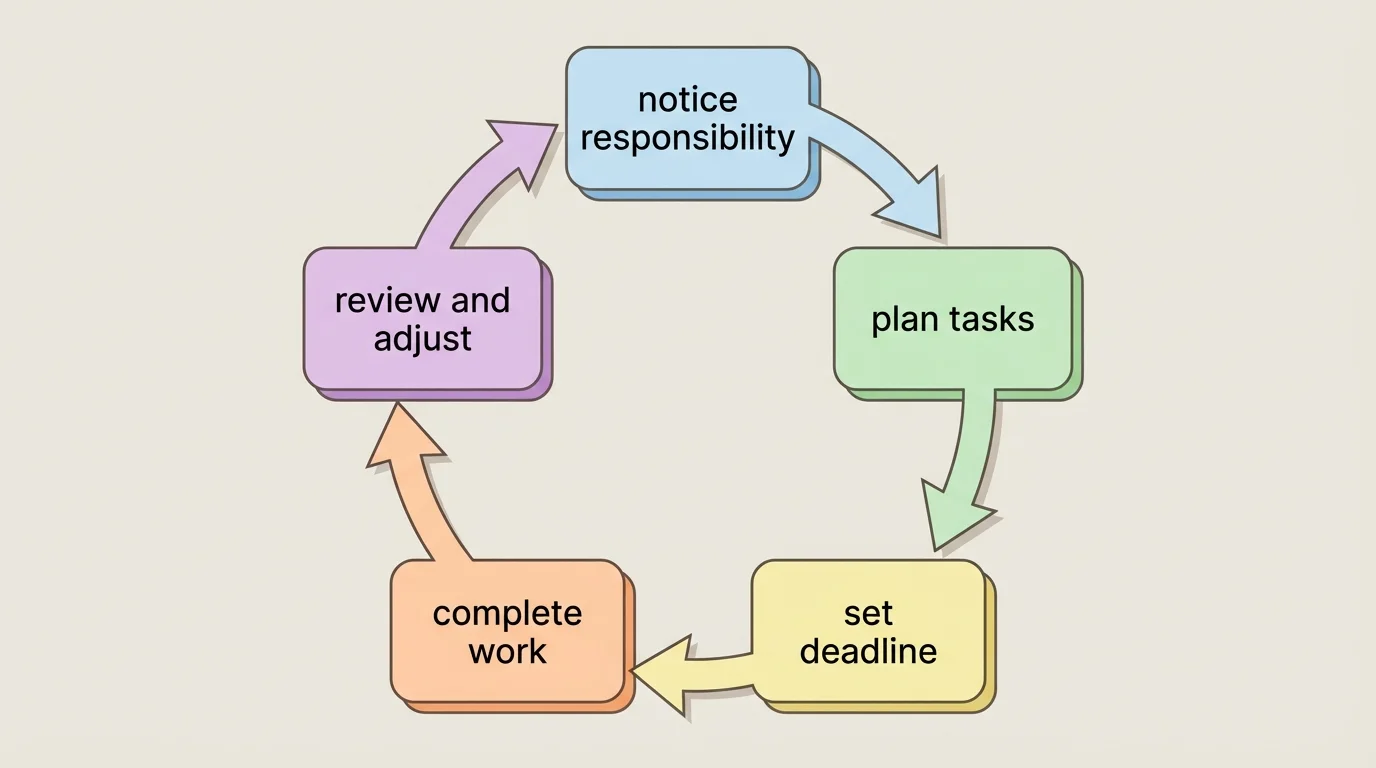
Before you can lead other people well, you need self-leadership. Self-leadership is the ability to manage your own time, energy, priorities, and behavior. As [Figure 1] shows, it works best as a simple cycle: notice the responsibility, make a plan, complete the task, and review the result. This is not about having a perfect personality. It is about building a system you can repeat.
In practice, self-leadership looks like checking deadlines before they become emergencies, setting reminders, preparing for meetings, and not making other people chase you for updates. If you say you will send a document by evening, send it by evening. If you realize you cannot, communicate early. Reliability is one of the fastest ways to earn trust.
Self-leadership also includes regulating your mood and stress. Adults still have bad days, but they cannot let every emotion control their behavior. If you are irritated, overwhelmed, or discouraged, pause before reacting. A rushed message, sarcastic comment, or ignored task can damage relationships that took months to build.
A simple self-leadership routine can help. At the start of the day, identify the top priorities. Ask: What must be done today? Which tasks affect other people? What can wait? Then estimate the time honestly. If something takes only a few minutes to begin but two hours to finish, plan for the full two hours, not just the easy beginning. A lot of adult stress comes from unrealistic planning.
Try this: choose one shared responsibility you already have, such as helping at home, being on time for work, or coordinating an online project. For one week, track it using the cycle in [Figure 1]: notice, plan, complete, review. At the end of the week, ask what kept working and what broke down.
Example: Turning a vague responsibility into a reliable plan
You need to help organize an online fundraiser meeting and also complete your own tasks.
Step 1: Define the responsibility clearly.
Instead of thinking, I should help with the meeting, make it specific: send the agenda, confirm speakers, and join the call prepared.
Step 2: Break the work into actions.
List tasks: draft agenda, message speakers, collect updates, review notes, test microphone.
Step 3: Put the actions on a timeline.
Assign each task a time and a deadline rather than hoping you remember later.
Step 4: Communicate before a problem grows.
If one speaker has not confirmed, send an update early rather than waiting until the call begins.
The result is not just a smoother meeting. It is a stronger reputation for being dependable.
People often underestimate how powerful that reputation is. In jobs, community organizations, and even family life, opportunities frequently go to the person others trust to follow through.
Collaboration works best when people know the goal, understand their role, and keep information moving. In a healthy team, as [Figure 2] illustrates, communication does not stay trapped in one person's head. Updates, questions, and responsibilities flow clearly between team members.
The first teamwork skill is role clarity. If nobody knows who is doing what, important tasks get forgotten while other tasks get repeated. At the start of a shared effort, ask practical questions: Who is handling communication? Who is gathering materials? Who is checking deadlines? Who makes the final decision if the group gets stuck?
The second skill is active listening. This means listening to understand, not just waiting to speak. In online settings, active listening can look like summarizing what someone said, asking one clarifying question, or confirming the next step in writing. This reduces confusion and shows respect.
The third skill is dependability. Teams break down when people agree to tasks they never complete. If you take responsibility for something, own it. If you cannot finish it, say so early enough for the team to adapt. Last-minute surprises create stress for everyone.
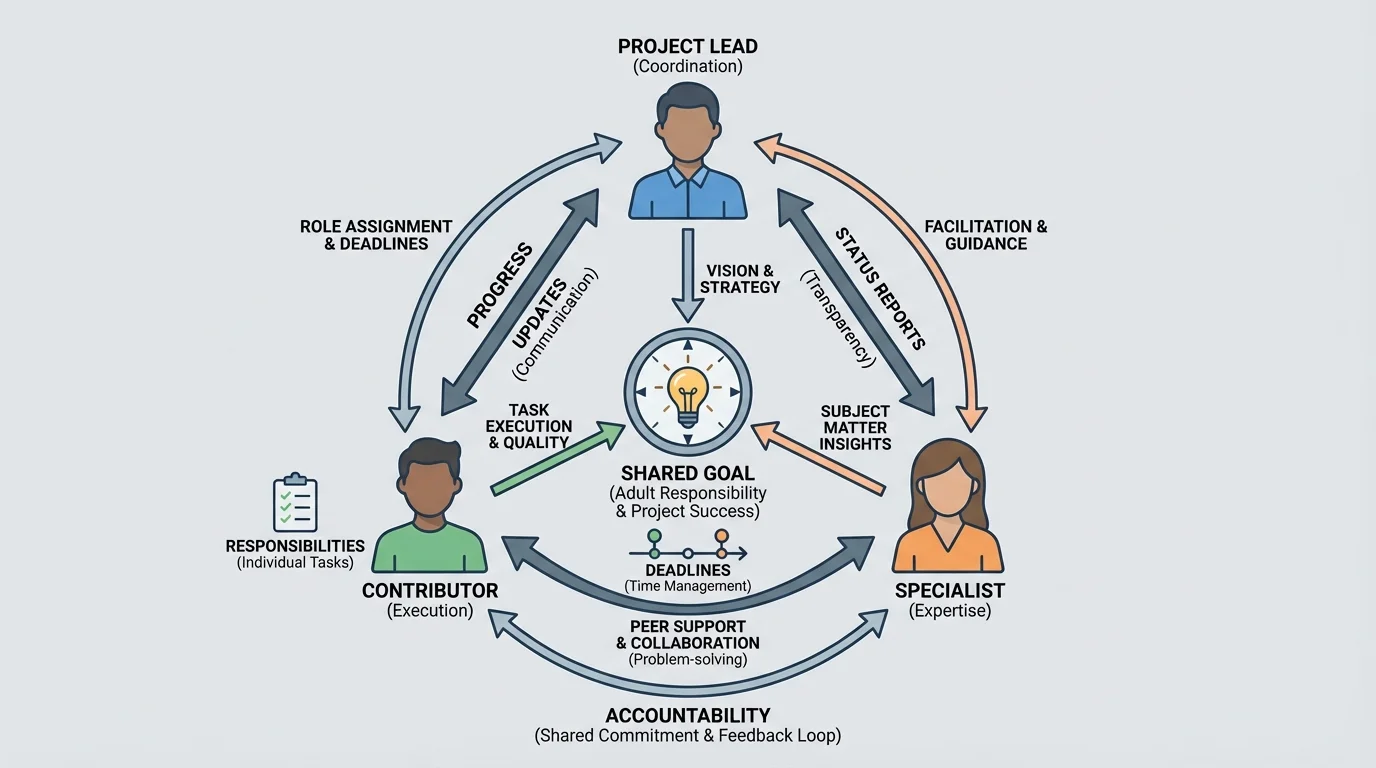
Another key teamwork habit is documenting decisions. After a video call or planning conversation, send a short follow-up message: what was decided, who is doing what, and when each part is due. This is especially important in digital collaboration, where people are not sharing the same physical space and can easily leave a conversation with different assumptions.
Trust grows when your words and actions match. If you promise a draft by Friday, deliver it Friday. If you need help, ask before the deadline. If someone else contributes well, acknowledge it. These habits strengthen the whole team and make future collaboration easier.
| Team habit | What it looks like | Likely result |
|---|---|---|
| Clear roles | Each person knows their task and deadline | Less confusion and less duplicated work |
| Active listening | People confirm understanding before moving on | Fewer mistakes and stronger trust |
| Early communication | Problems are reported before deadlines pass | More time to adapt |
| Follow-through | People do what they said they would do | Reliable teamwork and better results |
| Respectful feedback | Concerns are raised directly and calmly | Better improvement and less resentment |
Table 1. Common teamwork habits and their practical effects in shared responsibilities.
One of the hardest parts of leadership is helping a group move forward without trying to control every detail. Controlling leaders often create dependence, frustration, or silence. People stop contributing because they feel their input will be ignored. On the other hand, leaders who are too passive create confusion because nobody knows what decision has been made.
A balanced leader does five things well. First, they clarify the goal. Second, they invite input. Third, they decide what needs to happen next. Fourth, they assign or confirm responsibilities. Fifth, they follow up without micromanaging.
Delegation matters here. Delegation is not dumping tasks you do not want. It means assigning responsibility to the right person with enough information and authority to do it well. Good delegation includes the task, the deadline, the expected quality, and the check-in point.
For example, if you are coordinating a community clean-up event, saying Can you handle publicity? is too vague. Better would be: Can you create the event post, share it in two local groups, and send me the final version by Thursday at 6 p.m.? That version is respectful and clear. It gives the other person room to do the work while making expectations visible.
"Leadership is not about being in charge. It is about taking care of those in your charge."
— Simon Sinek
Leading without controlling also means knowing when to step back. If someone is handling their task well, let them work. Hovering over every choice wastes energy and signals distrust. A better approach is to agree on checkpoints, then let people own their part of the process.
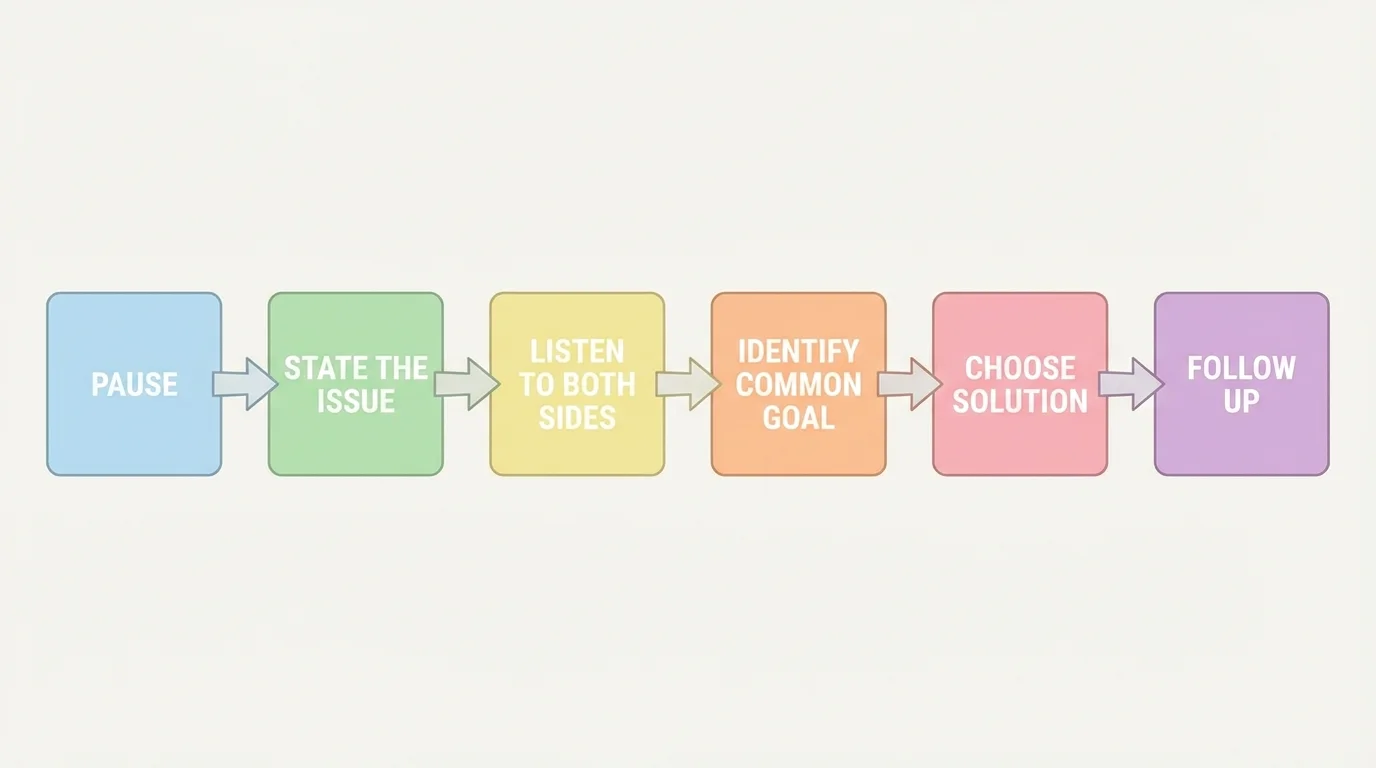
Conflict resolution is a major adult skill because disagreements happen in every shared setting. As [Figure 3] shows, conflict is easier to manage when you follow a process instead of reacting purely from emotion: pause, name the issue, listen, find the shared goal, agree on the next step, and follow up.
Most conflict gets worse when people assume motives. Saying You obviously do not care attacks the person. Saying The file was due yesterday, and we need a plan to finish it focuses on the problem. The second version is more productive because it invites action instead of defense.
When tension rises, use a simple script: state the issue, explain the impact, ask for their perspective, and work toward a solution. For example: We missed the deadline, which affected the whole team. What happened on your side? How can we prevent this next time? This keeps the conversation direct and respectful.
Receiving feedback is just as important as giving it. If someone points out a problem in your work, resist the urge to explain everything immediately. Listen first. Ask what specific change would help. Then decide what to do with the feedback. Mature people do not need to agree with every comment, but they do need to respond thoughtfully.
Mistakes also test leadership. The strongest response is usually simple: admit the mistake, explain the correction, and prevent the repeat. For example: I sent the wrong schedule. I have already sent the corrected version, and next time I will double-check dates before posting. That response protects trust better than excuses do.
Example: Resolving a missed responsibility with a teammate
You and another person are planning an online event. They fail to send the registration link on time.
Step 1: Pause before reacting.
Do not send an angry message immediately. Read the situation carefully.
Step 2: Focus on the issue, not the person.
Say: The registration link was not posted, and people are asking for it.
Step 3: Ask for context.
Say: What happened on your side?
Step 4: Move to solution.
Say: What is the fastest way to get the link out now, and what system should we use next time?
This approach protects the relationship while still dealing with the real problem.
Later, when another disagreement comes up, the process in [Figure 3] still applies. You do not need a new personality for every conflict. You need a stable method.
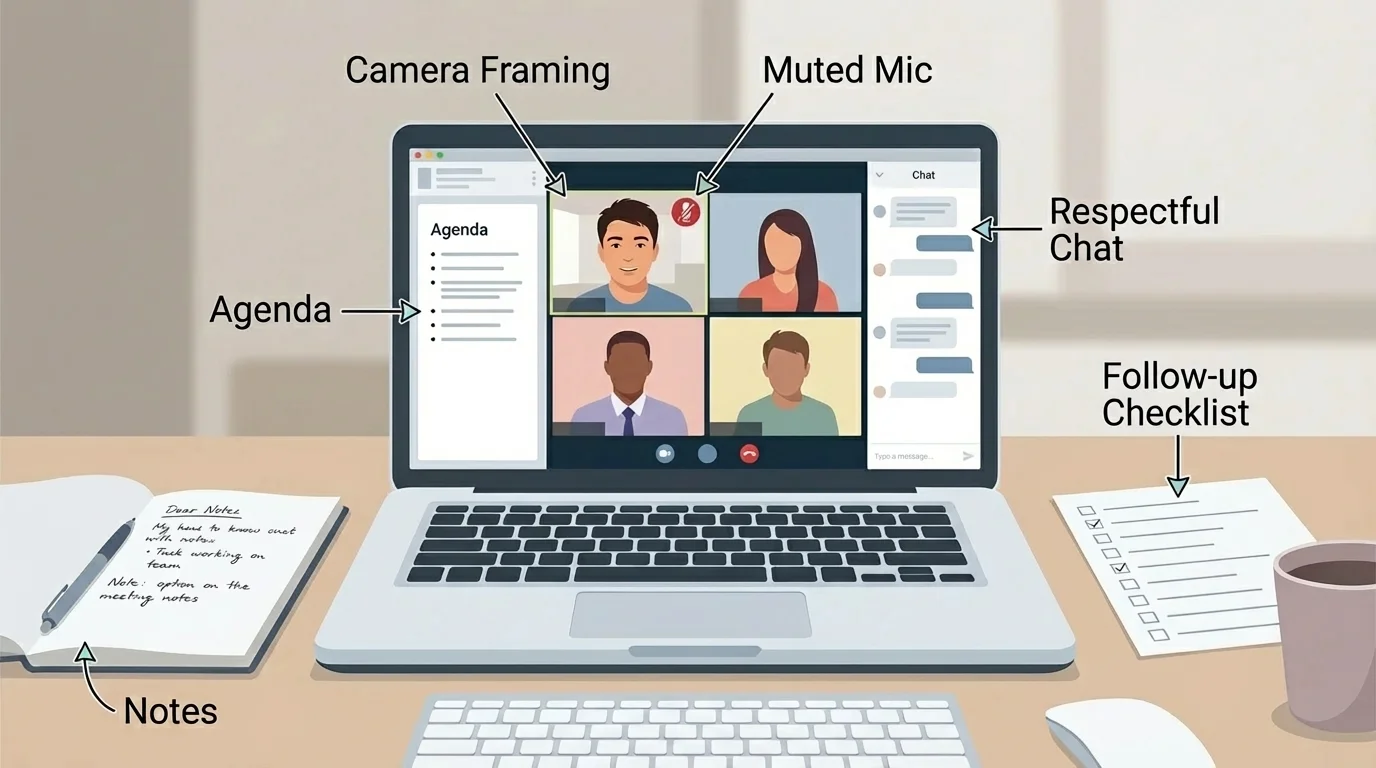
Because so much modern coordination happens online, your digital habits now shape your leadership image. In remote collaboration, as [Figure 4] shows, reliability becomes visible through preparation, response time, meeting behavior, and follow-up. People cannot watch you working in person, so they judge your dependability through what you communicate and when.
Before an online meeting, review the agenda, test your device, and know your role. During the meeting, stay present, avoid interrupting, and contribute something useful rather than speaking just to be noticed. After the meeting, send or save notes so decisions do not disappear into chat history.
Digital communication also requires tone awareness. Short messages can sound cold, irritated, or dismissive even when that was not your intention. Read important messages once before sending. Ask: Is this clear? Is it respectful? Does it tell the person what they need to do next?
Community settings add another layer. If you volunteer, organize a neighborhood project, help at a faith group, or support a local cause, you will often work with people of different ages and experiences. That means being flexible, respectful, and less focused on personal recognition. Community leadership is often quiet: arriving prepared, helping others succeed, and doing necessary work even when it is not glamorous.
The habits in [Figure 4] also apply beyond screens. Preparation, respectful communication, and clear follow-up make you easier to work with in almost any setting.
Many employers rank communication, reliability, and teamwork as highly as technical skill when deciding whom to hire or promote. In real workplaces, talent matters, but trust often determines who gets greater responsibility.
That matters because adult opportunities often grow through recommendation. Someone who experiences you as organized, respectful, and dependable may think of you later for a job, project, or leadership role.
Consider a part-time job shift. Your coworker is late, customers are waiting, and the supervisor is busy. Leadership might mean staying calm, handling what you can, updating the supervisor briefly, and helping the team recover instead of complaining while the pressure rises.
Consider living with roommates one day. Teamwork might mean setting clear rules for bills, chores, groceries, shared spaces, and quiet hours. If one person keeps forgetting a task, leadership means addressing it early and respectfully, not waiting until everyone is angry.
Consider helping your family. You may need to manage younger siblings, errands, appointments, or household responsibilities. Leadership there often means consistency. If people cannot count on you, the burden falls on someone else. If they can, home life becomes more stable.
Consider joining a volunteer project. If supplies are short, a leader does not just point out the problem. They help solve it: checking inventory, contacting people, adjusting the plan, or reorganizing tasks. Initiative is valuable because real-world group work is rarely perfect.
Consider an online collaborative task. A teammate goes silent. Instead of assuming laziness, reach out clearly: We need your section by tonight. If that is not possible, let us know by 5 p.m. so we can reassign it. That message is direct, respectful, and focused on the group's needs.
Responsibility means more than doing your own part. In adult life, responsibility also includes understanding how your choices affect other people. Leadership and teamwork build on that foundation by adding communication, coordination, and initiative.
Notice the pattern in all these situations: strong leadership and teamwork reduce chaos. They make responsibilities visible, protect relationships, and help groups recover when things go wrong.
Your reputation is shaped less by dramatic moments and more by repeated ordinary actions. Do you answer messages within a reasonable time? Do you show up prepared? Do you keep your word? Do you make it easier for others to work with you? These choices create a pattern, and people remember patterns.
A useful way to think about reputation is this: every responsible action adds trust, and every careless action removes some of it. Trust is not a number you can calculate exactly, but the pattern still works like a balance that rises or falls over time. A single mistake usually does not destroy trust if your overall pattern is strong. Repeated unreliability does.
This is why small habits matter. Keep a calendar. Confirm expectations. Ask questions early. Admit errors quickly. Finish what you start. Encourage others when they contribute well. These are not flashy actions, but they are the real infrastructure of adult leadership.
As you move into work, further education, independent living, and community life, people will not only notice what you can do. They will notice how you work with others. That combination of competence and character is what makes someone worth trusting with real responsibility.
