What would happen if everyone in an online class talked at the same time, changed game rules in the middle, or ignored turns? It would quickly become chaotic. People might feel left out, upset, or confused. That is why rules and helpers matter. They help school feel fair, calm, and welcoming for everyone.
Even when you learn from home, you are still part of a school community. You meet teachers online, join class discussions, send messages, and work with others in digital spaces. Fairness matters in all of these places. When people know the rules and trusted adults help when needed, teamwork gets stronger.
Fairness means people are treated in a caring, honest, and respectful way. Fair does not always mean everyone gets the exact same thing. Sometimes fair means everyone gets what they need to do well. For example, one student may need extra time to answer on a video call, while another student is ready right away. Giving both students what helps them learn is fair.
Fairness means treating people in a way that is honest, kind, and respectful. Rules are agreed steps or directions that tell people what they should do. Helpers are trusted people who support others, solve problems, and keep things safe.
Fairness also means listening, taking turns, telling the truth, and not leaving people out on purpose. If you are playing an online game with a group, fairness means using the same rules for everyone. If you are working on a shared project, fairness means each person gets a chance to help.
[Figure 1] Rules are important because they tell everyone what is expected. In online learning, a shared rule about taking turns helps everyone have a chance to speak. Without rules, louder voices might take over, and quieter people might not get a turn.
Rules also help keep people safe. A rule like "use kind words in messages" helps protect feelings. A rule like "do not share private information online" helps protect personal safety. A rule like "finish your own work" helps build honesty and trust.
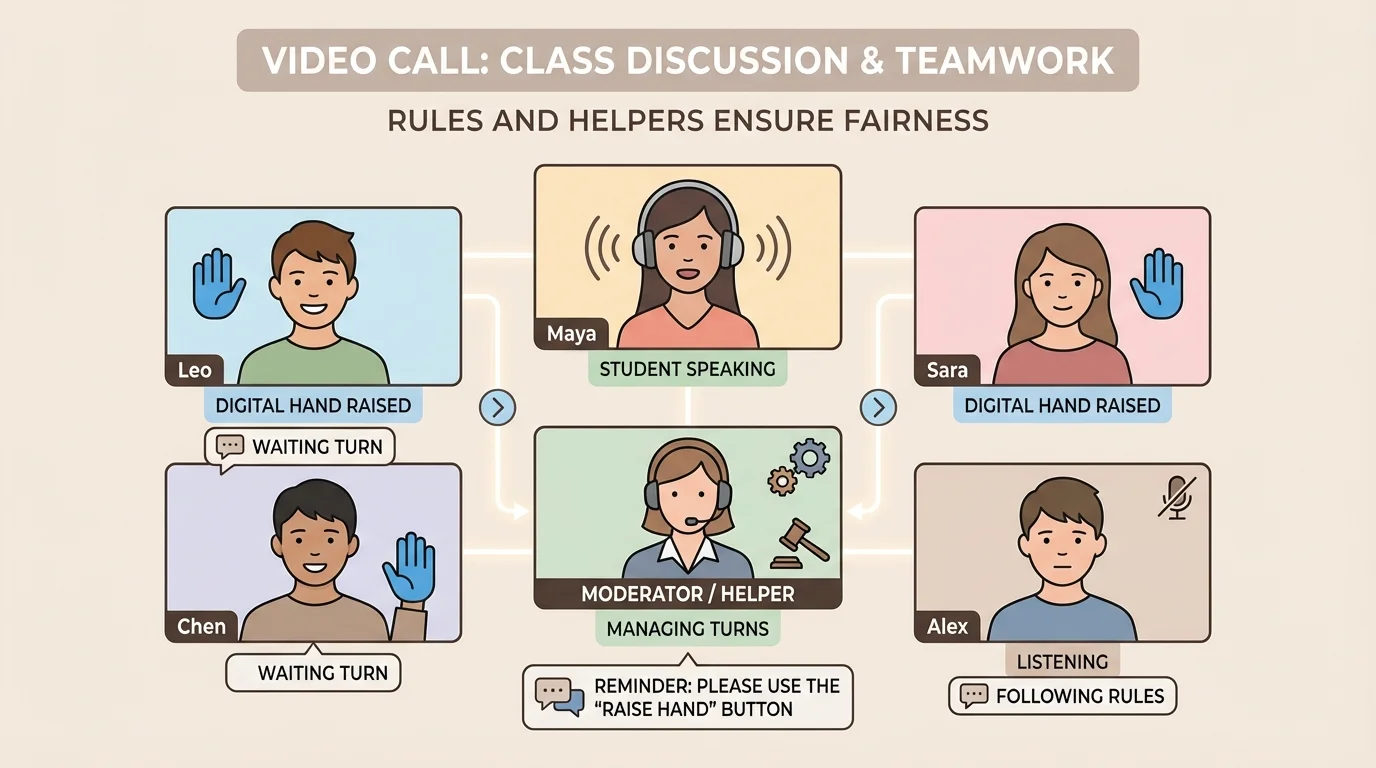
Think about a simple class meeting online. If students mute when another person is talking, listen carefully, and wait for their turn, the meeting runs smoothly. People can understand each other. Problems are smaller. Learning is easier.
Rules are not meant to be overbearing. Good rules are there to help everyone. They protect learning time, help people feel respected, and stop one person from making things unfair for others. Later, when you work in teams, play sports, join clubs, or help in your neighborhood, these same ideas still matter. Just like the online turn-taking in [Figure 1], clear rules help groups work well together.
How rules support fairness
Rules support fairness by giving everyone the same starting point. They answer questions like: Who goes first? What words are okay to use? What should we do if there is a problem? When people know the answers, they can make better choices and work together more peacefully.
Sometimes rules may feel annoying, especially when you want to go first or do something your own way. But rules are often most important in the very moments when people disagree. They help the group stop arguing and return to what is fair.
[Figure 2] Rules do a big job, but people need support too. Trusted helpers can guide you when you are confused, upset, or unsure what to do. In online school, helpers may include your teacher, a parent or caregiver, a school counselor, a learning coach, a librarian, or an activity leader in your community.
Helpers listen, explain rules, and help solve problems fairly. They remind people to be respectful. They also notice when someone needs extra support. For example, if a student keeps getting interrupted on a video call, a teacher can step in and make sure that student gets time to talk.
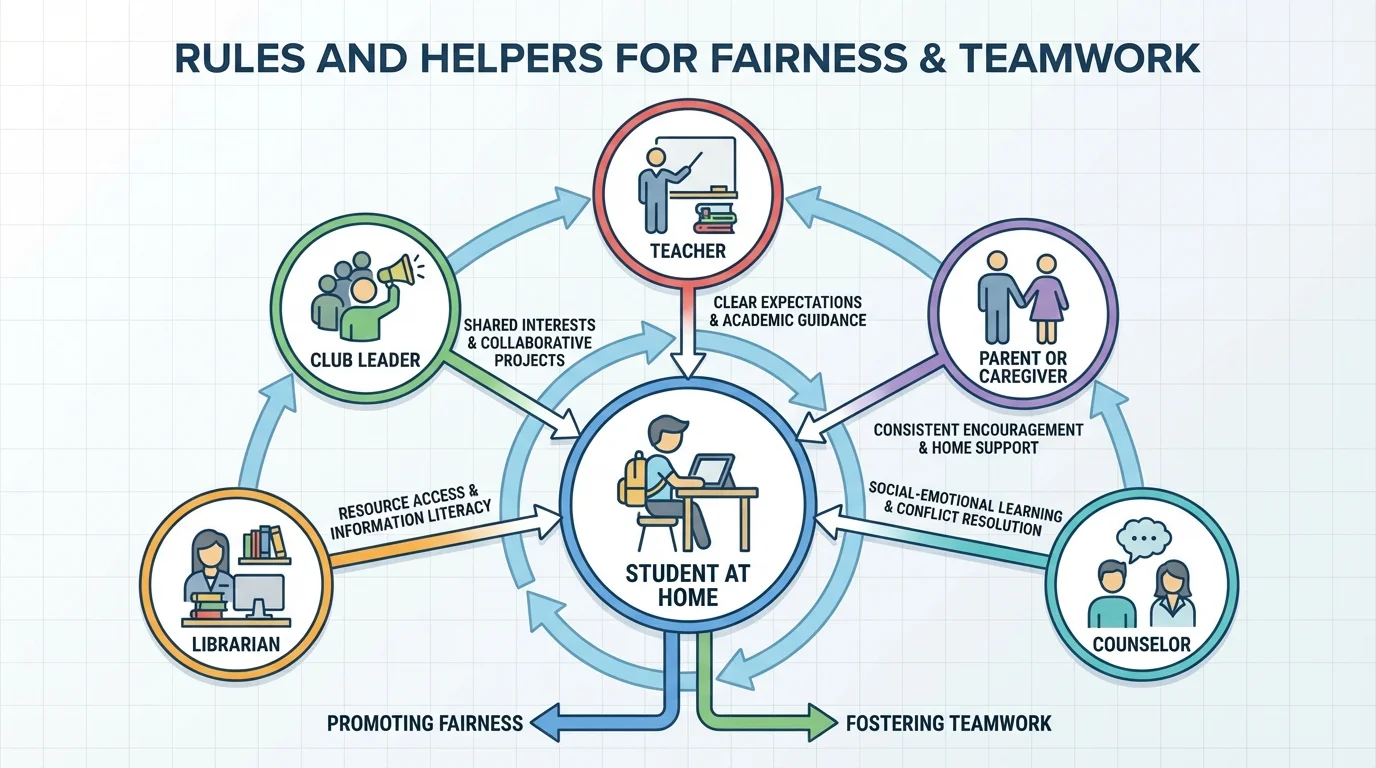
A helper is not just someone who fixes everything for you. A helper also teaches you what to do next time. If you forget a digital rule, a helper can explain it. If someone says something unkind in a chat, a helper can show you how to respond safely and respectfully. That helps you grow stronger and more responsible.
You can have more than one helper. Maybe you talk to a parent when you feel worried, a teacher when class rules are unclear, and a librarian when you need learning support. The support circle in [Figure 2] reminds you that you do not have to solve every problem alone.
Many strong teams work well not because they never have problems, but because they know who can help when a problem comes up.
Asking for help is not tattling when someone is being unsafe, unkind, or unfair. It is a smart and brave choice. Good helpers want to keep people safe and make sure everyone is treated well.
Rules and helpers are a team. Rules tell us what should happen. Helpers step in when people forget, disagree, or need support. One without the other is less effective. If there are rules but no help, people may not know how to fix a problem. If there are helpers but no clear rules, people may feel confused about what is fair.
Here is an example. Suppose your group is making a slide presentation online. The rule is that everyone gets one job. One person chooses pictures, another writes titles, another checks spelling, and another shares the final file. If one student tries to do every job, that is unfair. A helper, like a teacher or parent, can remind the group about the rule and help each person do their part.
| Situation | How a Rule Helps | How a Helper Helps |
|---|---|---|
| Online class discussion | Everyone takes turns speaking | Teacher makes sure each student is heard |
| Group project | Each person has a job | Adult helps solve disagreements |
| Chat message problem | Use kind words only | Helper guides safe responses |
| Home learning time | Follow a daily routine | Caregiver reminds and encourages |
Table 1. Examples of how rules and helpers work together in everyday school situations.
When rules and helpers work together, people know what to do and where to turn for support. That builds trust. Trust makes teamwork easier.
[Figure 3] Sometimes something will feel unfair. A simple conflict-solving plan can help when a person interrupts you, leaves you out of a game, or blames you for something you did not do.
Step 1: Pause. Take a breath. When you slow your body, your brain can think better.
Step 2: Say the problem clearly. You can say, "I was still talking," or "I want a turn too."
Step 3: Check the rule. Ask, "What is the class rule?" or "What did we agree to do?"
Step 4: Listen to the other person. Fairness means hearing both sides.
Step 5: Ask a helper if the problem does not stop.
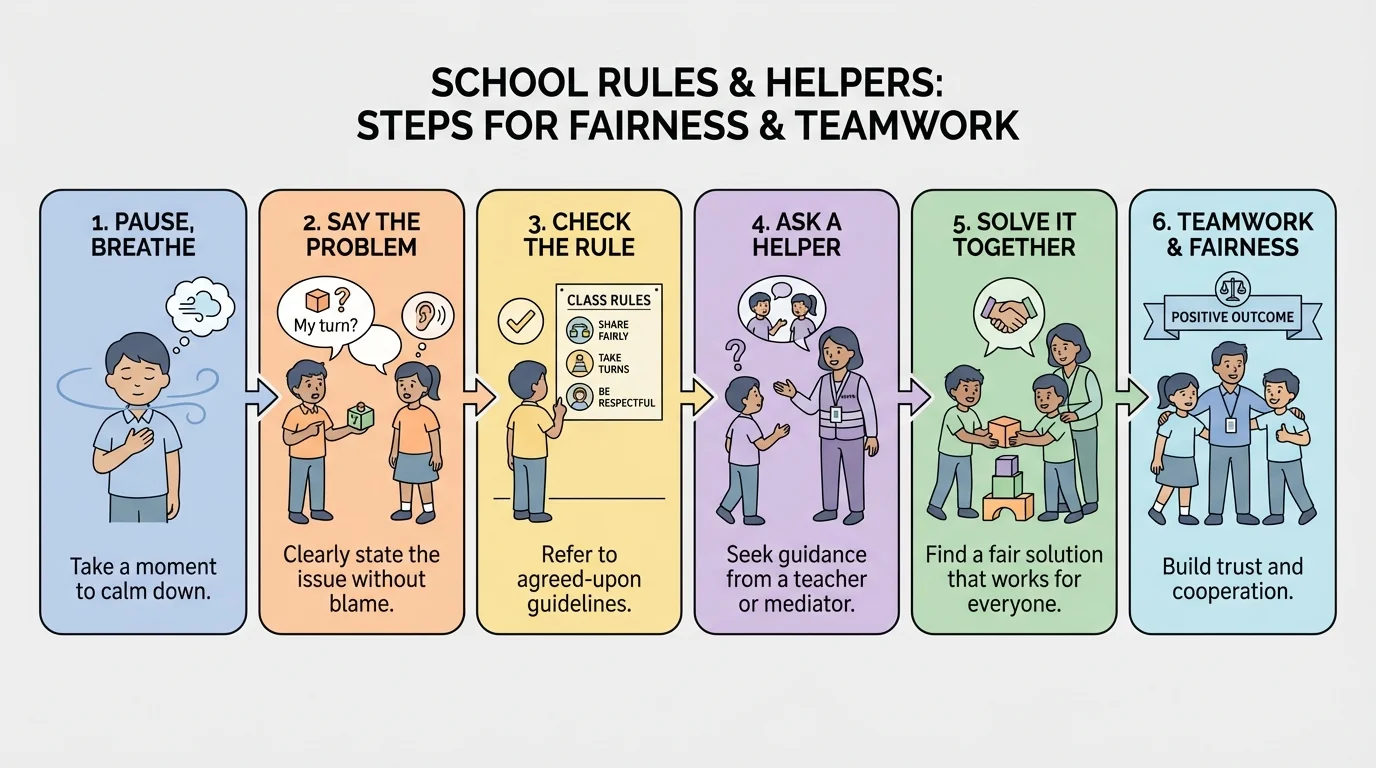
This plan helps you stay calm and respectful. It also helps others understand what went wrong. These steps are useful in school, at home, in clubs, and even during playtime with friends online.
Real-life example: A group call problem
You are in a small online group. Every time you begin to share your idea, another student talks over you.
Step 1: Pause and stay calm.
You take one breath instead of shouting back.
Step 2: Use respectful words.
You say, "I would like to finish my idea, please."
Step 3: Use the rule.
You remind the group, "We are taking turns."
Step 4: Ask a helper if needed.
If the interruptions continue, you tell the teacher.
This is fair because you speak respectfully, follow the rule, and get help the right way.
If you are the one who made a mistake, fairness matters then too. You can say, "I am sorry. I interrupted you. You can go now." Being fair is not only about asking others to do the right thing. It is also about fixing your own choices.
Teamwork means working with others to reach a shared goal. In online school, teamwork may happen in a video meeting, a shared document, a class discussion board, or a family learning routine at home. Rules and helpers make teamwork stronger because they help each person know their part.
Good teamwork sounds like this: "You go first." "I can help with the pictures." "Let's check the directions." "We both get a turn." These are fair teamwork words. They show respect and responsibility.
You already know that taking turns, sharing, and listening are important. This lesson adds one more big idea: rules and helpers make those good choices easier to follow every day.
At home, teamwork can mean getting ready for learning on time, putting supplies back, or helping clean up your workspace. If your family has a routine, that is a kind of rule. It helps the day go more smoothly. If a caregiver reminds you kindly, that person is being a helper.
When teamwork goes well, everyone feels included and the job gets done. When teamwork goes poorly, people may argue, quit, or feel hurt. Fair rules help stop these problems before they grow bigger.
The choices you make now help you become the kind of person others can trust later. When you follow fair rules, listen to helpers, and treat people respectfully, you are practicing how to be a good classmate, teammate, neighbor, and citizen.
A responsibility is something you are supposed to do. One responsibility at school is to follow rules that protect learning and kindness. Another responsibility is to ask for help when something is unsafe or unfair. These are not little things. They help your whole community.
"Fairness means everyone matters."
You do not have to be in charge to help make things fair. You can wait your turn, include others, tell the truth, use kind words, and ask a helper for support when needed. Small actions build strong teams.
Try This: Today, notice one rule that helps your day go better. It might be muting when someone else talks, keeping a routine, or sharing turns in a game. Then notice one helper who makes things easier. Thank that person, or tell them how they helped you.
