Have you ever noticed that some people seem to make good things happen? They do not always wait for someone to tell them what to do. They spot a problem, think of a helpful step, and begin. That skill is called initiative, and it is one of the best ways to become a strong helper, teammate, and leader.
Initiative means seeing what needs to be done and taking a helpful action without being pushed every time. It does not mean bossing people around. It means using your eyes, ears, and brain to notice what would help, then doing your part in a respectful way.
Initiative can begin with small actions, but those actions matter. You might open your materials before an online club meeting starts. You might message your group, "I can make the title page." You might clean up your art space after a project without being reminded. You might hear that your neighborhood is collecting food and ask, "Can I help sort cans?"
Initiative is taking a helpful first step without always being told.
Responsibility means doing what you said you would do and taking care of your tasks.
Leadership means helping people move in a good direction through actions, kindness, and good choices.
When you show initiative, people learn they can trust you. That trust is important at home, in community groups, on sports teams, in clubs, and during online learning. If you do not show initiative, tasks may be forgotten, teams may get stuck, and other people may have to do extra work.
You do not need to be the loudest person to have initiative. Quiet people can show it too. A person who calmly says, "I already made the list," or "I checked the link," is showing leadership through action.
Initiative looks a little different in each setting, as [Figure 1] shows. In a project, initiative means helping the work move forward. In service, it means helping others or improving your community. In collaborative learning, it means learning with others and making the group stronger.
In a project, you might gather supplies, make a checklist, or begin one part of the job. If you and your sibling are making a bird feeder, initiative might mean putting newspaper on the table before you start, asking for tape, and checking what step comes next.
In service, you help because it matters, not because you get a prize. You might write cheerful cards for a community center, help pick up litter with an adult, sort donated items, or help a younger child learn how to put books away. Service teaches you to look beyond yourself.
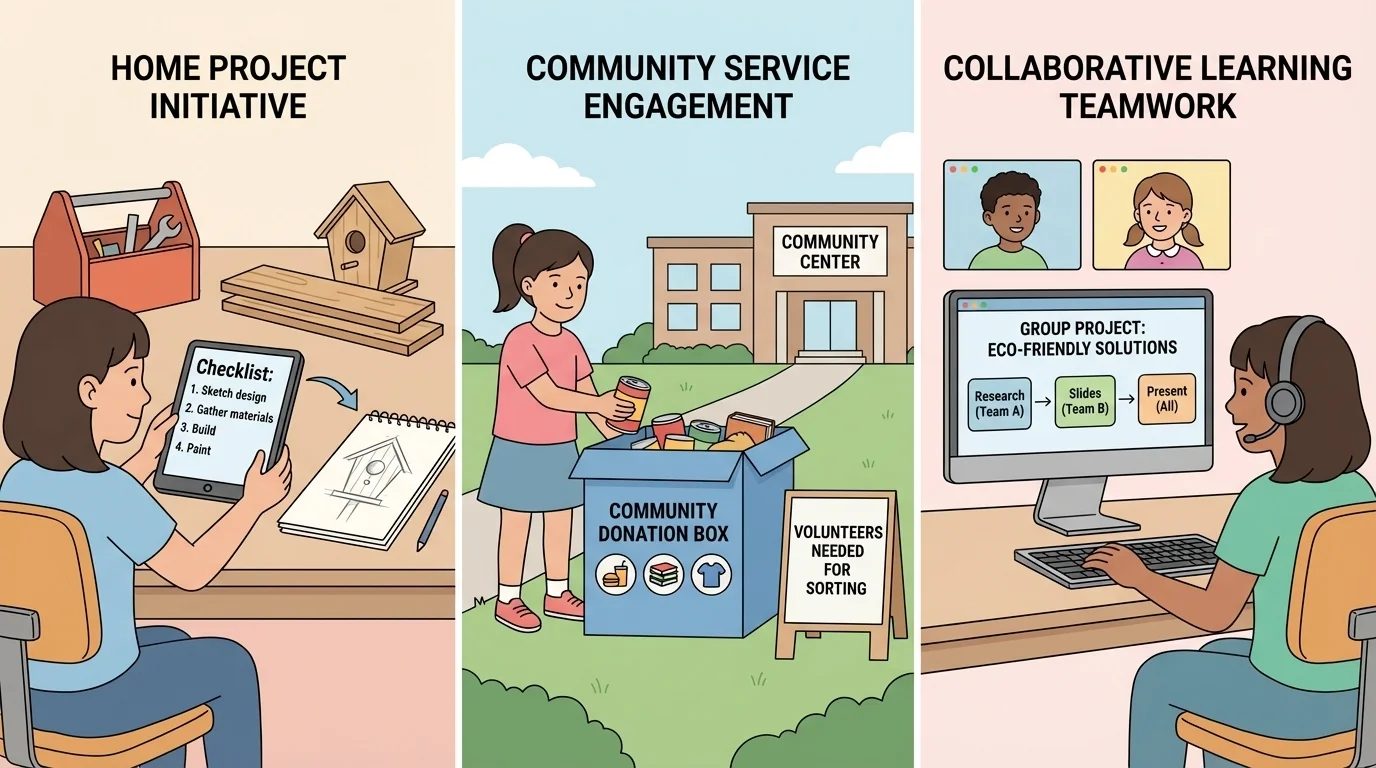
In collaborative learning, you work with others to understand something or make something together. That may happen in an online class meeting, a virtual club, a video call with friends, or a community activity. Initiative here might mean reading directions first, sharing one good idea, or helping the group stay on track.
Notice that all three settings have something in common: you are not waiting to be pulled along. You are helping things happen in a smart and caring way. Later, when you face bigger jobs, that habit becomes even more powerful, just as we saw in [Figure 1].
Children who practice small acts of responsibility often become the people others trust for bigger jobs later. Trust grows one action at a time.
You can show initiative at home too. If your family is getting ready for a meal, you might set napkins out, wash vegetables with help, or ask, "What is one thing I can do?" That question itself is a strong beginning.
Sometimes students want to help but do not know how to begin. A simple process, shown in [Figure 2], can make initiative easier: notice a need, choose a safe helpful action, start small, and check what happens next.
Step 1: Notice the need. Look around. Is something missing? Is someone confused? Is a task not started yet? For example, your online book club is meeting soon, and nobody has started the shared list of questions.
Step 2: Think about safety and kindness. A helpful action should be safe and respectful. You should not touch sharp tools alone, share private information online, or take over someone else's work without asking.
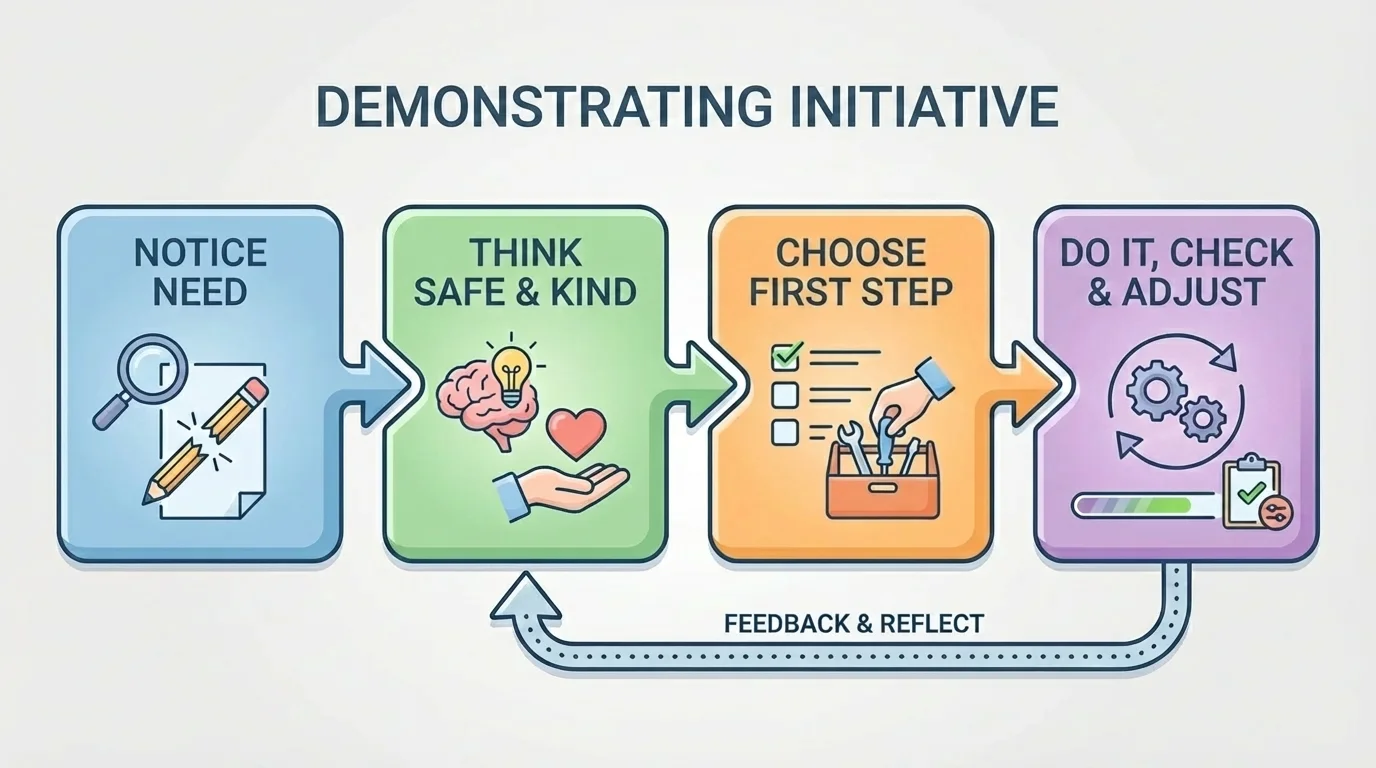
Step 3: Choose one first step. Do not wait until you know every detail. Start with one useful action. You could type a list title, gather crayons, or ask, "Would it help if I kept track of ideas?"
Step 4: Do the action. Begin calmly. You do not need a huge speech. Actions are often stronger than announcements.
Step 5: Check and adjust. Ask yourself, "Did that help?" If yes, keep going. If not, change your plan. Initiative is not just starting. It is noticing what works.
Example: Showing initiative during a family project
Your family wants to plant herbs in small pots.
Step 1: You notice the table needs protection.
You place old newspaper on the table before the soil comes out.
Step 2: You think ahead.
You bring the small shovel, pots, and watering cup to one spot.
Step 3: You help the group stay organized.
You ask, "Should I put the basil label on this pot?"
This is initiative because you saw what would help and acted without waiting for every direction.
If you are not sure whether to act, use this question: "Will this make the job safer, kinder, cleaner, clearer, or easier?" If the answer is yes, it may be a good step.
Showing initiative in a team is not the same as doing everything yourself. Good teamwork, as [Figure 3] illustrates, means listening, sharing, and helping the group do its best work.
When you join an online group or community activity, start by understanding the goal. Are you making a slideshow? Planning a kindness project? Learning a song together? A team works better when everyone knows what they are trying to do.
Next, pay attention to roles. One person might read directions. One might type ideas. One might check time. One might encourage the group. You do not need the biggest role to show initiative. If you say, "I can keep the list neat," that helps the whole team.
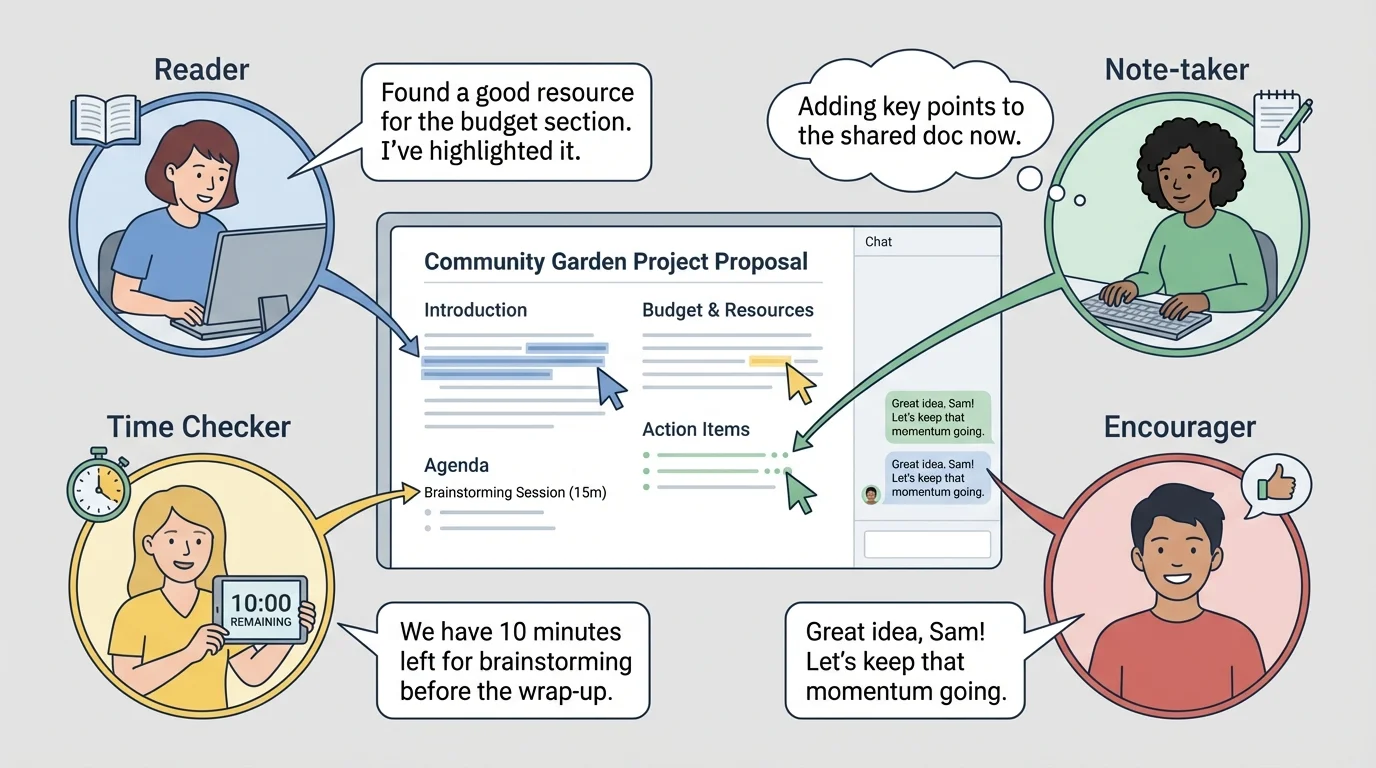
Use words that move the team forward. Try sentences like these:
Good teammates also practice communication. That means speaking clearly, listening carefully, and answering kindly. If you interrupt, ignore ideas, or leave your part unfinished, the team may feel frustrated. If you listen and help, the team becomes stronger.
Sometimes initiative means inviting others in. Maybe one child has not spoken much on a call. You could say, "Do you want to share your idea?" That is leadership with kindness. Teams work best when everyone has a way to contribute.
"A leader is not just the person in front. A leader is someone who helps others do their best."
If there is disagreement, stay calm. You can say, "Let's vote," or "Let's choose the idea that matches our goal." Initiative does not mean winning every argument. It means helping the group keep moving respectfully.
Every project has bumps. Supplies go missing. People forget tasks. Internet connections freeze. Plans change. Initiative helps you respond instead of giving up.
Here are some common problems and strong responses:
| Problem | Weak response | Strong response with initiative |
|---|---|---|
| A teammate forgets their part | Complain and stop working | Send a kind reminder and ask how to help |
| You do not understand directions | Wait silently | Ask a clear question |
| Materials are messy | Leave the mess | Sort materials and label what you can |
| The group is off-topic | Join the distraction | Bring attention back to the goal |
Table 1. Examples of weak and strong responses when problems happen during teamwork or projects.
Responsibility matters here. If you promised to draw the poster border or collect three ideas, do your part. If you cannot finish, tell the group early. That is much better than staying quiet and surprising everyone later.
Initiative and responsibility work together. Initiative gets you started. Responsibility helps you keep going, finish the task, and fix mistakes if needed. A person who starts but never finishes is not fully dependable yet.
You also need to know when to ask for help. Smart initiative is not unsafe or secretive. If a service job involves strangers, lifting heavy boxes, or going somewhere alone, stop and get a trusted adult. If someone online asks for private information, do not respond. Responsible helpers protect themselves and others.
Mistakes will happen. Maybe you sent the wrong file or forgot a meeting time. You can still show initiative after a mistake. Say, "I made an error. I will fix it now." Owning a mistake often builds more trust than pretending nothing happened.
Leadership grows from repeated small choices. You do not wake up one day and suddenly become a trusted leader. You build that trust by being prepared, helpful, honest, and steady.
These habits build leadership:
A student who always says, "Tell me exactly what to do," may still be learning. A student who says, "I read the directions and started the first part," is growing into leadership.
Example: Service with initiative
A community center is collecting pet food for families who need help.
Step 1: You ask a trusted adult if you may help.
Step 2: You help sort cans and bags into neat groups.
Step 3: You notice some labels face backward, so you turn them to make checking easier.
Step 4: You ask, "Would you like me to count how many are in each box?"
You are not just present. You are making the service effort work better.
Leadership also includes noticing feelings. If a teammate seems worried, you can offer support. Try, "You can read your idea when you're ready," or "I can help with that part." Kindness is not extra. It is part of strong teamwork.
You can practice initiative today in simple ways. Start small so the habit feels possible.
At home: Put away materials after an activity. Ask what job needs doing. Set up your workspace before an online lesson or club begins.
In projects: Make a list. Gather tools. Start one part. Check what still needs to be done.
In service: Look for a way to help people, animals, or shared spaces. Hold a door, sort items, wipe a table, write a kind note, or help carry light supplies with permission.
In collaborative learning: Read directions first. Share one idea. Keep notes. Remind the group of the goal. Invite a quiet person to join in.
You do not have to do everything alone to show initiative. Good helpers notice needs, start wisely, and work respectfully with others.
One useful habit is the "before, during, after" check.
Before: What do I need? What is my job?
During: What helpful step can I take now?
After: Did I finish? Did I leave things better than I found them?
Another helpful habit is asking good questions. Instead of "Are we done?" ask "What is the next useful step?" Instead of "Do I have to?" ask "How can I help?" Those questions lead to action.
When initiative is done well, projects get finished, service helps more people, and teams feel calmer and happier. When initiative is missing, jobs stay stuck, people get frustrated, and chances to help can be lost. Your actions, even small ones, make a real difference.
