Have you ever had a day when everything felt harder than usual? Maybe you were tired, annoyed, hungry, worried, or restless, and even simple tasks felt big. That is not just "a bad day." Very often, your body is sending signals. The way you sleep, handle pressure, eat, and move can change how well your brain works, how patient you feel, how much energy you have, and how well you get through your day.
At your age, your body and brain are growing fast. That means your daily habits matter a lot. You do not need to be perfect, and you do not need a complicated plan. But you do need to notice patterns. If you stay up too late, skip meals, sit all day, or carry stress without dealing with it, your body usually reacts. When your habits are steadier, you are more likely to feel focused, calm, and ready to handle challenges.
Your brain is part of your body, so it depends on physical care. If your body does not get enough rest, water, food, or movement, your brain has a harder time doing its jobs. Those jobs include paying attention, remembering information, solving problems, managing emotions, and making good decisions.
These four areas work like a team. Sleep helps your brain recover. Stress can either sharpen your attention for a short time or overload you if it lasts too long. Nutrition gives your brain and body fuel. Activity supports energy, mood, and even sleep. When one part of the team is off, the others can be affected too.
Your daily functioning is how well you manage regular life tasks: paying attention during lessons, finishing chores, remembering directions, controlling emotions, speaking kindly, staying safe, and taking care of yourself. Functioning is not just about grades. It includes how your mind and body help you get through real life.
Think about two mornings. On one morning, you slept well, ate breakfast, drank water, and took a short walk outside. On the other morning, you stayed up late, rushed out of bed, skipped food, and immediately felt stressed. The same person can function very differently on those two days.
Sleep deprivation happens when you do not get enough sleep or your sleep quality is poor. That can make attention, memory, mood, and reaction time worse. When you are well rested, your brain is better at listening, remembering, and staying calm.
[Figure 1] Sleep is like a reset button for your brain and body. During sleep, your body repairs itself, and your brain organizes what you learned during the day. If you are tired, you may reread the same sentence, forget directions, snap at family members, or feel like everything is taking too much effort.
Not getting enough sleep can affect you in small and big ways. You might yawn a lot, move more slowly, feel silly one moment and upset the next, or have trouble logging in on time and staying with a task. You may also make riskier choices because tired brains do not judge situations as clearly.
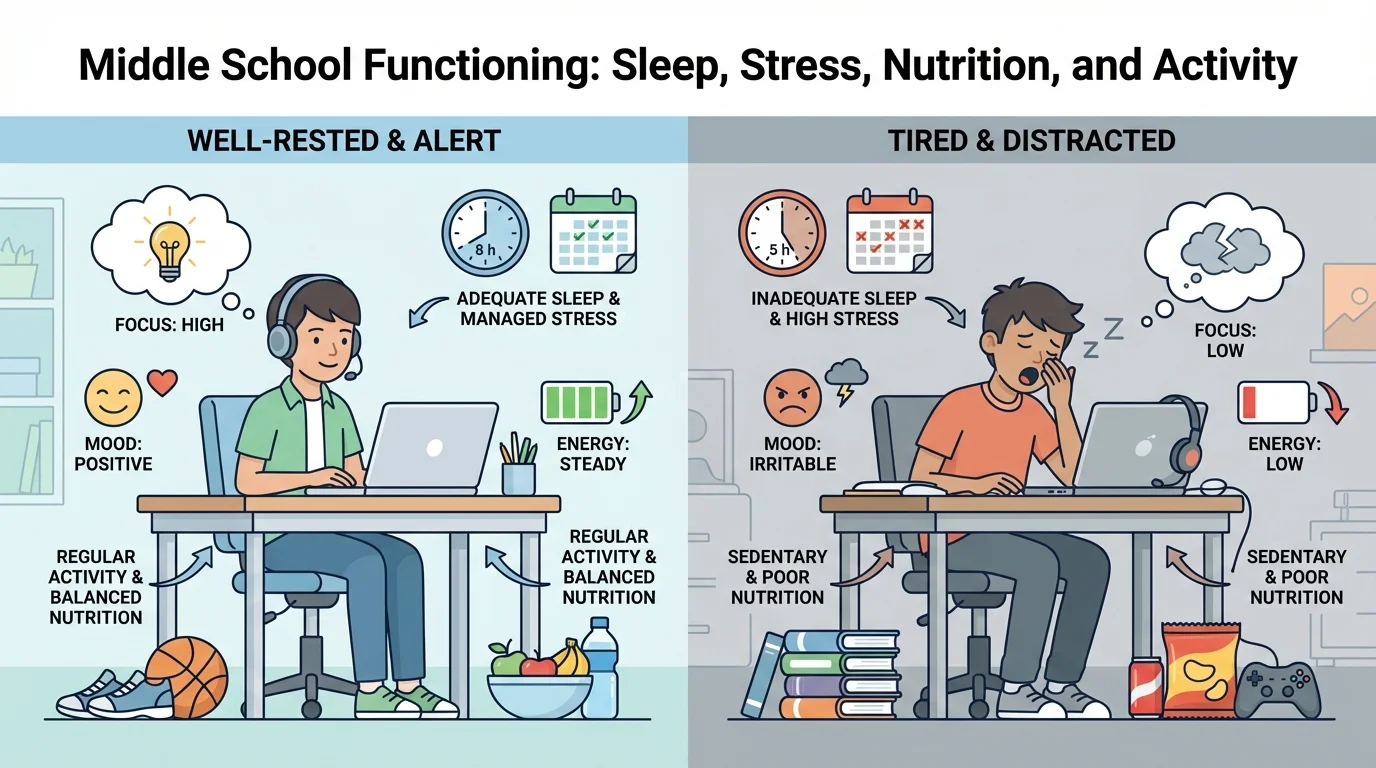
At your age, many experts recommend getting enough sleep each night to support healthy growth, learning, and emotional regulation.
Most students in this age group need about 9 to 12 hours of sleep each night. If you are regularly getting much less than that, your body may try to push through, but your functioning still drops. Sometimes students think, "I'm used to being tired," but being used to something does not mean it is healthy.
Common signs you need more or better sleep include trouble waking up, falling asleep during quiet activities, forgetting easy things, feeling extra emotional, or needing lots of snacks just to stay awake. Later in the lesson, the connection diagram in [Figure 4] shows why poor sleep can also affect stress, food choices, and activity.
A practical bedtime routine
Step 1: Pick a bedtime and wake-up time that you can keep most days, even on weekends.
Step 2: About 30 minutes before bed, lower the noise and lights. Put away exciting games or stressful messages.
Step 3: Do a calm routine such as showering, stretching, reading, or listening to quiet music.
Step 4: Keep your sleeping area as comfortable and dark as possible.
Step 5: If your mind is busy, write tomorrow's tasks on paper so you do not keep thinking about them.
Small routines tell your brain, "It's time to slow down."
Try This: For the next few days, notice how you feel after different amounts of sleep. Ask yourself: Was I patient? Did I focus well? Did I forget things? You are looking for patterns, not perfection.
Your stress response is your body's alarm system. It can be helpful for a short time because it prepares you to handle a challenge. For example, a little stress before a presentation on a video call might help you pay attention and try your best.
[Figure 2] But stress becomes a problem when it lasts too long, feels too big, or never gets released in healthy ways. Then your body may stay in "alert mode." You might feel tense, grumpy, worried, shaky, or exhausted. Some students feel stress in their body first, such as headaches, stomachaches, tight shoulders, or a fast heartbeat.
Stress can affect your functioning by making it harder to think clearly. When you are overwhelmed, your brain may focus on the problem instead of the task in front of you. That means you may stare at your screen without starting, avoid messages, overreact to small problems, or forget what someone just said.
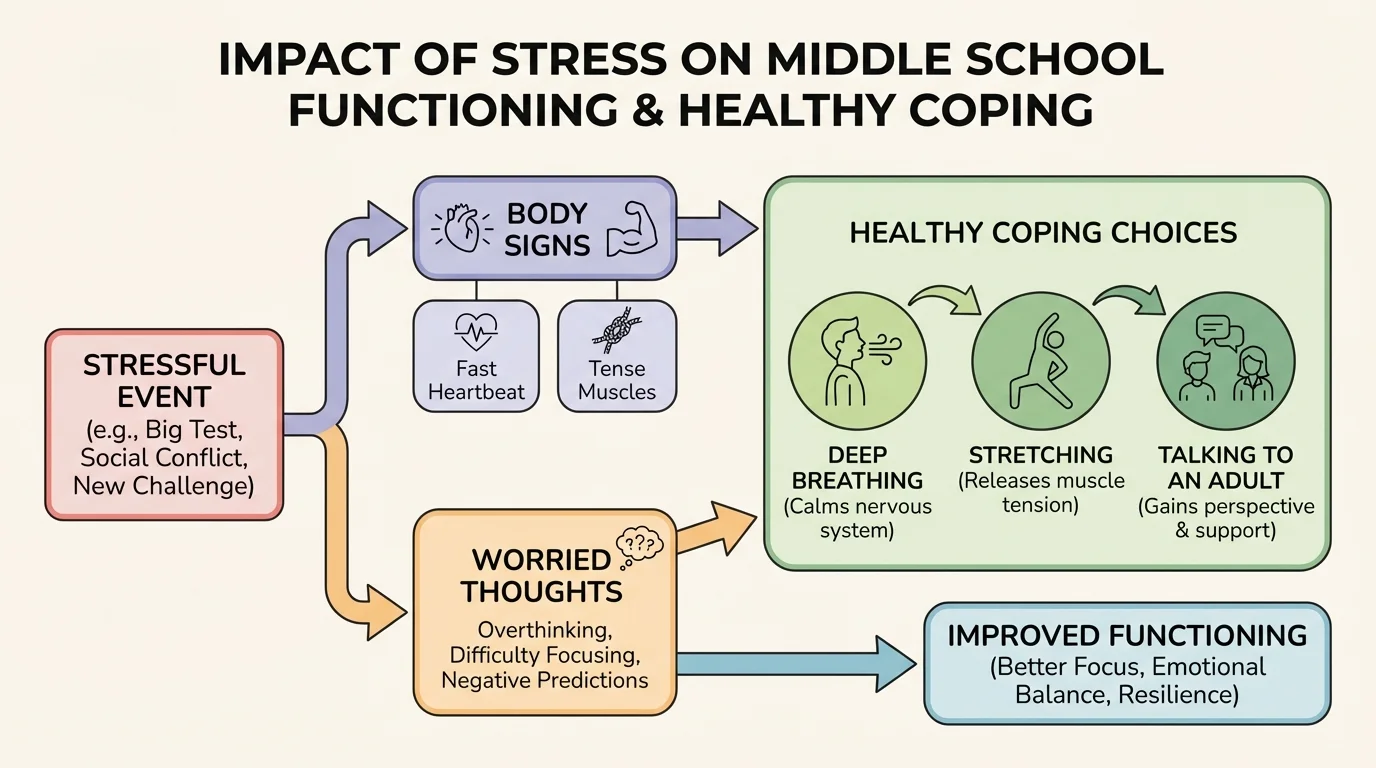
Stress can come from many places: a busy schedule, friendship problems online, family changes, not understanding an assignment, being overscheduled, lack of sleep, or even too much screen time without breaks. The cause matters, but so does your response. You may not control every stressor, but you can build skills for handling stress safely.
Stress is the body's reaction to a challenge, demand, or worry. Chronic stress is stress that lasts a long time and does not get enough relief. Short-term stress can sometimes help you act, but long-term stress can wear down your mood, sleep, focus, and health.
One useful skill is noticing your warning signs early. Maybe your shoulders tighten, your breathing gets fast, or you start thinking, "I can't do this." Catching stress early makes it easier to manage than waiting until you feel ready to explode or shut down.
Healthy coping strategies include slow breathing, stretching, taking a short walk, listening to calming music, drawing, journaling, talking to a trusted adult, or breaking a big task into smaller parts. As you saw earlier with sleep, and as the system view in [Figure 4] later reinforces, high stress can also make it harder to sleep well and choose healthy foods.
When you feel overwhelmed by a big assignment
Step 1: Stop and name the feeling: "I feel stressed and stuck."
Step 2: Take five slow breaths. Inhale gently and exhale longer than you inhale.
Step 3: Write the task in smaller pieces, such as open the document, read the directions, write a title, and complete the first part.
Step 4: Do only the first small piece.
Step 5: If you still feel stuck, message a teacher or trusted adult for help.
This turns a giant problem into a series of possible actions.
Try This: The next time you feel stressed, ask yourself, "What is my body doing right now?" Learning your signs helps you respond sooner.
Your body needs nutrition, which means getting the food and drink your body needs to work well. Food is fuel, and a balanced plate with water helps support steady energy and focus. If your body does not get enough fuel, your brain notices.
[Figure 3] When you skip meals or eat only foods that leave you hungry again very quickly, your energy may rise and crash. Then you might feel shaky, distracted, cranky, or extra tired. This is one reason breakfast and regular meals matter, especially before online classes, sports, chores, or long homework time.
A balanced meal does not have to be fancy. A good pattern is to include fruits or vegetables, protein, and grains, plus water. Protein foods help your body grow and repair. Fruits and vegetables provide vitamins and minerals. Grains, especially whole grains, give energy. Water helps with hydration, and your brain works better when you are not dehydrated.
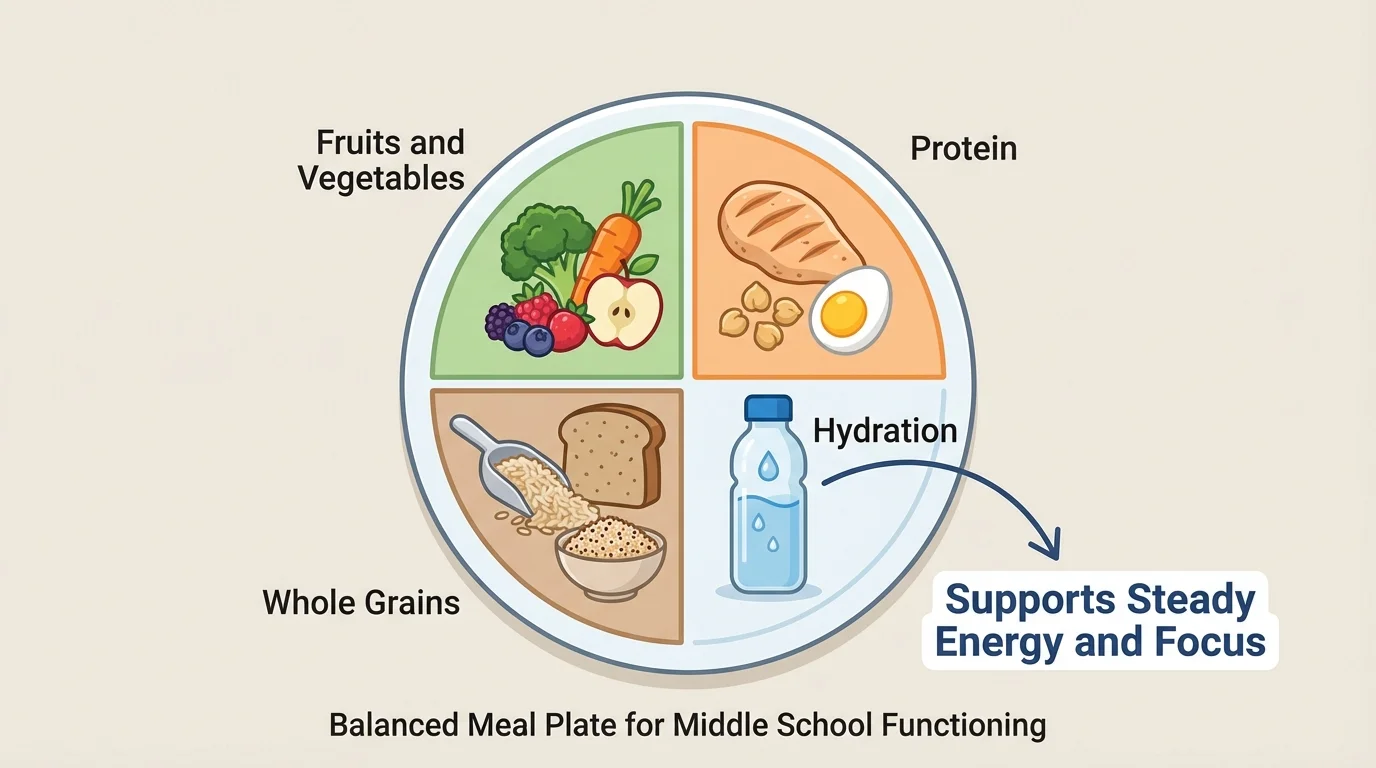
Dehydration means your body does not have enough water. Even mild dehydration can make you feel tired, give you a headache, or make you feel foggy. Sometimes students think they are hungry, when they are actually thirsty. Water is not a magic fix for everything, but it is a basic need.
Food also affects mood. If you go too long without eating, you may feel more impatient or emotional. If you eat very quickly or while distracted by a screen, you may miss your body's signals. Slowing down enough to notice how food makes you feel is a life skill.
Your brain uses a lot of energy all day, even when you are sitting still. That is one reason regular meals, snacks, and water can make such a noticeable difference in attention and mood.
You do not need to label foods as "good" or "bad" in a harsh way. It is more helpful to think about how often and how they make you function. A treat can fit into a healthy life. The main question is whether your usual choices help you feel steady, focused, and well.
| Choice | Possible Effect on Functioning |
|---|---|
| Skipping breakfast | Lower energy, harder to focus, more irritability |
| Drinking water regularly | Better hydration, fewer headaches, steadier attention |
| Eating a balanced meal | More stable energy and better mood |
| Only grabbing sugary snacks | Quick energy, then a crash for some people |
Table 1. Everyday food and drink choices and how they may affect daily functioning.
Try This: Before your next learning block, have a simple fuel check: "Have I had water? Have I eaten something that will keep me going?"
Physical activity is any movement that gets your body working more than resting. That can include walking, biking, dancing, stretching, sports, active chores, or playing outside. Activity does not just affect muscles. It can improve mood, energy, sleep, and focus too.
When you sit for a long time, your body can feel stiff and your mind may feel dull. A short movement break can wake up your attention. This matters in online learning because you may spend lots of time on a screen. Even standing up, rolling your shoulders, or walking around the room can help reset your body.
Regular movement can also lower stress. When you move, your body gets a healthy way to release tension. That is one reason people often feel better after a walk or active game, even if the problem itself is not fully solved.
Activity can also support better sleep. If you move your body during the day, you may fall asleep more easily at night. But very intense activity right before bedtime may make some people feel more awake, so timing matters.
Movement is a brain tool as much as a body tool. Many students think exercise only matters if they want to get stronger or faster. In real life, movement also helps with stress control, attention, self-regulation, and mood. That makes it part of daily functioning, not just sports.
You do not need a perfect workout plan. What matters most is moving regularly. If you dislike one kind of exercise, try another. Dancing in your room, walking a dog, helping carry groceries, practicing a sport, or following a kid-friendly fitness video all count.
Easy movement breaks during a screen-heavy day
Step 1: Stand up every so often instead of staying in one position too long.
Step 2: Stretch your arms, neck, legs, and back.
Step 3: Walk to get water or do a quick household chore.
Step 4: If possible, go outside for fresh air and light movement.
Step 5: Notice whether your focus improves when you return.
Short movement breaks can make a long day feel more manageable.
Try This: The next time you feel stuck or sleepy during work time, try moving for a few minutes before deciding you "just can't focus."
[Figure 4] These four health habits act like a system, not four separate boxes. The connected cycle shows that sleep, stress, nutrition, and activity all affect one another. If one area improves, the others often get easier too.
For example, if you sleep poorly, you may feel more stressed the next day. Because you feel tired, you might want quick sugary snacks and avoid movement. Then that lack of activity may make it harder to sleep well the next night. One rough habit can start a chain reaction.
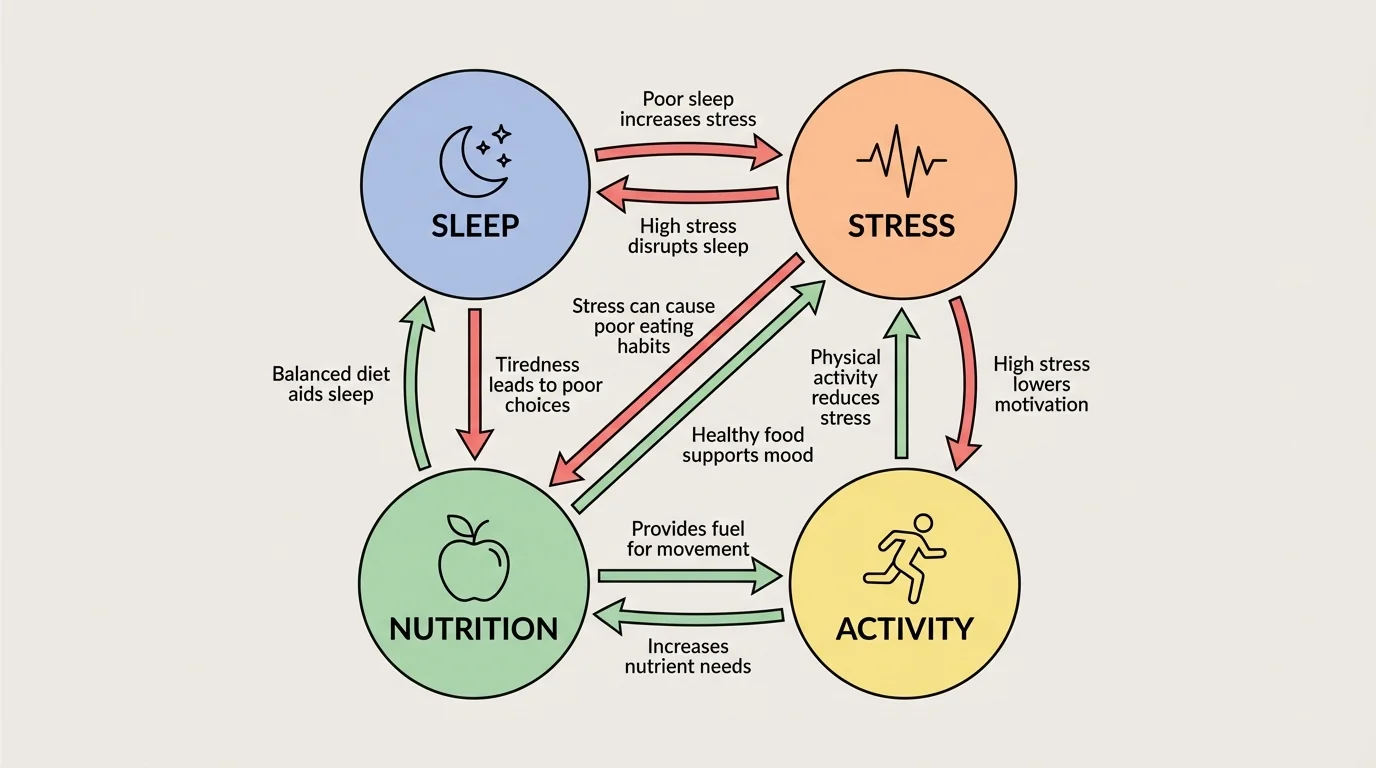
The reverse is true too. If you sleep better, you may feel calmer. If you feel calmer, you may eat more regularly. If you eat and drink enough, you may have more energy to move. If you move, your stress may go down and your sleep may improve again. Healthy habits often work together like dominoes in a good way.
Here is a realistic example. A student stays up very late watching videos, wakes up exhausted, skips breakfast, feels stressed during lessons, snaps at a sibling, and then says, "I'm just bad at focusing." But the problem may not be their character. It may be a set of habits affecting their functioning.
Here is another example. A student gets enough sleep most nights, keeps a water bottle nearby, has a simple breakfast, takes short movement breaks, and uses breathing when stressed. That student will still have hard days, but they have built support for their brain and body. The same lesson or chore may feel much more manageable.
"Small daily habits shape big daily outcomes."
Understanding this system helps you avoid blaming yourself unfairly. Sometimes the best fix is not "try harder." Sometimes the better question is, "What does my body need so my brain can do its job?"
You do not need to change everything at once. In fact, trying to change too much usually makes people quit. Start with one or two habits that would help the most right now.
A simple self-check can help. Ask yourself these questions: Am I sleeping enough most nights? Do I feel stressed often? Am I eating regular meals and drinking water? Am I moving enough to keep my body active and relaxed? Your answers can point to the area that needs attention first.
Create your own basic plan
Step 1: Pick one health habit to improve first, such as bedtime, breakfast, water, or movement breaks.
Step 2: Make the goal small and clear. "Go to bed earlier" is vague. "Turn off videos by a certain time" is clearer.
Step 3: Set up your environment. Put a water bottle where you study. Place walking shoes by the door. Charge devices outside your sleeping area if possible.
Step 4: Ask for support from an adult if needed.
Step 5: Check how you feel after a few days. Look for changes in mood, focus, energy, and patience.
Simple plans work best when they fit your real life.
If you notice big problems that do not improve, such as serious trouble sleeping, constant stress, extreme tiredness, frequent headaches, or major mood changes, tell a trusted adult. Sometimes you need more support, and asking for help is a smart health choice.
You function best when your body and brain are cared for together. Rest, calm, fuel, and movement are not extras. They are part of how you learn, think, feel, and handle everyday life.
