Governments answer not only to courts, legislatures, or executives. In a healthy democracy, they are also watched by ordinary people, organized groups, and a free press. That fact is easy to miss until a local policy changes because residents flood a school board meeting, or a journalist uncovers records that force officials to explain their actions. Public power is never supposed to operate in darkness for long.
In the United States and other constitutional democracies, formal checks and balances exist inside government. But outside government, society creates another layer of protection. Citizens speak, protest, organize, publish, investigate, vote, and question. These actions can pressure leaders to change course, reveal abuse, or defend rights that might otherwise be ignored.
[Figure 1] Government officials make decisions that affect taxes, schools, roads, public safety, health, voting rules, and much more. Because those decisions shape everyday life, public accountability depends on several outside forces working together. If citizens do not pay attention, if organizations stay silent, and if the press does not investigate, officials may act without enough public scrutiny.
These outside checks matter because legal power and public trust are not identical. A government may have the authority to act, but people still have the right to question whether that action is fair, effective, constitutional, or ethical. Public oversight helps expose corruption, challenge bad policy, and bring attention to groups whose voices are often overlooked.
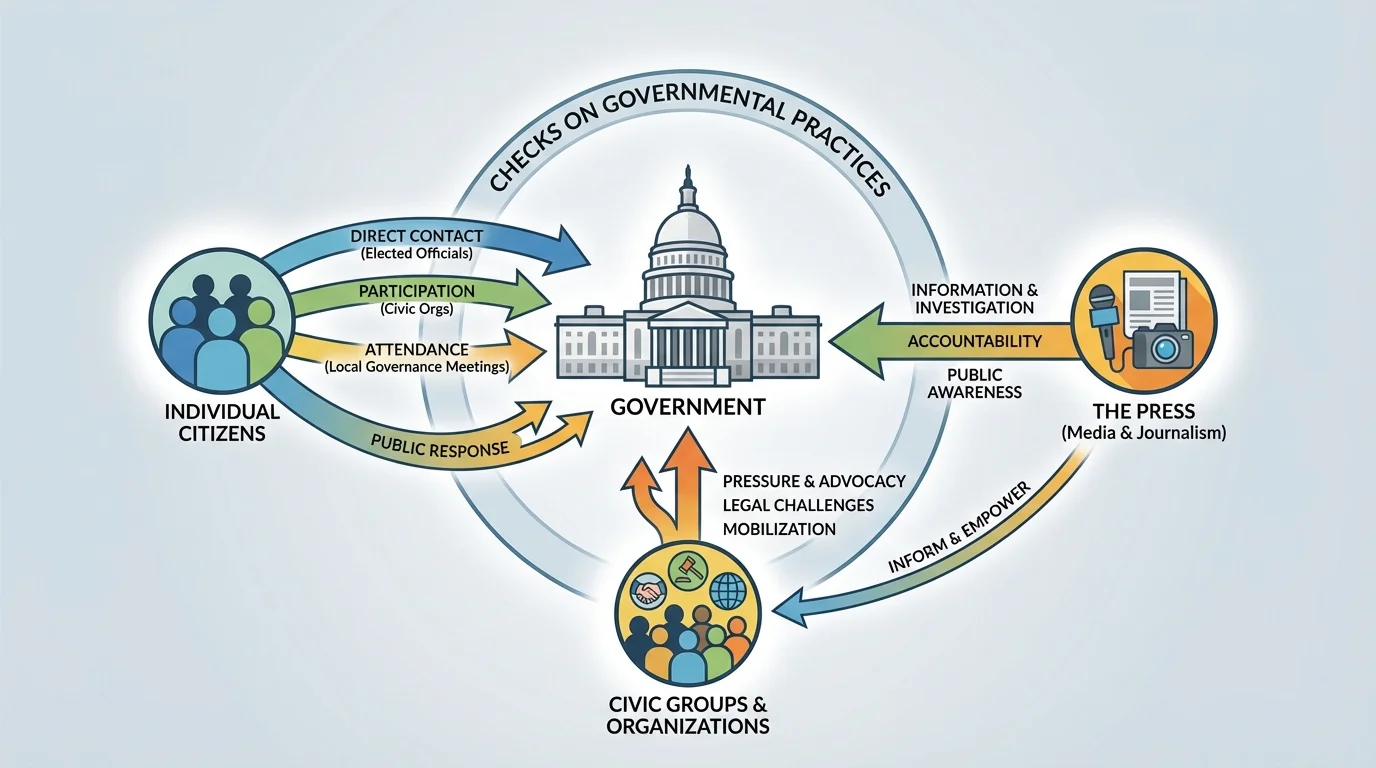
Outside checks also strengthen transparency, which means government actions are open enough for the public to examine. Budget reports, meeting agendas, public records, and press briefings all make it easier for people to understand what government is doing. Without transparency, citizens cannot make informed judgments.
Checks on government are actions or institutions that limit abuse of power and encourage responsible decision-making. Civil society is the network of people, organizations, associations, and media outside government that helps shape public life. Public opinion is the collection of views held by people in a community or nation, and it can strongly influence elected officials.
Democracy is not self-operating. It requires participation. Elections matter, but elections are only one moment in a much longer process of oversight and engagement.
One person may feel small compared with a government agency or elected office, but individual action can matter greatly. Officials often pay attention when voters contact them directly, especially when those messages are specific, respectful, and connected to community concerns.
[Figure 2] Constituents can influence policy through a series of practical steps: identify an issue, gather facts, contact an official, attend a meeting, and follow up. A student concerned about unsafe traffic near a school, for example, might collect accident reports, speak during public comment, email the city council, and ask for a crosswalk or speed-control measures.
Direct contact with elected officials can take many forms: letters, emails, phone calls, office visits, testimony at hearings, and town hall questions. These methods are especially effective when the person making contact explains the issue clearly, provides evidence, and connects the problem to real community impact. A vague complaint is easier to ignore than a well-supported argument.
People can also sign petitions, write opinion pieces, and meet with staff members who advise elected leaders. In many cases, officials rely on staff to sort concerns, summarize public feedback, and recommend responses. That means respectful, well-organized communication can travel farther than students sometimes expect.
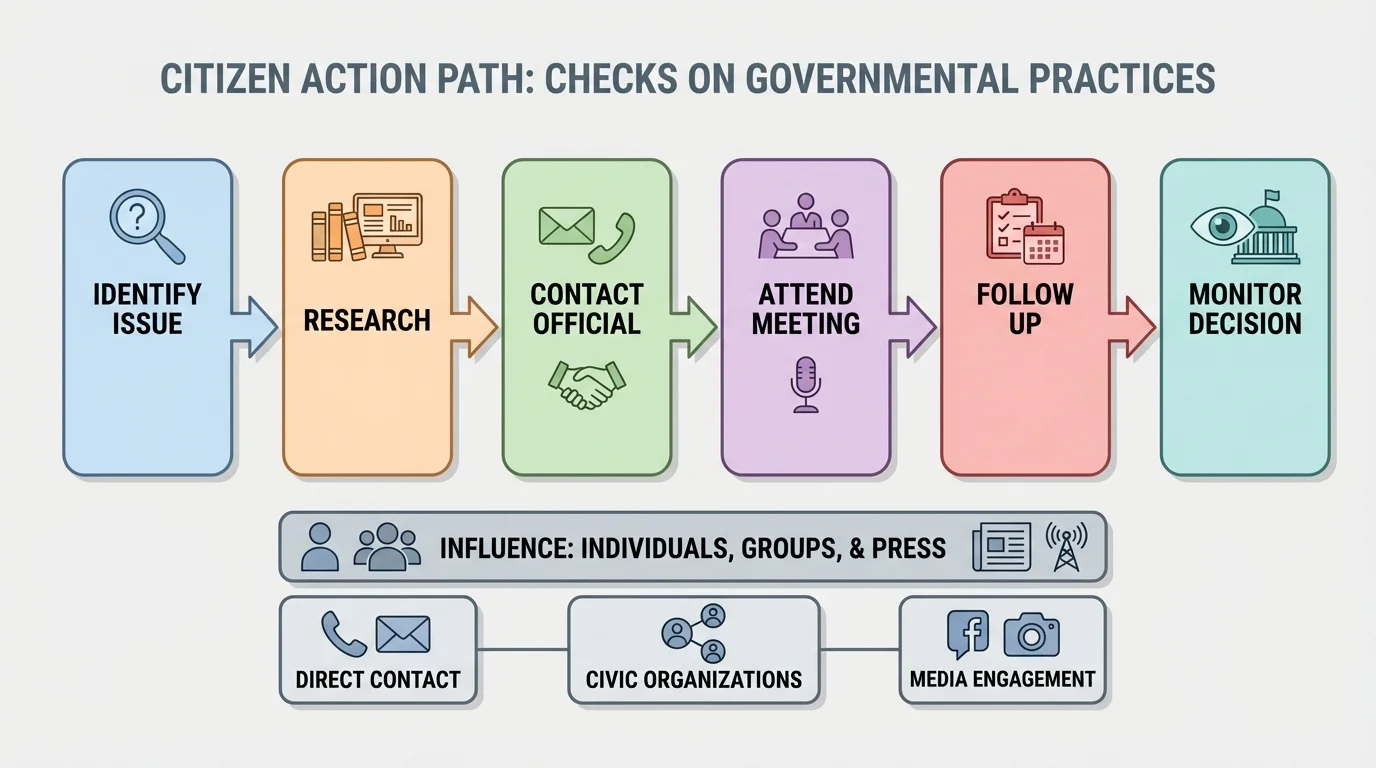
Individual action matters most when it is consistent. One email may be noted: repeated follow-up, attendance at meetings, and collaboration with neighbors can turn a personal concern into a policy issue. Civic influence often works as a process rather than a single event.
Case study: A student pushes for cleaner drinking water fountains
A high school student notices that several fountains in an older school building are broken or discolored. Instead of only complaining to friends, the student uses civic action.
Step 1: Define the problem.
The student records which fountains do not work and takes note of how many students are affected during lunch and passing periods.
Step 2: Gather information.
The student reviews school board agendas, checks district maintenance reports, and asks administrators how repair requests are handled.
Step 3: Contact decision-makers.
The student emails the principal and school board members with a clear description of the issue and asks to speak during public comment.
Step 4: Follow through.
After speaking at the meeting, the student tracks whether the issue appears in later agendas and asks for updates.
This is a small-scale example, but it shows how direct contact can turn a problem into an official response.
Individual action can also include voting once a person is eligible, helping others register, or researching ballot measures. Even before reaching voting age, students can learn how local policy decisions are made and how to communicate with those in power.
While individuals can be influential, organized groups often have greater reach. A civic organization is a group formed to address public concerns, serve communities, or advocate for social and political goals. These organizations may include neighborhood associations, advocacy nonprofits, labor unions, professional groups, youth organizations, or civil rights groups.
Groups amplify voices. If one resident complains about a polluted creek, officials may take note. If a local environmental organization presents water-quality data, mobilizes residents, and works with lawyers or scientists, the issue becomes harder to dismiss. Organization can turn scattered frustration into sustained public pressure.
Groups also help people develop expertise. Members may divide tasks: some research laws, some speak publicly, some gather signatures, and some communicate with the press. This division of labor makes collective action more powerful than isolated effort.
Why organized action matters
Groups create structure. They can meet regularly, set goals, gather evidence, raise funds, and coordinate public messaging. Because they persist over time, they often outlast a single news cycle or election season, which makes them effective at pressing for long-term change.
Not all groups have the same goals, and that is an important part of pluralism in a democracy. Business associations, civil liberties groups, veterans' organizations, parent coalitions, and tribal advocacy groups may disagree sharply. Their competition can itself serve as a check, because no single voice automatically controls the public conversation.
At the same time, group influence is not always equal. Organizations with more money, connections, or media access often gain more attention. That uneven influence is one reason broad public participation remains important. Democracy works best when many kinds of people join public life, not only the wealthiest or most powerful.
A free press acts as a watchdog over government. Journalists attend meetings, interview sources, review records, analyze budgets, and ask questions officials may prefer to avoid. When reporting is careful and evidence-based, it helps citizens understand what government is doing in their name.
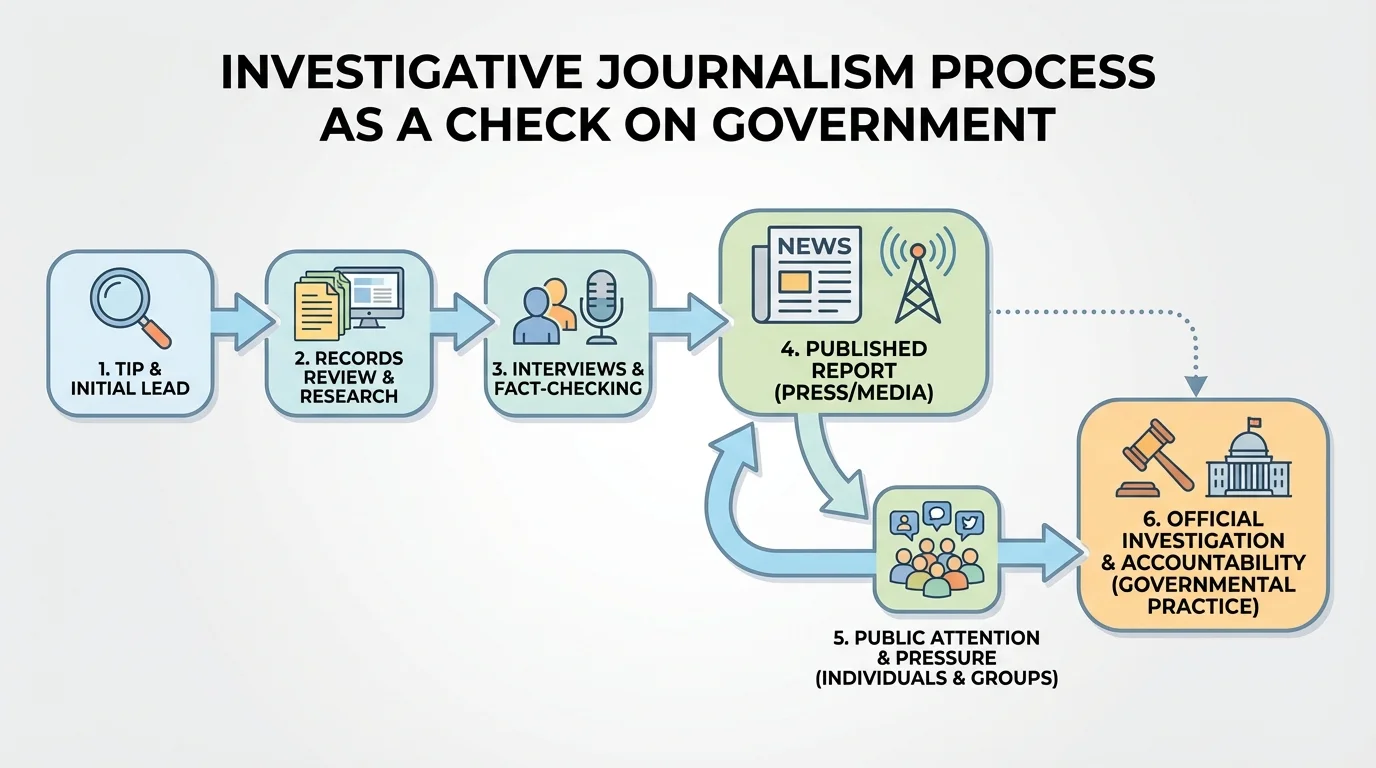
[Figure 3] The watchdog role of the press is essential because most people cannot personally monitor every agency, department, board, or committee. Reporters help bridge that gap. They can compare what leaders promise with what actually happens, and they can uncover misconduct that might otherwise remain hidden.
Investigative journalism goes beyond repeating official statements. It involves deep reporting, document review, source verification, and sometimes months of work. Famous examples include reporting during the Watergate scandal in the 1970s, which helped expose abuses of presidential power and contributed to major political consequences.
The press also shapes which issues receive attention. This is sometimes called agenda setting: the power to influence what the public talks about by deciding what stories receive coverage. If local news repeatedly reports on housing costs, school safety, or water contamination, those issues often rise in political importance.
Yet the press is not perfect. News organizations can make mistakes, show bias, or focus too heavily on conflict. Some outlets prioritize speed or entertainment over accuracy. That is why media literacy matters. Students should compare sources, distinguish reporting from opinion, and ask whether evidence supports a claim.
"The people must know before they can act."
— A principle often associated with democratic self-government
The role of the press becomes even clearer when public trust is under strain. The publication of verified information can trigger official investigations, public debate, resignations, policy reforms, or court cases. Information itself can become a check on power.
Today, public debate happens not only in newspapers and television broadcasts but also across digital platforms. Social media activism can spread information quickly, connect people across large distances, and allow users to document events in real time. A video from a city council meeting or a post about unsafe school conditions can reach thousands of people within hours.
This speed has changed civic life. Students, community members, and advocacy groups can raise awareness, organize events, contact reporters, and pressure officials without waiting for traditional media coverage. Hashtags, live streams, and shared documents can help transform local concerns into wider public issues.
Social media is especially powerful when it supports other forms of participation rather than replacing them. A post that encourages people to show up at a school board meeting, submit public comments, or call legislators can strengthen democratic action. Online attention matters most when it leads to offline engagement.
Some major public controversies first gained wide attention because ordinary people posted videos, documents, or eyewitness accounts online before large news outlets fully covered the story.
But digital tools also create serious risks. False claims can spread rapidly. Images and clips can be edited in misleading ways. Algorithms may reinforce echo chambers, where users mainly see ideas they already agree with. That can deepen polarization and make compromise harder.
Responsible digital participation requires source checking, patience, and skepticism. Before sharing a claim, citizens should ask who created it, whether evidence is provided, whether multiple reliable sources confirm it, and whether the information may be emotionally manipulative. Quick reactions are easy; informed judgment is harder and more valuable.
[Figure 4] Some of the most direct checks on government happen close to home. School board meetings, city council sessions, county commission hearings, and tribal council meetings make government visible and accessible. These meetings often include agendas, reports, votes, and public comment periods where residents can speak directly to decision-makers.
Attending a local meeting changes politics from an abstract idea into a visible process. Students can see who proposes a policy, who supports it, who objects, and how public pressure affects the discussion. Even silence can be meaningful: if a room is full of concerned residents, officials notice.
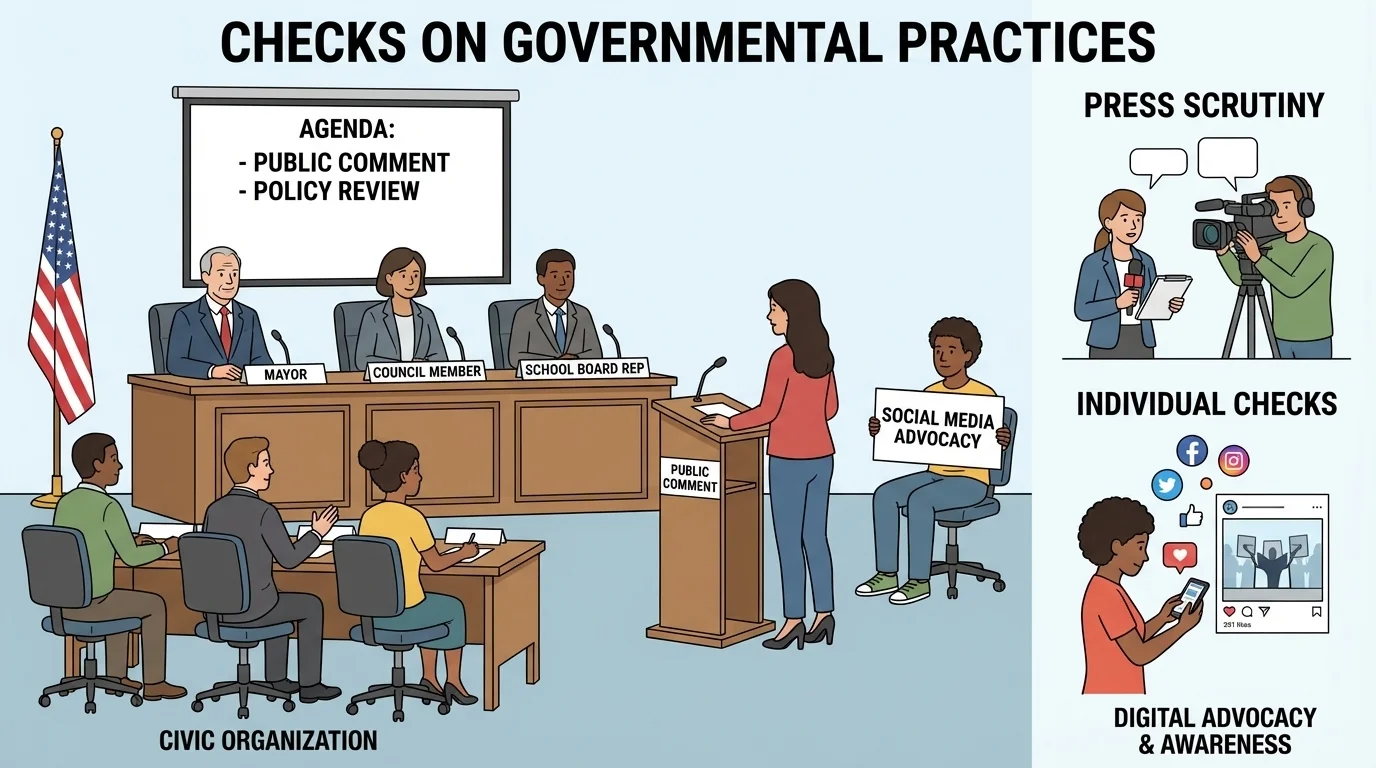
Public meetings also create records. Minutes, recordings, agendas, and vote counts allow residents to track what happened and compare later statements to earlier actions. That record helps prevent officials from quietly changing positions without explanation.
Local meetings matter because many high-impact decisions are local: school policies, zoning, police oversight, library policies, transportation plans, and water systems. People often focus on national politics, but daily life is heavily shaped by local government.
Example: Public comment at a school board meeting
A district proposes to change attendance boundaries. Families worry that the plan will increase travel time and separate neighborhoods.
Step 1: Residents read the agenda and proposal documents before the meeting.
Step 2: Several speakers prepare short statements using enrollment data, transportation concerns, and community impact.
Step 3: Local reporters cover the debate, and community organizations share the issue online.
Step 4: The board delays the vote and requests revisions after strong public response.
This does not guarantee the public gets exactly what it wants, but it demonstrates how attendance and testimony can shape decisions.
Later, when students think about how visible public pressure affects officials, the setting itself remains useful: it reminds us that democracy often happens face-to-face, under observation, and on the public record.
History offers many examples of outside checks on government. During the civil rights movement, individuals and organized groups challenged unjust laws through boycotts, litigation, marches, media outreach, and public testimony. Their efforts changed laws and public opinion, but they also revealed how difficult reform can be when power resists scrutiny.
The Watergate scandal is another major example. Investigative reporting, congressional inquiry, and public attention combined to expose wrongdoing at the highest level of government. No single actor created accountability alone; journalists, officials, and the public all played parts.
Contemporary examples appear at the local level too. Residents may organize against industrial pollution, demand police body-camera policies, push for changes to school discipline rules, or challenge restrictions on library materials. In each case, individuals, groups, and media coverage can interact to influence what government does next.
Young people have also become important civic voices. Student-led advocacy on gun violence, climate policy, mental health, and educational equity has shown that age does not prevent public influence. When students research issues carefully and communicate clearly, they can affect both public opinion and official decisions.
Checks on government are powerful, but they are not automatically wise or fair. Public pressure can expose injustice, but it can also spread rumors, target people unfairly, or reward the loudest voices over the best evidence. That is why a strong civil society depends not only on freedom but also on responsibility.
Responsible civic participation involves accuracy, respect for law, willingness to hear opposing views, and commitment to evidence. Citizens do not need to agree on everything. In fact, disagreement is normal in democracy. What matters is whether people can argue in good faith and use credible information.
Rights such as freedom of speech, press, assembly, and petition are closely connected. They protect the public's ability to question government, organize with others, publish concerns, and ask for change.
It is also important to recognize that no single method is enough by itself. A social media post without evidence may fade quickly. A meeting with officials without public support may go nowhere. A news article without follow-up may be forgotten. Civic influence is usually strongest when methods combine: research, direct contact, organization, public attention, and persistent monitoring.
To participate well in a civil society, students need more than opinions. They need informed positions built on research, evidence, and thoughtful reasoning. That begins with defining the issue clearly: What policy is being proposed? Who will be affected? What problem is the policy trying to solve?
Next, students should compare sources. Official documents, meeting agendas, local news coverage, public data, expert analysis, and community testimony each provide different kinds of information. Strong civic reasoning does not rely on one post, one headline, or one speaker alone.
Students should also ask good evaluative questions: Is the source credible? Is the evidence current? Does the argument confuse opinion with fact? Are important voices missing? How might different groups view the policy differently?
| Method of civic influence | How it checks government | Strengths | Possible limits |
|---|---|---|---|
| Direct contact with officials | Signals constituent concerns and pressures representatives to respond | Personal, specific, often immediate | May have limited reach if done alone |
| Civic organizations | Organize people, evidence, and strategy | Amplifies voices and sustains action | Influence may vary by resources |
| Press coverage | Investigates, informs, and exposes misconduct | Reaches large audiences, creates public scrutiny | Can include bias, error, or uneven coverage |
| Social media | Spreads information and mobilizes participation rapidly | Fast, accessible, wide reach | Misinformation spreads quickly too |
| Local meeting attendance | Makes officials answer publicly and creates visible accountability | Direct observation of decision-making | Requires time, access, and preparation |
Table 1. Comparison of major ways individuals, groups, and the press can act as checks on government.
Forming a position also means being ready to revise it. If new evidence appears, responsible citizens adjust. That flexibility is not weakness. It is a sign of intellectual honesty.
Government is strongest when it is answerable to the people, and the people are strongest when they are informed, organized, and engaged. Individuals, groups, and the press do not replace formal institutions, but they help ensure those institutions remain visible, responsive, and accountable.
