What would happen if everyone talked at the same time, ran anywhere they wanted, and never waited for a turn? A room could become loud, disorganized, and unsafe very quickly. That is why rules matter. Rules help people live, learn, and play together.
A rule is something that tells us what we should do or should not do. Rules can be very simple. A rule might be "Use walking feet indoors" or "Take turns." Rules are not made to spoil fun. Good rules help everyone know what is expected.
Rules are directions that help people know how to act in a group. They help keep people safe, treated fairly, and ready to learn or play together.
Children and adults use rules every day. At home, a rule may be putting toys away after playing. At school, a rule may be raising a hand before speaking. On the playground, a rule may be waiting in line for the slide.
We need rules because they help with safety, fairness, and order in shared spaces where people learn, listen, and work together. When people know the rules, they can make better choices. This helps everyone feel calmer and more secure.
Rules help keep people safe. If a teacher says, "Walk in the classroom, not run," that rule helps prevent pushing and falling. If a family says, "Hold an adult's hand in a parking lot," that rule helps protect children from danger. Safety rules are very important because they help prevent injuries.
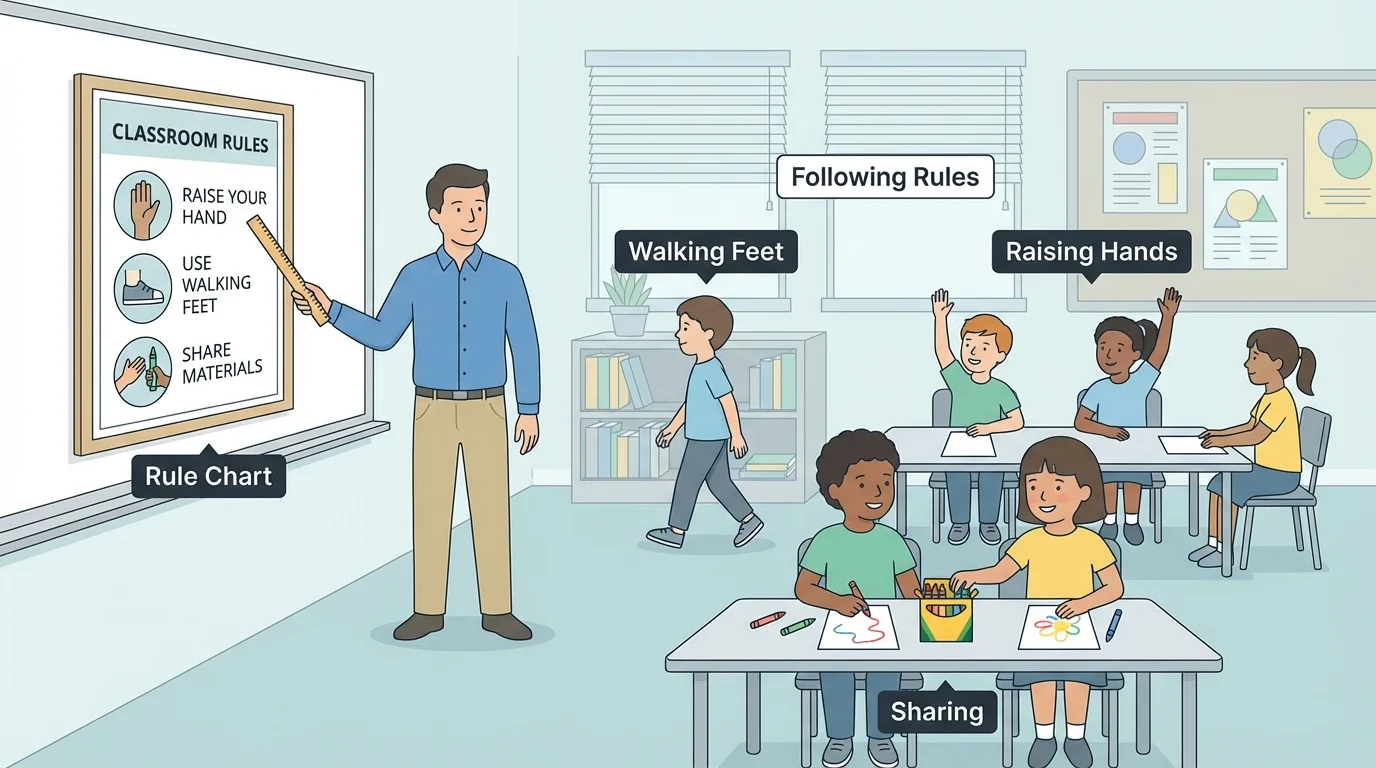
Rules also help people be fair. Fair means people are treated in a way that is right and kind. If only one child got every turn, that would not feel fair. A rule like "Everyone gets a turn" helps all children join in.
Rules help people learn, too. In a classroom, listening when someone else speaks helps everyone hear the story or directions. Cleaning up after an activity helps the room stay ready for the next thing. The same idea applies in many places: when people follow rules, a group can work better together.
How rules help groups
Rules help a group by giving clear expectations. People know when to stop, when to listen, when to share, and how to stay safe. Without those clear expectations, it is much harder for a group to learn, play, or solve problems together.
Another reason we need rules is kindness. Rules can remind us to use gentle hands, kind words, and patient waiting. These rules help people feel respected and included.
Rules can be found in many places. At home, rules may help a family care for each other. A child may have rules like washing hands before eating, going to bed on time, or helping clean up. These rules help a home run smoothly.
At school, rules help many children and adults share one space. Some school rules are listening to the teacher, keeping your hands to yourself, and lining up quietly. These rules help the class stay safe and ready to learn.
In the community, rules help even more people. Drivers stop at red lights. People wait in line at the store. Library visitors use quiet voices. Community rules help many different people get along in shared places.
| Place | Example Rule | Why It Helps |
|---|---|---|
| Home | Put toys away | Keeps the area neat and safe |
| School | Raise your hand | Helps everyone get a turn to speak |
| Playground | Wait for the slide | Prevents bumping and pushing |
| Community | Stop at red lights | Keeps people safer on roads |
Table 1. Examples of rules in different places and how they help people.
Even games need rules. If no one knows when a turn starts or ends, the game can become confusing very quickly.
Some rules are spoken, and some are written on signs or charts. A stop sign tells drivers what to do. A class chart may show rules with pictures and words so children can remember them.
Sometimes people help make rules together by using democracy. In a classroom, children may talk about what helps everyone learn and play safely. Then the class and teacher can choose rules that are good for the whole group.
When people make rules together, they should listen carefully, take turns speaking, and think about others. A rule should not help only one person. It should help the whole group. This is part of making a logical decision: we think about what makes sense and what helps everyone.
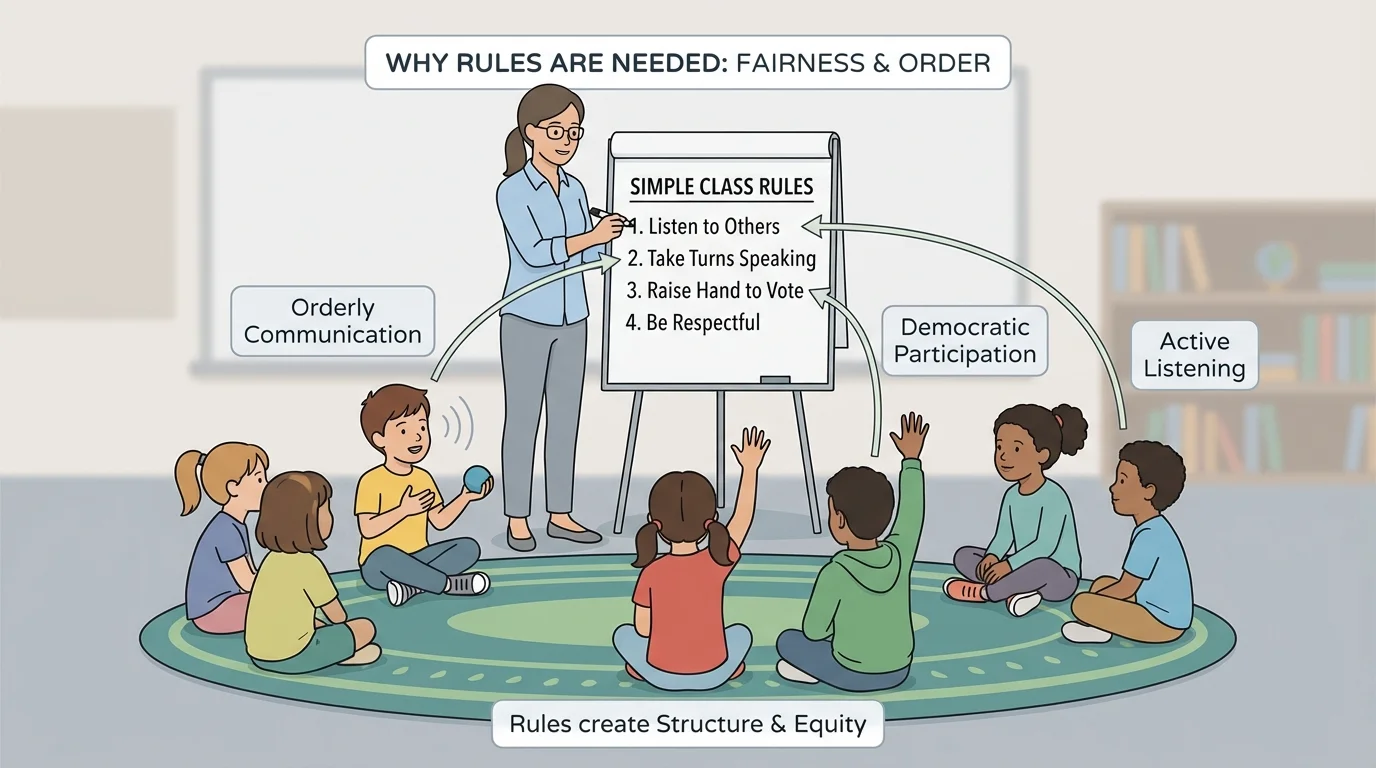
A class might choose a rule like "Use kind words" because it helps everyone feel safe and welcome. A class might choose "Clean up before snack" because it keeps the room ready and organized. These are examples of group decisions.
Class rule example
A class is deciding on a rule for center time.
Step 1: Children talk about a problem.
Sometimes children grab toys and others feel sad.
Step 2: The class shares ideas.
They suggest "Take turns" and "Ask before taking."
Step 3: The class chooses a fair rule.
They decide on "Take turns and use kind words."
This rule helps many children, not just one child.
Listening to others is important in a group. The children shown here demonstrate that making rules can be peaceful and thoughtful. People do not always pick their favorite idea. They try to choose a rule that is fair and helpful.
Without rules, people may not know what to do. They might interrupt, push, skip the line, or take things without asking. That can cause hurt feelings, confusion, and danger.
Think about crossing a street. If cars did not stop and people did not look carefully, crossing would be unsafe. Think about a classroom with no rule for sharing crayons. One child might take them all, and others would not be able to work. Rules help stop these problems before they start.
You already know that taking turns, listening, and being kind help people work together. Rules put those good habits into clear words so everyone can remember them.
Not every rule feels fun, but a good rule has a reason. If a rule protects people, helps everyone get a turn, or keeps a place calm, it is doing important work.
Following rules shows responsibility. It means a person understands that their actions affect other people. When children follow rules, they help their class, family, and community.
Sometimes a rule may need to change. People can talk about what is working and what is not. Then they can make a better rule. This is another part of good group decision-making. We can listen, think, and improve together.
Good rules are clear, fair, and helpful. They are needed because people share spaces, materials, and time. Rules help groups stay safe, solve problems, and treat one another with respect.
