What if you wanted a banana but all you had was a teddy bear? The store might not want your teddy bear. That is one big reason people use money. Money helps people get things they need and want in a simple way.
Money is something people use to buy things. We can use money to get food, clothes, toys, books, and many other things. Grown-ups use money to pay for homes, water, and electricity too.
Money has a purpose. Its purpose is to help people buy and sell. When one person has apples and another person has bread, money helps them trade in a fair and easy way without swapping objects directly.
Money is something people use to pay for goods and services.
Goods are things we can touch, like a ball or an apple.
Services are jobs people do for others, like cutting hair or driving a bus.
People work to earn money. Then they use that money to buy what they need. In this way, money connects work and buying things.
Long ago, people sometimes used barter, which means trading one thing for another. As [Figure 1] shows, barter can be tricky because both people must want what the other person has at the same time.
If one child has a toy car and wants crackers, the child with crackers might not want a toy car. Then the trade does not work. Money makes this easier because many people agree that money can be used to buy many different things.
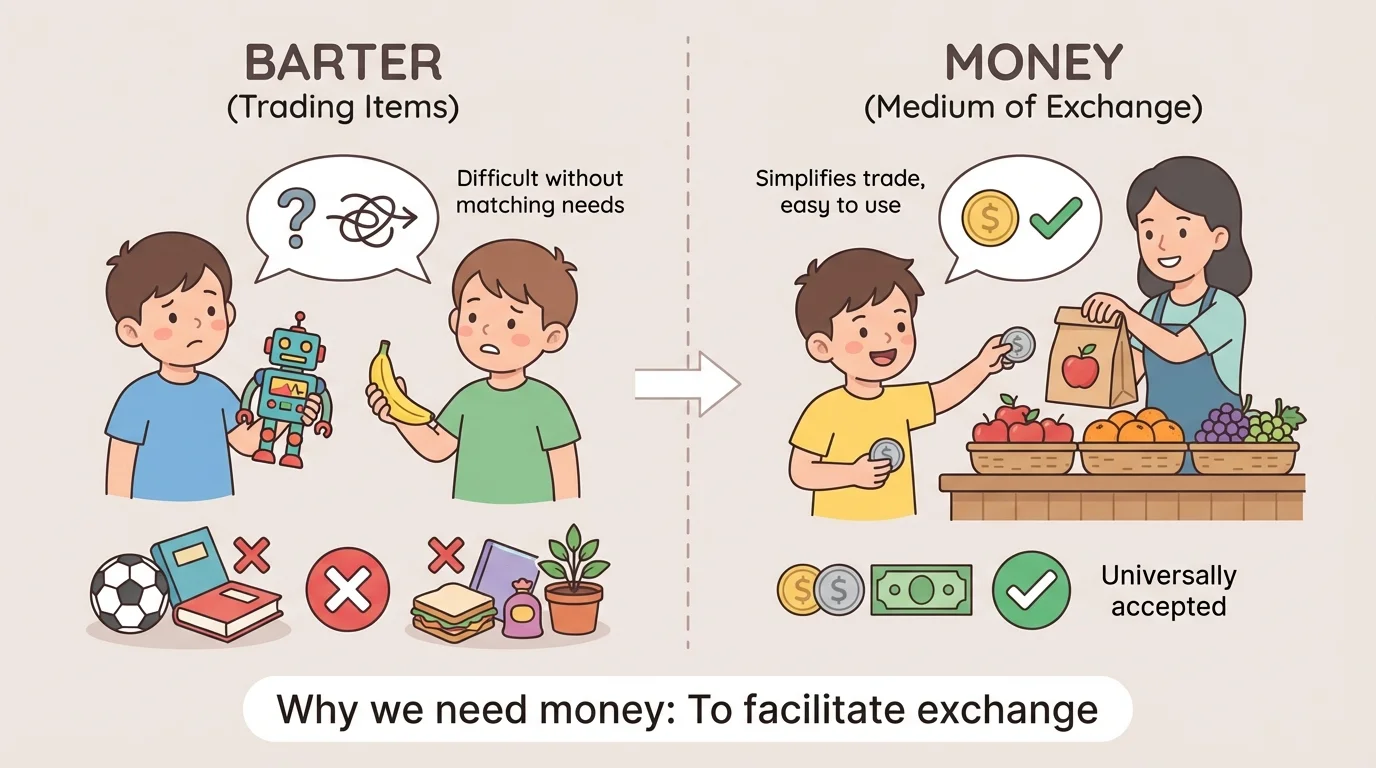
Money is helpful because it is accepted in many places. A store may not take a shoe or a stuffed animal as payment, but it will usually take money.
Why money is easier than barter
Money works as a common tool. Instead of finding someone who wants exactly what you have, you can use money to buy what you need. This saves time and avoids confusion.
That is why money helps families, stores, and workers every day. We can all understand what it is for.
Money helps us buy things. If a family needs milk, bread, or soap, they can use money at the store. If someone fixes a bike or teaches music, that person can be paid with money for the service.
Money also helps us make choices. We cannot always get everything we see. Sometimes we choose one thing now and save money for something else later.
Saving means keeping some money to use another time. A child may save coins in a jar for a book or a puzzle. An adult may save money for a car or for emergencies.
Real-life example
Lina has $5. She can buy a snack now, or she can keep the money for later. If she saves it, she may be able to buy something bigger another day. This shows that money helps people plan.
Money can also be used to share and help. People may give money to family, buy a gift, or donate to others in need.
Money can look different. People may use coins, paper bills, cards, or phones to pay for things, as [Figure 2] illustrates.
Even when money looks different, its job is still the same. It helps people pay in a way others recognize and accept.
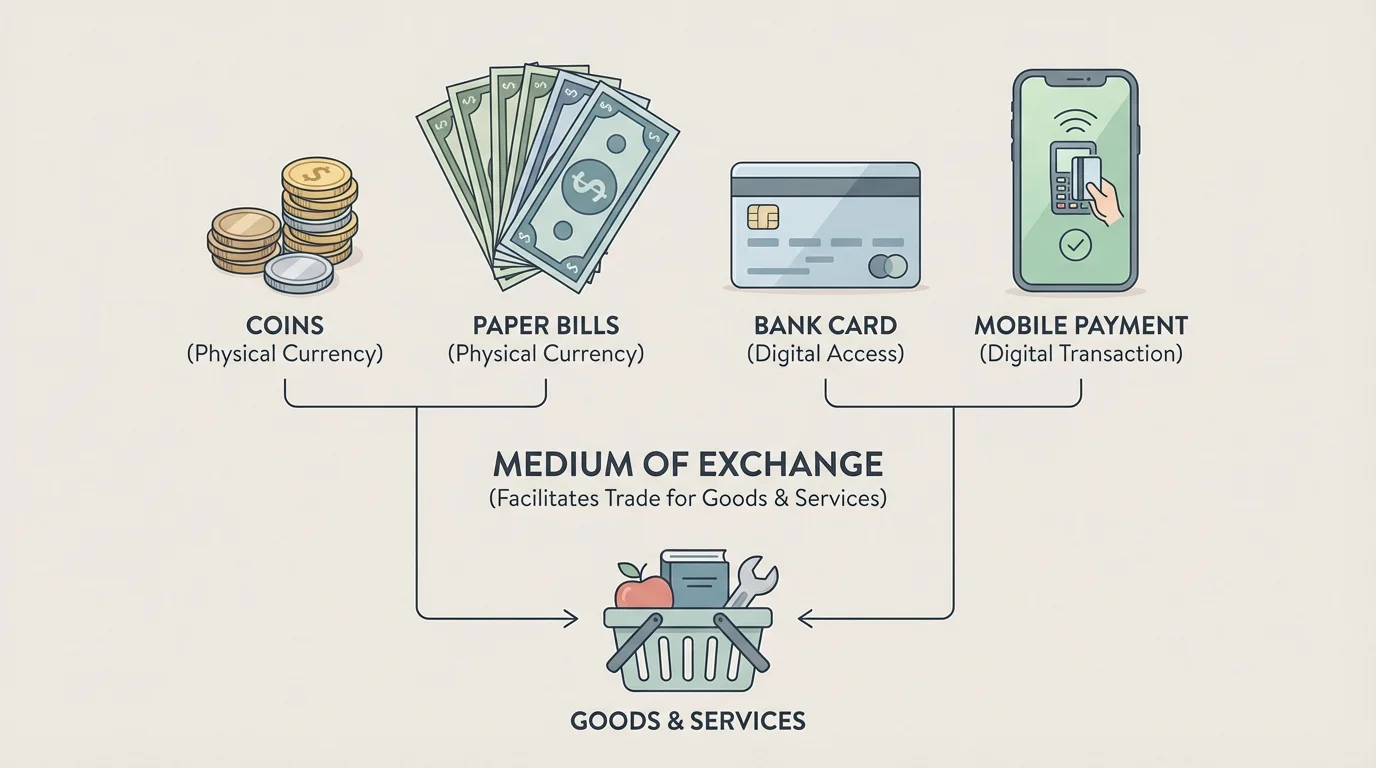
| Kind of money | What it is like |
|---|---|
| Coins | Small metal money |
| Bills | Paper money |
| Card | A card used to make payments, often from a bank account |
| Phone payment | Paying with a phone in some stores |
Children may see adults use different forms of money, but the big idea stays the same: money helps people get goods and services. These forms of money all do this job.
Money is important because people do not have an endless amount of it. Families make choices about what they need most. Needs can include food, clothing, and a place to live. Wants can include toys, treats, or games.
Learning about money helps children understand why adults sometimes say, "Not today," or "We are saving for that." Those choices help people use money carefully.
Many places around the world use different coins and bills, but people everywhere use money for the same basic reason: it makes buying and selling easier.
When people understand money, they can make better choices. They can earn it, use it, save it, and share it in helpful ways. The problem of barter we saw in [Figure 1] helps us see why money became such an important tool.
Money is not just coins and paper. It is a way for people to work together. It helps a farmer sell food, a driver give rides, a baker sell bread, and a family buy what they need.
