What do you do if your screen freezes, your pencil is missing, or you forget what to do next? Little problems can feel big when you are learning at home. The good news is that you can solve many problems by using a plan. When you have a plan, your brain does not have to guess. You can go one step at a time.
A problem is something that is not going the way you want. Maybe your video lesson starts and you cannot hear. Maybe you have crayons when you need scissors. Maybe you feel upset because a task looks hard. These are everyday classroom problems for students learning online.
Problems are normal. Everyone has them. Good problem solvers do not need to be perfect. They slow down, look carefully, and make a smart choice. That helps them keep learning instead of staying stuck.
Step-by-step process means doing one small action at a time in order. It helps you stay calm and figure out what to do next.
Choice means something you can do. A problem may have more than one choice, and you can think about which one is best.
When you solve a problem step by step, you are using careful thinking. You are not just reacting right away. That can help you feel safer, calmer, and more ready to learn.
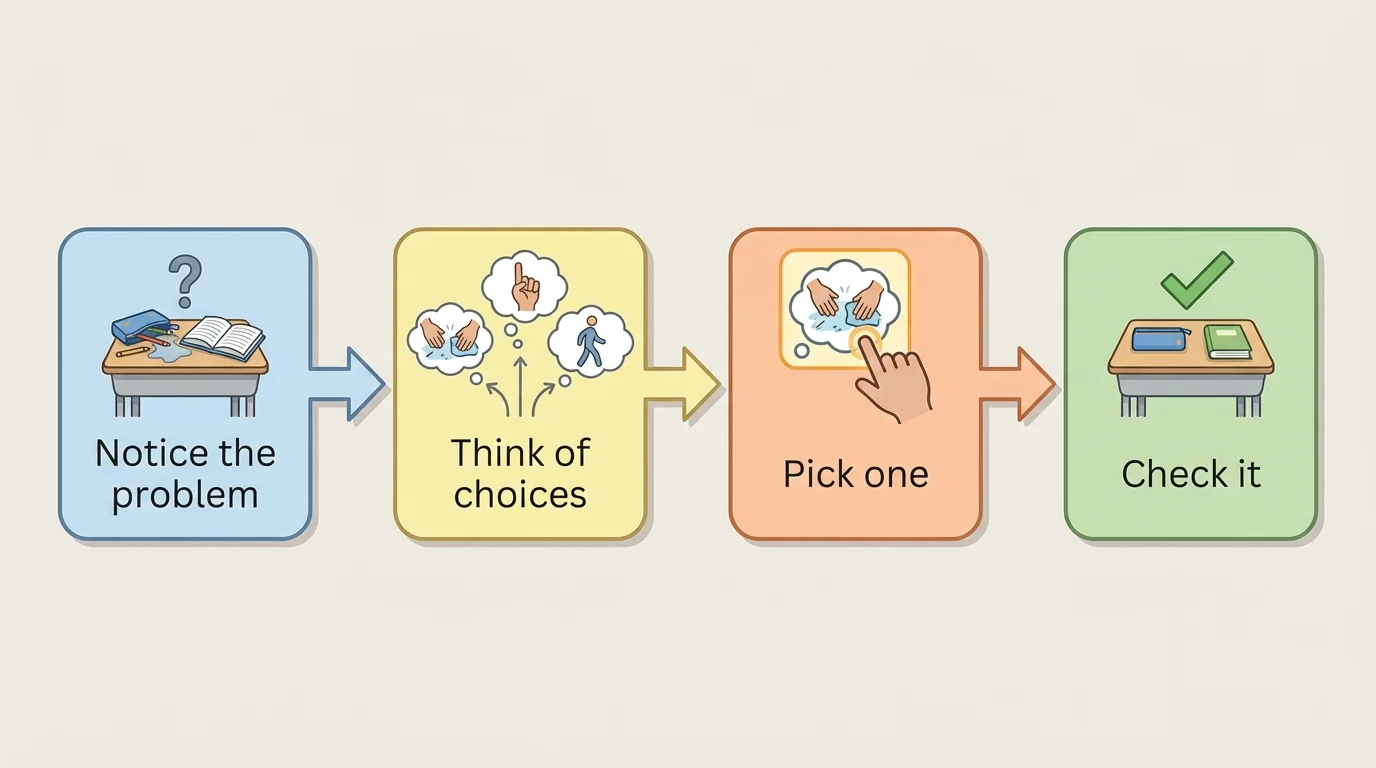
You can use a step-by-step process every time. The plan in [Figure 1] keeps problem solving simple: notice the problem, think of choices, pick one, and check what happened.
Step 1: Notice the problem. Say the problem in a short way. You might say, "My page will not load," or "I do not know which folder to open." When you name the problem, it becomes clearer.
Step 2: Think of choices. Ask yourself, "What can I do?" Try to think of two or three choices. For example: refresh the page, check the internet, or ask an adult for help. This means thinking carefully about your choices.
Step 3: Pick one choice and do it. Choose the idea that seems safe and helpful. Then try it. Do one thing, not many things all at once.
Step 4: Check. Ask, "Did it work?" If yes, great. If not, go back and try another choice. Checking helps you learn what works best.
You do not have to solve everything alone. If the problem is too big, not safe, or makes you very upset, a trusted grown-up can help. Asking for help is also a smart step.
Why the steps help
When you go in order, your brain can focus on one small job at a time. First you understand the problem. Next you think. Then you act. Last you check. This stops rushing and helps you make better decisions.
Sometimes children skip from the problem right to a fast action. They may click random buttons or cry before they know what is wrong. The four-step plan helps you slow down and solve the real problem, as [Figure 1] shows.
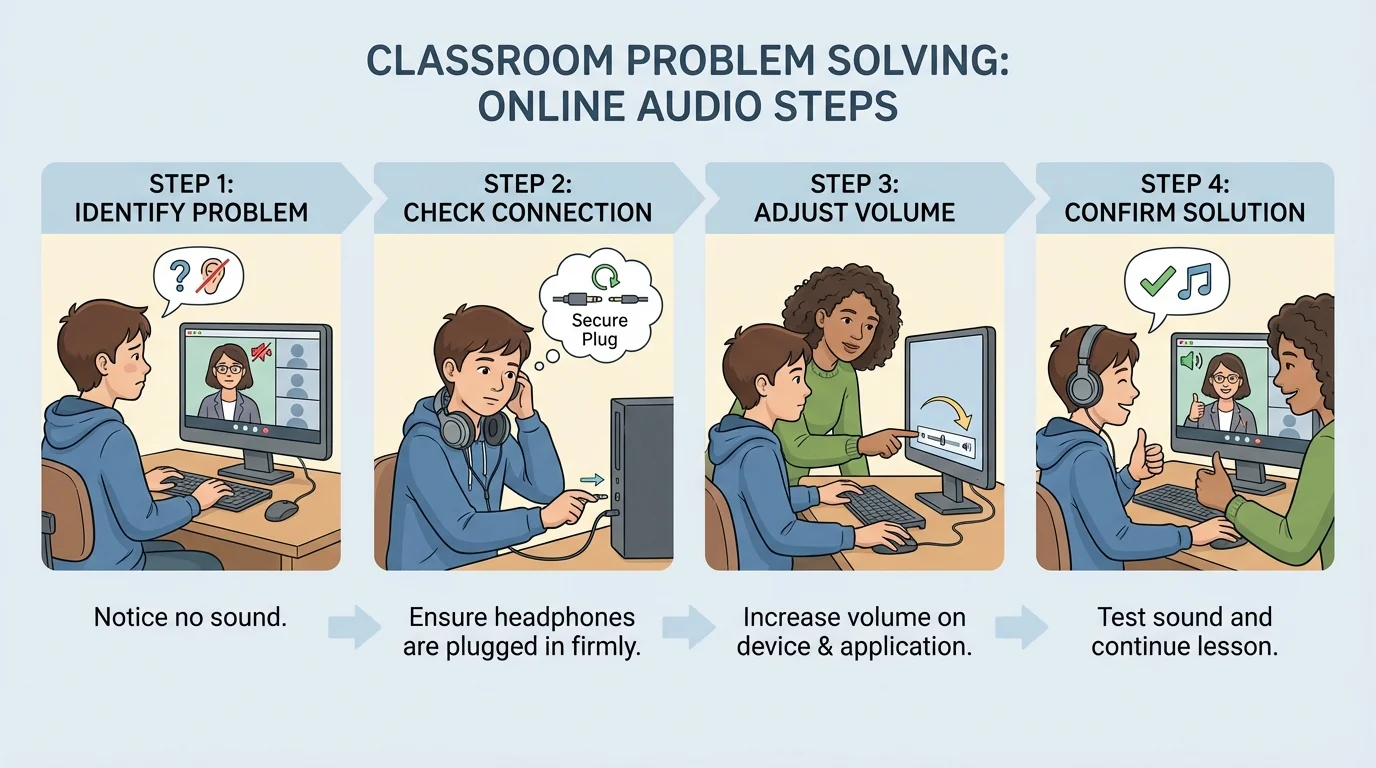
[Figure 2] shows an everyday example of how the steps work during online learning and home study time.
Example 1: Your sound is not working during a video lesson. First, notice the problem: "I cannot hear." Next, think of choices: check headphones, turn up volume, or ask for help. Then pick one: check the volume. Last, check: if sound comes back, the problem is solved. If not, try the next choice.
Example 2: You cannot find your math notebook. Notice the problem: "My notebook is missing." Think of choices: look on your desk, check your backpack, or look in yesterday's work pile. Pick one and check. If it is not there, try another choice.
Example 3: You do not understand the directions. Notice: "I am confused." Think of choices: reread directions slowly, listen to the video again, or send a message to your teacher or ask a grown-up to help you read it. Pick one. Then check if you understand better.
Case study: broken crayon during art time
Step 1: Notice the problem.
You say, "My blue crayon broke, and I still need blue."
Step 2: Think of choices.
You can use the other half, use a blue marker, or ask for help finding another crayon.
Step 3: Pick one choice.
You use the other half first.
Step 4: Check.
If it works, you keep going. If it does not, you try the marker next.
This is problem solving in a calm, simple way.
When you use the steps again and again, your brain gets stronger at solving problems. Soon, small problems do not feel quite so scary.
Good problem solvers use tools to help themselves, and [Figure 3] shows some of the best ones: calm your body, check directions, look at your materials, and ask the right person for help.
One helpful tool is to take a slow breath. When your body is calm, your thinking gets clearer. Another tool is to look closely. Check your screen, your desk, your folder, or the directions before saying, "I can't do it." Sometimes the answer is already there.
You can also use kind words. You might say, "I need help with this step," or "I tried two choices and it still does not work." These words help adults understand what you need.
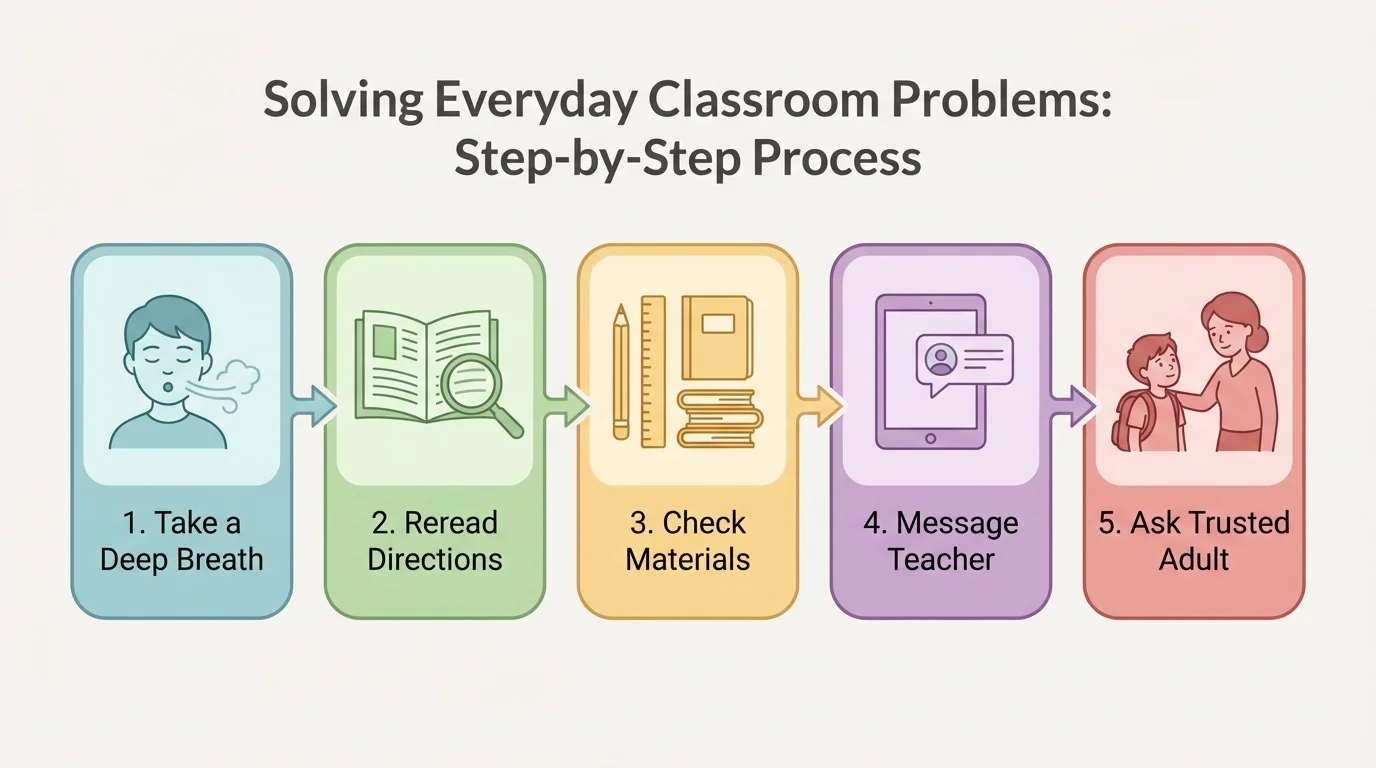
A trusted adult, parent, caregiver, or teacher can help with bigger problems. If the internet stops, if you feel very frustrated, or if something online seems unsafe, tell a grown-up right away. Problem solving includes knowing when help is needed.
Your brain gets better at solving problems each time you practice. Even small choices, like finding a missing eraser or fixing the sound, help you learn how to handle bigger problems later.
The tools in [Figure 3] are useful because they help before a problem grows bigger. A deep breath can stop tears. Rereading can stop confusion. Asking clearly can get faster help.
If you skip steps, you may make the problem harder. For example, if your lesson page will not open and you tap many buttons quickly, you may open the wrong app. Then you have two problems instead of one.
But if you stop and use the process, you save time. You notice the problem, think of choices, pick one, and check. That is careful decision-making. It helps you feel more in control.
| When you rush | When you use the steps |
|---|---|
| Feel mixed up | Feel calmer |
| Guess what to do | Think of choices |
| May make new problems | Fix one problem at a time |
| Need more help later | Often solve small problems sooner |
Table 1. Comparison of rushing through a problem and using a step-by-step process.
Being calm does not mean the problem disappears right away. It means you keep trying in a smart way. That is how strong problem solvers work.
You can use this process during reading time, art time, computer time, cleanup time, and homework time. It works for many kinds of small school problems at home.
At first, you may need reminders. That is okay. You can even say the steps out loud: "Notice. Think. Pick. Check." Each time you do that, you are building a strong habit.
"Stop, think, choose, and check."
— A simple problem-solving rule
Try This: The next time something small goes wrong while you learn at home, pause before you react. Name the problem in one short sentence. Then think of two choices before you do anything.
Try This: If you feel upset, take one slow breath and look again. You may notice something helpful that you missed the first time.
Try This: Practice asking for help with clear words: "This is the problem. I tried this. Can you help me with the next step?"
