Your trash can tells a story about your life. So does your electric bill, your shopping cart, and even the charger left plugged in all day. Sustainable household habits are not just about "saving the planet" in some distant, abstract way. They affect your money, your space, your health, and the kind of future your everyday choices help create.
When people hear the word sustainable, they sometimes picture expensive products, strict rules, or a lifestyle that feels hard to maintain. In real life, sustainable living at home is mostly about making smarter choices with what you already use: sorting waste correctly, wasting less electricity and water, and buying things that last instead of things that quickly become trash.
This matters because small household actions add up fast. If one person throws recyclable materials in the trash every day, leaves lights on in empty rooms, and buys disposable products again and again, the result is more landfill waste, higher bills, and more demand for resources. But when those habits improve, you usually get a cleaner home, lower costs over time, and less waste leaving your house each week.
Sustainable household practices are everyday home habits that reduce waste, save energy and resources, and lower environmental harm while still meeting your needs. They include actions like recycling correctly, using electricity efficiently, conserving water, repairing items, and making thoughtful buying decisions.
There are three main areas to focus on: waste, energy, and consumption. Waste is about what you throw away, recycle, reuse, or compost. Energy is about how your home uses electricity and heating or cooling. Consumption is about what you choose to buy in the first place. If you improve all three, your household becomes more efficient and more responsible.
Good habits have real-world consequences. Suppose two teenagers each buy bottled water every day for a month. One uses a refillable bottle and tap water. The other buys a single-use bottle daily. Even without doing a full yearly calculation, it is obvious that one person creates far more plastic waste and spends much more money. The same pattern happens with paper towels, fast-fashion clothing, batteries, chargers, and food that gets thrown out unused.
Sustainable choices also help you practice independence. If you can notice waste, compare products carefully, and manage household resources wisely, you are building adult life skills. These are the same habits that matter when you eventually live on your own, share an apartment, or help manage a family budget.
Many items people put in recycling bins never get recycled because they are contaminated by food, liquid, or the wrong materials. Recycling works best when people sort clean, accepted items correctly.
That last point is important: doing something with good intentions is not always the same as doing it effectively. Tossing everything "maybe recyclable" into one bin can actually create problems. Sustainable living works best when your habits are informed, not just enthusiastic.
Contamination is one of the biggest reasons recycling fails, and [Figure 1] shows the basic household sorting system that helps prevent it. In practice, contamination means non-recyclable or dirty materials get mixed with recyclable ones. A greasy pizza box, a half-full drink container, or a plastic bag stuffed into the wrong bin can reduce the quality of an entire batch.
The first rule of recycling is simple: follow your local system. Different communities accept different materials. One area may take glass in curbside bins, while another may require drop-off collection. Some places accept only certain plastics. So the most responsible choice is not guessing; it is checking your local waste or sanitation website.
Most recycling systems commonly accept clean paper, cardboard, metal cans, and some rigid plastic containers. Items that often cause confusion include plastic film, foam containers, greasy cardboard, broken ceramics, and electronics. These may need separate handling or may not be accepted at all.
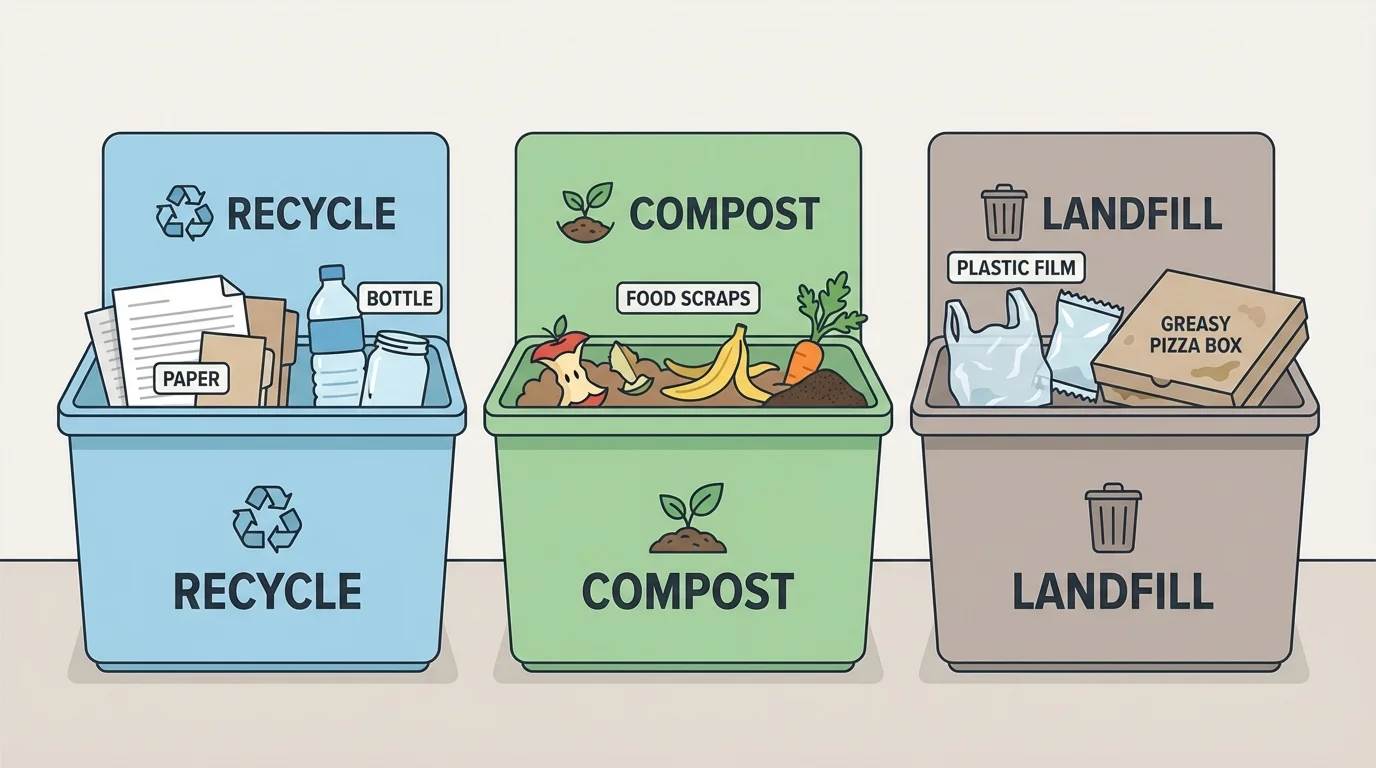
A useful household habit is to create a sorting station. This does not need to be fancy. You can use labeled bins, boxes, or bags for recycling, landfill waste, and compost if your home composts. The goal is to make the correct choice easy in the moment. If people have to stop and think every time they throw something away, mistakes are more likely.
Rinsing containers helps too. You do not need to scrub them until they look brand new, but visible food and liquid should be removed. A peanut butter jar with a thin residue is very different from a jar that is still half full. Clean enough is usually the standard.
Flattening cardboard can save space in your bin and make storage easier. Keeping caps on or off depends on local rules, so again, check the local guidance. The key idea is that correct recycling is about accuracy, not just effort.
Household recycling fix
You finish a takeout meal and have five items: a clean aluminum can, a greasy paper box, a plastic fork, a clean cardboard sleeve, and leftover food.
Step 1: Separate by material and condition.
The clean aluminum can and clean cardboard sleeve are likely recyclable.
Step 2: Check for food or grease.
The greasy paper box may not be recyclable if the grease has soaked through.
Step 3: Sort the rest honestly.
The plastic fork is often not accepted in regular recycling, and leftover food belongs in compost or trash depending on your system.
The best result is not "recycle the most." It is sort the most correctly.
Later, when you decide what kind of packaging to buy, the sorting system in [Figure 1] still matters. A product is easier to handle responsibly when its materials are simple, clean, and clearly recyclable.
Recycling is helpful, but it is not the first or best solution for every item. A stronger approach is to reduce what you use, reuse what still works, and repair what can be fixed. Recycling comes after those choices.
This matters because manufacturing new products still uses energy, water, raw materials, and transportation. Even if a plastic bottle gets recycled, it had to be produced and shipped in the first place. A reusable bottle avoids much of that repeated waste.
Compost is another smart tool for reducing landfill waste. Composting turns food scraps and other organic material into nutrient-rich material that can help soil. Not every home has a backyard compost setup, but some communities offer compost collection, and even a small indoor food-scrap container can help you separate waste more responsibly.
Think upstream, not just downstream
A sustainable habit is stronger when it prevents waste before disposal becomes an issue. Borrowing a tool, refilling a container, mending a shirt, or choosing a digital receipt all reduce the amount of stuff that has to be sorted, transported, and processed later.
Here are simple waste-reduction choices that work in real life: carry a refillable water bottle, use cloth towels for small cleanups, store leftovers in reusable containers, bring a shopping bag when possible, repair a zipper before replacing a backpack, and donate usable items instead of throwing them out.
Food waste deserves special attention. If groceries spoil before they are used, you are wasting both food and the resources that produced it. Planning meals, checking expiration dates, and eating leftovers can be just as environmentally responsible as recycling a can or bottle.
Energy efficiency means getting the same useful result while using less energy, and [Figure 2] illustrates how this shows up in everyday rooms and routines. You still want light, comfort, hot food, and charged devices. The goal is to provide those things without wasting electricity or fuel.
Some of the biggest household energy drains are lighting, heating and cooling, hot water use, and appliances that run longer than necessary. Many people focus only on obvious actions like turning off lights, but efficient living is broader than that. It includes using better equipment, changing routines, and noticing "silent" energy use.
One example of silent energy use is standby power. This is the electricity some devices use even when they seem off. Game consoles, chargers, TVs, microwaves, and speakers may still draw power when idle. One device may not seem important, but several devices running all the time add up.
Simple upgrades and habits make a difference. LED bulbs use much less electricity than older incandescent bulbs and last longer. Turning off power strips when devices are not in use can cut standby power. Washing clothes in cold water often works well and reduces the energy needed to heat water. Running full loads in the dishwasher or washing machine is usually more efficient than multiple small loads.
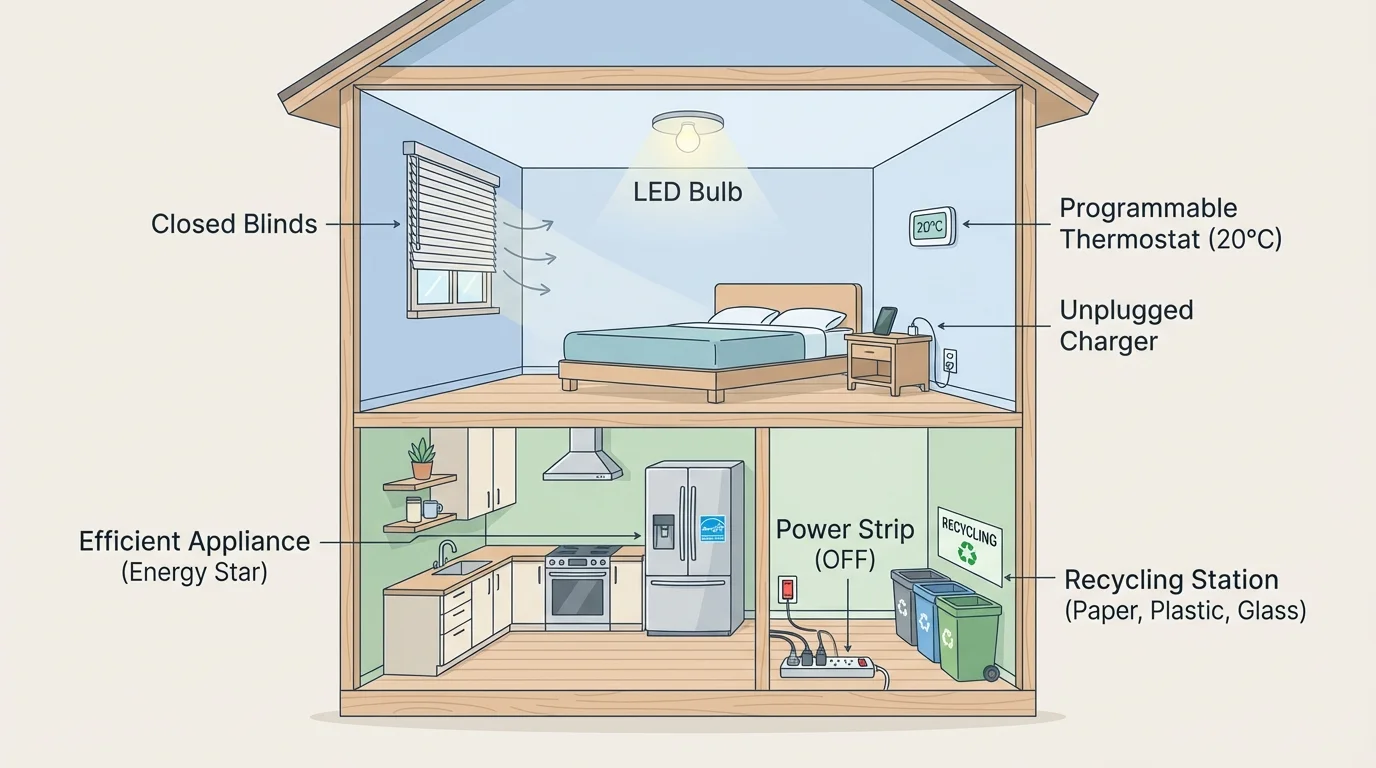
Heating and cooling also matter. If your home has adjustable temperature settings, even small changes can help. Using curtains or blinds to block strong sunlight in hot weather reduces cooling needs. In cooler weather, closing doors and windows properly helps keep warm air inside. Ceiling fans, where available, can improve comfort without changing the thermostat as much.
Appliance choices matter over time. A durable, efficient appliance may cost more upfront but use less electricity across years of use. For example, compare two light bulbs. One costs $2 and uses more electricity; the other costs $5 but lasts longer and uses less. The cheaper purchase is not always the cheaper choice in the long run.
Comparing long-term cost
You are deciding between two desk lamps. Lamp A costs $18 and uses an older bulb. Lamp B costs $26 and uses an LED bulb that reduces electricity use by about $12 per year.
Step 1: Find the price difference.
Lamp B costs $8 more because \(26 - 18 = 8\).
Step 2: Compare the yearly savings.
If Lamp B saves about $12 each year, it makes up the extra cost in less than one year.
Step 3: Think beyond the first purchase.
After one year, the extra upfront cost is recovered, and continued savings matter more than the original price tag.
Responsible buying often means looking at total use, not just the sticker price.
The room-by-room choices in [Figure 2] are a good reminder that energy waste is often hidden in ordinary habits: charging too long, leaving electronics idle, using harsh temperature settings, or running half-full machines.
Water use is closely connected to sustainability, and sometimes to energy as well. Hot showers, heated water for laundry, and unnecessary running water all use resources. Saving water often helps save energy too.
You do not need extreme habits to make a difference. Shorter showers, turning off the tap while brushing teeth, fixing leaks, and only running full laundry loads are realistic choices. If a faucet drips once every few seconds, it may not seem serious, but over time that waste builds up.
Pay attention to indirect waste too. Throwing away food wastes the water used to grow it. Buying low-quality products that break quickly wastes the water and energy used to manufacture them. Sustainability is often about seeing the full chain behind an item, not just the moment you use it.
You already use decision-making skills in daily life when you compare cost, quality, convenience, and time. Sustainable living uses the same skill set, but adds one more question: what are the long-term effects of this choice?
If you live with family or roommates now or in the future, shared routines matter. One person taking long showers or leaving windows open while air conditioning runs affects everyone. Sustainable home habits work best when they are discussed clearly instead of assumed.
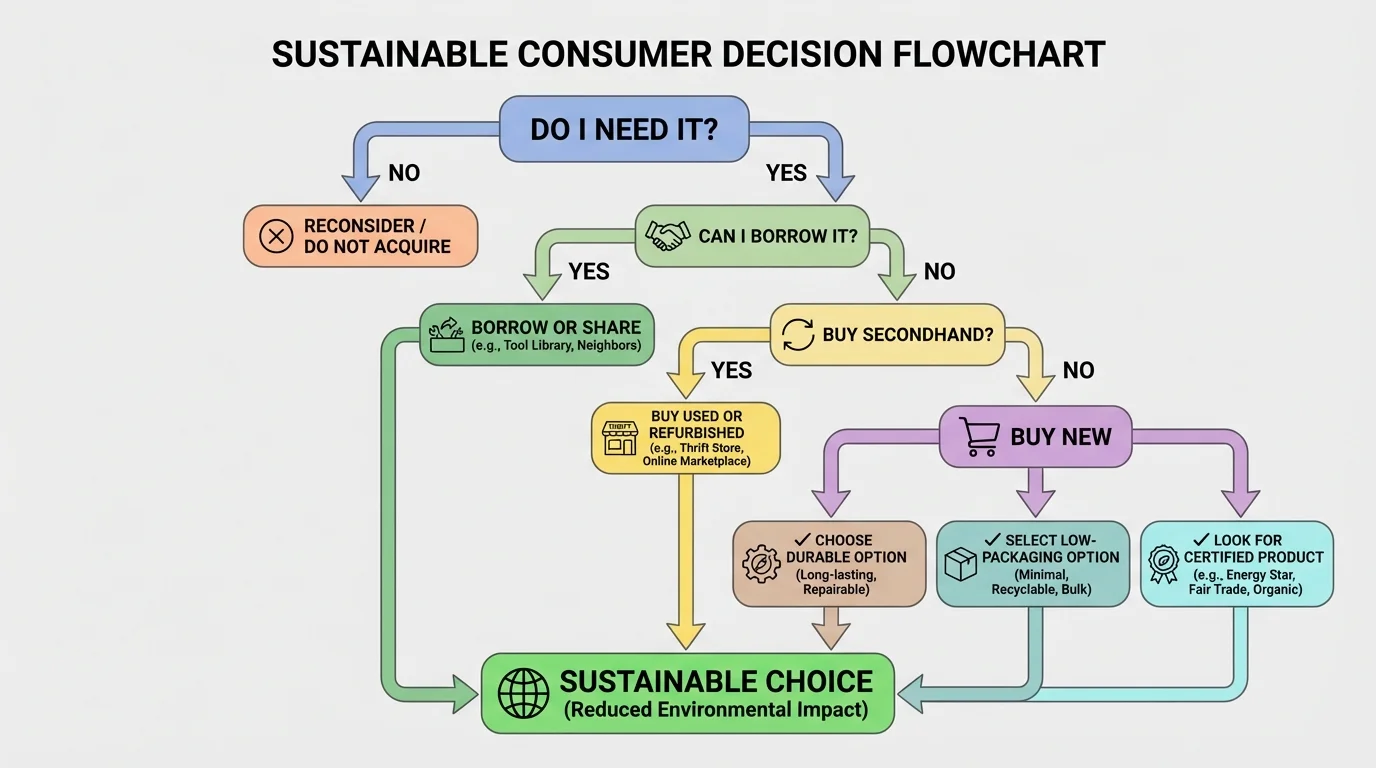
What you buy shapes environmental impact long before you throw anything away. That is why consumer choice matters so much, and [Figure 3] presents a simple decision path you can use before making a purchase. The most sustainable product is often the one you never needed to buy at all.
A strong buying routine starts with a few questions. Do I actually need this? Can I borrow it? Can I repair what I already have? Can I buy it secondhand? If I do need a new one, which option is more durable, repairable, and lightly packaged?
Durability matters because cheap products that break quickly create repeat purchases and repeat waste. A sturdy backpack, refillable pen, repairable headphones, or well-made kitchen container may cost more at first but create less waste than replacing low-quality versions over and over.
Packaging matters too. If two similar products do the same job, the one with less packaging is often the better choice. A large plastic shell around a tiny item, multiple layers of wrapping, or individually packaged servings all create extra waste. Buying in practical bulk sizes can reduce packaging, but only if the product will actually be used before it expires.
Secondhand shopping can be a major sustainability win. Thrift stores, resale apps, community swap groups, and hand-me-down networks can help you find clothing, books, furniture, sports equipment, and home items without creating demand for a brand-new product.
Food choices are part of consumer responsibility too. Buying only what your household can actually eat reduces waste. Choosing seasonal produce when available, storing food correctly, and avoiding impulse purchases that spoil unused are all practical sustainable habits.
You also need to watch for greenwashing. This happens when a company makes a product seem more environmentally friendly than it really is. Words like "natural," "eco," or "green" may sound impressive but mean very little without clear evidence. Look for specific facts instead: recycled content, refill options, durability, repair support, energy ratings, or trusted certifications.
Smarter purchase decision
You want a new notebook for planning your week. Option A is cheap, heavily plastic-wrapped, and made to be thrown away quickly. Option B costs a little more, uses recycled paper, has minimal packaging, and is sturdy enough to last longer.
Step 1: Compare need and function.
Both items do the same basic job.
Step 2: Compare waste and lifespan.
Option B creates less packaging waste and may last longer.
Step 3: Choose based on long-term value.
If the price difference is small and the quality is better, Option B is usually the more responsible choice.
Responsible consumer decisions are not about perfection. They are about making the better option the regular option.
The flow in [Figure 3] is especially useful for avoiding impulse buys. A short pause before purchasing can prevent clutter, wasted money, and unnecessary resource use.
The best system is the one you will realistically follow. If your plan is too complicated, you probably will not maintain it. Sustainable routines should feel clear, repeatable, and manageable.
Start small. Pick one recycling improvement, one energy habit, and one consumer habit. For example: rinse recyclables before binning them, unplug your charger when finished, and wait one day before buying non-essential items online. These changes are simple enough to repeat until they become automatic.
You can also build environmental habits into existing routines. If you already reset your room at night, turn off your power strip then. If you already make a grocery list, check the fridge first to avoid duplicate food. If you already shop online, compare packaging and durability before clicking buy.
| Area | Less sustainable habit | Better sustainable habit |
|---|---|---|
| Recycling | Throwing mixed dirty items in one bin | Sorting clean accepted materials correctly |
| Energy | Leaving devices plugged in all day | Turning off power strips and unplugging chargers |
| Water | Long unnecessary hot showers | Shorter showers and mindful hot-water use |
| Shopping | Impulse-buying cheap disposable items | Choosing durable, repairable, or secondhand items |
| Food | Buying more than will be eaten | Planning meals and using leftovers |
Table 1. Comparison of common household habits and more sustainable alternatives.
If you share your home with others, communication helps. You do not need to lecture anyone. Instead, make the system easier: label bins, keep reusable bags near the door, or agree on simple rules like full laundry loads and lights off in empty rooms.
One common mistake is assuming recycling fixes everything. It does not. If you keep buying disposable products unnecessarily, recycling only handles the end of the problem. Another mistake is focusing only on obvious waste and ignoring hidden waste like standby power, food spoilage, or low-quality purchases that break quickly.
Another problem is trying to do everything at once. That usually leads to frustration. Sustainable living is more effective when it becomes part of your routine one habit at a time. Consistency beats intensity.
It is also easy to confuse "environmentally marketed" with "environmentally responsible." A bamboo-looking package or green-colored label does not automatically mean a better product. Specific evidence matters more than branding.
"Use what you need, waste less, and choose well."
— A practical rule for sustainable living
Finally, remember that sustainable living is not a competition. You do not need a perfect zero-waste lifestyle to make meaningful progress. If you recycle accurately, reduce unnecessary purchases, save energy where you can, and think before you throw things away, you are already making responsible decisions that matter.
