Have you ever noticed that some mornings feel easy, but other mornings feel messy and rushed? On easy days, you probably know what to do next. That is the power of a plan you use again and again. When your day has helpful patterns, your brain does not have to guess every step.
A routine is a group of steps you do in the same order. You might wake up, get dressed, eat breakfast, and log in for your online school lessons. A routine is like a path. It helps you move from one part of the day to the next.
A habit is one action you do so often that it starts to feel automatic. For example, putting your headphones in the same spot after class can become a habit. Taking a sip of water before you begin your work can become a habit too.
Routines are sets of steps you repeat in order. Habits are single actions you repeat so often that they become easier and quicker to do.
Routines and habits work well together. A routine gives your day a shape. A habit helps one small part of that routine happen smoothly. When you use both, you can pay attention better, feel steadier, and finish more of what you start.
Your brain likes to know what comes next. A predictable order, as shown in [Figure 1], can help you feel ready instead of worried. If you always put your school supplies on your desk before class starts, you do not waste time searching for pencils, paper, or your device.
Routines support focus because they lower confusion. Instead of thinking, "What should I do now?" you can start right away. That saves your energy for learning, listening, reading, drawing, or solving problems.
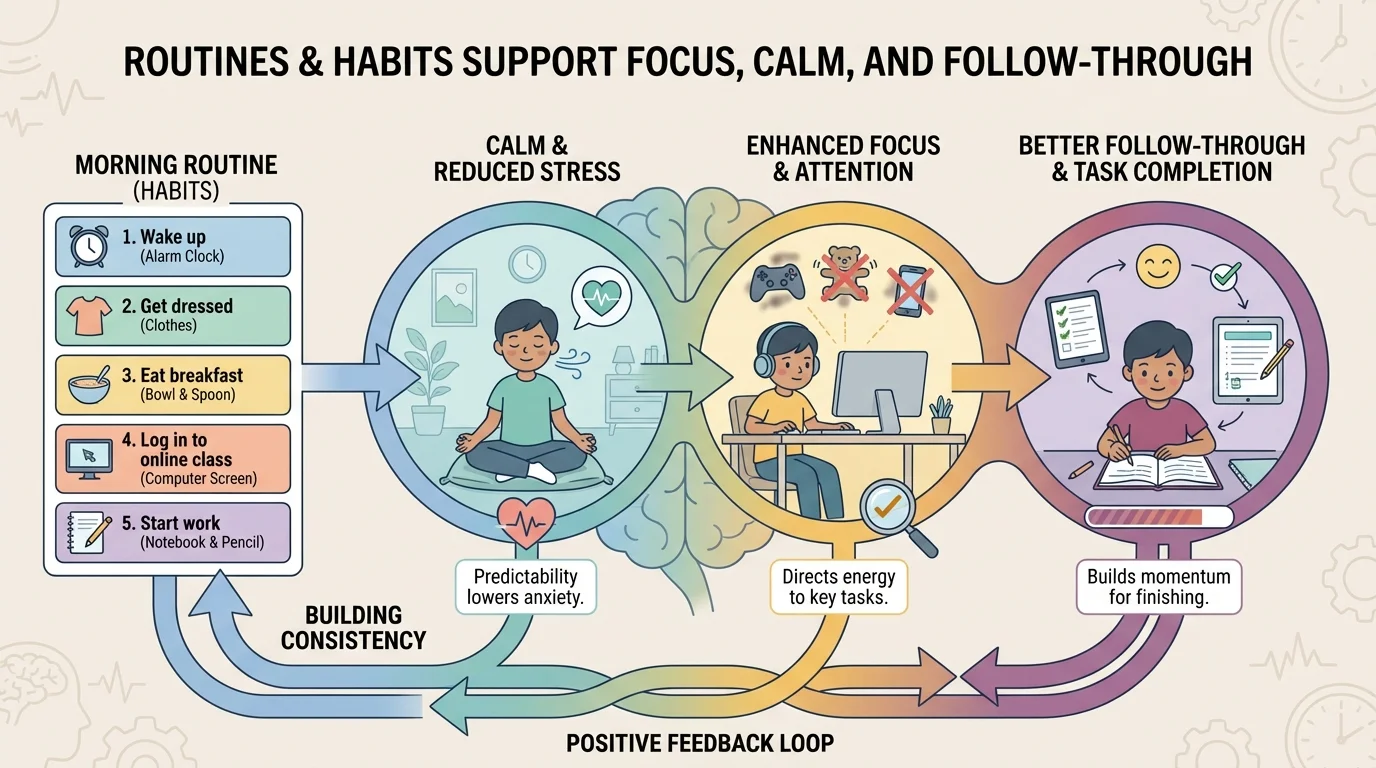
Routines also help you feel calm. When life feels busy, a familiar pattern can be comforting. You already know the next step, so your body and mind can settle. This is helpful before online class, before chores, before bedtime, or before going to an activity like soccer, dance, music, or a club.
Think about two different mornings. On one morning, you wake up late, cannot find your notebook, forget breakfast, and log in feeling upset. On another morning, you wake up, wash up, eat, check your school space, and begin on time. The second morning feels better because the routine helps you stay organized and ready.
Why repeated steps help
When you repeat the same helpful steps, your brain learns the pattern. That means you do not have to make as many choices each time. Fewer extra choices can leave more energy for paying attention, managing feelings, and sticking with a task.
You can see this in small everyday moments. If you always plug in your device after school, you are less likely to miss class because of a low battery. If you always put tomorrow's materials in one basket, mornings become smoother. Little repeated actions can prevent bigger problems later.
A helpful habit is small, but it can make a big difference. For example, if you have the habit of reading directions before starting, you make fewer mistakes. If you have the habit of checking your work before turning it in, you catch more missing answers.
Habits help with follow-through, which means finishing what you started. Sometimes the hardest part of a task is not the middle or the end. It is just getting started. A tiny habit can push you into action. You might sit down, set out your notebook, and begin with the first easy part.
Good habits also help when you do not feel like working. You may not always feel excited to clean your room, practice piano, or finish an assignment. But if you have a habit of starting at the same time each day, you are more likely to do it anyway.
Small habits that help
Step 1: Pick one small action.
Example: Put your water bottle on your desk before class.
Step 2: Do it at the same time.
Example: Do it right after breakfast every school day.
Step 3: Keep it simple.
If the habit is small, it is easier to remember and repeat.
Small actions are easier to keep doing, and repeated small actions build strong habits.
It is okay if a habit does not feel automatic right away. Habits grow with practice. The more often you repeat a helpful action, the easier it becomes.
A morning routine can set the tone for your whole day. If the beginning of the day is rushed and confusing, it is harder to focus. If the beginning is steady and simple, it is easier to feel ready.
Here is one way to build a morning routine for home and online learning. First, choose only a few important steps. Next, put them in order. Then, practice doing them in the same order each day. You do not need a perfect routine. You need a routine that works for you.
A strong morning routine might include waking up, getting dressed, eating breakfast, brushing teeth, filling a water bottle, opening your computer, and checking what you need first. This matches the kind of pattern shown earlier in [Figure 1]. The order matters because each step prepares you for the next one.
| Time of Day | Helpful Step | Why It Helps |
|---|---|---|
| Morning | Get dressed | Helps your brain know it is time to begin the day |
| Morning | Eat breakfast | Gives your body energy |
| Before class | Set out supplies | Saves time and lowers stress |
| Before class | Check your device and log in | Helps you start on time |
| After class | Put materials away | Makes the next day easier |
Table 1. Examples of daily routine steps and how they support readiness and calm.
If your routine is too long, it may feel hard to follow. Start with three to five steps. Once those steps feel easier, you can add another one if you need to.
Try This: Pick one place in your home for your school materials. Put the same items there each day. This one change can make your morning smoother.
Strong feelings are normal. You might feel frustrated when technology stops working, disappointed when an activity is canceled, or nervous before speaking on a video call. A calming strategy works best when you use the same simple steps again and again.
This is where routines and habits help with emotional regulation, as shown in [Figure 2]. Emotional regulation means noticing your feelings and choosing a helpful way to respond. It does not mean you never feel upset. It means you learn what to do when you are upset.
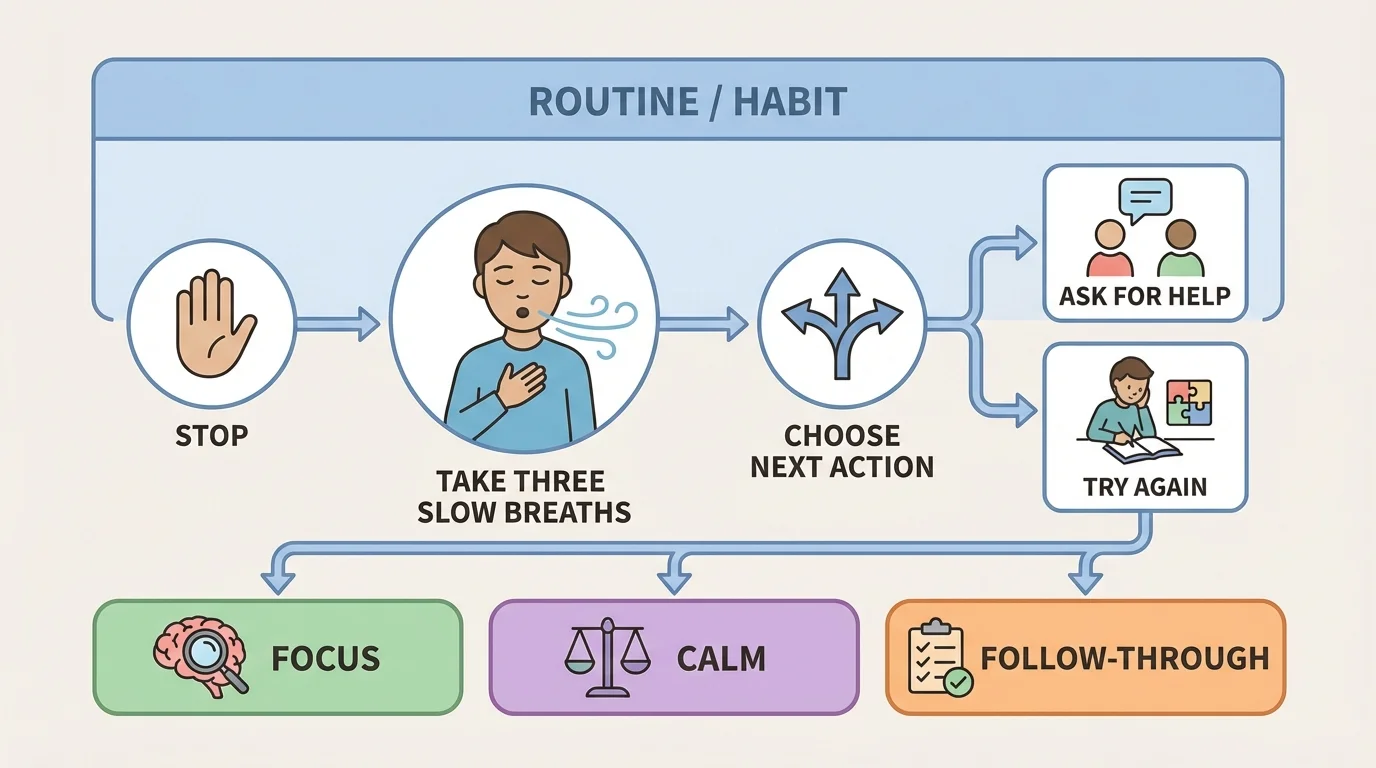
You can make a short reset routine. For example: stop, take three slow breaths, relax your shoulders, and say, "I can do one small step." This kind of repeated pattern can help your body calm down.
You can also build habits that protect calm feelings before a problem starts. Drinking water, taking a stretch break, cleaning up your workspace, or asking for help early are all helpful habits. These actions may seem small, but they can stop stress from growing bigger.
Your body can start to calm when you slow your breathing. That is one reason a short breathing habit can help when you feel angry, nervous, or overwhelmed.
Suppose your internet freezes during a live lesson. One choice is to panic, bang the desk, and give up. A better routine is to pause, breathe, refresh the page, and ask an adult for help if needed. The same calm steps can help in many situations, just like the flow in [Figure 2].
Many children can start fun tasks. The bigger challenge is finishing boring, tricky, or long tasks. Clear steps make follow-through easier because you know what to do from the beginning to the end.
When something feels hard, as shown in [Figure 3], do not tell yourself, "I have to finish everything right now." Instead, break the task into smaller parts. You can say, "First I will read the directions. Then I will do one part. Then I will check it." Small steps feel less scary than giant tasks.
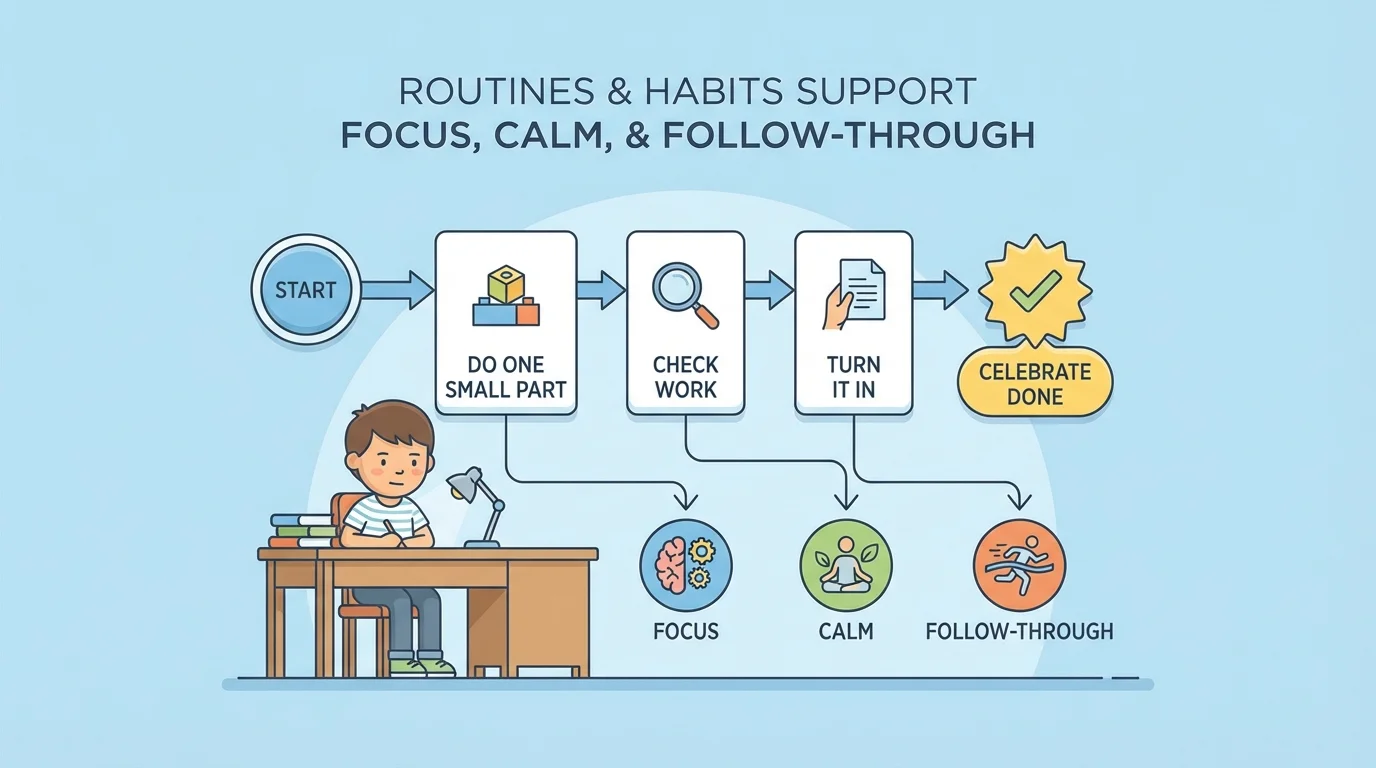
Checklists are helpful because they show progress. Each time you finish one part, you can mark it off. That helps your brain see that you are moving forward.
When you want to quit
Step 1: Stop and name the problem.
"This feels hard," or "I got distracted."
Step 2: Pick one tiny next step.
"I will finish this one line," or "I will put away one toy."
Step 3: Keep going until that tiny step is done.
Then choose the next tiny step.
Finishing one small part often gives you enough energy to continue.
Follow-through is not about being perfect. It is about coming back to the task. If you get distracted, you can return. If you make a mistake, you can fix it. That is part of resilience, which means getting back up and trying again after something feels difficult.
Later, when you use checklists or finish a chore in steps, remember the picture in [Figure 3]. Finishing usually happens one small action at a time, not all at once.
The best routine is not the fanciest one. It is the one you can really do. Helpful routines are simple, clear, and repeated often.
If a routine keeps falling apart, that does not mean you failed. It may mean the routine needs a change. Maybe it has too many steps. Maybe the time is wrong. Maybe you need a visual list on the wall or a reminder from an adult.
Start small and adjust
When you build a new routine or habit, begin with one or two steps that matter most. After those steps feel easier, add more only if you need them. Small routines are easier to remember and easier to keep.
It also helps to connect a new habit to something you already do. For example, after you brush your teeth, you might pack your school notebook. After your last class, you might put your charger in the same place every day. Linking actions together helps your brain remember.
Be kind to yourself when things do not go as planned. Some days are different. Maybe you are tired, sick, upset, or busy with family plans. You can restart your routine the next day. Missing once does not erase your progress.
Try This: Choose one tiny habit for this week, such as putting your device on charge at night or taking three breaths before a hard task. Keep it so small that it feels easy to repeat.
"Small steps, done again and again, can lead to big changes."
Routines and habits are like helpers for your brain and body. They guide you when you feel unsure, calm you when you feel upset, and support you when a job needs to be finished. The more you practice helpful patterns, the stronger those patterns become.
