Missing one small habit can turn a normal day into a rough one. If you skip water, forget a snack, stay up too late, or rush without checking your plan, you may feel tired, grumpy, or unsafe. The good news is that health and safety do not depend on being perfect. They depend on having a few strong habits you can use again and again, even when life gets busy.
As you grow up, you get more freedom. You may help make your own lunch, manage more of your online learning schedule, join activities, visit friends or relatives, or spend short times working on your own at home. More freedom is exciting, but it also means more responsibility. You need habits that protect your body, your feelings, your time, and your safety.
A habit is an action you do regularly without having to think about it a lot. Good habits make hard days easier. They help you remember the basics when your brain is busy with homework, games, family plans, sports practice, music lessons, community events, or travel.
Health habits help your body work well. Safety habits help protect you from harm. These habits are connected. For example, if you are very tired, you may forget important steps. If you are hungry, you may get frustrated faster. If your room or workspace is messy, you may trip, lose things, or miss medication reminders from an adult.
Think of your day like a bike ride. It is much easier to stay steady when your tires are filled and your brakes work. Healthy habits are like the air in the tires. Safety habits are like the brakes and helmet. You need both.
Health habits are regular actions that help your body and mind stay well, such as sleeping enough, eating meals, drinking water, washing hands, brushing teeth, and taking movement breaks.
Safety habits are regular actions that lower risk, such as checking where you are going, telling a trusted adult your plan, following internet safety rules, using equipment correctly, and noticing warning signs.
Routine means the usual way your day is organized. Routines can change, so it helps to have backup plans.
When health and safety habits are strong, you are more ready for surprises. If plans change, you are less likely to panic. If you are in a new place, you are more likely to remember the basics: stay with trusted people, know how to contact home, notice your surroundings, and take care of your body.
You do not need a giant list of rules. It helps more to remember a few main categories. Ask yourself: Have I slept? Have I eaten? Have I had water? Have I moved my body? Am I clean? Do trusted adults know my plan? Do I know what to do if something changes?
Another helpful idea is noticing a warning sign. A warning sign is a clue that something may be wrong. Your body can give warning signs, like headache, dizziness, stomach ache, or feeling extra cranky. A situation can give warning signs too, like not knowing where you are, being separated from your group, a stranger asking for private information online, or feeling pressured to do something that seems unsafe.
Paying attention early is powerful. Small problems are easier to fix than big ones. A little thirst can be fixed with water. A very dehydrated body is much harder to fix. A forgotten plan can be repaired with a quick check-in. A long time without contact can make adults worried and make it harder to find you if help is needed.
Strong habits save brain power. When healthy and safe actions become automatic, your brain has more room for learning, solving problems, and enjoying your day. Instead of deciding from scratch every morning, you follow a simple system. That system keeps working even when you are rushed, excited, disappointed, or distracted.
This is why many people use checklists. Pilots, doctors, athletes, and cooks all use routines. A checklist does not mean you are forgetful. It means you are smart enough to support your brain.
[Figure 1] shows that the easiest routines are made up of parts. A morning routine, a daytime routine, and an evening routine are easier to remember than one huge list. When you group habits by time of day, each step reminds you of the next one.
In the morning, focus on wake-up basics. Use the bathroom, wash your face or shower if needed, brush your teeth, get dressed, eat breakfast, and drink water. If an adult helps you with medication, vitamins, or health needs, this is also a good time to check that the reminder happened. You should never take medicine on your own unless a trusted adult has clearly taught you and given permission.
During the day, protect your energy. Eat meals and snacks on time, refill your water, move your body, and rest your eyes from screens. If you learn online, it helps to stand up, stretch, or walk for a few minutes between tasks. Keeping a simple schedule can help. For example, after every lesson or work session, you might do a quick body check: water, bathroom, stretch, snack if needed.
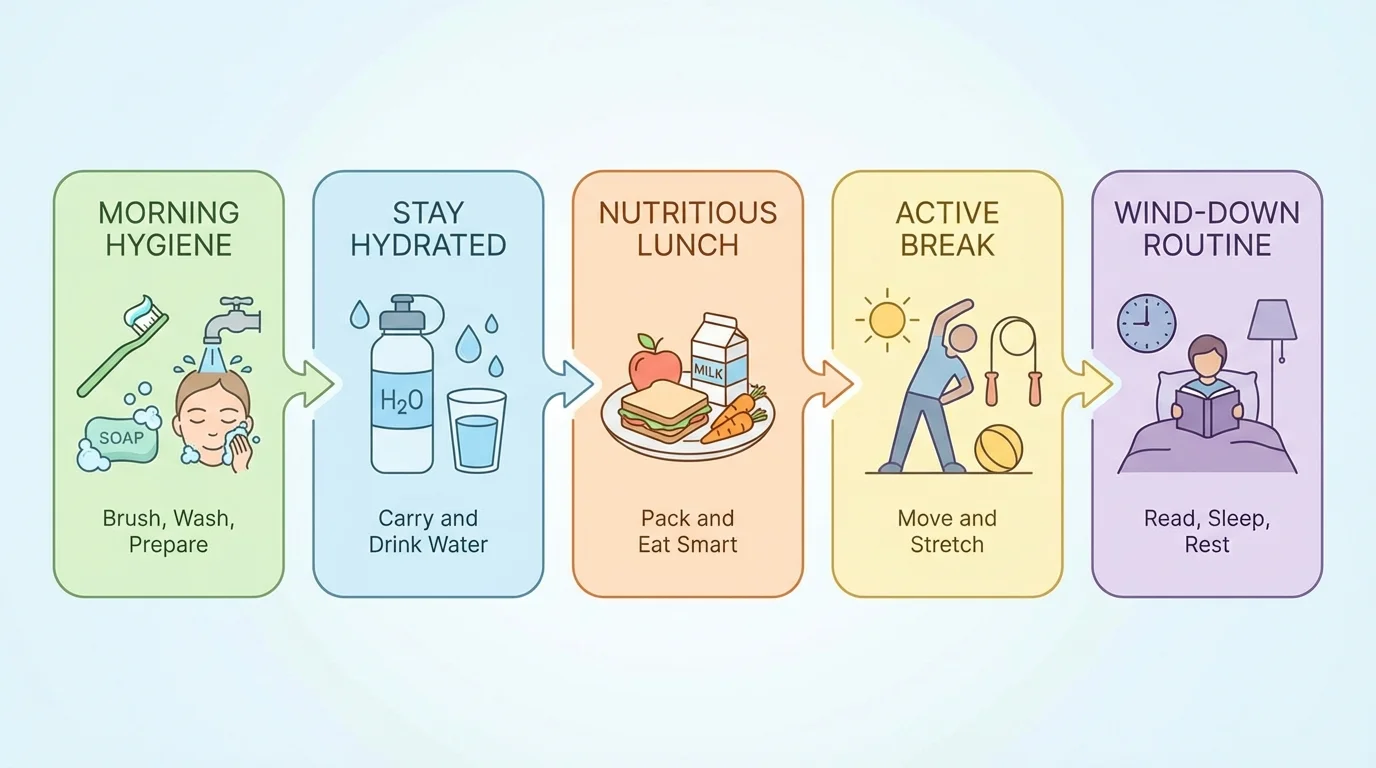
In the evening, help your next day go better. Pack what you need for activities, charge devices in a safe spot, set out clothes, and check the next day's plan with a trusted adult. Then do calming habits like brushing teeth, washing up, and getting to bed on time. Sleep is not extra. Sleep is part of your health plan.
Hygiene matters on busy days too. It is easy to say, "I'll do it later," but dirty hands spread germs, and skipped tooth brushing can lead to cavities and pain. Quick health habits still count. Even if your day is full, washing hands before eating and after using the bathroom, brushing teeth, and changing into clean clothes make a difference.
Food and water are not rewards. They are fuel. If you wait until you feel awful, you waited too long. Keep a water bottle nearby if your family allows it, and ask an adult about easy grab-and-go snacks like fruit, yogurt, cheese sticks, crackers, or nuts if they are safe for you. Looking back at [Figure 1], you can see that the strongest routine includes small health actions all day, not only in the morning.
Your brain and muscles both need water to work well. Even mild dehydration can make it harder to focus, remember things, and stay in a good mood.
If you have a very busy day, shrink the routine instead of skipping it completely. Maybe your normal movement time is 20 minutes, but today you only have 5 minutes. A shorter healthy habit is still better than none. The same is true for calming down before bed, eating something nourishing, or checking in with an adult.
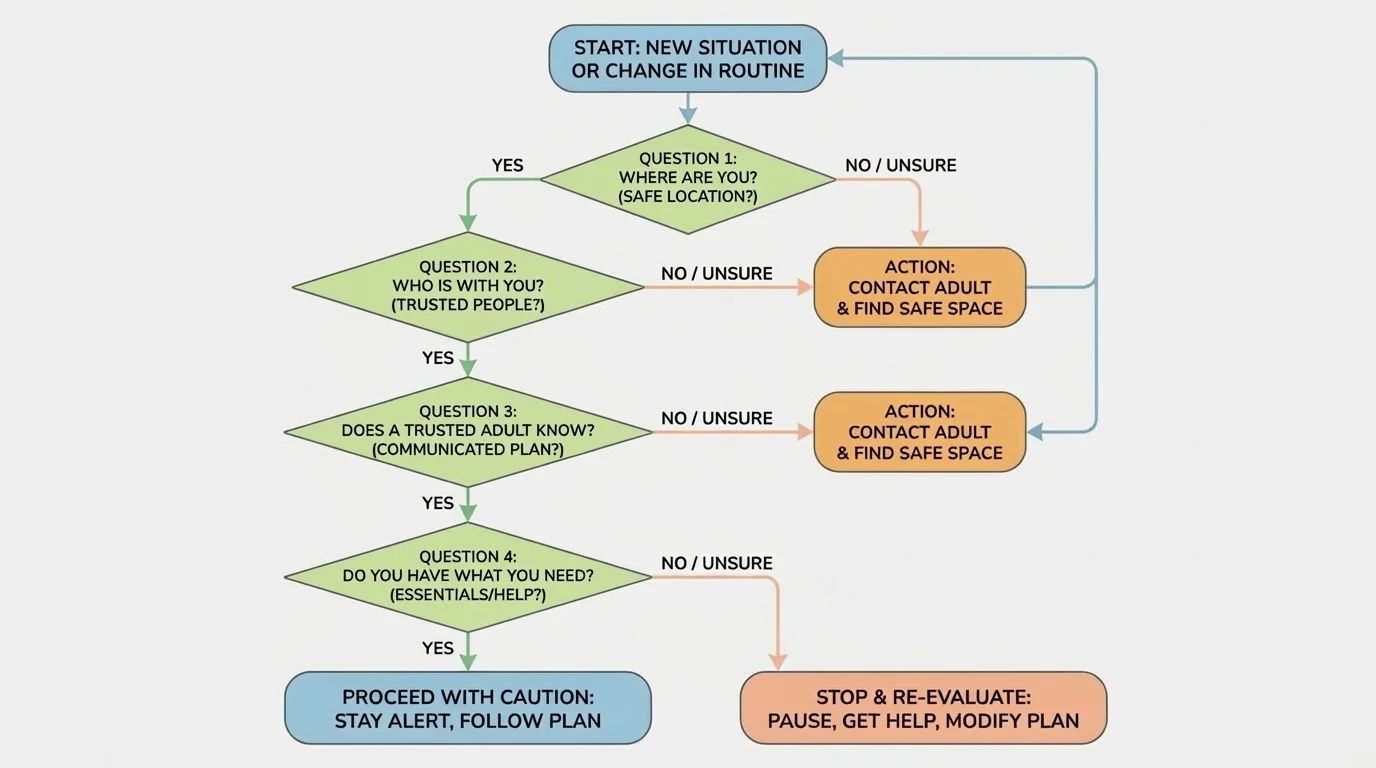
[Figure 2] lays out a simple order for what to check first when life does not follow the plan. Maybe your family is traveling, an activity runs late, a babysitter is helping, you are visiting relatives, or plans switch at the last minute. A flexible safety system helps you handle changes.
Start with location. Ask: Where am I? Who is with me? Who knows I am here? If you cannot answer those questions clearly, pause and fix that first. Being in the right place with the right people is more important than being fast.
Next, check your basic needs. Do you have water? A snack if needed? Weather-appropriate clothes? A charged device if your family uses one for communication? Emergency contact information? If you have allergies, asthma, diabetes, or other health needs, your plan must include those too, with adult guidance.
Then check communication. If plans change, tell a trusted adult as soon as possible, following your family's rules. If your soccer practice ends late, if you are going to a neighbor's house, or if a community event changes locations, a quick message or call can prevent worry and confusion.
New places need extra attention. Notice exits, bathrooms, safe adults, and agreed meeting spots. If you are separated from your family in a store or event, do not wander around searching by yourself. Stay where it is safe and ask an appropriate adult for help, such as an employee or event worker, based on the safety rules your family has taught you.
Online routine changes matter too. Maybe you are using a different device, joining a new club video call, or chatting during an online game. Safety still counts. Never share your address, phone number, passwords, school login, or private family details. If someone makes you uncomfortable, pressures you, or asks you to keep secrets from your trusted adults, leave the conversation and report it right away.
The steps in [Figure 2] work online and offline: stop, check where you are, check who knows your plan, and make sure you have what you need before you continue.
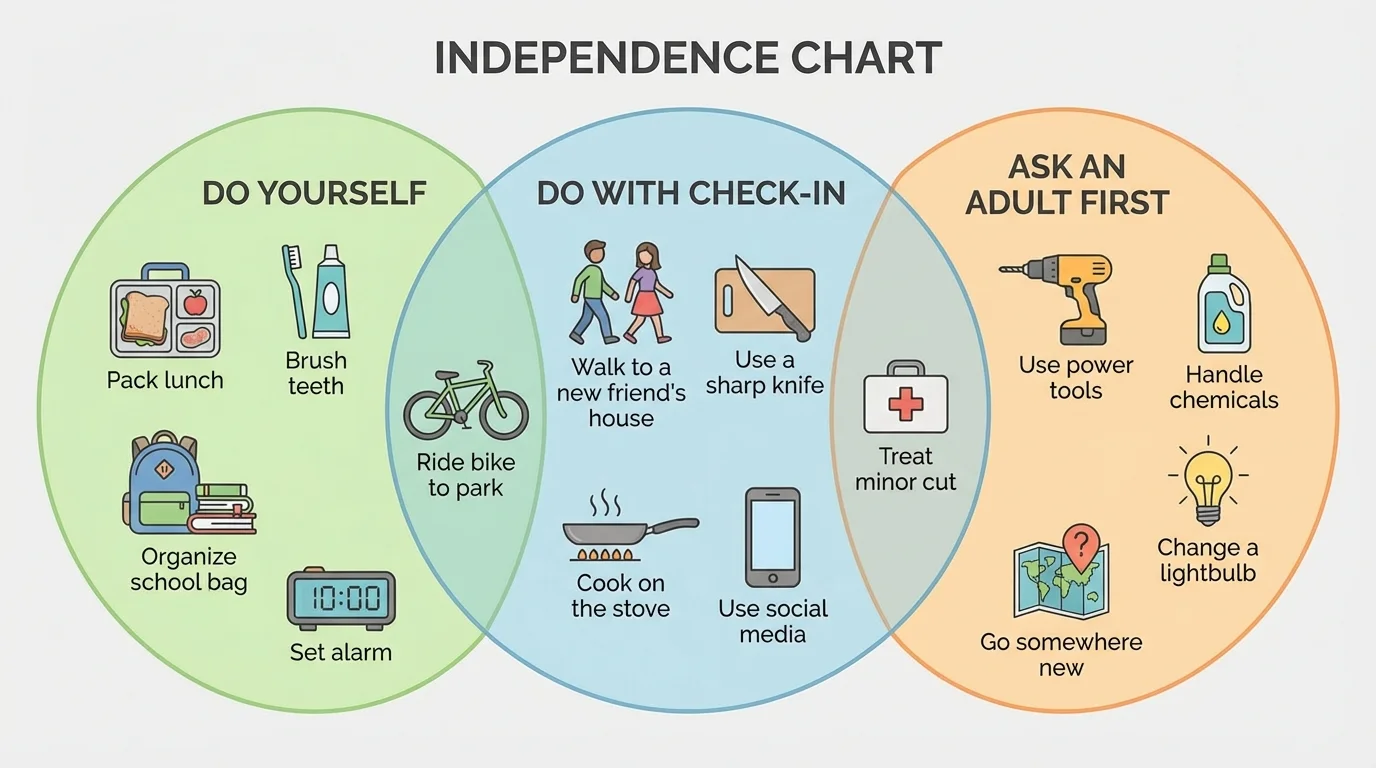
[Figure 3] shows that independence grows in levels, not all at once. Some things you can do by yourself, some things you can do with a quick check-in, and some things still need adult help. This growing-circle idea helps you know what kind of support fits each task.
You might be ready to refill your water bottle, prepare a simple snack, log into class, tidy your workspace, or text a parent that you arrived at an activity. But bigger choices, like changing where you are going, taking medicine, answering messages from strangers, cooking on the stove, or staying home alone, need family rules and adult guidance.
A smart independent person is not someone who never asks for help. A smart independent person knows when to ask. That is real maturity.
It helps to build a check-in habit. A check-in is a quick message, call, or conversation that lets a trusted adult know your plan, location, or need. A check-in can sound like, "I finished my lesson and I'm starting my art class online now," or "Practice is over and I'm waiting with Coach Maya," or "We got to Grandma's house." Short and clear is best.
Another part of growing up is learning your boundary. A boundary is a limit that protects your body, time, feelings, or privacy. You can say no to unsafe dares, mean jokes, rough play, sharing private photos, or messages that make you uncomfortable. You do not have to be rude to be firm. You can say, "No thanks," "I'm not doing that," or "I need to ask my adult first."
"Being responsible does not mean doing everything alone. It means making safe choices and asking for help when you need it."
When you feel unsure, use the rule: pause before you agree. If someone asks you to do something and your stomach feels tight, your face feels hot, or your thoughts start racing, that may be a signal to slow down and check with an adult. Body clues can be useful safety tools.
The circles in [Figure 3] remind you that independence is earned through practice. As you show safe choices, adults often trust you with more responsibility.
Busy moments are when habits matter most. Try this simple tool: Stop, Think, Check, Act.
Stop: Pause for a moment. Do not rush because someone else is rushing.
Think: What is happening? What feels wrong or unclear?
Check: Do I have what I need? Does a trusted adult know the plan? Are the people, place, and activity safe?
Act: Make the safest next choice. That may mean drinking water, getting your helmet, locking a door, logging off, moving to a safer place, or asking for help.
Example: You are getting ready for a busy afternoon
Step 1: Stop
You notice you feel rushed because an activity starts soon.
Step 2: Think
You realize you have not had water since morning and you are not sure where your ride plan is.
Step 3: Check
You fill your water bottle, grab a snack, and ask your adult, "Who is picking me up after?"
Step 4: Act
You leave with what you need and know the plan.
The problem stays small because you noticed it early.
Another useful tool is a body scan. Ask: Am I hungry, thirsty, tired, upset, too hot, too cold, or in pain? Sometimes what feels like a huge problem starts with a simple body need. Meeting that need can help you think clearly again.
You can also use a people check. Ask: Who are my trusted adults? Who can I contact if my main adult is busy? Memorizing at least one important phone number, if your family wants that, can be helpful in emergencies.
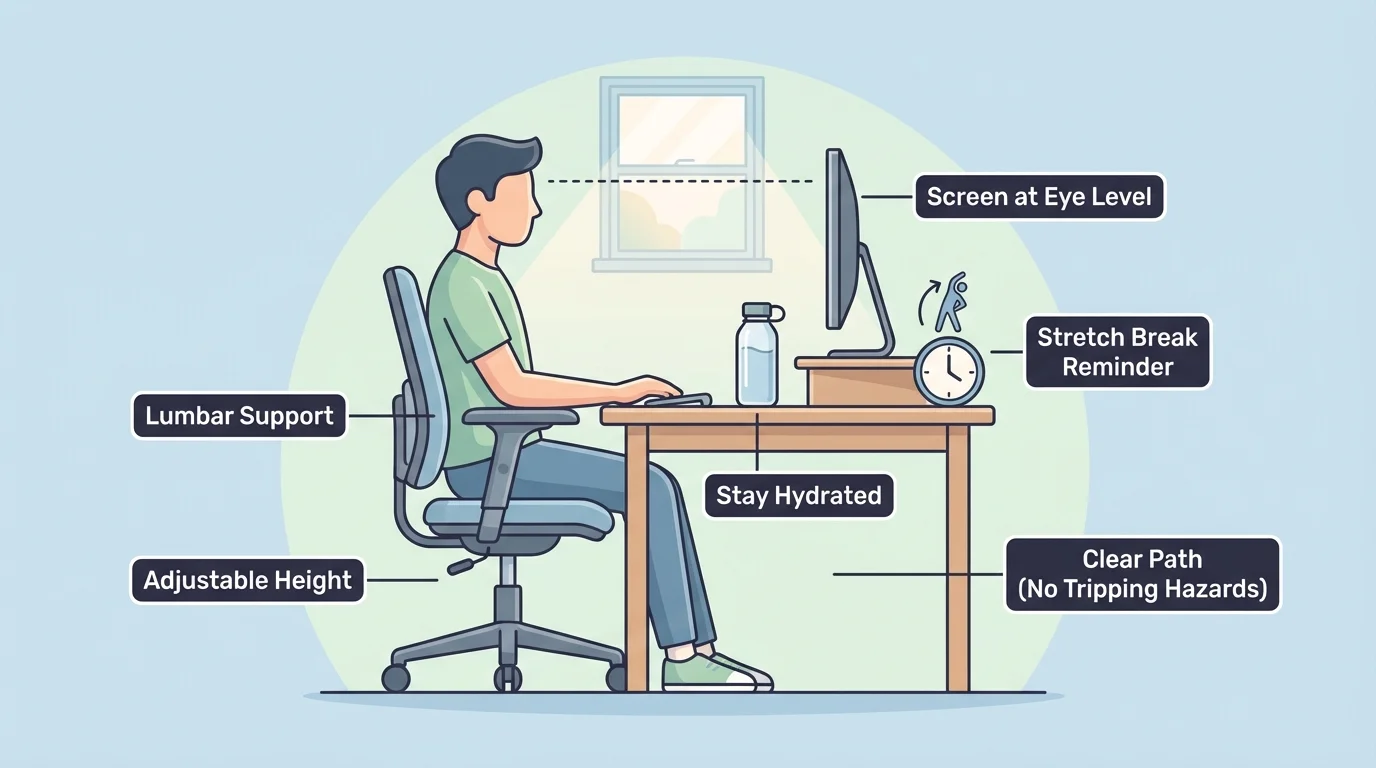
[Figure 4] shows how a good home study setup can help you focus and reduce problems like neck strain, eye strain, spills, and tripping. Learning from home gives you freedom, but your home study space still affects your body and safety.
Try to sit in a way that supports your back. Keep your screen where you do not have to bend your neck too far down for long periods. Put drinks in a stable spot. Keep cords out of walking paths. If headphones are too loud, lower the volume to protect your hearing.
Screen breaks are health habits, not wasted time. Looking away from the screen, blinking, standing up, and stretching your hands can help prevent soreness and tired eyes. If your teacher gives breaks between online tasks, use them well instead of staying frozen in your chair.
Digital safety is part of personal safety. Use strong passwords with adult help. Log out of shared devices if your family shares computers. Do not click strange links. Be careful with chat boxes, direct messages, and online groups. If someone online acts mean, creepy, or secretive, save the information if your family has taught you how, then tell a trusted adult.
Your surroundings matter too. If you are home alone for a short approved time, follow family rules for doors, windows, cooking, and answering messages or knocks. Do not tell people online that you are alone. Protecting private information helps protect your real-life safety.
Notice how [Figure 4] combines comfort and safety. The best workspace is not just neat. It also helps you drink water, move safely, and avoid common accidents.
Here are a few situations that show what these habits look like in real life.
Example: Your normal routine changes because you are visiting relatives
Step 1: Learn the plan
Ask when you are leaving, where you are going, who will be there, and how long you will stay.
Step 2: Pack basics
Bring what you need for comfort and health, such as water, any adult-managed medical items, weather-appropriate clothes, and a charger if needed.
Step 3: Notice the new place
When you arrive, learn where the bathroom is, where your trusted adult is, and what the rules are.
Step 4: Check in if plans change
If you move to a new location or the return time changes, make sure your trusted adult knows.
You stay flexible without losing your routine completely.
Another example: You are in the middle of an online game or chat, and someone asks for personal information. The safe response is simple: do not share it, leave the conversation if needed, and tell a trusted adult. Curiosity from another person is not a good reason to give away private details.
Example: You feel sick or off during a busy day
Step 1: Notice the warning sign
Maybe you have a headache, feel shaky, or are suddenly very irritable.
Step 2: Check basic needs
Ask yourself if you have had food, water, rest, or a break from the screen.
Step 3: Tell an adult
Do not hide symptoms just because you want to keep going.
Step 4: Follow the next safe step
That may be resting, eating, drinking water, taking a break, or getting medical help from an adult.
Speaking up early is safer than pretending you are fine.
One more example: You are allowed to do more on your own now, and you want adults to trust you. The best way to earn trust is not by arguing that you are ready. It is by showing steady habits. When you remember your water, complete your routine, follow internet rules, and check in on time, adults see that you can handle more independence.
Health and safety habits are not meant to control your life. They are tools that protect your freedom. When you know how to care for yourself and make safe choices, you can do more, enjoy more, and handle changes with confidence.
