People disagree every day, and that is not a sign that something is wrong. It usually means two people care about something important at the same time. The real skill is not avoiding every conflict. The real skill is handling it in a way that protects the relationship and solves the problem. Whether you are deciding who gets to use a device first, working with a teammate in an online club, or trying to fix a misunderstanding in a group chat, respectful negotiation can help you move forward.
Negotiation is the process of talking through a disagreement to reach a solution both sides can accept. When people negotiate well, they waste less time, feel more respected, and are more likely to keep trusting each other. When they negotiate badly, small problems can turn into bigger ones. A short argument about plans can become a friendship problem if people interrupt, insult, or refuse to listen.
Fair solutions matter because unfair ones usually do not last. If one person always gets their way, the other person may agree in the moment but feel upset later. That hidden frustration can build up and cause more conflicts. A respectful solution is stronger because both people understand what was decided and why.
Disagreement is a situation where people have different ideas, wants, or opinions.
Perspective is the way a person sees and understands a situation based on their feelings, experiences, and needs.
Compromise is an agreement where each side gives up something small to reach a solution.
Fair outcome is a result that is reasonable and respectful to everyone involved, even if it is not exactly the same for both sides.
One important thing to remember is that fair does not always mean equal. If two siblings share a tablet, equal might mean each gets exactly the same number of minutes. Fair might mean one gets a little more time today because they need it to finish a project, while the other gets first turn tomorrow. What makes it fair is that the plan is understandable, respectful, and balanced over time.
Respectful negotiation is not about winning. It is about solving the problem without treating the other person like an enemy. You can disagree strongly and still speak politely, listen carefully, and look for a solution. Respect does not mean you always say yes. It means you communicate in a way that is honest and calm.
Good negotiation usually includes three basic actions: understand the other side, propose alternatives, and find a compromise. These actions work best when you also manage your emotions and choose your words carefully.
The goal is problem-solving, not point-scoring. In many arguments, people focus on proving they are right. That can make the other person feel cornered, so they defend themselves instead of working with you. When you focus on the problem itself, both people can move from "me versus you" to "us versus the problem."
That change in mindset is powerful. Instead of saying, "You never listen," you might say, "We both want to use the same time slot, so let's figure out a plan." The second version makes cooperation much more likely.
Before you negotiate, check your emotional level. If you are angry, embarrassed, or hurt, you might say something you regret. You do not have to be perfectly calm, but you should be calm enough to think clearly. If needed, pause for a few minutes, drink water, step away from the chat, or tell the person, "I want to talk about this, but I need a short break first."
Then name the real issue. Sometimes people argue about the surface problem, but something deeper is really bothering them. For example, the surface problem might be, "You changed the plan." The deeper issue might be, "I felt left out because no one asked me." If you only argue about the plan, the real hurt may stay there.
A helpful pattern is: What happened? How do I feel? What do I need? For example: "The meeting time changed after I logged off. I felt frustrated because I had already planned my evening. I need earlier notice next time." That is much more useful than, "You all are so annoying."
[Figure 1] Many disagreements become easier to solve when you slow down and look at both sides. A person may say one thing out loud, but underneath that, they may have a feeling or need you cannot see right away. Maybe they sound bossy because they are stressed. Maybe they keep pushing for their idea because they are worried the project will not get finished.
Try to learn three things: what the other person wants, why they want it, and what they are worried about. You can find this out by asking respectful questions such as, "Can you help me understand your side?" "What matters most to you here?" or "What are you hoping happens?" These questions invite honest answers instead of starting another fight.
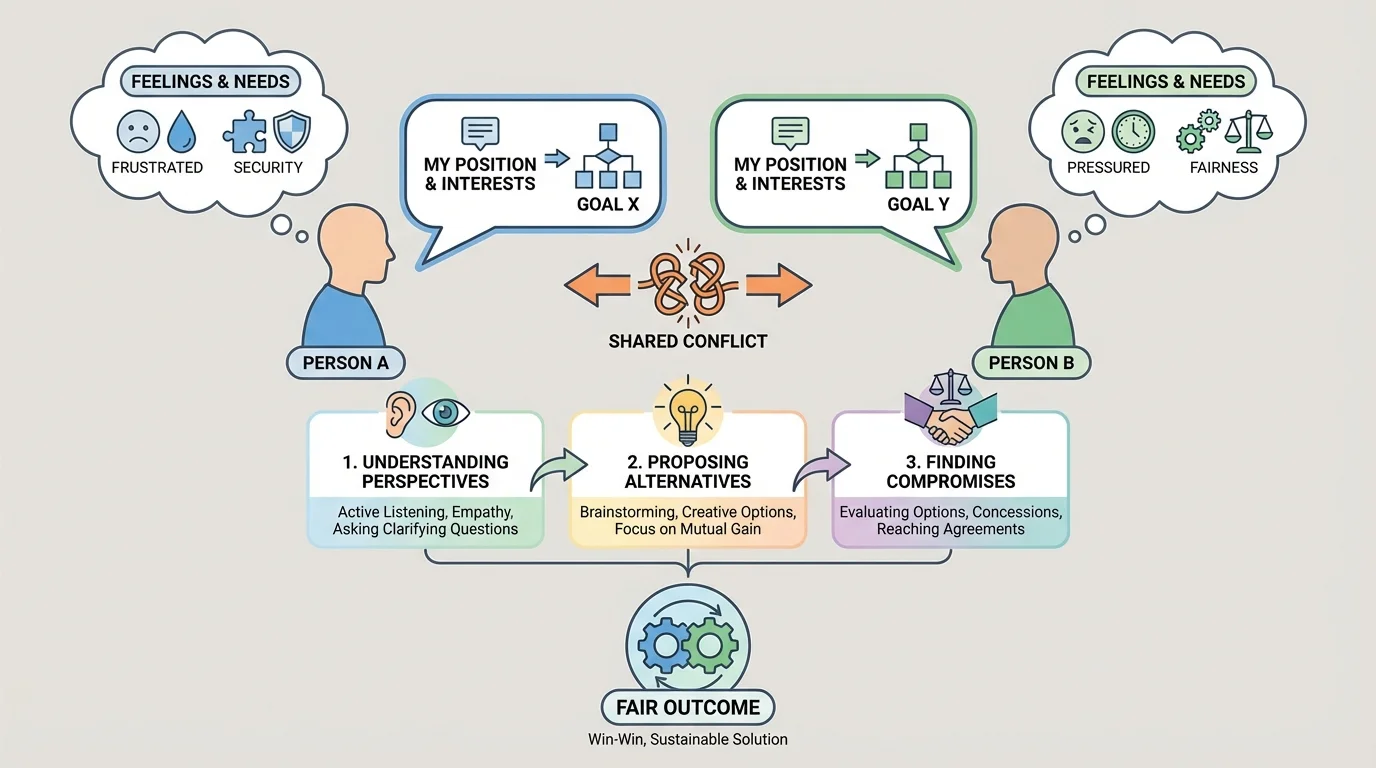
Listening does not mean you agree with everything. It means you are trying to understand accurately. One easy way to show that is to practice active listening. That means paying close attention, not interrupting, and repeating the main idea back in your own words. You might say, "So you're upset because you thought I changed the plan without asking you." If they say yes, you have learned something important. If they say no, they can correct you.
It also helps to separate wants from needs. A want is something someone prefers. A need is something more important. For example, a friend may want to video call at a certain time, but what they really need is enough time to finish before practice starts. When you understand the need, you can often find more solutions.
Example: Understanding the real concern
Step 1: Notice the position.
Your cousin says, "I want the laptop now."
Step 2: Ask about the reason.
You say, "What's the deadline?"
Step 3: Identify the need.
Your cousin says they need to upload an assignment in 20 minutes.
Step 4: Respond to the need, not just the demand.
You say, "Okay, you can use it for the upload first, and then I need it back for my class video call."
The disagreement becomes easier once the real need is clear.
Perspective-taking also includes noticing your own assumptions. If someone types a short message like "fine," you might assume they are angry. But they might just be busy. When you are not sure, ask instead of guessing.
After listening, explain your own side clearly. This is where respectful wording matters. If you blame, shame, or exaggerate, the other person may stop listening. Phrases like "You always..." or "You never..." often make people defensive, even if you are upset for a valid reason.
A better option is an I-statement. This is a sentence that explains what happened, how it affected you, and what you need. For example: "I felt left out when the group made a decision without me, and I want us to check with everyone before changing the plan." That sentence is honest, but it is not insulting.
Keep your message specific. Saying "Be more respectful" is too vague. Saying "Please tell me before you repost my art" is clear and actionable. Clear requests are easier to respond to than general complaints.
You can be firm and respectful at the same time. Calm words are not weak words. In fact, calm words often give you more control because they keep the conversation focused on solutions.
Pay attention to tone in digital communication too. Online messages can sound harsher than you intended because people cannot hear your voice or see your face. If the issue matters, a voice note or video call may work better than a fast back-and-forth text argument.
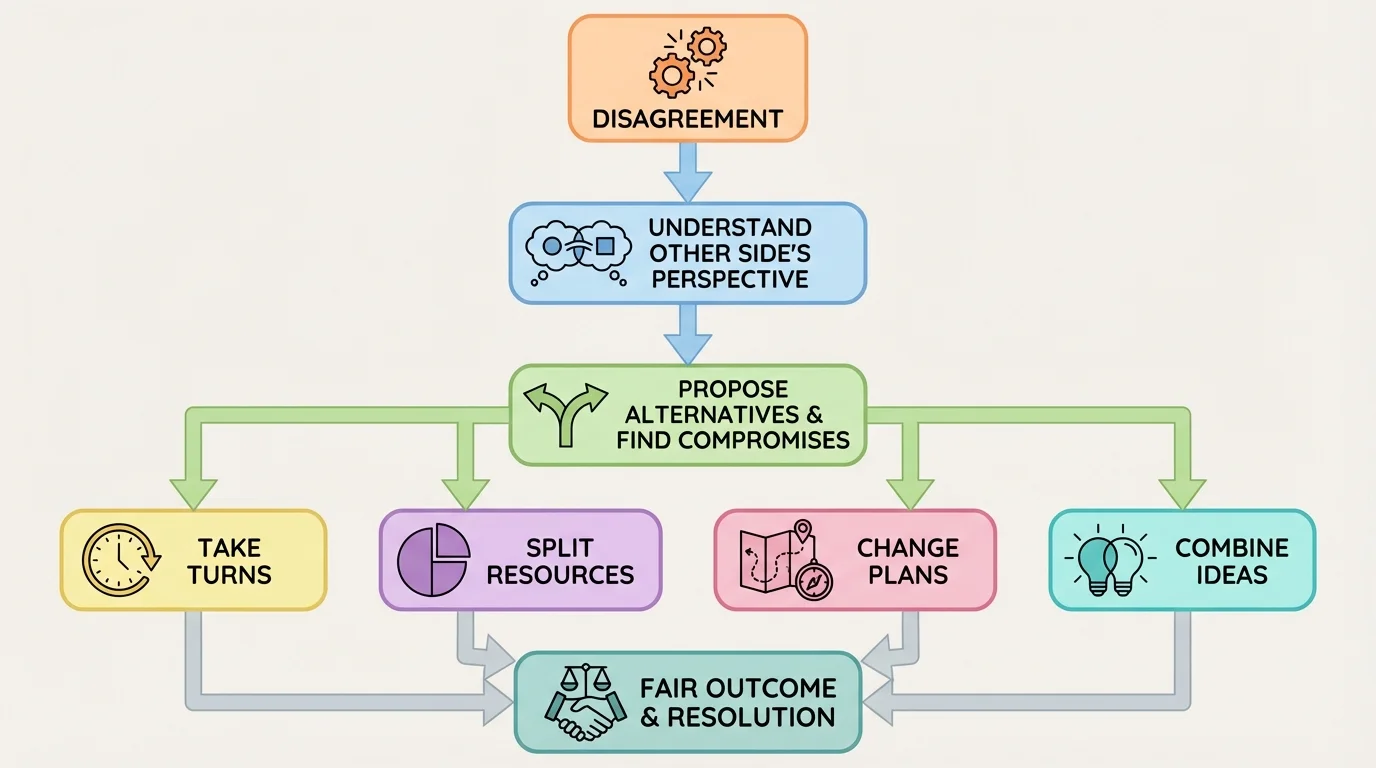
[Figure 2] One problem can have several workable answers. If you only argue for one solution, the conversation can get stuck. But if you propose alternatives, you create room to solve the problem together.
Start with a simple question: "What are two or three ways we could handle this?" You do not have to love every idea. The point at first is to generate options. You can judge them later. This is helpful because sometimes the first idea either person has is not the best one.
Useful alternatives often involve taking turns, splitting time, changing the schedule, combining ideas, or setting a rule for the future. For example, if two friends want different weekend plans, alternatives might include doing one plan this week and the other next week, shortening one activity so there is time for both, or inviting each person to choose one part of the outing.
When brainstorming, avoid shooting down ideas too quickly. If someone offers a possible solution, do not instantly say, "That won't work." Instead, try: "That might work if we change one part," or "I see the idea, but here's my concern." This keeps the conversation open.
Try This: The next time you disagree with someone, challenge yourself to suggest at least two possible solutions before saying no to theirs. That small habit can completely change the tone of the conversation.
People are more likely to accept a solution when they had some part in creating it. Even a small choice can make a compromise feel more fair and more likely to last.
Another smart strategy is to focus on the shared goal. If both of you want the same big result, say it out loud. For example: "We both want this video project to turn out well." Shared goals make cooperation easier because they remind both people they are on the same side in an important way.
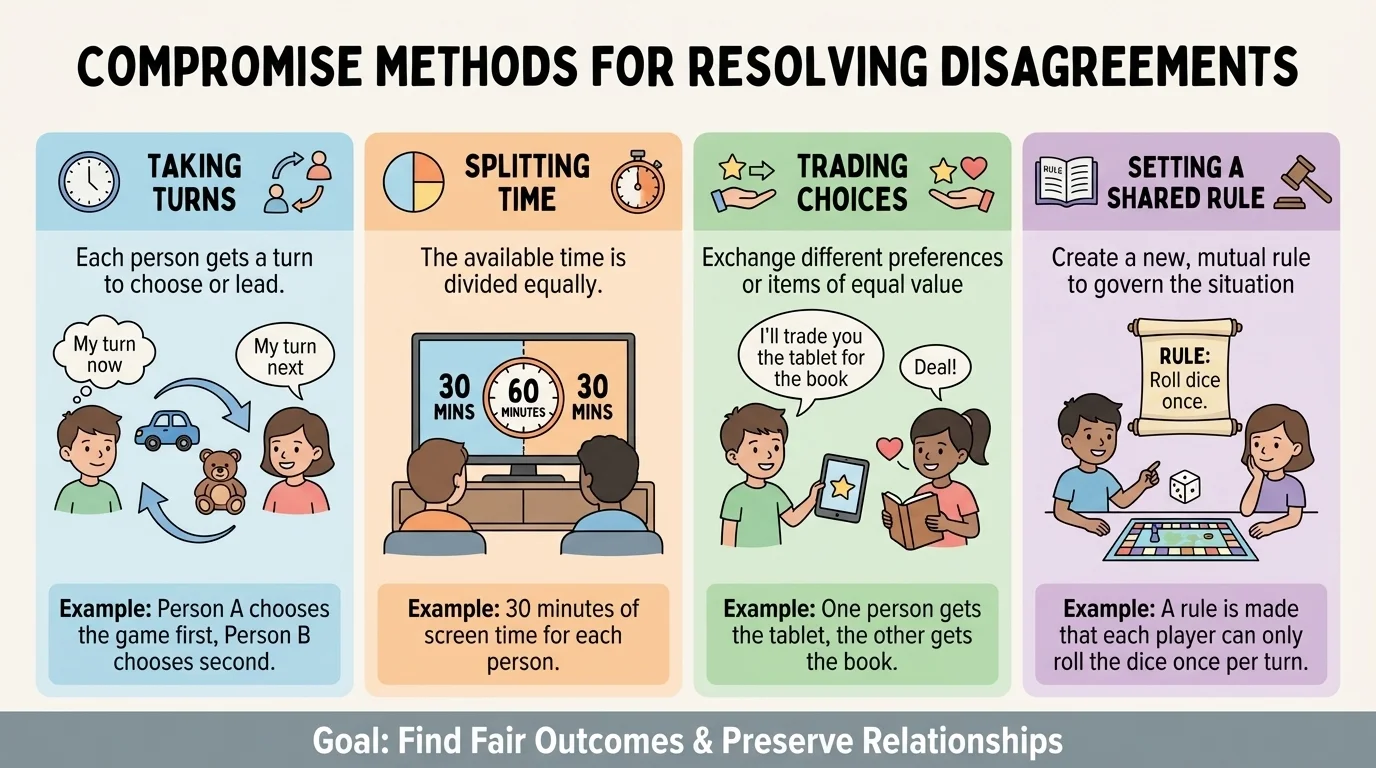
[Figure 3] Fairness is not always exactly equal, and there are several ways people can build a balanced agreement. A good compromise usually means each person keeps what matters most and gives up something less important. The goal is not for both people to be miserable. The goal is for both people to feel heard and reasonably satisfied.
There are many ways to compromise. You can take turns, split time, divide tasks, trade choices, or create a new rule. The best method depends on the problem. If two people both want the same item now, taking turns may work. If one person cares a lot about one part of the plan and the other person cares about a different part, trading choices may be smarter.
Think about what is flexible and what is not. Maybe your meeting time is flexible, but the due date is not. Maybe you can change where you hang out online, but not whether you attend at all. Good compromise happens when people protect the important things and bend on the smaller ones.
| Situation | Compromise Method | Example |
|---|---|---|
| One item, two users | Take turns | One person uses the game console now, the other gets first turn later. |
| Limited time | Split time | Each person gets part of the afternoon for their preferred activity. |
| Different priorities | Trade choices | One person chooses the movie, the other chooses the snack. |
| Repeated conflict | Set a shared rule | Everyone posts schedule changes in the group chat before 6:00 p.m. |
Table 1. Common compromise methods and examples of when each one works well.
Sometimes a fair outcome also includes repairing harm. If you interrupted, shared something private, or ignored someone's input, part of the resolution may be apologizing and changing your behavior next time. Fairness is not only about the final plan. It is also about how people are treated during and after the disagreement.
Example: Reaching a fair outcome in an online group project
Step 1: State the problem clearly.
Two group members both want to be the presenter for the final slide deck.
Step 2: Hear both perspectives.
One wants to present because they designed the slides. The other wants to present because they are comfortable speaking on camera.
Step 3: Brainstorm options.
They could co-present, split the sections, or let one present while the other answers audience questions in the chat.
Step 4: Choose a compromise.
They decide to split the presentation in half and practice together first.
This solution respects both people's strengths instead of forcing one person to lose completely.
As you saw earlier in [Figure 3], different situations call for different kinds of compromise. The more clearly you can identify the type of problem, the easier it is to choose a fair method.
Not every disagreement gets solved quickly. Sometimes emotions get stronger, someone refuses to listen, or the problem involves trust that has already been damaged. If that happens, do not keep pushing the same conversation in the same way.
You can pause and reset. Try saying, "We're going in circles. Let's come back to this in 15 minutes," or "Let's each think of one solution and talk again later." A break can lower tension and help both people think more clearly.
You should also know the difference between a respectful disagreement and unhealthy behavior. If someone threatens you, insults you repeatedly, pressures you, shares private information, or tries to control you, that is not a fair negotiation. In those cases, your job is not to keep negotiating forever. Your job is to protect yourself and get help from a trusted adult.
"You do not have to be mean to be strong, and you do not have to give in to be respectful."
Another reason negotiation can get stuck is a power imbalance. If one person has much more control, the other may not feel safe being honest. For example, a younger child negotiating with an older teen may need adult support. Fair negotiation works best when both people can speak openly without fear.
Suppose a friend reposted your drawing on social media without asking. You are upset because it is your work. A respectful negotiation might sound like this: "I'm glad you liked it, but I felt uncomfortable when it was reposted without asking. Next time, please ask first. For now, can you either tag me clearly or take it down?" This explains the problem, gives options, and protects the relationship better than posting an angry public message.
Suppose you and your sibling both want the same device at the same time. First, identify the need. Is one person doing something urgent? If yes, the urgent need may come first. Then make a plan for later access. If both needs are similar, split time or alternate first turn each day. That is much more effective than yelling, grabbing, or complaining to a parent before trying to solve it yourselves.
Suppose you are planning a weekend activity with a friend, but you want a long video call and they want to play an online game together. You could propose alternatives: spend the first half hour talking, then play the game; do the game this weekend and the call next weekend; or invite another friend and mix both activities. Notice how the focus stays on solving the problem, not proving who has the better idea.
Perspective-taking still matters here, just as it did in [Figure 1]. When you understand the reason behind the other person's choice, your solutions become smarter and more respectful.
When you are in the middle of a disagreement, it helps to have a short plan in your head:
Step 1: Pause and calm down enough to think.
Step 2: State the problem clearly and specifically.
Step 3: Listen to the other side and ask questions.
Step 4: Explain your feelings and needs with respectful words.
Step 5: Suggest two or more possible solutions.
Step 6: Choose a compromise or fair plan.
Step 7: If needed, check back later to see whether the plan worked.
This final step matters more than people think. A solution is only useful if it actually works in real life. If it does not, that does not mean the negotiation failed. It just means you may need to adjust the plan.
Try This: Write your own calm starter sentence and keep it where you can see it. For example: "I want to solve this fairly," or "Can we talk about a solution that works for both of us?" Having the words ready makes it easier to use them when emotions are high.
