A great deal can happen in just a few seconds: smoke from a pan, a storm warning on your phone, a scary message from a stranger online, or someone collapsing in a park. In urgent moments, the biggest difference is often not strength or age. It is whether you can stay calm long enough to make a smart choice. Safety is not about never feeling afraid. It is about knowing what to do next.
When people respond well in dangerous situations, they often protect more than themselves. A good decision can prevent injury, reduce panic, and help emergency workers do their jobs faster. A poor decision can make things worse, such as running back into a smoky room, posting private information online, or crowding around someone who needs medical help.
As you get older, you will be trusted with more independence. You may be home alone for a while, walking in your neighborhood, helping younger siblings, joining clubs or sports in the community, or managing your own phone and online accounts. That means your safety choices matter more every year.
Urgent situation means something needs quick attention to prevent harm. A risky situation is any situation with a chance of harm, even if it is not a full emergency yet. A hazard is the source of possible harm, such as fire, traffic, a violent person, or a scammer online. An emergency is a serious situation where someone may be in immediate danger and trained help may be needed right away.
Not every problem is an emergency, but every risky situation deserves attention. For example, seeing a suspicious link in a message is risky. Smelling gas in your home is urgent and may become an emergency very quickly. Part of staying safe is learning to notice the level of danger and respond in a way that fits the situation.
A useful question is: What harm could happen in the next few minutes if nobody acts? If the answer is "someone could get seriously hurt," treat it as urgent. If the danger is immediate and severe, treat it as an emergency.
Here are some common examples:
| Situation | Level | Best first response |
|---|---|---|
| Unknown person repeatedly asks for your address online | Risky | Stop replying, save evidence, block, tell a trusted adult |
| Small cut while cooking | Low urgency | Clean it, apply pressure, get adult help if needed |
| Smoke alarm sounds and you smell burning | Urgent/Emergency | Leave immediately and get help |
| Friend dares someone to cross a busy road unsafely | Risky | Refuse, move away, warn others |
| Person faints at a community event | Emergency | Get adult help, call emergency services, give space |
Table 1. Examples of situations with different danger levels and safe first responses.
Notice that a safe response is not always dramatic. Sometimes the best move is to leave, lock a door, stop replying, or call someone. Knowing when not to get physically involved is part of good judgment.
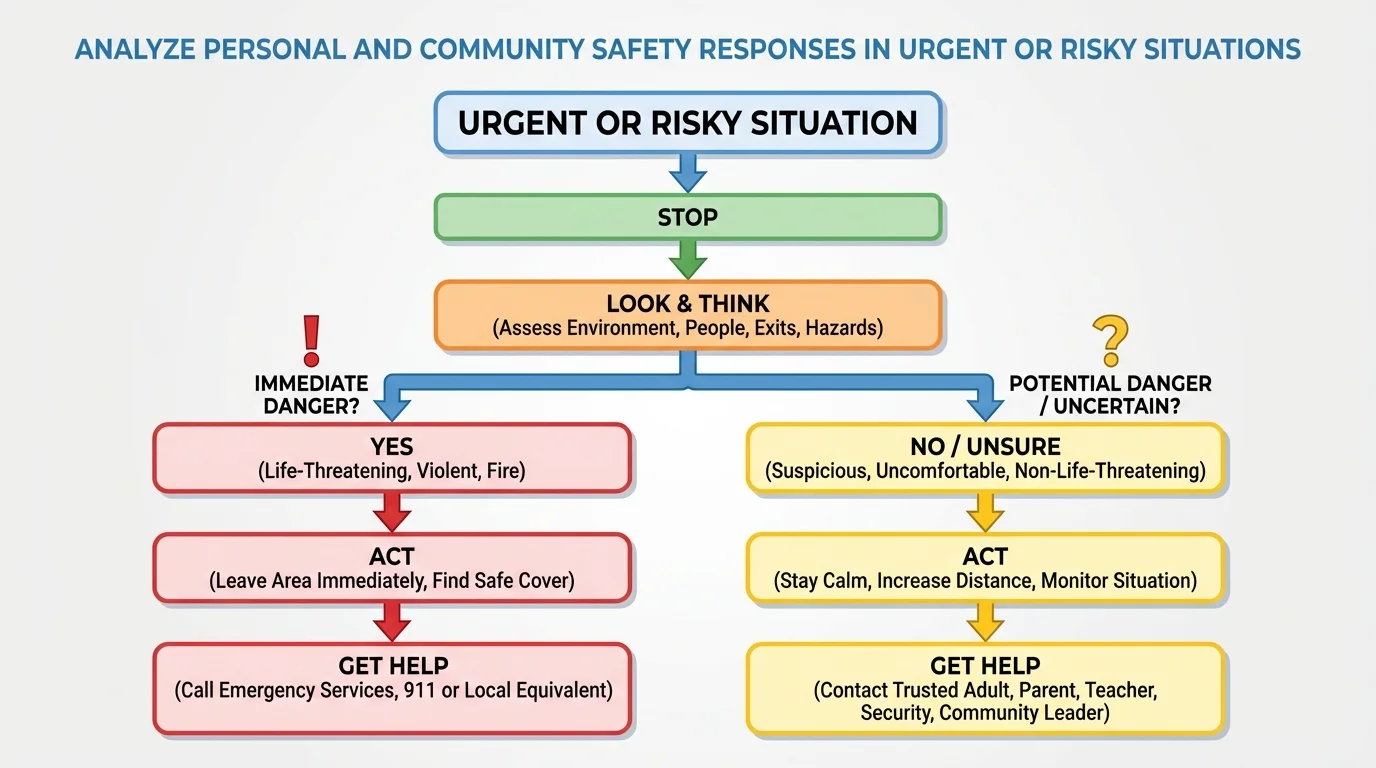
In stressful moments, a repeatable risk assessment process helps you avoid impulsive choices. You do not need a perfect plan. You need a simple one you can actually remember.
[Figure 1] Step 1: Stop. Pause for a second. Do not rush toward the problem without thinking. Panic can cause injuries.
Step 2: Look. Scan for the main danger. Is there fire, traffic, broken glass, water, electricity, a weapon, a threatening person, or a medical emergency?
Step 3: Think. Ask yourself: Am I safe right now? Is anyone else in immediate danger? Do I need to leave? Do I need adult help or emergency help?
Step 4: Act. Take the safest useful action. That might mean exiting, locking a door, moving others away, calling for help, or giving clear information.
Step 5: Get help. Contact a trusted adult, neighbor, event staff member, security guard, or emergency services depending on the situation.
One of the most important rules is this: do not become the second victim. If someone is hurt in a dangerous area, you should not run into traffic, enter a room with heavy smoke, touch exposed wires, or confront a violent person. Your job is to get help and reduce harm, not to prove bravery.
This same process works in very different situations. Just as [Figure 1] organizes your choices in order, it helps whether the danger is physical, social, or digital. For example, if a group chat suddenly turns threatening, you still stop, look at what is happening, think about the risk, act by leaving or documenting it, and get help from a trusted adult.
Safe action is the action that lowers danger fastest. In movies, people often solve problems by charging in. Real safety is different. The best response is the one that protects life, avoids extra injuries, and gets trained help involved when needed.
If you remember only one thing from this section, remember this: quick does not mean reckless. Calm, clear action is usually faster and safer than panic.
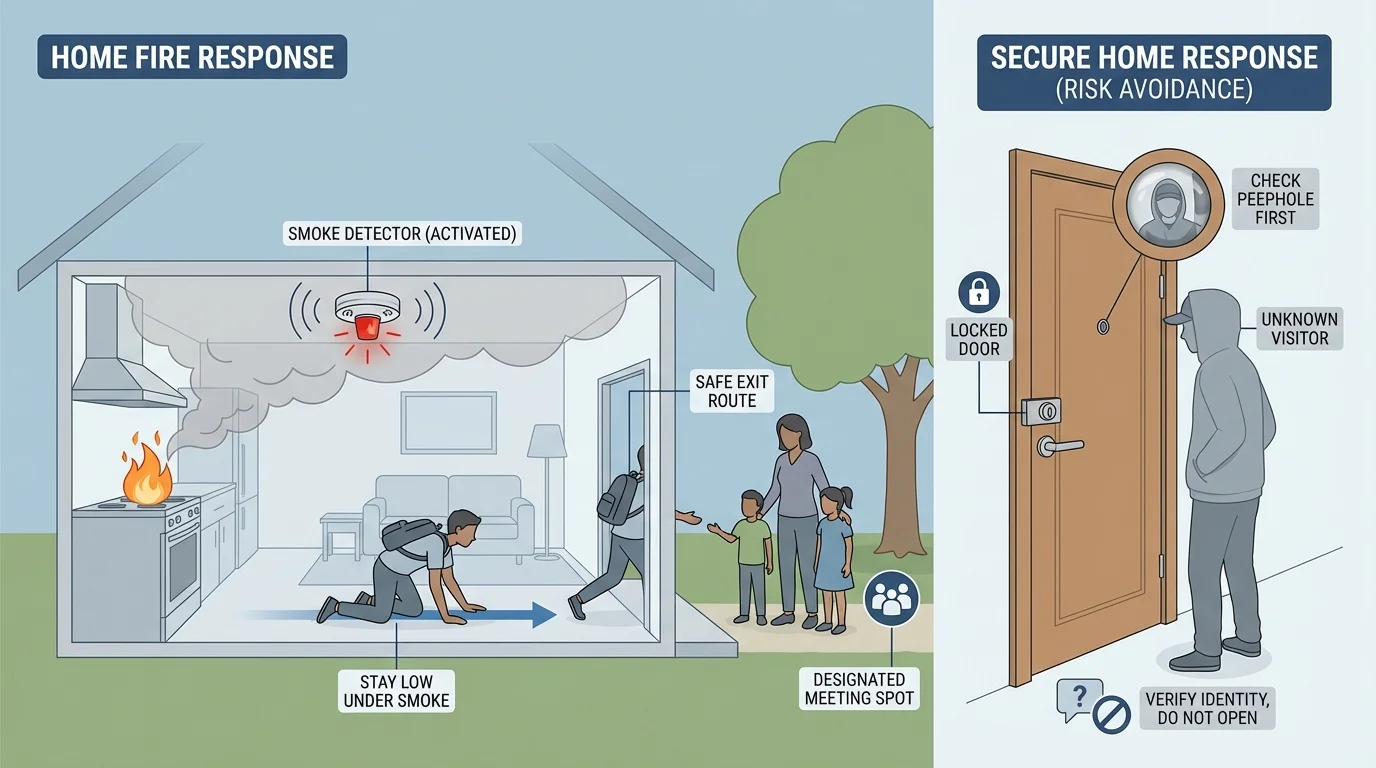
Many urgent situations happen in everyday places you know well, and [Figure 2] highlights how common home situations need immediate but controlled responses. Because familiar places feel normal, people sometimes react too slowly.
Fire or smoke: If you see flames or smell strong burning and the alarm sounds, leave right away. Do not stop to collect chargers, pets, or favorite items if that delays escape. If there is smoke, stay low because cleaner air is lower to the ground. Once outside, stay outside and call for help. Never go back in unless trained emergency workers tell you it is safe.
Smell of gas: Do not turn lights on or off, do not use matches, and do not use anything that might create a spark. Leave the area quickly and tell an adult or call emergency services from a safe location.
Stranger at the door: If you are home and someone unexpected knocks, you do not have to open the door. Speak through the door if needed, keep it locked, and contact a parent, guardian, or trusted adult. If the person acts threatening, call for help.
Minor injury: A scrape or small cut is different from heavy bleeding, difficulty breathing, or someone not waking up. For a small cut, wash it, apply pressure with a clean cloth if needed, and tell an adult. For severe bleeding, press firmly with a cloth and get emergency help immediately.
Severe weather: Follow official alerts, not rumors on social media. Move to the safest place in your home, away from windows if needed. Keep your phone charged when bad weather is expected.
Unsafe online contact: If someone asks for personal details, threatens you, pressures you to send images, or tries to move a chat into a secret space, stop responding. Screenshot evidence, block the account, and tell a trusted adult. You are not "overreacting." You are protecting yourself.
The home examples in [Figure 2] also show an important pattern: the first response is usually simple. Leave. Lock. Call. Tell. Those actions may feel basic, but they prevent many situations from getting worse.
Personal safety and community safety are connected. Your choices affect people around you. In a community space like a library, sports field, apartment building, store, or park, part of staying safe is noticing when others may need help too.
If someone seems injured, unconscious, confused, or in danger, your first move is to alert a responsible adult nearby or call emergency services if no adult is available. If the area is dangerous, move other people back if you can do so safely. Do not crowd the person. Give them air and space.
If you see unsafe behavior, such as a fight starting, reckless biking in a packed area, or someone damaging electrical equipment, do not jump into the middle unless there is no safer choice and you have adult support. Report it to the right person. Strong safety decisions are not about trying to control everyone. They are about lowering the chance of harm.
Case study: community event emergency
You are at a local fair with family friends. An older adult suddenly falls and does not get up.
Step 1: Check the scene.
Look for immediate danger such as traffic, falling objects, or electricity.
Step 2: Get help fast.
Call for an adult, event staff member, or emergency services right away.
Step 3: Protect space.
Ask bystanders to move back so air and access remain clear.
Step 4: Share what you know.
Report what happened, the person's location, and whether they are responsive.
This is a strong response because it focuses on safety, speed, and clear communication instead of panic.
Community safety also includes paying attention to people who may need extra support, like younger children, older adults, or someone who does not understand what is happening. Helping them move to safety, find a trusted adult, or stay calm can make a big difference.
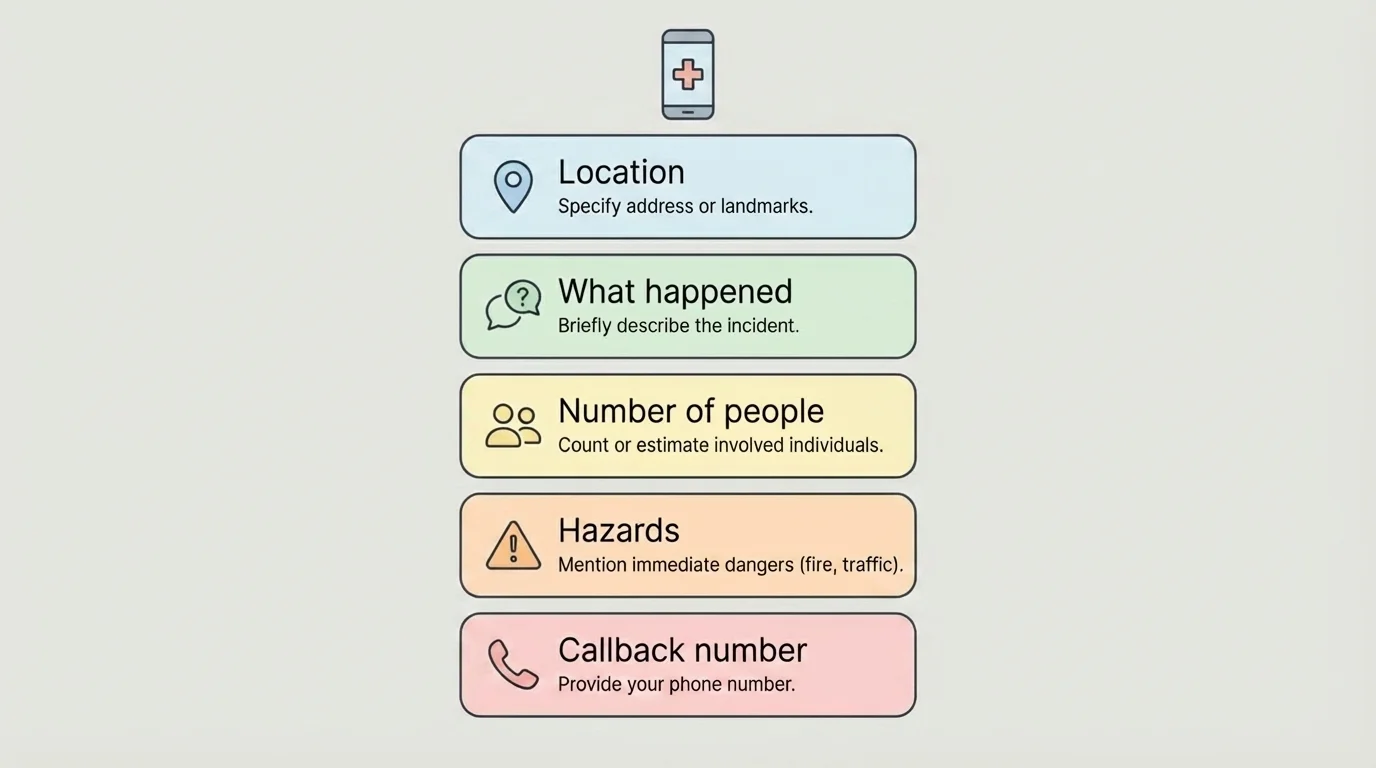
Clear emergency communication helps responders act faster, and [Figure 3] lays out the key details in a useful order. In a crisis, people often speak too fast, forget the location, or start with less important details.
When you call for help, give information in this order if possible: your location, what happened, how many people are involved, what dangers are still present, and how you can be contacted again.
For example, a clear report sounds like this: "I am at the basketball court in Pine Park near the west gate. A person fell and is not responding. There are about five people here. No fire or traffic danger nearby. My phone number is on this device."
If you text a trusted adult, be direct. Instead of sending "help" by itself, send something useful: "I'm at the corner store on Oak Street. A man is following me. I'm going inside now. Please call me." Specific details help adults help you faster.
If you are scared and your mind goes blank, use a short checklist. The order shown in [Figure 3] is effective because location comes first. Help cannot reach you if no one knows where you are.
Many safety mistakes happen because people assume someone else will explain the situation. Never assume that. If you are the one seeing the danger clearly, speak up clearly.
Also remember that online communication can be part of staying safe. Save evidence of threats, scams, or harassment. Do not argue with the person. Share the information with a trusted adult, platform report tools, or law enforcement when necessary.
Fear can make your body react before your brain feels ready. Your heart races, your hands shake, and your thoughts may freeze. This is normal. The goal is not to erase fear. The goal is to keep fear from choosing your actions for you.
A useful skill is de-escalation, which means reducing the intensity of a situation so it is less likely to become dangerous. De-escalation can mean lowering your voice, stepping back, avoiding insults, leaving the area, or getting an adult before a conflict grows.
If you feel panic rising, try this simple reset: plant both feet, inhale slowly, exhale longer than you inhaled, and name the next safe action out loud. For example: "Phone. Door. Outside." Short words can keep your thinking organized.
People sometimes freeze in emergencies not because they do not care, but because the brain is overwhelmed by stress. Practicing simple routines ahead of time makes action easier when your body feels startled.
Peer pressure can also create danger. Someone may say, "Do not tell," "It is not a big deal," or "Come on, prove you are not scared." Those phrases are warning signs. Real confidence is being able to disappoint other people when safety is on the line.
Analyzing responses means asking three questions: What was the danger? What action was taken? Did that action reduce or increase harm? This helps you learn from situations instead of just reacting to them.
Scenario 1: A pan catches fire. One person throws water on it. Another turns off the heat if safe, leaves the area, and gets adult help. The second response is stronger. Throwing water on some kitchen fires can spread burning grease.
Scenario 2: A friend receives threatening messages online. One person replies angrily and starts posting screenshots publicly. Another saves evidence, blocks the account, and tells a trusted adult. The second response is safer because it protects evidence and avoids escalating the conflict.
Scenario 3: A storm warning is issued. One person keeps gaming with headphones on and ignores alerts. Another charges their phone, follows updates, and moves to the safest room. The second response shows preparation and awareness.
How to analyze a response
Suppose a bike crash happens on your street.
Step 1: Identify the main danger.
The rider may be injured, and there may be traffic nearby.
Step 2: Look at the response.
If someone runs into traffic without looking, that increases danger.
Step 3: Judge the result.
A better response is to stay clear of traffic, alert adults, and call for help.
Step 4: Improve it.
Move bystanders back and share the exact location with responders.
This kind of analysis helps you move from "something happened" to "what is the safest next step?"
Strong responses usually have the same features: awareness, calm, clear communication, and respect for limits. Weak responses often involve denial, showing off, arguing, or acting without checking danger first.
A safety plan is a simple set of actions and contacts you prepare before an emergency happens, and [Figure 4] shows the kind of information that makes a plan useful under stress. Preparation matters because stress makes memory less reliable.
Your plan can be short. It just needs to be clear. Know your home address, the best exits, one meeting place outside, at least two trusted adults' phone numbers, and how to contact local help. If someone in your home has a medical condition, know where important information is kept.
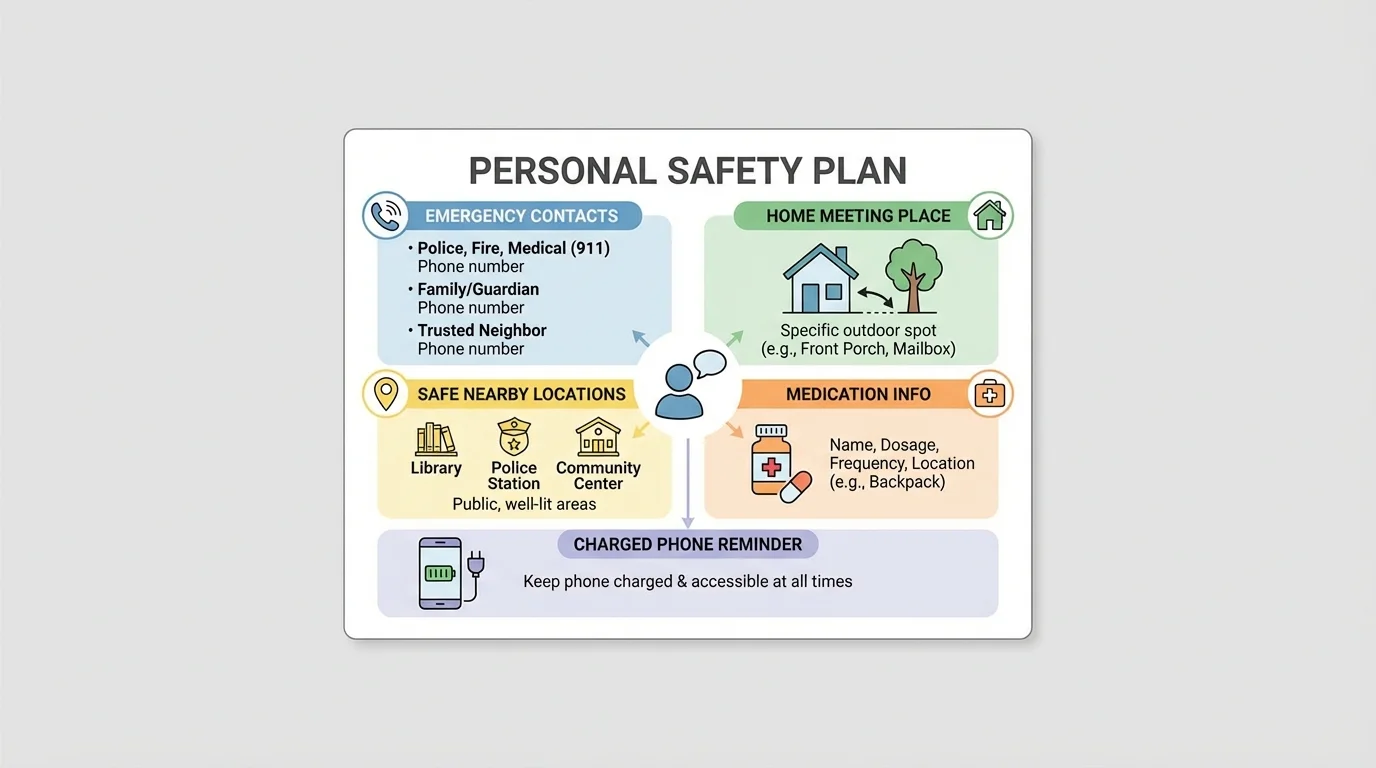
Helpful preparation habits include keeping your phone charged, noticing safe public places in your neighborhood, learning basic first aid from a trusted source, and talking with family about what to do during fire, storm, or neighborhood emergencies.
The plan in [Figure 4] is also about community awareness. You should know where you could go for immediate help nearby, such as a trusted neighbor's home, a staffed community center, or a business with adults present.
Try This: Write down two emergency contacts on paper and keep them somewhere easy to find in case your phone battery dies.
Try This: Walk through your home and identify two exits from the rooms you use most often.
Try This: Practice saying your location clearly, including street name, building number, or nearby landmark.
"The best emergency plan is the one you can remember when your hands are shaking."
Preparation does not mean living in fear. It means building confidence. When you know how to respond, urgent moments become more manageable.
