Have you ever tried to talk at the exact same time as someone else on a video call? It can sound jumbled, confusing, and silly. Good discussions work better when everyone follows a few simple routines. These routines help you know when to talk, when to listen, and how to show respect.
When you are learning from home, you still have many chances to talk with other people. You might speak with a teacher in an online class, chat with a partner in a breakout room, talk with a small group, or share ideas with family members at home. Knowing how to follow routines helps everyone feel heard.
Discussion routines are small steps you do again and again when people talk together. They help conversations stay calm, fair, and easy to understand. When you follow routines, people can hear your ideas. When routines are missing, people may interrupt, feel left out, or miss important words.
Discussion means people talk and listen to share ideas. Take turns means one person talks, then another person talks. Listen means your ears, eyes, and brain are paying attention to the speaker.
If you wait for your turn, people can understand you better. If you listen while someone else speaks, you learn new things and show kindness. These are important life skills not only for online school, but also for clubs, games, community groups, and family conversations.
[Figure 1] shows that a good talk often follows the same pattern every time: first you get ready to listen, then you wait, then you speak when it is your turn, and then you listen again. These steps make talking together feel safe and organized.
Here are some simple routines you can follow: look at the screen or the person talking, keep your body still enough to listen, wait until the speaker is done, raise your hand or use another signal if you want to talk, and use a calm voice. You do not need to be perfect. You just keep practicing.
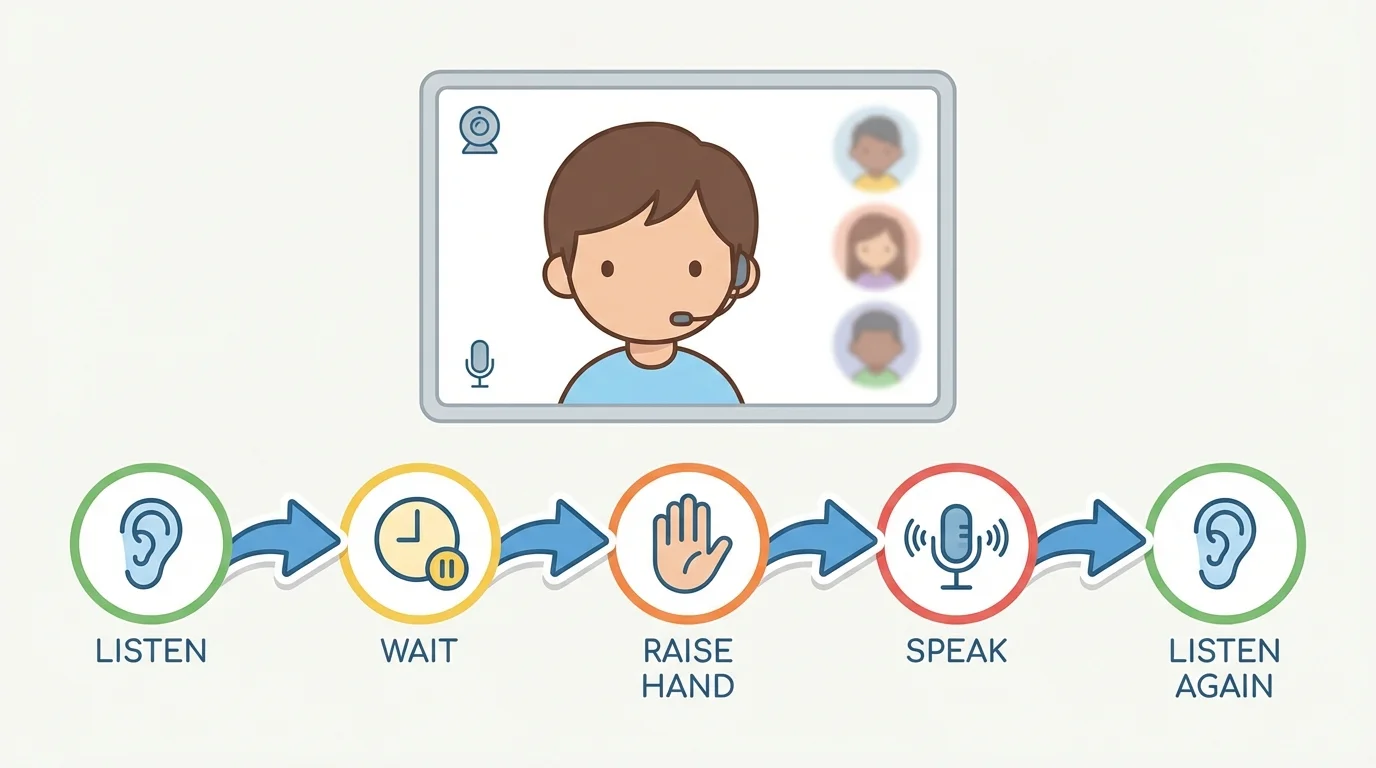
You can also notice helpful signs from others. If someone is still talking, you wait. If the teacher calls your name, you may speak. If a friend shares an idea, you can answer with words like I agree, I think, or My idea is. These little sentence starters help conversations go smoothly.
Listening is active
Listening is not just being quiet. It means paying attention, thinking about the words you hear, and showing the speaker that you care. You can show active listening by facing the screen, staying calm, nodding, or saying a short response when it is your turn.
When you use the same routine again and again, your brain learns what to do next. That is why routines feel helpful. Just like brushing teeth has steps, talking kindly with others has steps too.
A partner talk is when you talk with one other person. This may happen in a short online breakout room or in a conversation with someone at home. In partner talks, each person should get a turn.
Start by listening first. If your partner is speaking, do not jump in. When they finish, you can answer. You might say, "I heard you say you like drawing. I like drawing too," or "My idea is different." This shows that you listened before you talked.
Example: A good partner talk
Step 1: One person speaks.
Sam says, "I like rainy days because I can read at home."
Step 2: The other person listens and waits.
Mia stays quiet and looks at the screen.
Step 3: The other person answers.
Mia says, "I like sunny days, but I also like reading."
Both children get a turn, and both ideas are heard.
If you talk too long, your partner may not get a chance. Try using short, clear sentences. Then pause. A pause gives the other person space to speak.
If you forget and interrupt, that is okay. You can fix it by saying, "Sorry. You go first." That is a strong and respectful choice.
[Figure 2] illustrates how, in a small online group, turns move from one person to another. Group talks work best when only one person talks at a time and everyone else listens. This helps each voice be heard.
When you join a group, listen first so you know what everyone is talking about. Then add your idea when there is space. Stay on the same topic. If the group is talking about favorite animals, do not suddenly talk about lunch unless the topic changes.
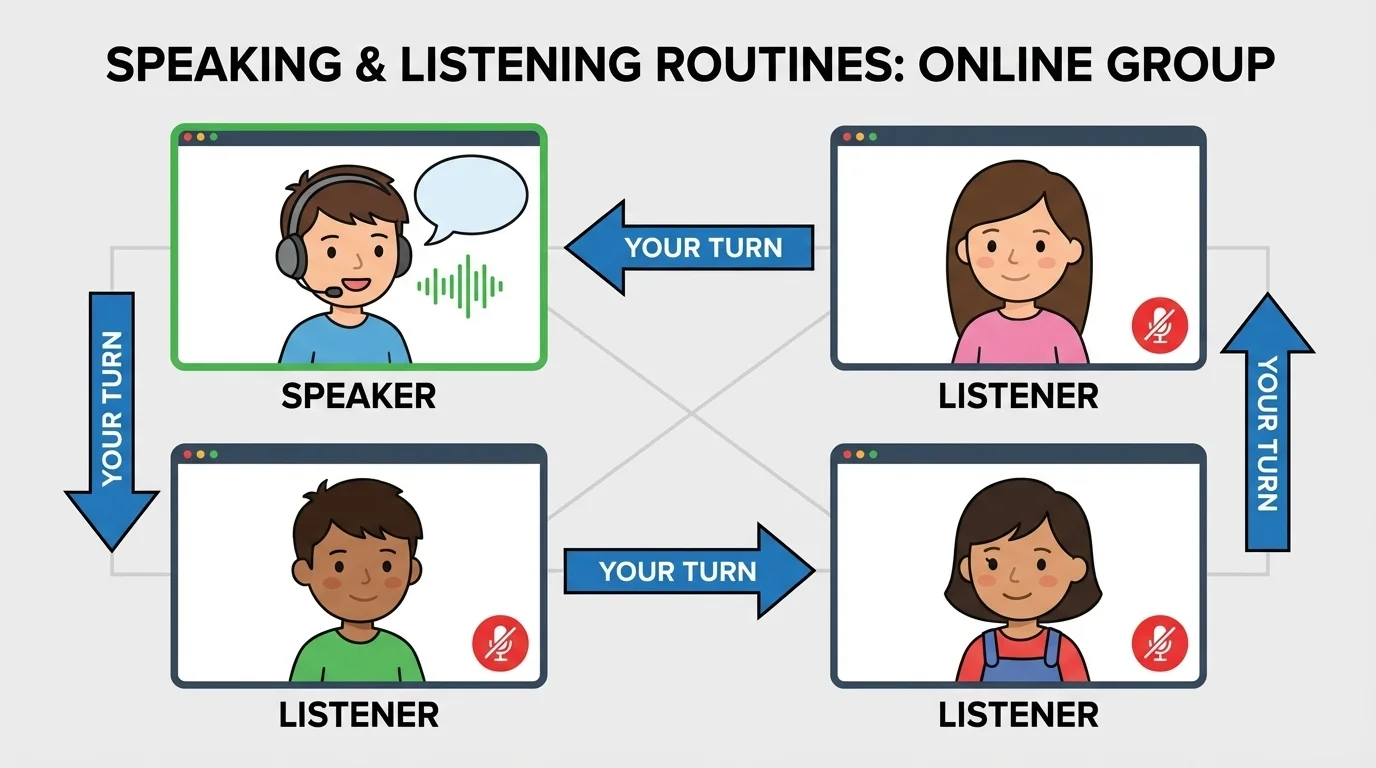
Good group routines include waiting, sharing, and making room for others. You can say, "I want to add something," or "Now it is your turn." Those words help the group stay friendly and fair.
Sometimes one person talks a lot. Sometimes one person feels shy. You can help by being kind. If you have already spoken, you can wait. If someone else has not spoken, you can invite them by saying, "Would you like to share?"
Many adults use the same turn-taking skills in work meetings, team sports, and community groups. Learning them now helps you in many places later.
The turn-taking picture from [Figure 2] is helpful because it reminds you that group talking is like passing a ball. One person has the turn, then passes it to someone else.
[Figure 3] shows some of the special rules that often guide online class discussions. Your teacher may ask you to stay muted, raise your hand, or wait until your name is called. These routines make the class easier for everyone to hear.
When your teacher is talking, listen carefully. Keep other sounds low if you can. If you want to speak, use the class signal, such as raising your hand on screen or using a hand-raise button. Then wait.
When the teacher calls on you, unmute and speak clearly. Say your idea in a simple way. When you are done, mute again if that is the class routine.
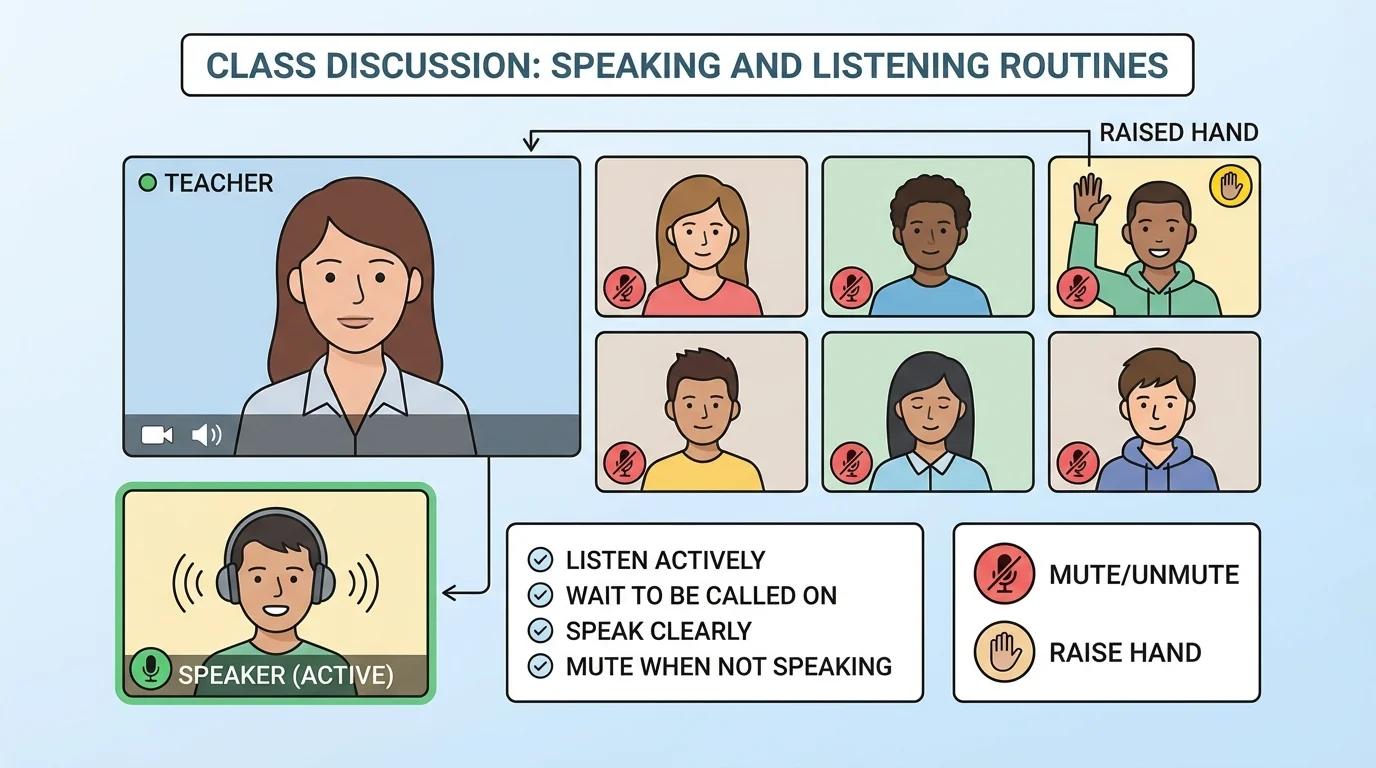
If another student is speaking, do not talk over them. Even if you are excited, hold your thought. You can remember it in your head until it is your turn. This shows respect and helps everyone understand the speaker.
Example: Waiting in an online class
Step 1: You think of an answer.
You want to share right away.
Step 2: You use the class signal.
You raise your hand instead of calling out.
Step 3: You wait to be called on.
Then you unmute, share, and mute again.
This routine helps the class hear one speaker at a time.
The online class screen in [Figure 3] reminds you that good class discussions are not about talking first. They are about listening, waiting, and sharing at the right time.
Sometimes discussions do not go the way you want. Maybe two people speak at once. Maybe you cannot hear. Maybe you feel frustrated or too excited. You can still make a good choice.
If two people talk at once, stop and let one person go first. If you cannot hear, say, "Can you say that again, please?" If you feel upset, take one slow breath and keep your body calm before speaking. A calm body helps a calm voice.
You already know how to be kind in everyday life. The same kindness belongs in discussions too: wait, listen, and use gentle words.
If you disagree with someone, you can still be respectful. You can say, "I think something different," instead of saying something unkind. Good discussions are not about winning. They are about sharing and hearing ideas.
Here is an easy routine to remember when you talk with others online or at home: Listen. Wait. Speak. Stop. Listen again. These steps fit partner talks, group talks, and class discussions.
You can also check your body and voice. Ask yourself: Are my eyes watching? Is my body calm? Is my voice kind? Am I waiting for my turn? Small checks like these help you do well in real conversations.
| Situation | What to Do |
|---|---|
| Someone else is talking | Listen and wait |
| You want to share | Raise your hand or wait for a pause |
| It is your turn | Speak clearly and briefly |
| You interrupt | Say, "Sorry. You go first." |
| You disagree | Use kind words |
Table 1. Simple discussion routines for common situations.
Try This: The next time you talk with a partner, try one small goal: wait until the other person is fully done before you speak. The next time you are in a group, try inviting someone else to share. The next time you are in an online class, use the hand-raise routine and wait calmly.
Every time you practice these routines, you become a better speaker and a better listener. That helps people trust you, understand you, and enjoy talking with you.
