Have you ever seen grown-ups say "not today" at the store, even when they have money? That happens because money has many uses. Some money buys things we must have. Some money buys things we enjoy. Some money helps pay for things many people use together. Learning these differences helps you make kind, careful, and smart choices.
Money helps people get what they need, enjoy some things they want, and pay for shared parts of daily life. When you understand these groups, you can start to see why adults make certain choices. A family may buy milk before cookies. They may pay for lights before a new toy. That does not mean toys are bad. It means some things come first.
Need means something people must have to live, grow, and stay safe. Want means something nice to have but not necessary for living. Shared responsibility means something people help pay for or take care of together.
When money is used well, people can eat, stay warm, and keep important services working. When money is used poorly, there may not be enough left for important things. That is why even young children can practice stopping and thinking before choosing.
A need is something important for life and safety. Needs can include food, water, a place to live, clothes for the weather, and medicine when someone is sick. A warm coat on a cold day is a need. Soap to wash hands is a need. A bed to sleep in is a need.
Families often use money on needs first. If a family is shopping, they may choose bread, fruit, and eggs before cupcakes. If your shoes are too small, new shoes may come before a toy. These choices help people stay healthy and comfortable.
A want is something you enjoy but do not need in order to live. A stuffed animal, a video game, a fancy dessert, stickers, or a shiny water bottle can be wants. Wants are not wrong. Wants can bring fun and joy. The important part is knowing they usually come after needs.
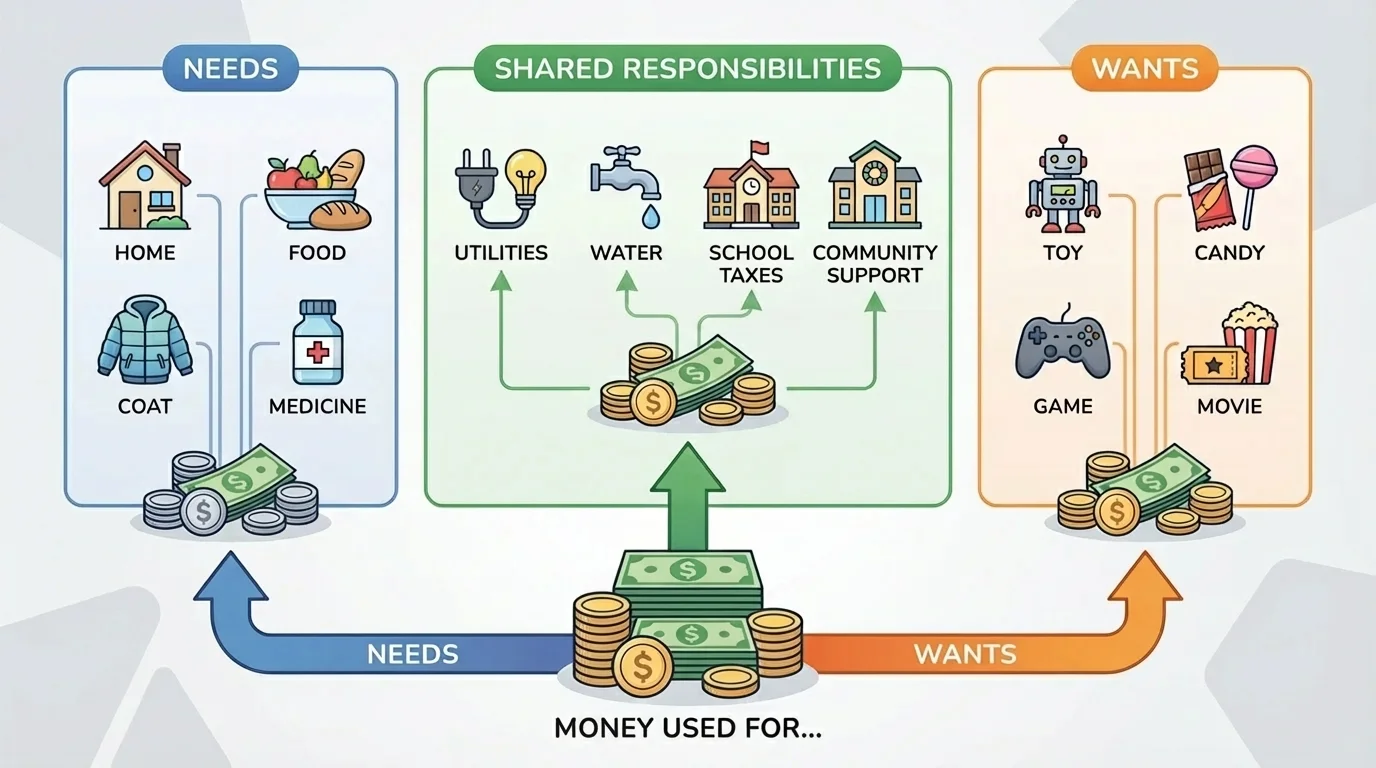
Some things can be a need in one situation and a want in another. A plain pair of shoes is a need if you do not have shoes that fit. A second sparkly pair may be a want. A simple lunch is a need. Extra candy with it is a want. As [Figure 1] shows, smart money choices often begin by sorting things into "need" and "want."
When you can tell the difference, shopping becomes easier. You can say, "We need apples. We want cookies." You can say, "I want this toy, but I do not need it today." That is a strong life skill.
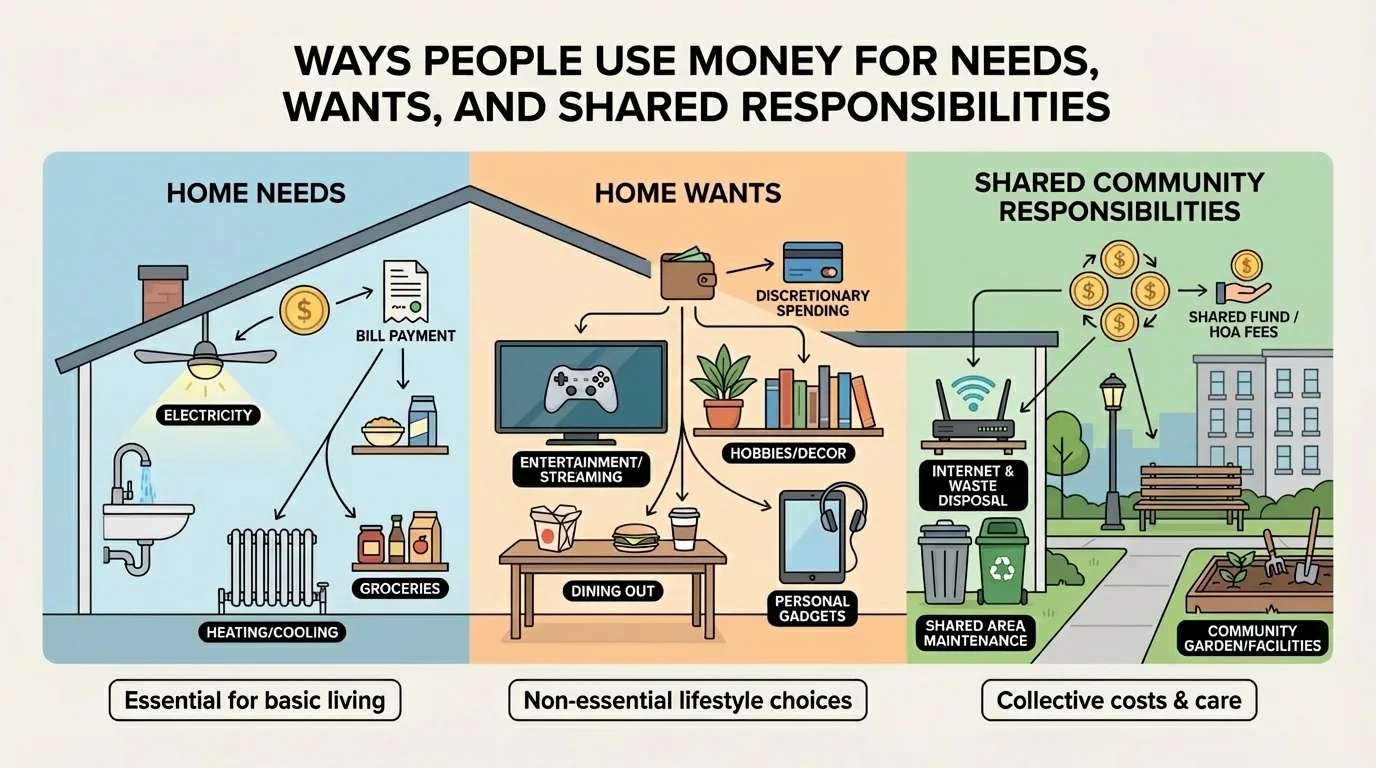
As [Figure 2] illustrates, some money goes to shared responsibilities. These are things people use together or things that help everyone in a home or community. Shared money can help keep lights on, water running, trash picked up, and internet working for the people who use them.
At home, adults may pay for electricity, water, internet, or rent. In a building or neighborhood, money may help care for shared spaces. In a community, people also help support roads, parks, libraries, and helpers such as firefighters. You may not pay these yourself right now, but you can learn that money is not only for one person. Sometimes it helps many people.
Why shared responsibilities matter
When people help pay for shared things, everyone can use safer, cleaner, and more helpful spaces and services. If these things are ignored, daily life gets harder. Lights may not work, water may not run, and shared places may not be cared for.
This is one reason adults sometimes say no to an extra treat or a new gadget. They may be thinking about a bill that keeps the home running. Later, when needs and shared responsibilities are covered, there may be room for some wants too.
You do not have to be a grown-up to start practicing good money habits. You can use a simple check when you want something.
Step 1: Stop and look. What is the item?
Step 2: Ask, "Do I need it, want it, or is it for everyone to use?"
Step 3: Think about what comes first. Needs usually come first. Shared responsibilities also matter. Wants can come after that.
Step 4: Choose calmly. Sometimes the answer is yes. Sometimes the answer is "not now."
Real-world example
You have enough money for one small thing at the store.
Step 1: You see a banana and a candy bar.
Step 2: You ask which one is a need and which one is a want.
Step 3: The banana helps your body and is a need. The candy bar is a want.
Step 4: If you need a snack, the banana is the smarter first choice.
The same way of thinking works at home. If your family needs soap, soap comes before bubble gum. If the internet bill needs to be paid so everyone can do important tasks online, that may come before buying a new game. As we saw in [Figure 1], sorting choices helps you understand what should come first.
Here are some simple ways people use money in daily life:
| Money Use | Type | Example |
|---|---|---|
| Food for dinner | Need | Buying rice, vegetables, or milk |
| Warm socks | Need | Getting clothes for cold weather |
| Toy car | Want | Fun to have, but not necessary |
| Ice cream treat | Want | Enjoyable, but not needed to live |
| Electricity bill | Shared responsibility | Keeps lights and devices working |
| Water bill | Shared responsibility | Helps provide water for the home |
Table 1. Examples of how money can be used for needs, wants, and shared responsibilities.
Sometimes a choice feels tricky because both things seem good. That is normal. You can ask a trusted adult, "Which one comes first?" Over time, you will get better at noticing what is most important right now. Shared responsibilities, like the ones shown in [Figure 2], remind us that money often helps a whole group, not just one person.
People all over the world use money to make choices every day. Even small choices, like picking fruit before candy, can help build strong money habits.
Good money habits do not mean never having fun. They mean taking care of important things first. Then, when possible, you can enjoy wants too. That balance helps homes run more smoothly and helps people worry less.
Next time you help with shopping, look at a few items and quietly sort them in your mind: need, want, or shared responsibility. You might notice bread, soap, and toothpaste are needs. You might notice cookies or a toy are wants. You might hear an adult talk about paying for water, electricity, or internet.
You can also practice at home by looking around one room. Ask yourself which things help people live safely and which things are mostly for fun. This simple habit helps you become thoughtful and responsible with money.
