Sometimes your stomach feels funny, your eyes want to cry, or your brain says, "Huh?" That is an important clue. It means you may need help from a grown-up you know and trust.
Something can feel hard when you cannot do it by yourself. Something can feel confusing when you do not understand what is happening. You might feel sad, scared, worried, upset, lost, or unsure.
Trusted adult means a grown-up who helps keep you safe, listens to you, and cares for you.
If you are hurt, frightened, cannot find your family member, do not understand something on a screen, or someone says something that feels wrong, it is time to tell a grown-up.
A trusted adult is someone who helps you when you need care, comfort, or safety. In many families, trusted adults can be a parent, grandparent, aunt, uncle, caregiver, or family friend. Some helpers in the community can help too, as [Figure 1] shows.
You do not need a long list. It is enough to know a few safe grown-ups. You might say their names out loud: "Mom helps me. Grandpa helps me. My babysitter helps me."
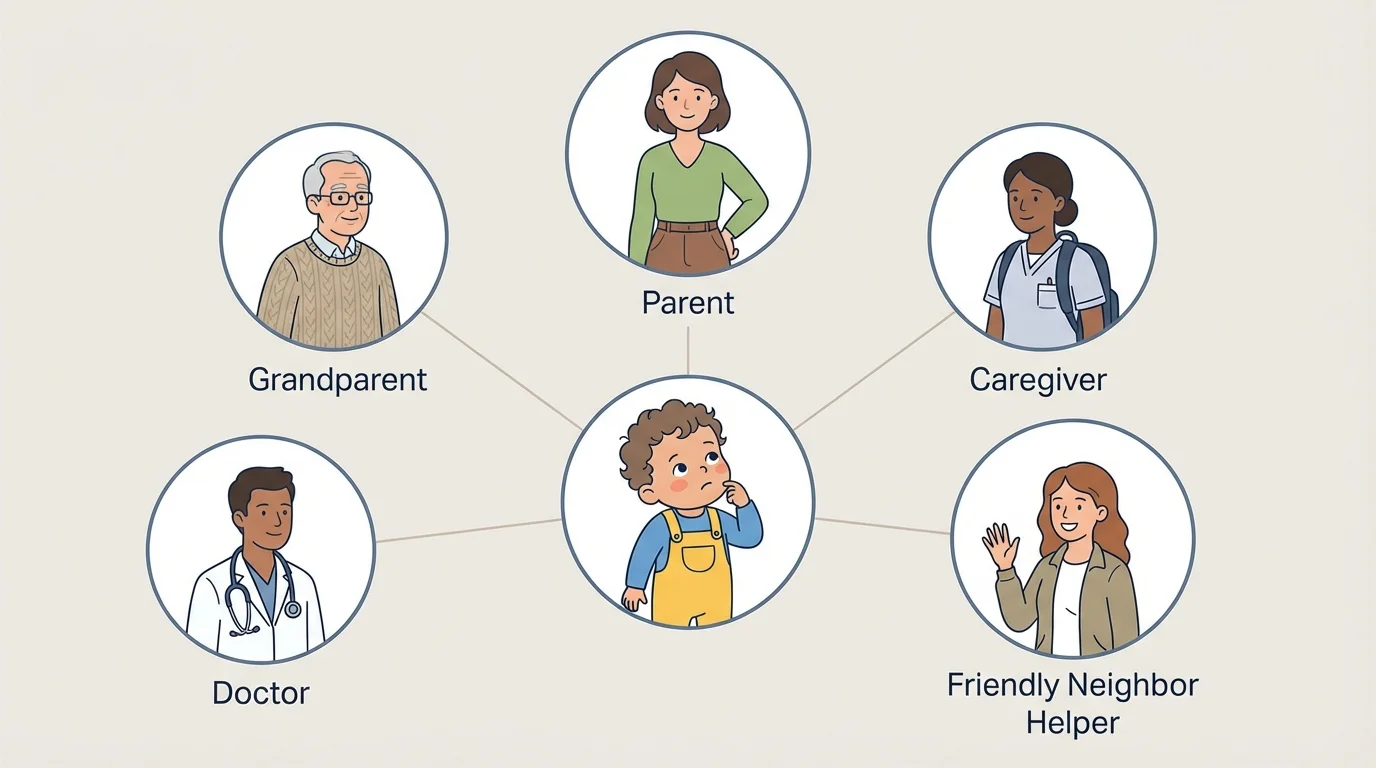
Other trusted adults can include a doctor, a coach, a group leader, or a neighbor your family knows well. A trusted adult is someone your family says is safe and helpful.
How to know a helper
Trusted adults listen, stay calm, and try to help. They do not tell you to hide important problems. They want you to be safe.
When something feels big, you do not have to solve it alone. You can go to one of the helpers your family knows. The circle of helpers in [Figure 1] reminds you that more than one grown-up can care for you.
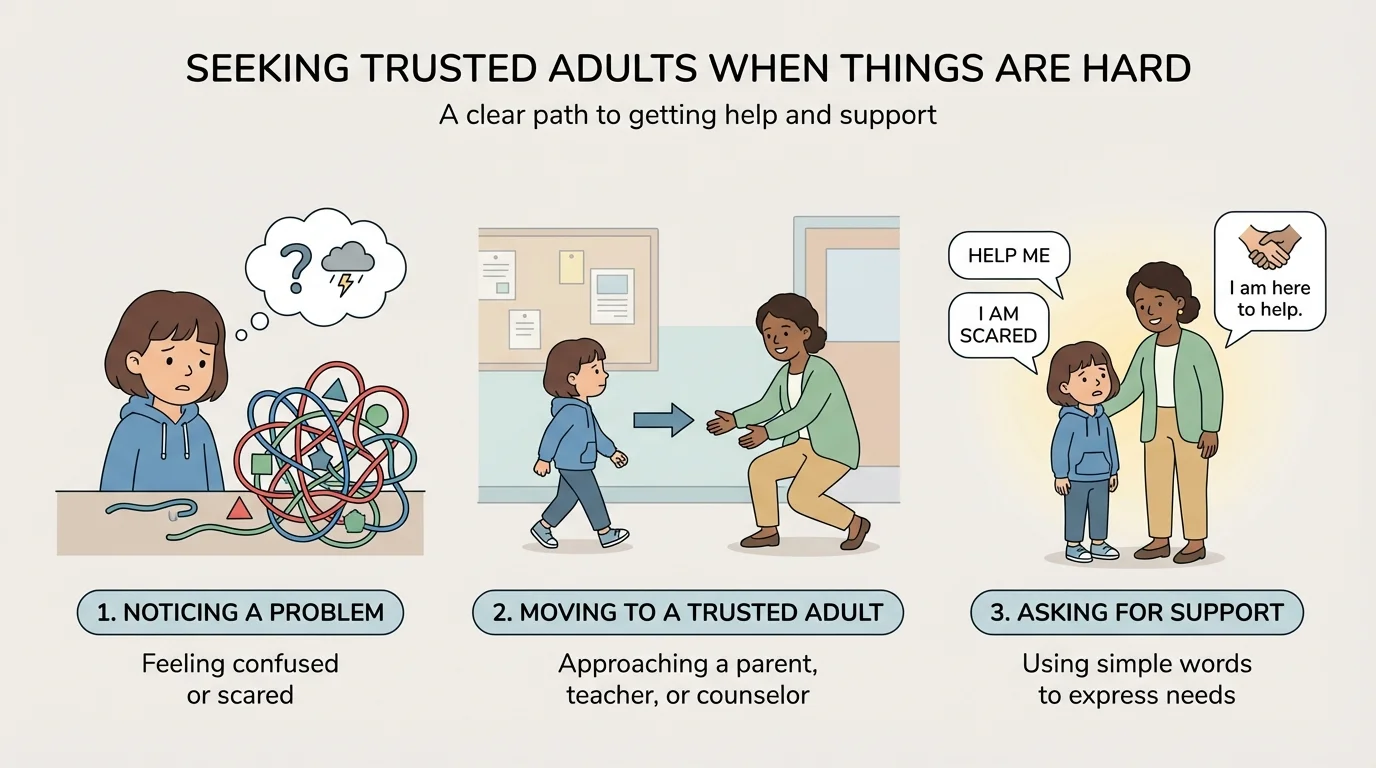
Asking for help can be very simple. First, notice your feeling. Next, go to a trusted adult. Then, use a short sentence.
[Figure 2] You can say: "Help me." "I am scared." "I am confused." "I got hurt." "I need you." Short words are enough.
You can also point, hold a grown-up's hand, or stand close if talking feels hard. The important part is to ask for help.
Everyday example
Step 1: You see something on a phone or tablet that makes you feel upset.
Step 2: You go to your trusted adult.
Step 3: You say, "This feels confusing. Please help me."
You did the right thing by telling an adult right away.
Sometimes children stay quiet because they think a problem is too small. But if it feels hard to you, it matters. A trusted adult wants to know.
[Figure 3] Sometimes the first grown-up is cooking, on a call, or helping someone else. That does not mean your problem does not matter. It means you should tell again.
You can say, "I need help now," or go to another trusted adult on your helper list. Keep asking until someone helps you.
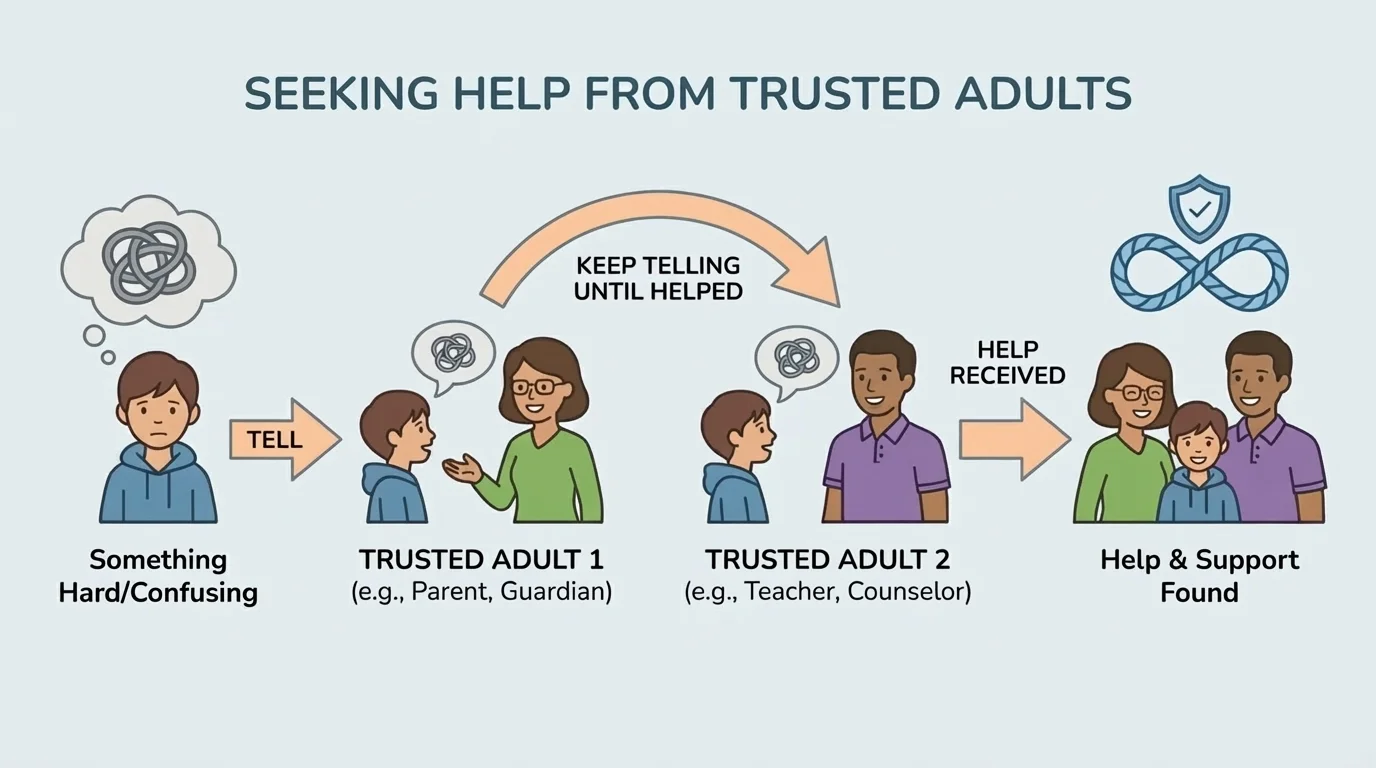
If you are hurt, very scared, or feel unsafe, stay near safe grown-ups. Do not keep a scary secret. Keep telling a helper until you feel heard.
You are never being a bother when you tell a trusted adult that something feels wrong, confusing, or unsafe.
Later, when another problem happens, you can remember the path in [Figure 3]: tell one helper, then another helper if needed.
Here are times when you might need help: you fall down, you cannot find your caregiver in a store or park, a stranger talks to you online, a loud noise scares you, or you do not understand what someone is saying in a video call.
In each case, the job is the same: go to a trusted adult and tell what happened. You do not need perfect words. You just need to start.
Young children build strong safety habits by practicing the same simple help words again and again. Short phrases are easier to remember when feelings are big.
A good safe choice is to stay close to known helpers. If something feels tricky on a device, do not click more. Go tell an adult.
It helps to know the names of a few trusted adults in your life. You might know a parent, grandparent, caregiver, and one community helper. When you know their names, it is easier to find help fast.
You can remember this simple idea: "If I feel scared, hurt, or confused, I tell a trusted adult." That is a smart and brave thing to do.
