What will you do first: build a tall block tower, put toys away, or wash your hands before snack? Picking one thing helps your day feel calm and clear. A small plan can help you start, keep going, and finish.
As [Figure 1] shows, a goal is one thing you want to do. It can be small and simple. You do not need a big plan. You just need one clear idea. You might say, "I will put my crayons in the box," or "I will finish my puzzle."
When you set one goal, you know what to do next. That helps your body and brain get ready. A simple goal is easier to start than trying to do many things at one time.
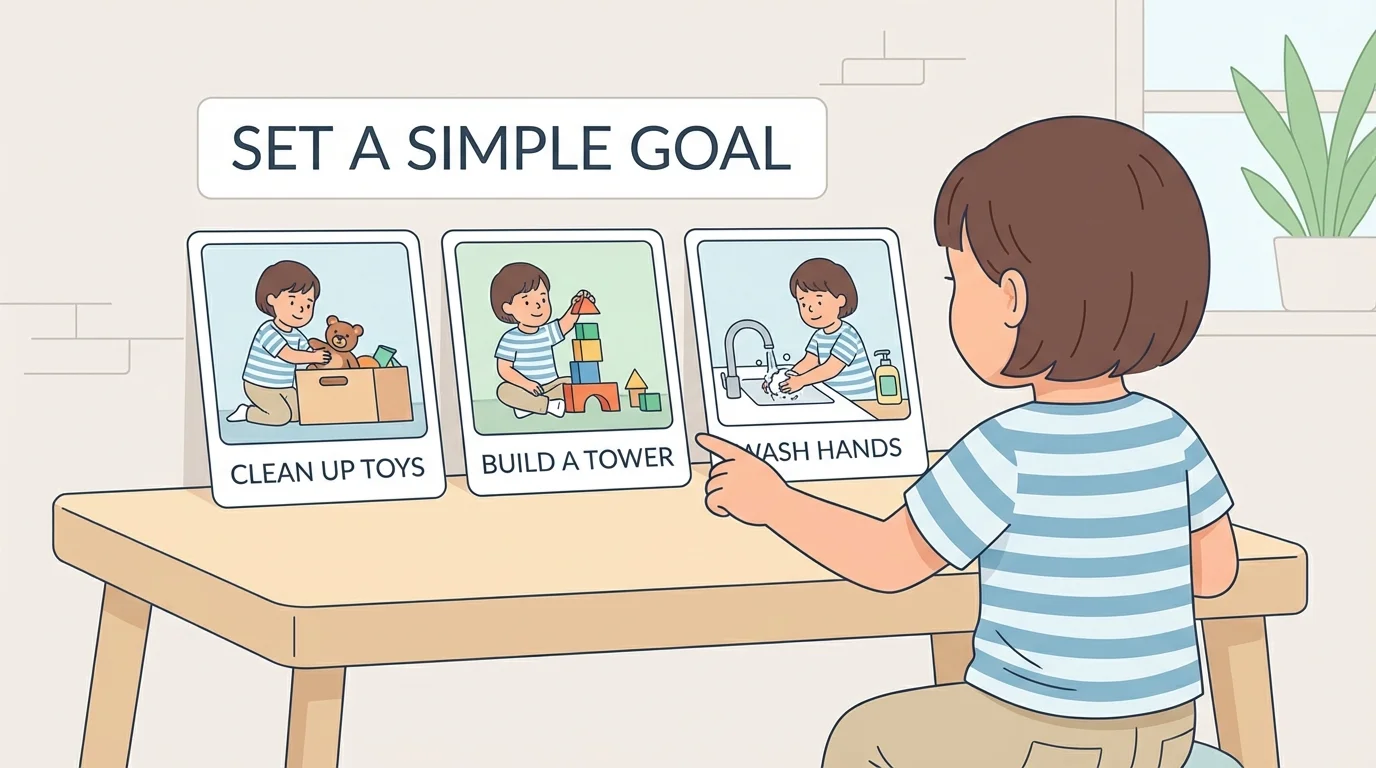
A good simple goal is small, clear, and safe. Small means you can do it soon. Clear means you know what it is. Safe means a grown-up knows about it and it is okay for you to do.
Goal means something you want to do or finish. Routine means something you do again and again, like getting dressed, washing hands, or cleaning up.
You can set goals at home, during online learning, or while playing with family or friends on a video call. Goals help you take care of your things, your time, and your body.
First, choose only one thing. If your goal is too big, it can feel hard. Instead of "clean everything," try "put stuffed animals on the bed." Instead of "learn all my letters," try "sing the alphabet song."
You can ask yourself easy questions: What do I want to do? Can I do it now? Is it just one small thing? If the answer is yes, you have a simple goal.
Here are some simple goals: a play goal could be "I will roll the ball three times." A learning goal could be "I will listen to one story." A routine goal could be "I will put my shoes by the door." These goals are easier than trying to do too much at once.
Choosing a simple goal
Step 1: Think of what you want to do.
You want to clean up after drawing.
Step 2: Make it smaller.
Pick one part: "I will put the markers in the cup."
Step 3: Say it out loud.
"My goal is to put the markers in the cup."
Now the goal is clear and easy to start.
When you choose one simple goal, you are practicing responsibility. Responsibility means doing what you are supposed to do, even in small ways.
Sometimes a goal still feels big. Then you can use steps. A step is one small action. Doing one small step at a time helps you keep moving, as [Figure 2] shows.
If your goal is "clean up blocks," your steps might be: pick up blocks, put blocks in the bin, push the bin to the shelf. Tiny steps help you know exactly what to do first.
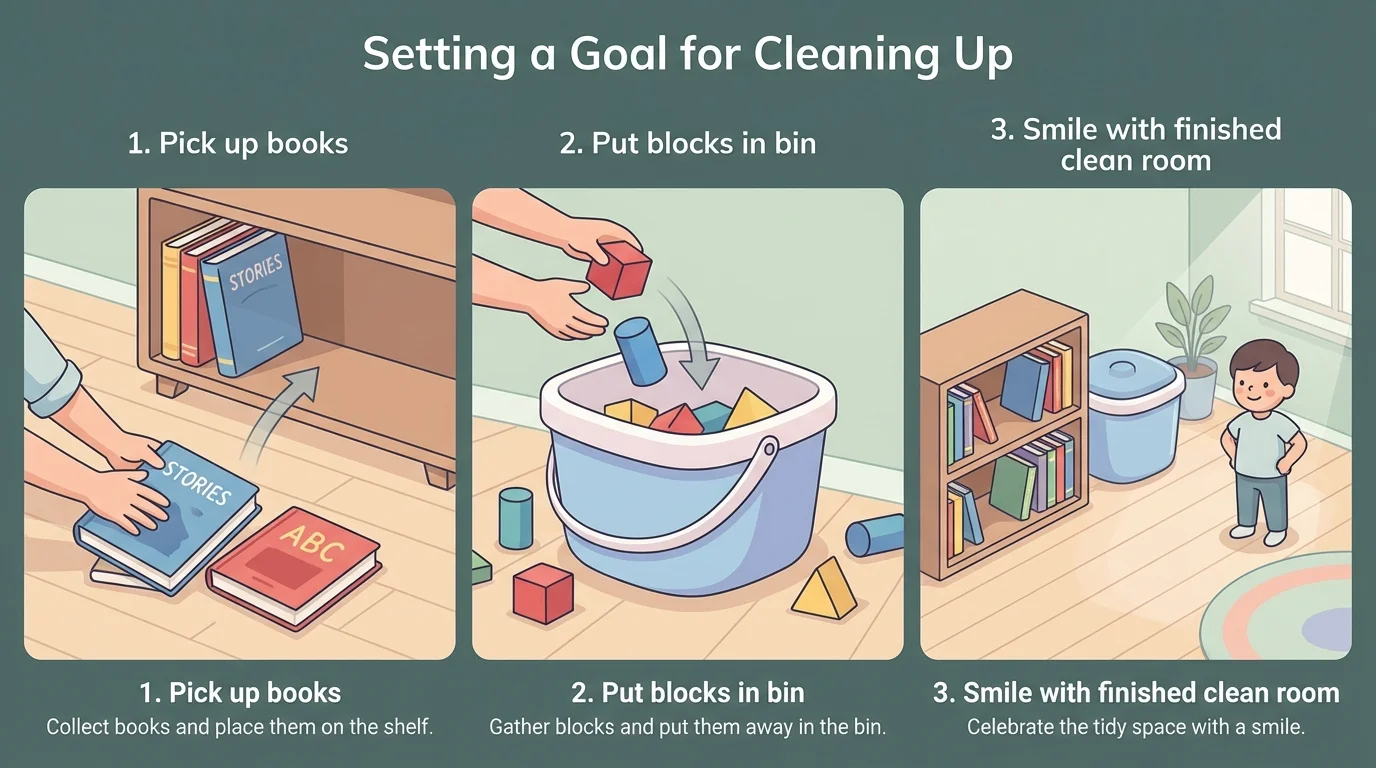
You can also use helpful words: first, next, last. For example: first wash hands, next sit at the table, last eat snack. These words make routines easier to follow.
Why tiny steps work
Small children do better when a job is broken into tiny parts. One step feels possible. After one step, the next step feels easier. This is how goals help you grow stronger and more independent.
If something does not work the first time, that is okay. You can stop, breathe, and try the next step again. Goals are not about being perfect. Goals are about trying and finishing what you can.
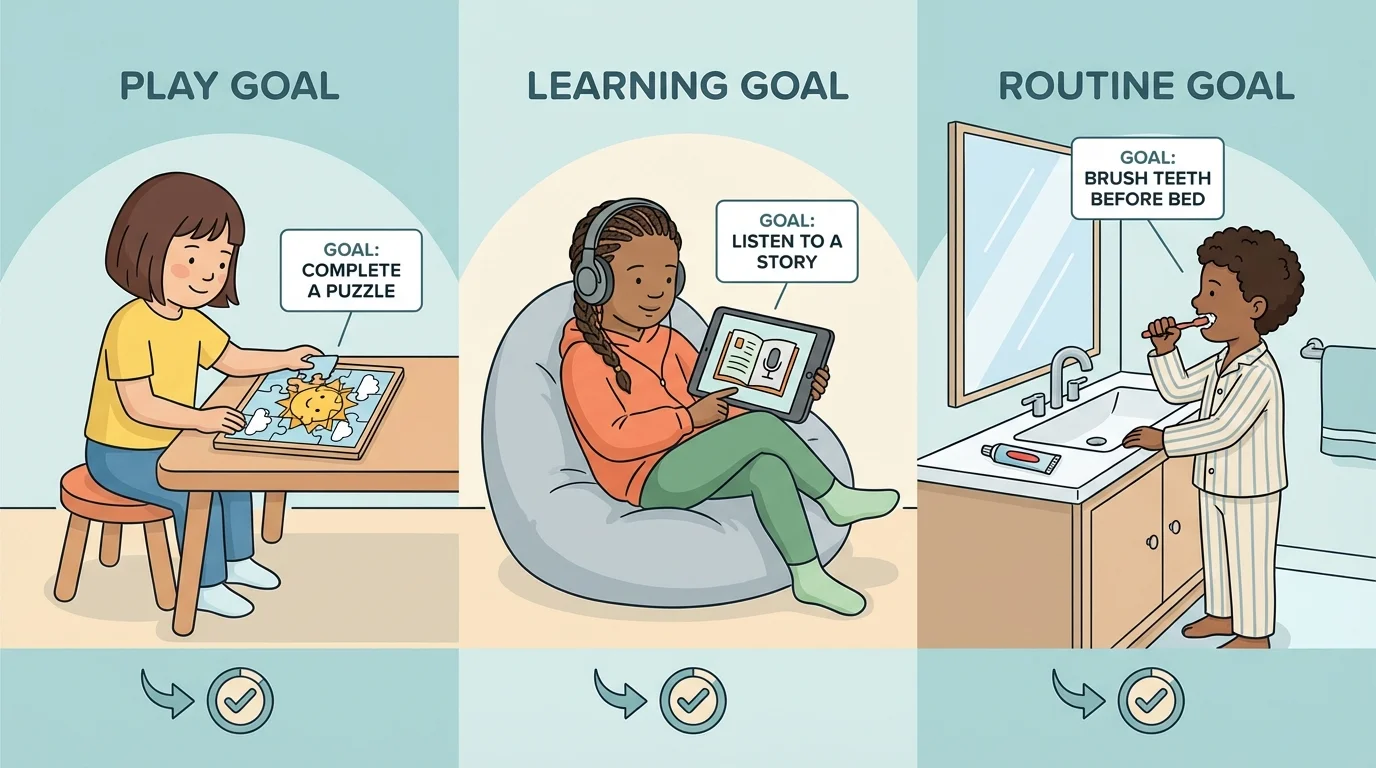
As [Figure 3] illustrates, you can use a routine goal in many parts of your day. During play, you might set a goal to build a train track or take turns in an online game with a sibling or friend. During learning, you might set a goal to listen to one song, name one color, or sit for one short video lesson.
During daily routines, you might set a goal to brush your teeth, put clothes in the hamper, or carry your cup to the sink. These little goals help your home feel smoother. They also help grown-ups know you are learning to do things on your own.
Goals can help in your community, too. Community means the people around you, like family, neighbors, club friends, or people you talk with online safely. A simple goal could be "I will say hello on the video call," or "I will help carry napkins to the table." Small helpful actions make you part of a group.
When goals are used every day, they prepare you for the future. Future means the time that comes later. A child who learns to set small goals now is practicing how to do bigger things later.
Small goals help many people get started. Even grown-ups often do better when they pick one clear task instead of trying to do everything at once.
Notice how each home scene shows one clear job. That is the big idea: one goal for one moment.
After you try your goal, check: Did I do it? If yes, you can smile, clap, or tell a grown-up, "I did my goal." Feeling proud helps you want to try again tomorrow.
If the goal was too hard, make it smaller. If "put away all toys" was too much, try "put away the cars." If "get ready for bed" felt big, try "put on pajamas." Small changes help you succeed.
"One small step can help you do a big thing."
Trying again is important. Responsibility grows little by little. Just like the tiny steps in [Figure 2], each small action helps you finish.
You can say your goal with simple words: "I will put my book on the shelf." "I will wash my hands." "I will finish my puzzle." Saying it out loud helps you remember.
You can also point to what you will do. Some children like a grown-up to repeat the goal with them. Some like to do the step right away. Both ways are good.
When you set one simple goal, you are learning to make choices, follow through, and care for your space and your people. That is a strong life skill.
