Have you ever seen an empty lot turn into a playground, or a grassy field become a neighborhood? Places do not always stay the same. People build, plant, dig, clean, and sometimes even pollute. Over time, these actions can change how a place looks, feels, and works.
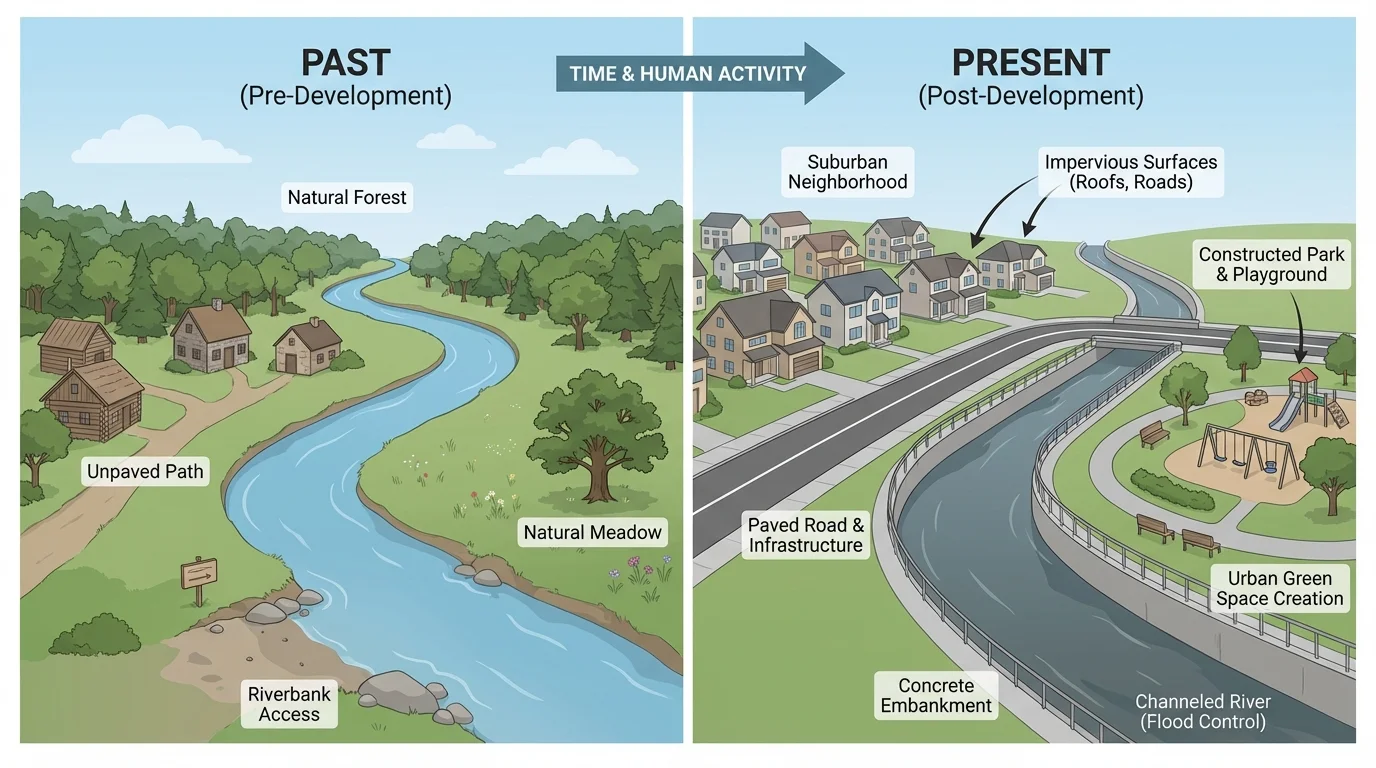
A place has an environment. That means all the things around it, including land, water, air, plants, animals, and things people build. A schoolyard, a park, a farm, a riverbank, and a city street all have environments. As [Figure 1] shows, one place can include trees, water, roads, buildings, and open land together.
Places also have environmental characteristics. These are the features we can notice about a place. For example, a place may have many trees, little water, hard ground, soft soil, tall buildings, or wide streets. These characteristics can change slowly or quickly.
Environmental characteristics are the features of a place, such as its land, water, plants, animals, and built spaces.
Human activity means the things people do, like building, farming, driving, planting, or cleaning.
When people act in a place again and again, that place can change over time. A quiet field can become a busy town. A muddy path can become a paved sidewalk. A bare yard can become a garden full of flowers and insects.
People depend on the environment every day. We need water to drink, soil to grow food, trees for shade, and land for homes and schools. Roads are built on land so people can travel. Parks give people places to play and relax.
Farmers depend on soil, sunlight, and rain to grow crops. Fishers depend on healthy lakes, rivers, or oceans. Families depend on clean air and safe water. Even animals near us depend on the same places. Birds may nest in trees in a neighborhood. Frogs may live near ponds. If people change those places, the animals must adjust too.
This is why human choices matter. When people use the environment, they should also think about how to care for it.
From earlier geography learning, you may remember that people live in communities and use nearby land and water for different needs. Communities are groups of people who share a place and work together.
A community often chooses how to use land. One area may be used for houses. Another may become a farm, a road, or a park. These choices help people meet their needs, but they also change the look of the place.
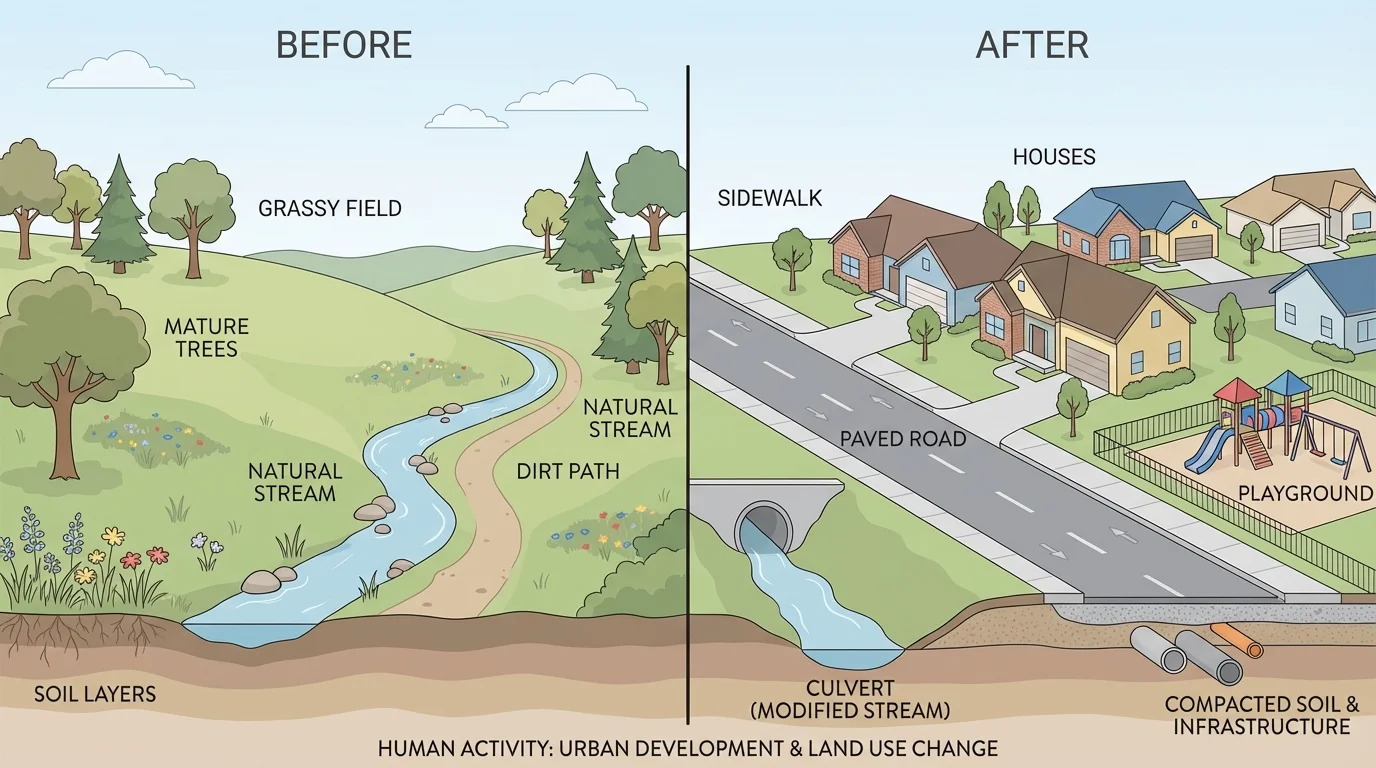
As [Figure 2] illustrates, people often modify places by building or changing them. As [Figure 2] illustrates, land can change from a natural area into a neighborhood with streets, homes, and play spaces. When workers build houses, they may clear grass or cut down some trees. When a new road is made, the ground is flattened and covered.
People also change places to make them useful. A bridge helps people cross water. A dam can hold back water. A sidewalk makes walking safer. A garden adds plants to a yard. A playground changes an empty space into a place for fun.
Sometimes these changes are small. A family might plant flowers in front of a house. Sometimes the changes are big. A whole field might become a shopping area, or a forest edge might become a neighborhood.
Changes happen over time. At first, a place may have mostly grass and trees. Later, people may add buildings, parking lots, fences, and lights. Years later, they may plant new trees or build a park to improve the area.
Change over time means a place does not stay exactly the same. Human actions today can shape what a place looks like next year or many years from now. Some changes happen quickly, like building a road. Other changes happen slowly, like trees growing after people plant them.
When we look carefully, we can ask simple questions: What was here before? What is here now? Who changed it? How did the change help people? Did it also affect plants or animals?
Many human actions help a place. People can plant trees to give shade and homes for birds. They can make parks so families have places to gather. They can clean streams and pick up litter. They can recycle materials and use trash cans so waste does not spread.
A school garden is a good example. Before the garden, the ground might have been plain dirt. After students and teachers plant vegetables and flowers, the space changes. Bees and butterflies may visit. Students can learn where food comes from. The place becomes more useful and more alive.
Case study: A community park gets better
Step 1: People notice a place needs care.
An open lot has little shade and trash on the ground.
Step 2: The community makes changes.
Neighbors plant trees, add benches, and place trash cans.
Step 3: The place changes over time.
As the trees grow, the park becomes cooler, cleaner, and more welcoming.
This is an example of people managing their environment in a helpful way.
Communities also protect places by making rules. For example, a park may have signs that ask people not to litter. A beach may have a cleanup day. A town may plant trees along streets to make the area cooler and greener.
Not all changes are helpful. Some human actions can hurt a place. Pollution happens when air, water, or land becomes dirty in a harmful way. Smoke from too many cars can dirty the air. Trash on the ground can hurt animals. Dirty water can make it hard for fish and plants to live.
If too many trees are cut down, animals may lose homes. Without tree roots to hold soil in place, rain can wash soil away more easily. If a lot of land is covered by concrete, less rainwater can soak into the ground. Water may then collect in puddles or flow quickly into streets.
Even small actions can add up over time. One piece of litter may seem tiny, but many pieces can make a park look dirty and unsafe. One tree cut down changes little, but many trees removed from the same place can change the whole area.
Some cities plant more trees because shaded streets can feel cooler than streets with very few trees. Trees also help slow down wind and give shelter to birds and insects.
When people understand these effects, they can make better choices about how to use and care for land and water.
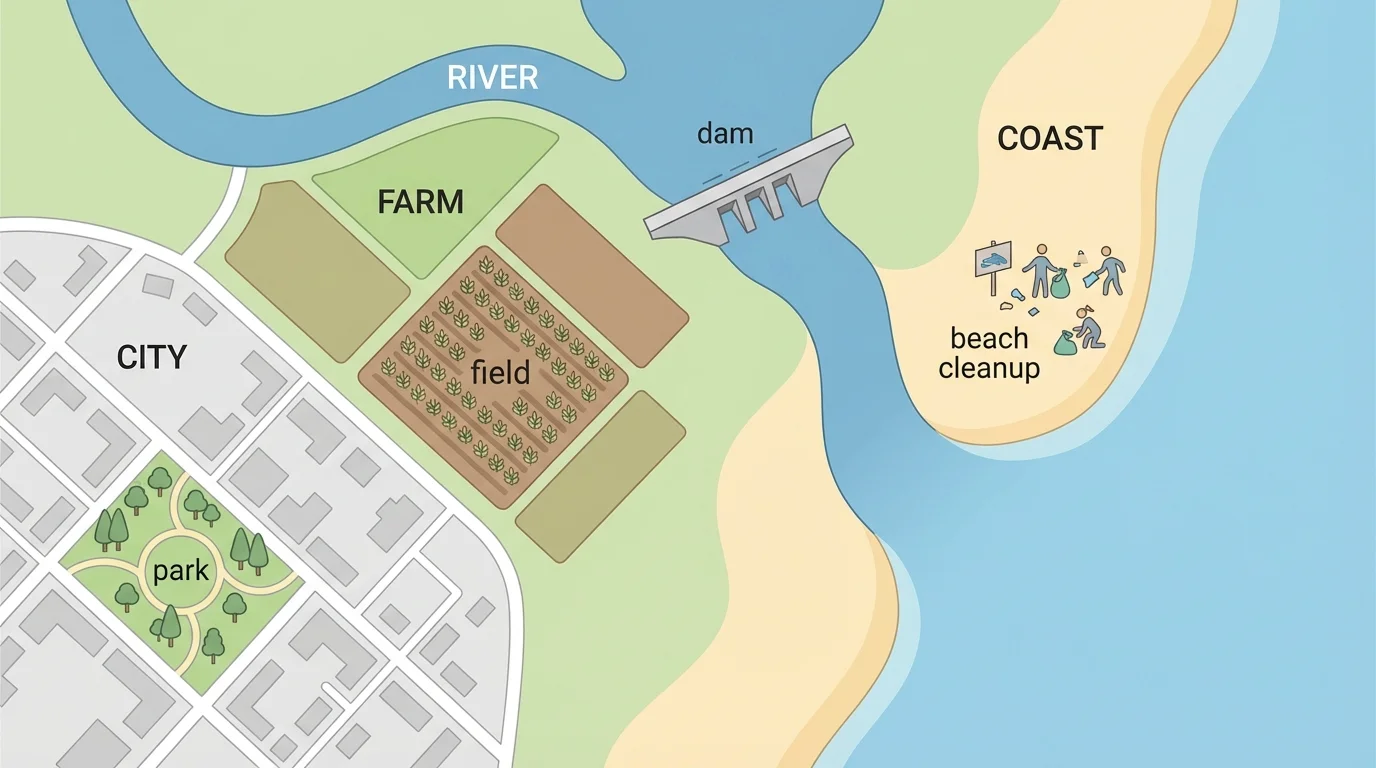
Different places are changed in different ways, as [Figure 3] shows on a simple map of a city, a farm, a river, and coastal areas. Human activity is not the same everywhere because places have different landforms, water, weather, and needs.
In a city, people build tall buildings, roads, sidewalks, and parks. This changes open land into busy spaces for living and working. In a farm area, people plow fields, plant crops, and build barns. This changes natural land into land used for growing food.
Near a river, people may build bridges, docks, or dams. These changes help people travel or store water, but they can also affect fish and flowing water. At a beach or coast, people may build paths, piers, or walls to protect land from waves. They may also organize cleanups to remove trash.
| Place | Human activity | How the place changes |
|---|---|---|
| City | Building roads and homes | More pavement, buildings, and traffic |
| Farm | Planting crops | Fields replace wild plants in some areas |
| River area | Building a bridge or dam | Water use and travel patterns change |
| Park | Planting trees and adding trash cans | Cleaner, greener space for people and animals |
| Beach | Cleaning litter and making paths | Safer, cleaner shore |
Table 1. Examples of how human activities change different kinds of places.
These examples help us see that people both use and change the environment. The same action can help people but also affect nature. That is why communities need to think carefully.
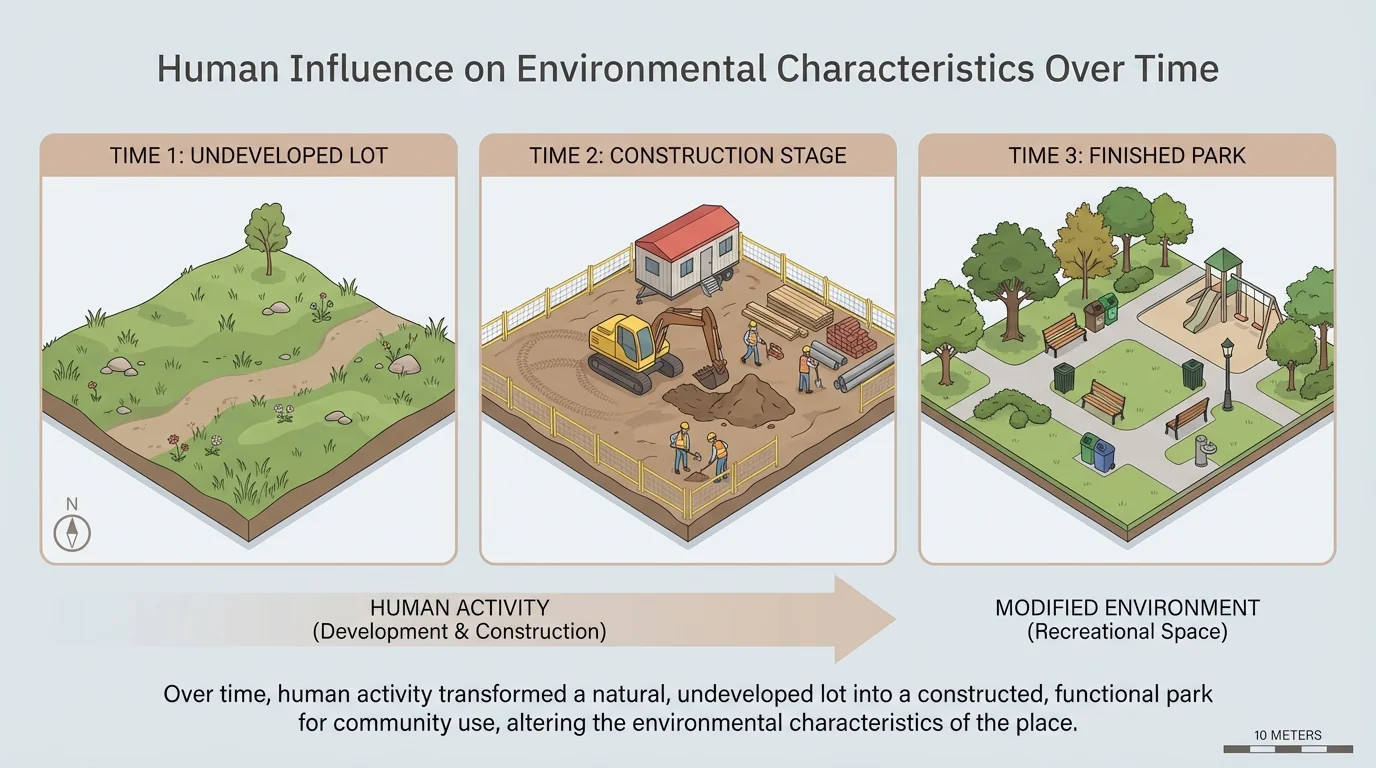
We can learn a lot by comparing a place at different times. [Figure 4] shows that one community lot can change from open land to a construction space and then to a finished park. Looking at old and new pictures helps us notice change over time.
For example, a place might begin with grass, bushes, and a dirt path. Later, people may build swings, benches, and a basketball court. After that, they may plant trees and add recycling bins. The place is still the same location, but its environmental characteristics are different now.
We can ask: Is there more shade than before? Are there fewer wild plants? Is there more space for people to play? Is the place cleaner now? Questions like these help us identify how human activity influences a place.
Case study: A riverbank over time
Step 1: At first, the riverbank has grass, trees, and birds.
Step 2: People build a path and a small bridge so the area is easier to use.
Step 3: Later, the community adds trash cans and plants new shrubs.
The riverbank changes because of human activity. Some changes make it easier for people to visit, and some changes help keep it cleaner.
When we remember the neighborhood scene from [Figure 1], we can see that every part of a place matters. Water, trees, buildings, and roads all work together to shape how the place feels and functions.
Communities do more than change places. They also manage them. To manage a place means to take care of it and make choices about how it is used. People decide where parks should go, where roads should be built, and how to keep public spaces clean.
Good management means thinking about both people and nature. A community might save some green space while still building homes. It might plant trees near a playground. It might protect a pond so animals can live there while people enjoy the area from a path.
As we saw in [Figure 2], building changes a place quickly, but later choices can improve that place too. Trees can be planted, gardens can be made, and litter can be removed. As [Figure 3] reminds us, different places need different kinds of care.
When people work together, they can make places safer, cleaner, and healthier over time. Every road, park, garden, farm, and neighborhood tells a story about how people have influenced the environment.
