Why does Colorado have famous ski resorts, cattle ranches, farms, and science labs all in the same state? The answer is economics. Colorado's land, people, and tools help decide what businesses make and what jobs people do. When we study how a place produces goods and services, we look at the productive resources found there. Colorado is a great example because its mountains, plains, rivers, workers, and machines all shape the state's economy.
People use productive resources to make goods and to provide services for others. Economists often group them into three big types: natural resources, human resources, and capital resources. These resources help businesses and workers decide what they can produce well.
Natural resources are things from nature that people use, such as land, water, forests, sunlight, and minerals.
Human resources are the people who do the work and the skills, knowledge, and effort they bring.
Capital resources are the tools, machines, buildings, and equipment used to produce goods and services.
Goods are things you can touch, such as corn, milk, or a bicycle helmet. Services are jobs people do for others, such as teaching, guiding, or repairing.
These three kinds of resources do not work alone. A farmer may need land and water from nature, workers with farming skills, and a tractor or irrigation system. A ski resort may need snowy mountains, trained employees, and ski lifts and lodges. Colorado produces certain goods and services because it has special combinations of these resources.
Colorado's natural resources strongly influence what people produce, as [Figure 1] shows through the state's mountains, plains, rivers, forests, and farmland. Different parts of Colorado have different landforms and climates, so different kinds of work happen in different places.
The Rocky Mountains bring steep land, forests, beautiful views, and lots of snow. These natural features support services such as skiing, snowboarding, hiking, camping, fishing, and sightseeing. The mountains also hold minerals and rock that people have mined, including gold, silver, and molybdenum. Because these resources are in the ground, mining became an important industry in parts of Colorado.
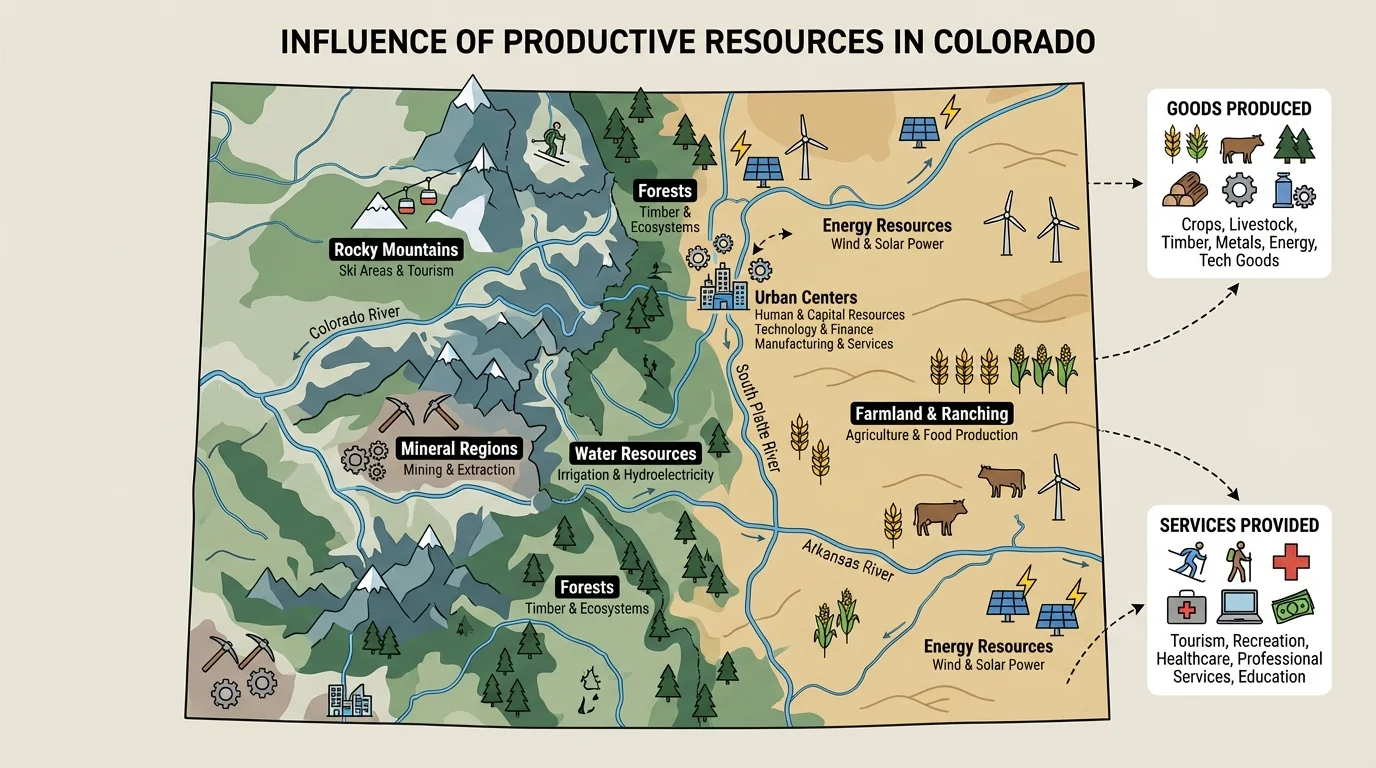
Eastern Colorado has wide plains and grasslands. This land is useful for farming and ranching. Farmers grow crops such as corn, wheat, hay, and vegetables. Ranchers raise cattle and sheep. Rivers and water from snowmelt are also important natural resources because crops and animals need water. Without enough water, farmers may grow less or choose different crops.
Colorado also has many sunny days and open spaces. These natural conditions support solar energy. Wind in some areas supports wind energy too. When people use sunlight and wind to produce electricity, they are using natural resources to provide an important service: energy for homes, schools, and businesses.
Even climate matters. Snow attracts tourists in winter, while cool mountain air and beautiful scenery attract visitors in summer. Because of these natural resources, Colorado has many outdoor recreation businesses. As we saw in [Figure 1], the geography of the state helps explain why skiing is common in one area while farming is common in another.
Colorado has some of the highest mountains in the United States. Those mountains are not just beautiful; they help create the snow and river systems that support tourism, farming, and water supplies.
Natural resources can also limit production. Mountain land can be hard to build on. Dry weather can make farming difficult. Harsh winter storms can close roads or ski areas. So natural resources can create opportunities, but they can also create challenges.
Natural resources alone do not produce anything. People must know how to use them. Colorado's human resources include workers and their skills. These workers include farmers, ranchers, miners, teachers, nurses, truck drivers, scientists, engineers, chefs, ski instructors, and many others.
For example, rich soil and open land do not automatically create food. Farmers must know when to plant, how to care for crops, and how to harvest them. Ranchers need to know how to raise healthy animals. These skills are human resources because they come from people's training and experience.
Colorado's tourism industry depends heavily on human resources too. Ski instructors teach lessons. Lift operators help visitors ride safely. Hotel workers prepare rooms. Park rangers help protect nature and guide visitors. Restaurant workers serve meals. All of these services exist because people use their talents and effort.
Colorado is also known for technology and science. In some places, engineers design equipment, programmers create software, and researchers study weather, space, health, or clean energy. These jobs show that human resources are not only physical labor. Thinking, planning, problem-solving, and creativity are resources too.
Why human resources matter so much
Two places may have similar land or water, but the place with more trained workers may produce more goods and better services. Skills can raise quality, improve safety, and help businesses invent new products. Education and training help strengthen human resources.
People also choose jobs based on what resources are nearby. In a mountain town, many people may work in tourism. On the plains, more people may work in agriculture. Near cities, people may work in hospitals, schools, research centers, transportation, and offices. Human resources grow and change when people learn new skills for new kinds of work.
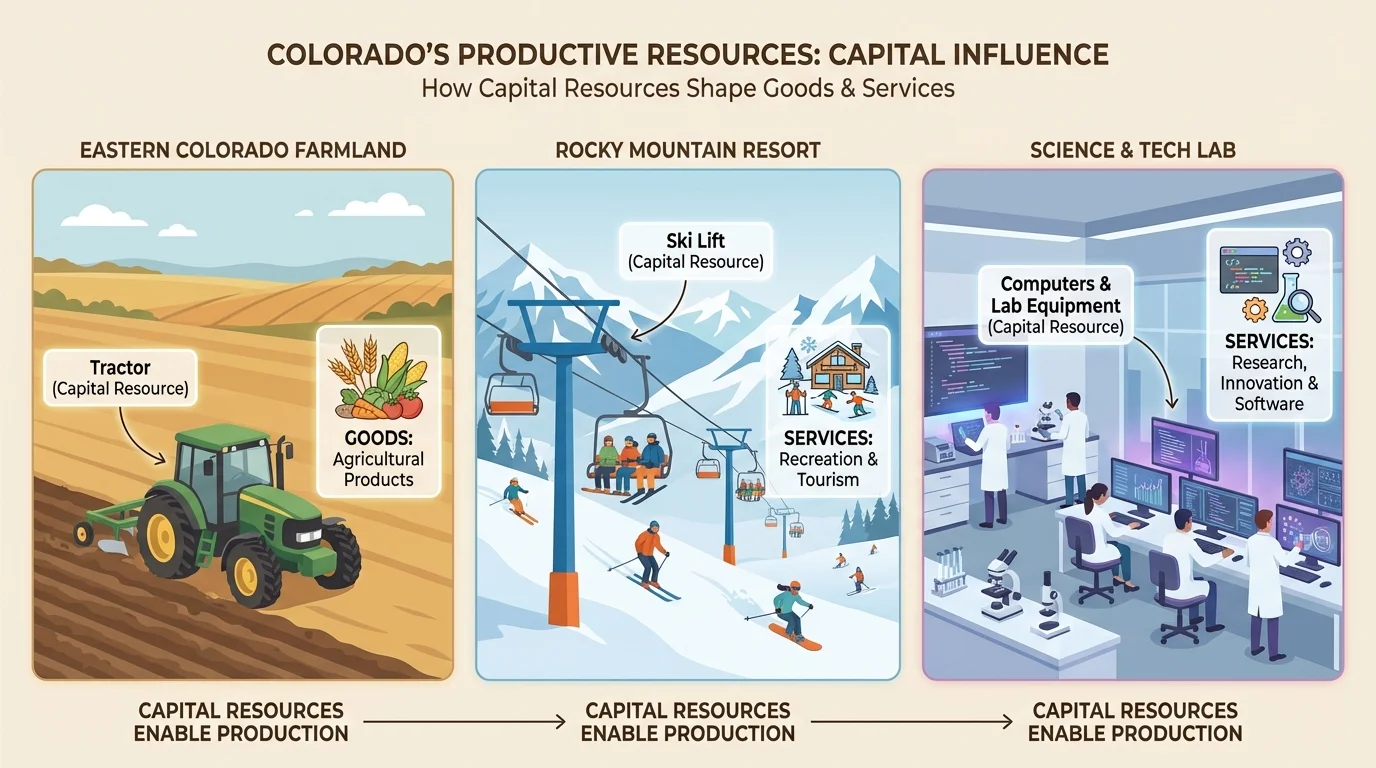
Capital resources are the tools and equipment that help workers produce more, as [Figure 2] illustrates with farming, tourism, and research. Capital resources are not money in this lesson. They are physical things people use to do jobs better and faster.
On a farm, capital resources include tractors, plows, irrigation systems, barns, fences, and trucks. These tools help farmers plant, water, protect, and move crops and animals. Without these tools, workers could still farm, but it would take much longer and produce less.
At a ski resort, capital resources include ski lifts, snowmaking machines, lodges, rental shops, roads, and safety equipment. These resources help businesses serve many visitors. In hospitals and research labs, capital resources include computers, medical machines, microscopes, and special buildings. These tools help doctors, nurses, and scientists do their work.
Roads, bridges, rail lines, and airports are also important capital resources in Colorado. They help move goods like crops, beef, and manufactured products from one place to another. They also help people travel for work and tourism. A good road system can make a business more successful because it can reach customers more easily.
When businesses buy better tools, they may produce more goods or provide better services. This can save time and lower costs. Looking back at [Figure 2], it is easy to see that the same idea applies in many industries: workers become more productive when they have useful tools and equipment.
Colorado produces many different goods because different parts of the state have different resources. Agriculture is one major area. Farmers grow wheat, corn, hay, and other crops on the plains. Ranchers raise cattle and sheep. Dairies produce milk and other dairy products. These goods depend on land, water, workers, and equipment.
Mining has also been important in Colorado. People have taken minerals and rock from the earth and turned them into useful materials. Natural resources in the ground, workers with mining skills, and machines for digging and moving materials all help make this possible.
Colorado businesses also make foods and outdoor products. For example, companies may process milk into cheese or yogurt, roast coffee, package snacks, or build outdoor gear for hiking and skiing. Even when goods are made in factories, the work still depends on productive resources. Workers use machines in buildings, and businesses often choose locations based on transportation and nearby customers.
Case study: From field to bread
A loaf of bread sold in Colorado stores comes from many resources working together.
Step 1: Use natural resources.
Wheat grows on farmland with soil, sunlight, and water.
Step 2: Use human resources.
Farmers plant and harvest the wheat. Truck drivers move it. Bakers turn it into bread.
Step 3: Use capital resources.
Tractors, combines, mills, ovens, buildings, and delivery trucks help do the work.
The final good is bread, but it exists only because many resources are combined.
Goods often change over time. If water becomes scarce, farmers may switch to crops that need less water. If new machines are invented, businesses may make products faster. If more visitors want outdoor equipment, companies may make more skis, jackets, or camping supplies. Production changes because people respond to resources and to incentives.
Colorado also provides many services. Tourism is one of the most visible examples. Visitors pay for hotel stays, ski lessons, guided hikes, rafting trips, restaurant meals, and transportation. These services are popular because Colorado has mountains, rivers, scenery, and trained workers.
Education is another service. Teachers, librarians, and school staff help students learn. Health care is a service too. Doctors, nurses, and hospital workers care for people. Transportation services move people and goods across the state. Repair workers fix cars, machines, and buildings. Technology workers design software and solve computer problems.
Many services depend on natural resources even if they do not come directly from the land. For example, a rafting guide needs a river. A ski instructor needs snowy slopes. A fishing guide needs healthy lakes or streams. At the same time, those services also depend on human skills and capital resources such as safety gear, vehicles, and buildings.
Some services in Colorado grew because the state became known for outdoor fun and high quality of life. When many people move to or visit a place, the need for stores, schools, doctors, and transportation also grows. One kind of service can help create demand for more services.
People do not produce goods and services by accident. They make choices, and those choices are shaped by incentives. An incentive is something that encourages or discourages a choice. A positive incentive is a reward that makes people more likely to do something. A negative incentive is a cost or problem that makes people less likely to do something.
In Colorado, a high demand for skiing can be a positive incentive for businesses to build lodges, hire instructors, and offer rental services. Good prices for wheat or beef can encourage farmers and ranchers to produce more. If a town attracts many tourists, that can encourage more restaurants, shops, and hotels to open.
Negative incentives matter too. Drought may discourage planting certain crops. Dangerous weather may reduce tourism for a time. High costs for equipment, fuel, or transportation may make it harder for businesses to produce as much. If mining becomes more expensive or less safe in one place, companies may slow down or stop.
People usually compare benefits and costs before making economic choices. When the reward seems greater, they are more likely to act. When the cost or risk seems greater, they may choose something else.
Governments, businesses, and families all respond to incentives. A business may invest in solar panels because sunshine is strong and cleaner energy is valued. A farmer may choose a different crop because it sells well and fits Colorado's dry climate. A student may study science or agriculture because those skills can lead to jobs in Colorado later on.
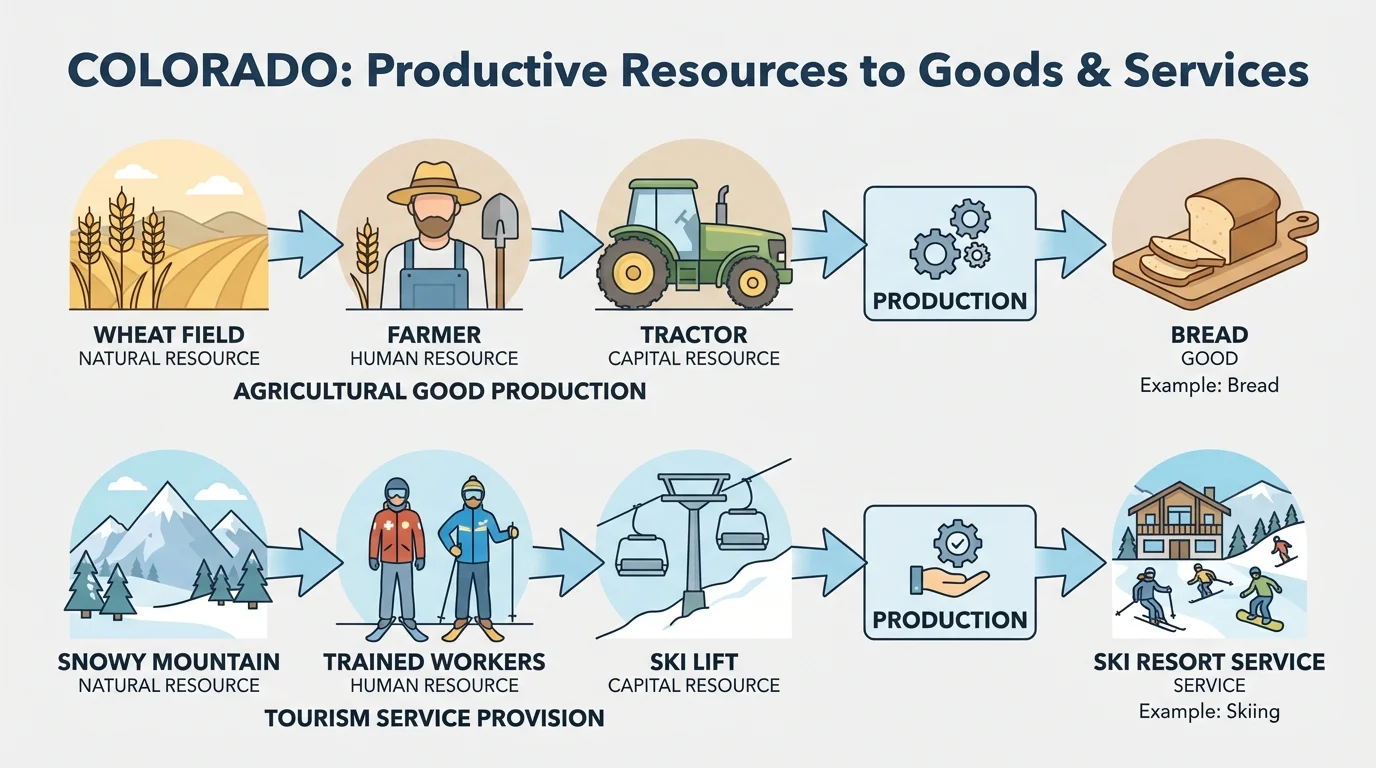
[Figure 3] shows that most goods and services need all three productive resources working together. Natural resources provide the basic materials or setting. Human resources provide effort and skill. Capital resources provide tools and equipment. If one part is missing, production becomes harder.
Think about a ski resort. The natural resource is the mountain and snow. The human resources are the instructors, repair workers, managers, and cooks. The capital resources are the ski lifts, buildings, skis, and snow machines. Together they create a service: a place where people can ski and relax. Think about farming too. Land and water, trained workers, and machines combine to create goods such as wheat and corn.
This idea also explains why changes in one resource can affect the whole economy. If there is less snow, ski businesses may need snowmaking machines or may earn less money. If roads improve, farmers and factories may ship goods more easily. If workers gain new skills, businesses may create new products or offer new services.
Colorado's economy is shaped by place and by people's choices. The mountains, plains, rivers, climate, and minerals matter. The workers and their skills matter. The machines, roads, and buildings matter too. As shown earlier, production is like a team effort in which each type of resource has an important job.
When we look at what Colorado produces, we can see a clear pattern. The state's productive resources help explain why Colorado is known for agriculture, ranching, mining, tourism, transportation, health care, education, technology, and outdoor recreation. Goods and services grow out of the resources that are available and the choices people make about how to use them.
