Have you ever found an old picture and wondered, "What was happening here?" That is what people do when they learn about history. They look at things from long ago and think carefully. Then they say what they know and why they know it.
The past is the time before now. History helps us learn about people, places, and things from long ago. We can ask questions like: Who was there? What happened? How do we know?
When we talk about the past, we do more than guess. We use clues. A clue can be a picture, a toy, a book, a house, or a story from a family member. Clues help us explain our thinking.
Because tells the reason. As a result tells what we know happened because of that reason. These words help us explain our ideas clearly.
We can say, "Because I see boots and an umbrella, I know it was rainy." We can also say, "It was rainy. As a result, people used umbrellas." These are clear historical statements because they express both the idea and the reason.
Some words help us talk about time. Before means earlier. After means later. Long ago means far back in the past. Today means now.
Some words help us explain our thinking. Because gives a reason. As a result tells what happened next. If we say, "Because the candle is on the table, I know this room was lit without electricity," we are using a clue to think about the past.
Many things people used long ago are still around today in museums, homes, and family photo boxes. These old things can give us clues about how people lived.
When we use these words, we sound like young historians. Historians ask questions and explain ideas with reasons.
A clue helps us figure something out. In history, a clue from long ago helps us know more about the past. In a family photo, as shown in [Figure 1], clothes, faces, and objects can all be clues. Because we see old-style clothes and a wagon, we know the picture was taken long ago.
We can look closely and make a statement. "Because the picture is black and white, I know it is old." "Because the child is holding a lunch pail, I know the child may be going to school or work." We use what we see to explain what we know.
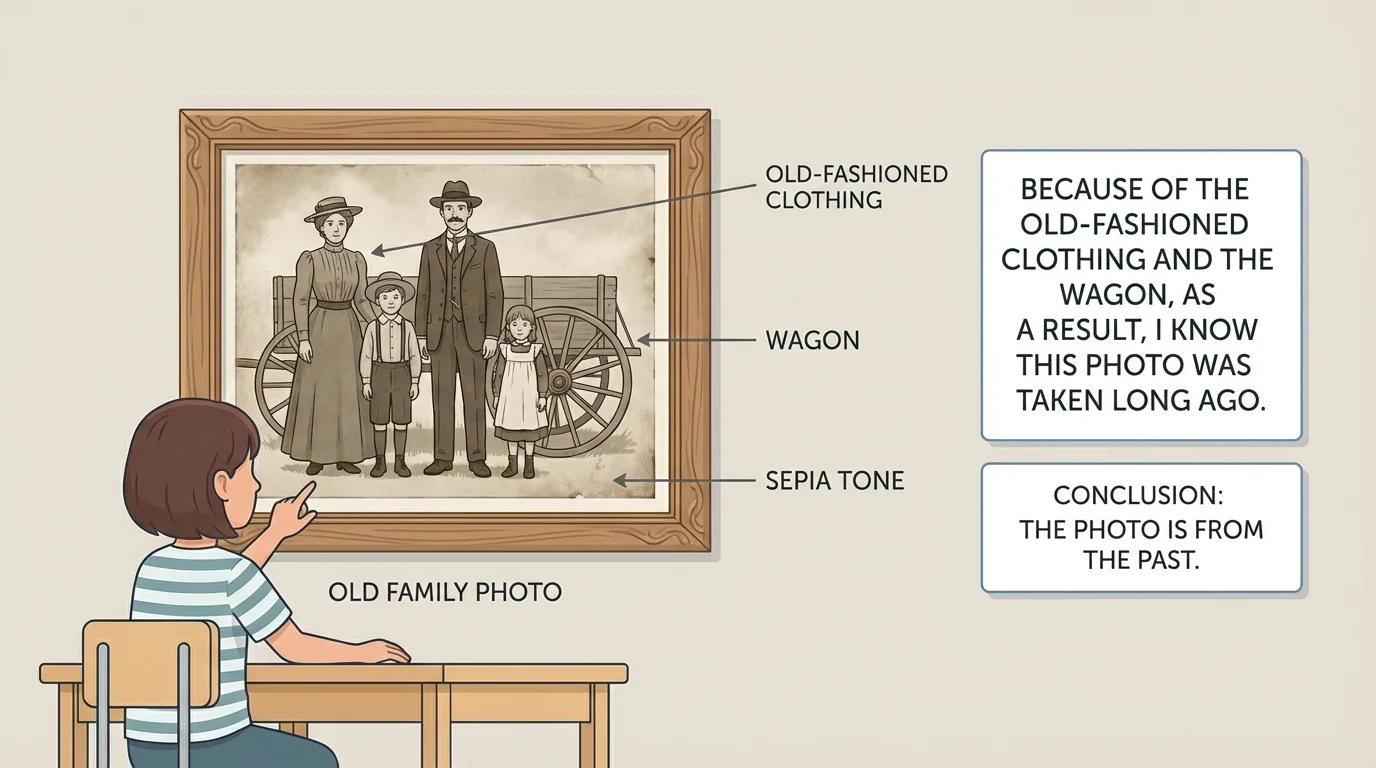
Sometimes we use more than one clue. "Because I see a small house, a garden, and no cars, I know this family lived differently from many families today." More clues can help make our idea stronger.
Talking about one old picture
Step 1: Look for clues.
The picture has a horse, a wagon, and dirt roads.
Step 2: Say the reason.
Because there is a horse and wagon, travel was different long ago.
Step 3: Tell what you know.
So, I know people did not always use cars.
That is how a clue helps us make a reasoned statement. We are not just saying what we see. We are saying what the clue tells us.
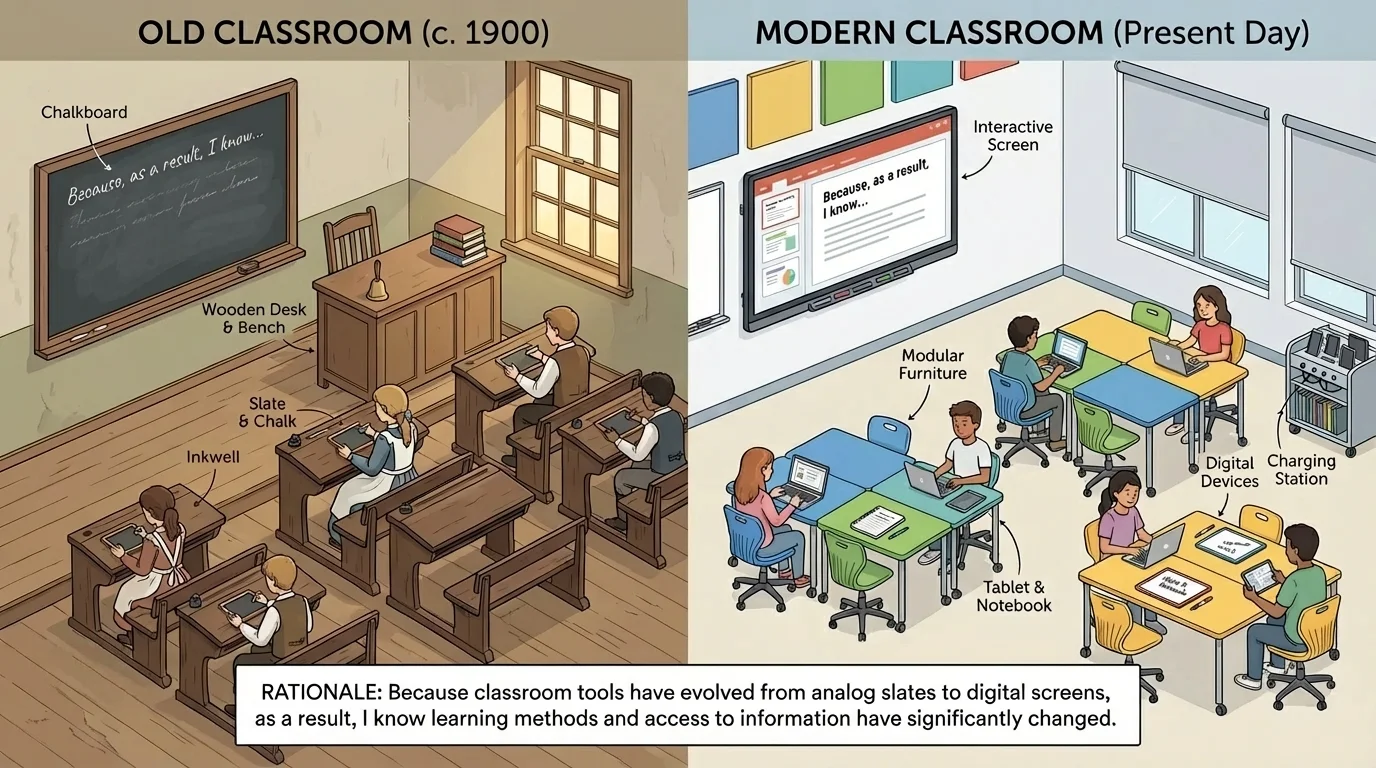
[Figure 2] People in the past ate, worked, learned, and traveled, just like people do today. But some things were different. When historians compare long ago and now, a schoolroom can give many clues. Because an old classroom has a chalkboard and rows of wooden desks, we know school looked different long ago.
Long ago, some children wrote on slates instead of paper. Some schools had one room for many ages. Because children used slates and shared one room, we know school tools and spaces were not the same as today.
Travel was different too. People walked, rode horses, or used wagons. Because there were fewer cars, traveling could take longer. As a result, families often stayed closer to home.
Homes were different in some places. Some families cooked with firewood. Because they used firewood, we know they did not cook the same way many families do today. These ideas help us talk about change over time.
Change over time means that some things stay the same, but some things become different as years go by. We can notice change by comparing old things with things we use now.
We can also think about what stayed the same. Families still care for each other. Children still learn. People still need food, homes, and ways to travel. History helps us see both change and sameness.
Good history talk is clear and simple. We can use sentence frames to explain our ideas. One frame is: "Because ___, I know ___." Another is: "As a result, I know ___."
Here are some examples: "Because the photo shows candles, I know the room needed candlelight." "Because the road is dirt, I know the town may be from long ago." "The family used a wagon. As a result, I know travel was slower."
We can also say, "Because I heard my grandparent tell a story about walking to school, I know some children traveled differently in the past." This kind of statement uses a story as a clue.
You already know how to look carefully and tell what you notice. In history, you use that same careful looking to explain what a clue means.
When we explain our thinking, we should use clues from the past, not just our opinions. If we say why we know something, our idea becomes stronger.
[Figure 3] A source is something that helps us learn about the past. A source can be an old object, a photo, or a book. These different sources can help answer questions about long ago.
Some sources come from the time long ago, like an old shoe, a letter, or a photograph. These are called primary sources. Other sources tell about the past later, like a history book or a teacher's story. These are called secondary sources.
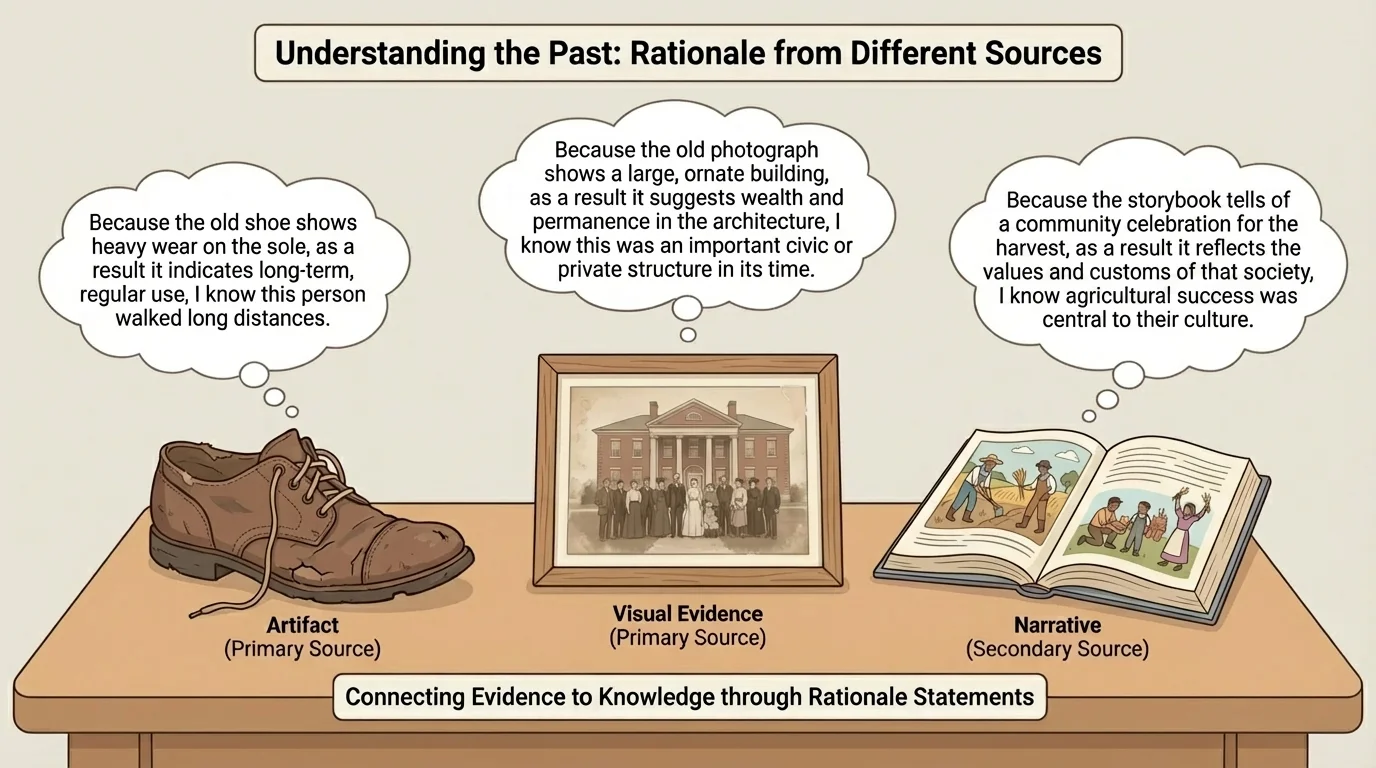
If we see an old toy, we can say, "Because this toy is made of wood, I know children long ago may have played with different toys." If we hear a story in a book, we can say, "Because the book tells about old homes, I know people lived in different kinds of houses."
Later, when we think again about pictures and classrooms, the clues in [Figure 1] and [Figure 2] still help us explain our ideas. A source gives us evidence, and evidence helps us support our ideas.
People who study history ask questions, look for clues, and explain what they know. That is why words like because and as a result are so important. They help us share our thinking about the past in a careful way.
