A tiny old shoe, a faded photograph, or a grandparent's story can be a clue from long ago. History is like being a careful clue-finder. We ask questions about what happened before now, and then we look for things that help us answer those questions.
The past is anything that already happened. Breakfast was in the past. Your last birthday is in the past. When your school was first built, that was in the past too. Some things happened a short time ago, and some happened a very long time ago.
People learn about the past by looking, listening, asking, and thinking. When we wonder about long ago, we are doing history.
Past means the time before now.
Source means something that gives us information.
Collective memory means the memories a group of people share together, such as a family, school, or community.
We can ask many kinds of questions about the past. We might ask, Who was here? What did people do? What did our classroom look like before? How do we know?
Good history starts with questions. A child might ask, "What games did my family play when they were little?" Another question could be, "What was our town like before these new buildings were here?" Questions help us know what clues to find.
Some questions are about people. Some are about places. Some are about events. When we ask and discuss ideas about the past, we listen to others and share what we think.
[Figure 1] shows that history clues, called sources, come in two important kinds. One kind comes straight from the time long ago. The other kind tells about that time later.
A primary source is made by someone who was there or comes from that time. A secondary source is made later to tell about the past. Both can help us learn.
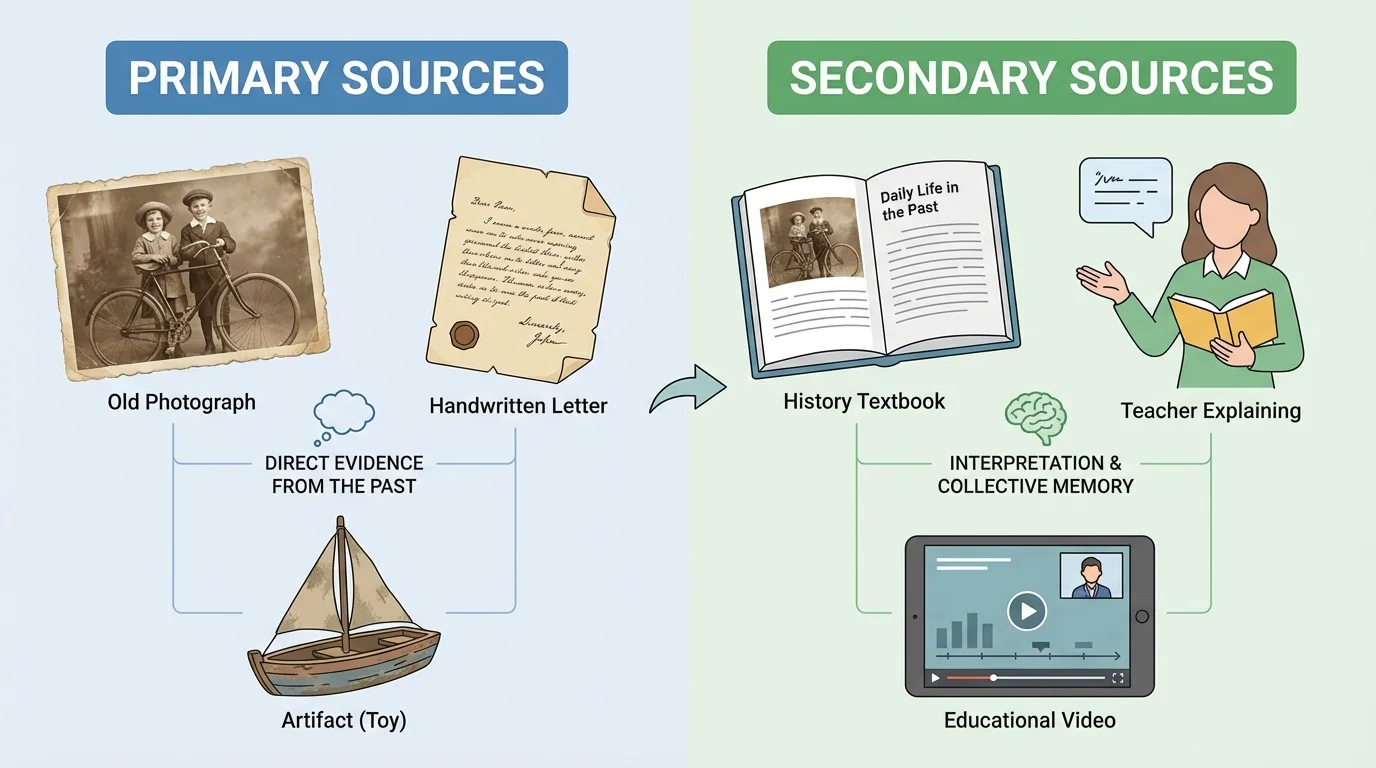
If you find an old class picture from many years ago, that picture is a primary source. If a teacher reads a book that explains what the school was like many years ago, that book is a secondary source.
Primary sources are special because they come from the time we are studying. They can be old photos, letters, diaries, clothes, toys, tools, songs, buildings, or things people say about what they remember.
An old birthday photo can show who was there, what clothes people wore, and what the room looked like. A toy from long ago can show what children liked to play with. A building can show how people made places in the past.
Why primary sources matter
Primary sources help us get close to the past. They do not tell us everything, but they give us real clues from long ago. A photograph may show a room, but it may not tell us what people were saying. That is why historians often use more than one source.
Sometimes a person's memory can also be a primary source. If a grandparent says, "When I was little, I walked to school," that is information from someone who remembers that time.
Secondary sources help by putting information together. They may be books, articles, classroom lessons, or videos that explain the past. These sources are made after the event happened.
A children's history book about schools long ago is a secondary source. The writer may have looked at many old photos, listened to people's memories, and studied buildings. Then the writer made one book to explain what was learned.
Secondary sources are useful because they help us understand many clues at once. We saw in [Figure 1] that a book and a teacher's lesson are not from long ago themselves, but they help explain long ago.
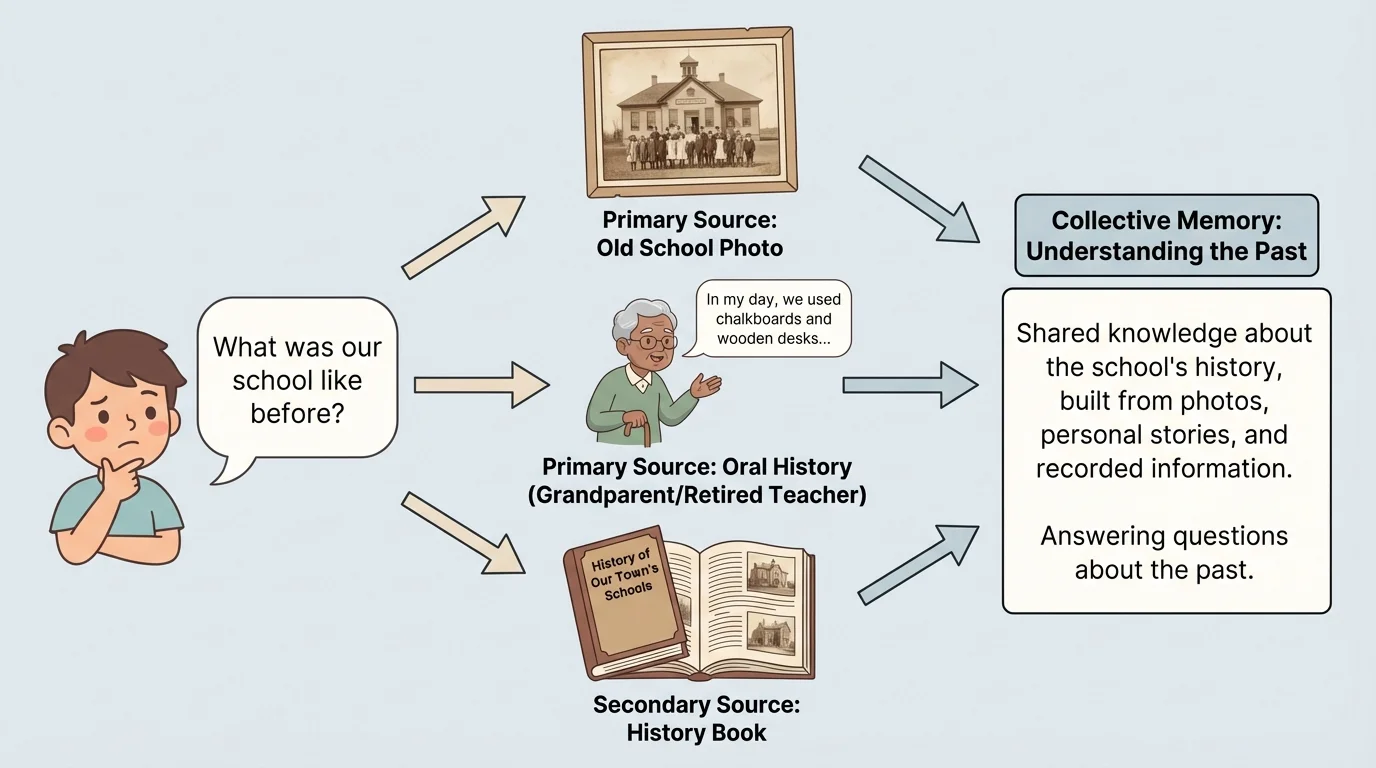
[Figure 2] illustrates how one history question can have many answers from many clues. If we ask, "What was our school like before?" we can look at an old photo, listen to a retired teacher, and read a book about the school.
Each source may tell us something different. The photo may show old desks. The teacher may remember school songs. The book may tell when the school opened. When we put those clues together, we learn more.
Example: answering a question about the past
Question: "What games did children play long ago?"
Step 1: Look at a primary source.
An old photograph shows children outside holding hoops.
Step 2: Listen to a person's memory.
A grandparent says children rolled hoops and played tag.
Step 3: Check a secondary source.
A book about childhood long ago explains playground games from that time.
Now we have more than one clue, so our answer is stronger.
Sometimes sources do not match exactly. One person may remember one game, and another may remember a different game. That does not mean we stop. It means we keep asking, comparing, and thinking.
Families, schools, and towns remember important things together. This shared remembering is called collective memory. A family may remember a wedding with photographs and stories. A school may remember its first year with class pictures and trophies. A town may remember a parade with posters and newspaper stories.
These shared memories help people feel connected. They also help new people learn what happened before they arrived. When we keep photos, tell stories, and save objects, we help the group remember.
Some museums keep everyday things, not just famous treasures. An old lunchbox, a school desk, or a ticket stub can help people remember how ordinary life looked in the past.
Collective memory is not just about one person. It belongs to many people together. That is why history matters in homes, classrooms, and communities.
A careful historian does not grab just one clue and stop. Careful historians look at more than one source. They ask whether the source is primary or secondary, who made it, and what question it can answer.
For example, a photo can show what people wore, but it may not tell their names. A story can tell feelings and memories, but a person may forget some parts. A book can explain many facts, but it was written later. Using different kinds of sources helps us learn better.
This is why the flow of clues in [Figure 2] matters. A strong answer often comes from putting several clues together instead of using only one.
[Figure 3] shows how time can be put in order on a timeline. A timeline helps us see what happened first, next, and last. Even young children learning history can use a simple timeline.
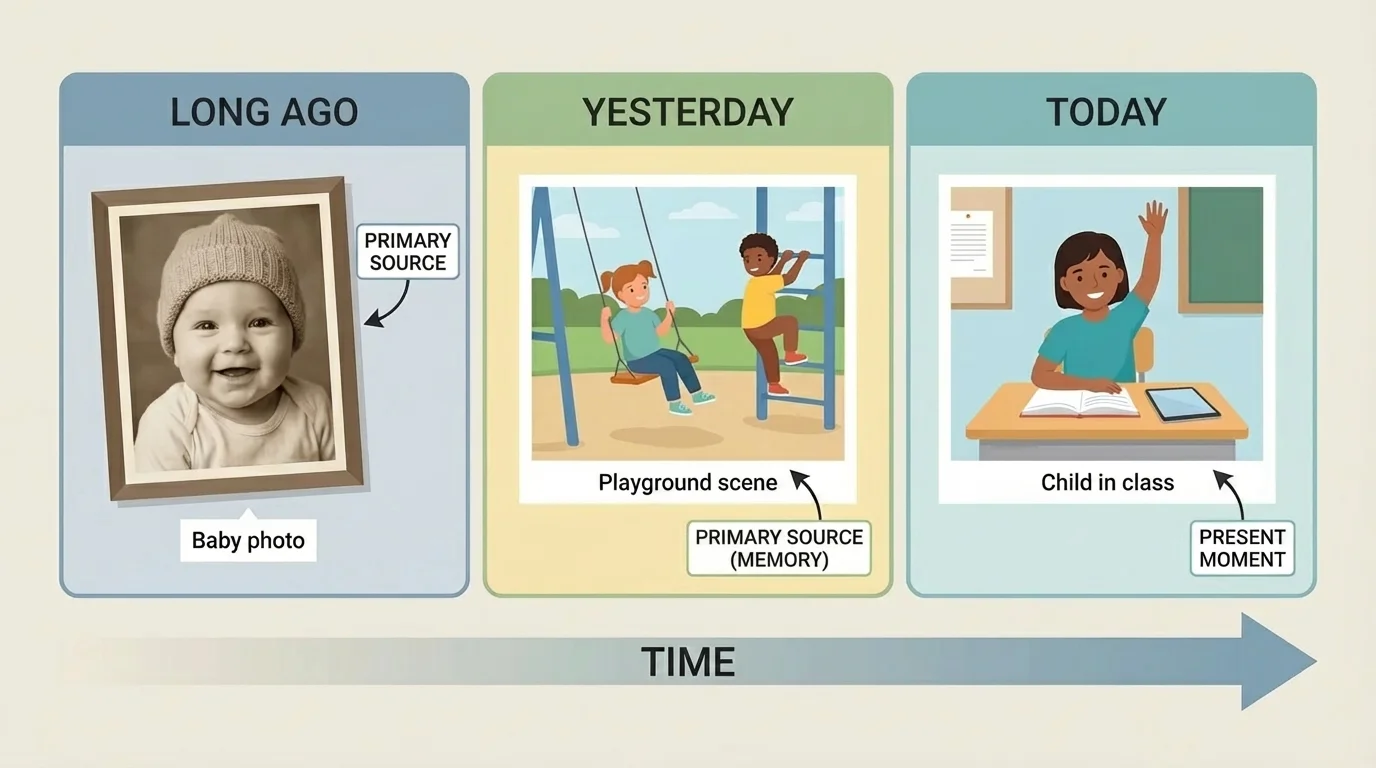
Think about one child's life. Long ago, the child was a baby. Yesterday, the child played outside. Today, the child is in class. Putting events in order helps us talk about the past clearly.
Timelines can also help with community history. A school might have a timeline with the year it opened, the year a library was added, and the year a playground was built.
| Question about the past | Primary source | Secondary source |
|---|---|---|
| What did our school look like before? | Old photograph | Book about school history |
| What games did children play long ago? | Old toy or memory from a grandparent | History video |
| How did a family celebrate? | Family picture or invitation | Storybook about celebrations long ago |
Table 1. Examples of questions about the past and sources that can help answer them.
When we ask questions, use clues, and listen to others, we learn about more than facts. We learn how people lived, worked, played, and remembered. That helps the past remain present in our minds and communities.
