Have you ever wanted more than one thing at the same time, like a snack, a toy, and a book? People often want many things. But money is not endless. That means people must think and choose what is most important first.
People can earn money by doing jobs. A teacher teaches children. A baker makes bread. A gardener helps plants grow. These workers earn money for the work they do, as [Figure 1] shows with different kinds of work.
Money helps people get things they need and things they want. A family may use money to buy food, clothes, or soap. They may also use money for a treat, a toy, or a trip to the gift shop.
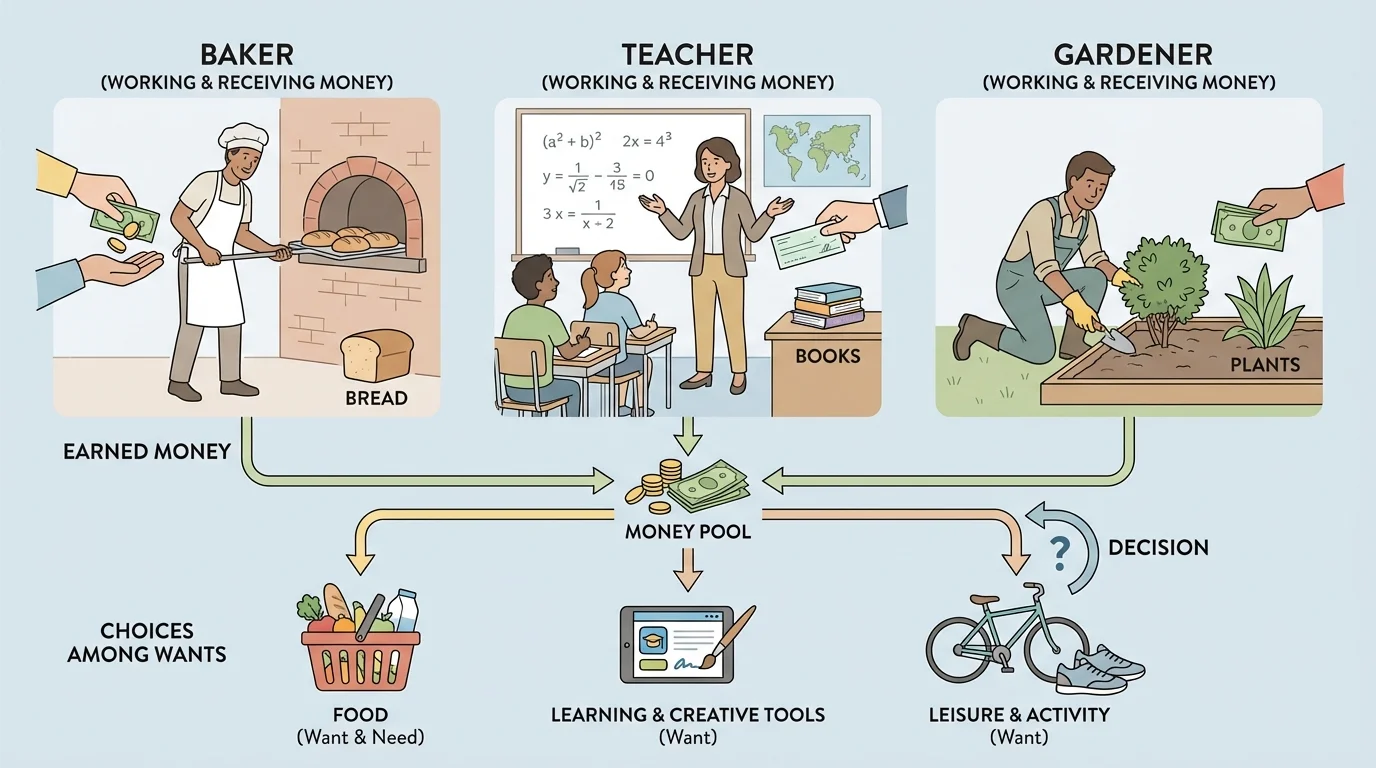
Money is what people use to buy things. Earn means to get money by working. Choice means picking one thing from two or more things.
Some people earn a little money, and some earn more. No matter how much money a person has, they still have to decide how to use it carefully.
A want is something a person would like to have. A new ball, a cookie, stickers, and a storybook can all be wants. People usually have many wants, not just one.
Sometimes wants are small, and sometimes they are big. A child may want a banana and also want a teddy bear. A grown-up may want new shoes and also want to go to the movies. Wants can be fun, useful, or both.
Even adults make choices about wants every day. Choosing one thing often means waiting to get another thing later.
Because people have many wants, they cannot always get everything at once. This is why choices are part of everyday life.
Money is limited, so people must make a choice, as [Figure 2] illustrates when a family has enough money for only one item first. If there is enough money for fruit but not also for a toy, the family chooses what to buy now.
Choosing one thing can mean not choosing another thing right away. If a child picks a book today, the child may wait until another day for bubbles. This is an important idea in economics: people choose among different wants.
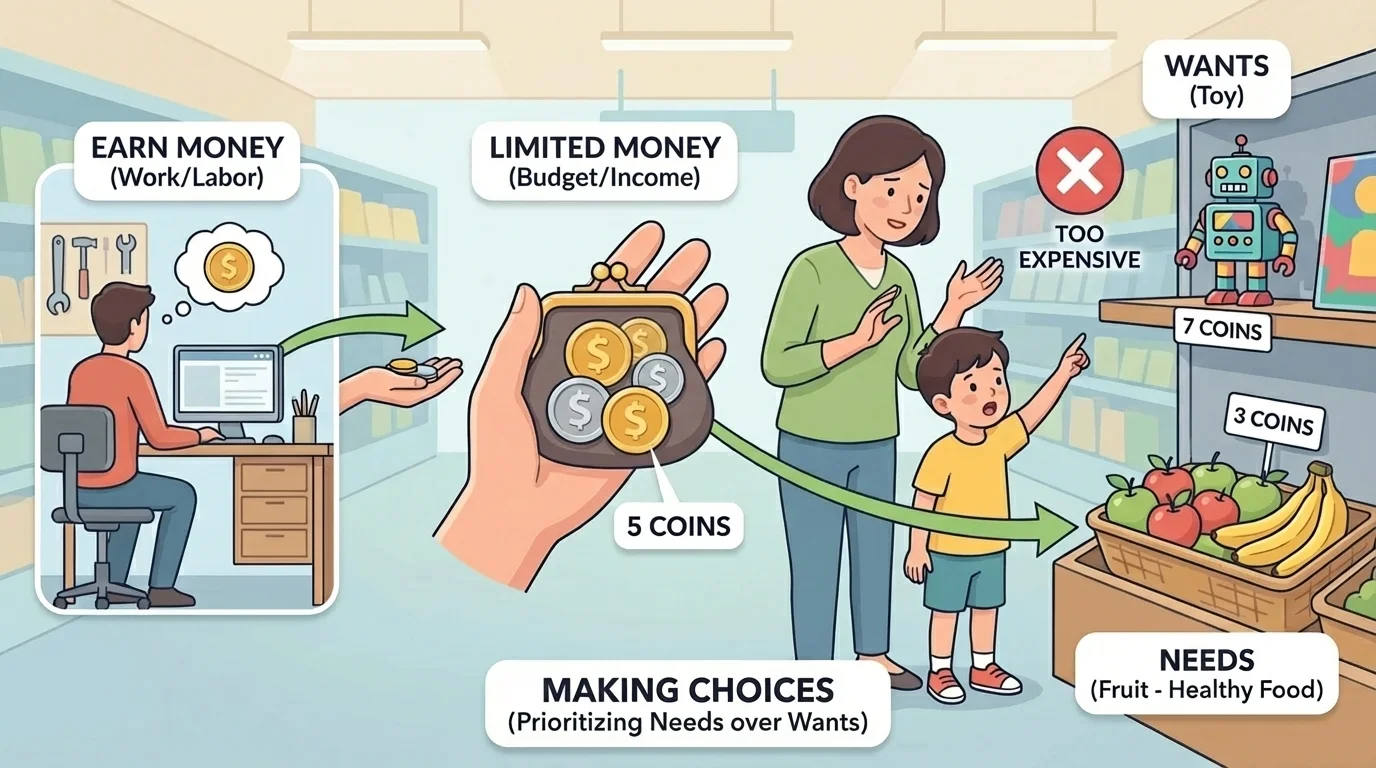
Limited money means choices
People usually have more wants than money. When money cannot buy everything, people think about what matters most. They may choose food first, then save for a toy later.
Later, the same idea from [Figure 2] helps us understand many family decisions. A family might choose milk and bread before a game or candy because some things are more important right away.
A need is something people must have to live safely and stay healthy, like food, clothing, and shelter. A want is something people would like to have but can live without.
Both needs and wants matter, but needs usually come first. A family may buy dinner before buying a toy car. They may buy warm shoes before buying a stuffed animal.
| Thing | Need or Want | Why |
|---|---|---|
| Food | Need | Helps people grow and stay healthy |
| House or home | Need | Gives shelter and safety |
| Toy | Want | Fun to have, but not required for living |
| Ice cream treat | Want | Enjoyable, but not necessary |
Table 1. Examples of needs and wants in everyday life.
Sometimes the same thing can feel more important in one situation than another. For example, shoes are a need, but a second shiny pair of shoes may be a want.
[Figure 3] helps show that people do not always spend money right away. They can save money for later. Saving means keeping money now so it can be used another day.
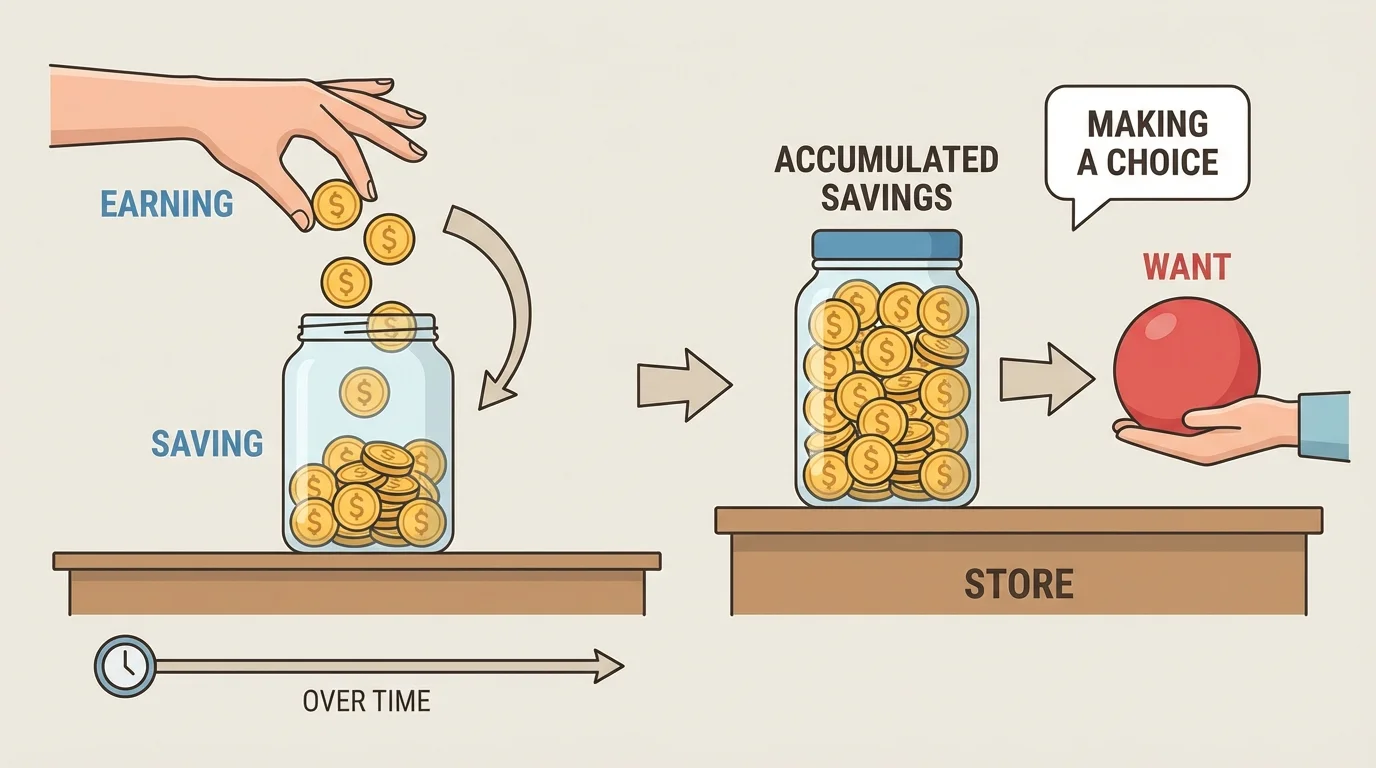
Spend means using money to buy something now. If a child gets money for helping and buys crayons today, that is spending. If the child keeps the money in a jar to buy a ball later, that is saving.
Simple real-life example
A family has $5. They see a snack for $2 and a small ball for $5.
Step 1: Think about the money.
The family has $5 total.
Step 2: Compare the wants.
The snack costs $2. The ball costs $5.
Step 3: Make a choice.
If they buy the ball, they use all $5. If they buy the snack, they still have some money left.
This shows that using money for one thing changes what can be chosen next.
The idea of saving also helps children understand waiting. Sometimes people wait because they want something bigger later than what they can buy now.
A family might go to a store with a short list. They may need apples, bread, and soap. They may also want cookies and a toy. If there is not enough money for everything, they choose what to get first.
A child might earn a little money by helping with simple tasks at home, depending on the family's rules. Then the child may choose: buy stickers now or keep the money for a bigger toy later. This is how earning, spending, and saving connect.
People make choices every day. When one choice is made, another choice may have to wait.
Economics is about these everyday decisions. People earn money, use money, and choose among many wants. Good choices help people take care of their needs and plan for things they want.
