What happens if you pour water on a plant every day, and what happens if you forget? The plant grows in one case and droops in the other. Your day can be like that too. The things you choose can change what happens next.
Every day, you make many choices. You choose whether to get dressed when it is time, whether to use kind words, and whether to put toys away. A choice may seem small, but small choices can make a big difference.
Choice means picking what to do. Outcome means what happens after a choice. When you make a choice, an outcome follows.
A good thinker does not pick fast all the time. A good thinker pauses and asks, "What may happen next?" That helps you make choices that are safe, kind, and helpful.
You make choices at home, during play, and when talking to people online. You may choose to clean up crayons or leave them on the floor. If you clean up, the space stays neat. If you leave them out, someone may step on them or lose them.
You also make choices with your words. If you say, "Please" and "Thank you," people often feel happy and respected. If you yell or say mean words, people may feel sad or upset. Different choices lead to different outcomes.
Sometimes the outcome happens right away. If you put your cup near the table edge, it may fall. Sometimes the outcome comes later. If you brush your teeth each day, your mouth stays healthier over time.
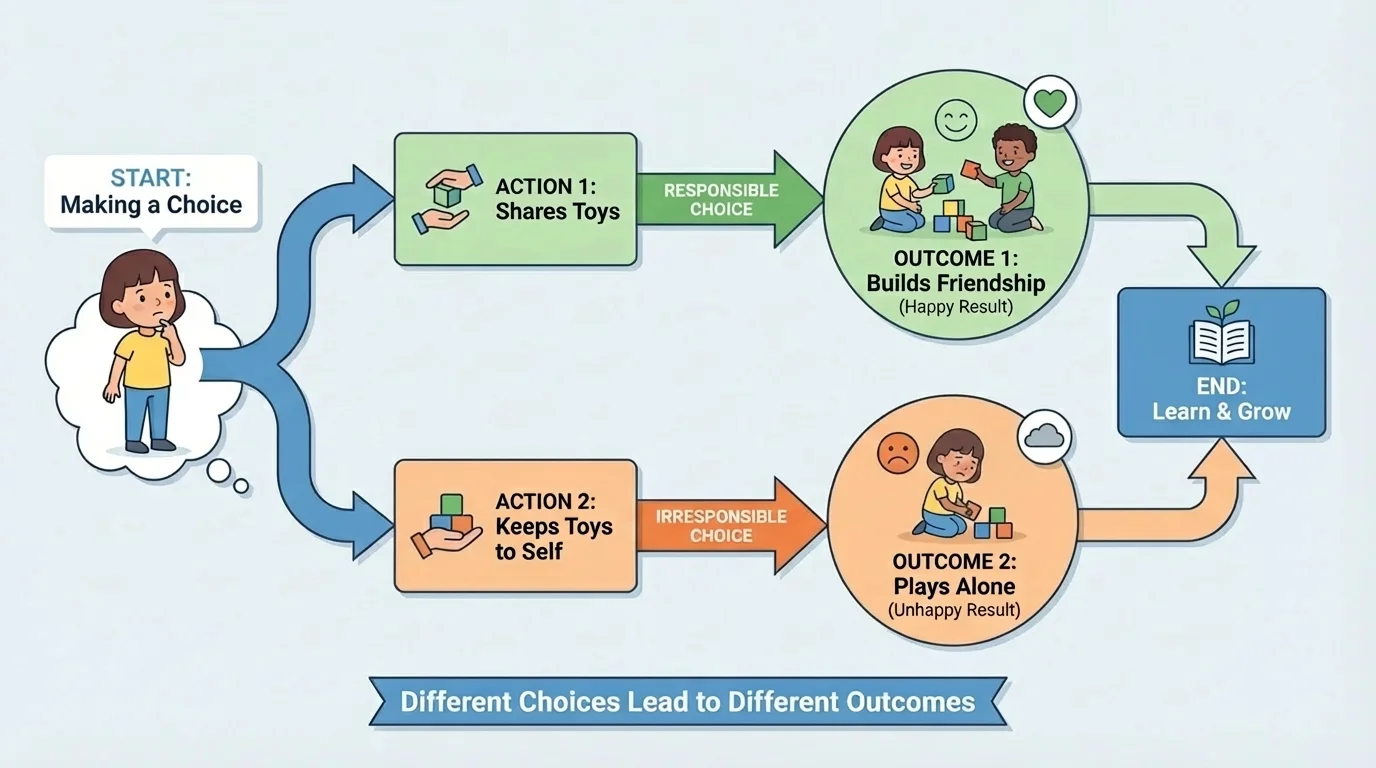
When something happens quickly, it helps to use a simple decision-making plan. As [Figure 1] shows, one choice can lead to a happy result, while another choice can lead to a problem. You do not need big words to do this. You just need a calm moment to think.
Step 1: Stop. Do not rush.
Step 2: Think. What are my choices?
Step 3: Think again. What might happen next?
Step 4: Choose the safest and kindest action.
Here is a simple example. Your blocks are all over the floor, and it is snack time. You can pick them up now, or you can leave them. If you pick them up, the room is safer and easier to walk through. If you leave them, someone may trip.
You can even say the steps quietly to yourself: "Stop. Think. Choose." That little plan can help when you feel excited, upset, or rushed.
Real-life example: choosing what to do when you feel upset
Step 1: You feel mad because a game is not working.
Step 2: You notice two choices: throw a pillow, or take a deep breath and ask for help.
Step 3: You think about outcomes. Throwing something may break it or hurt someone. Asking for help may solve the problem.
Step 4: You choose to take a breath and ask for help.
The result is a calmer, safer situation.
That is called thinking about the outcome.
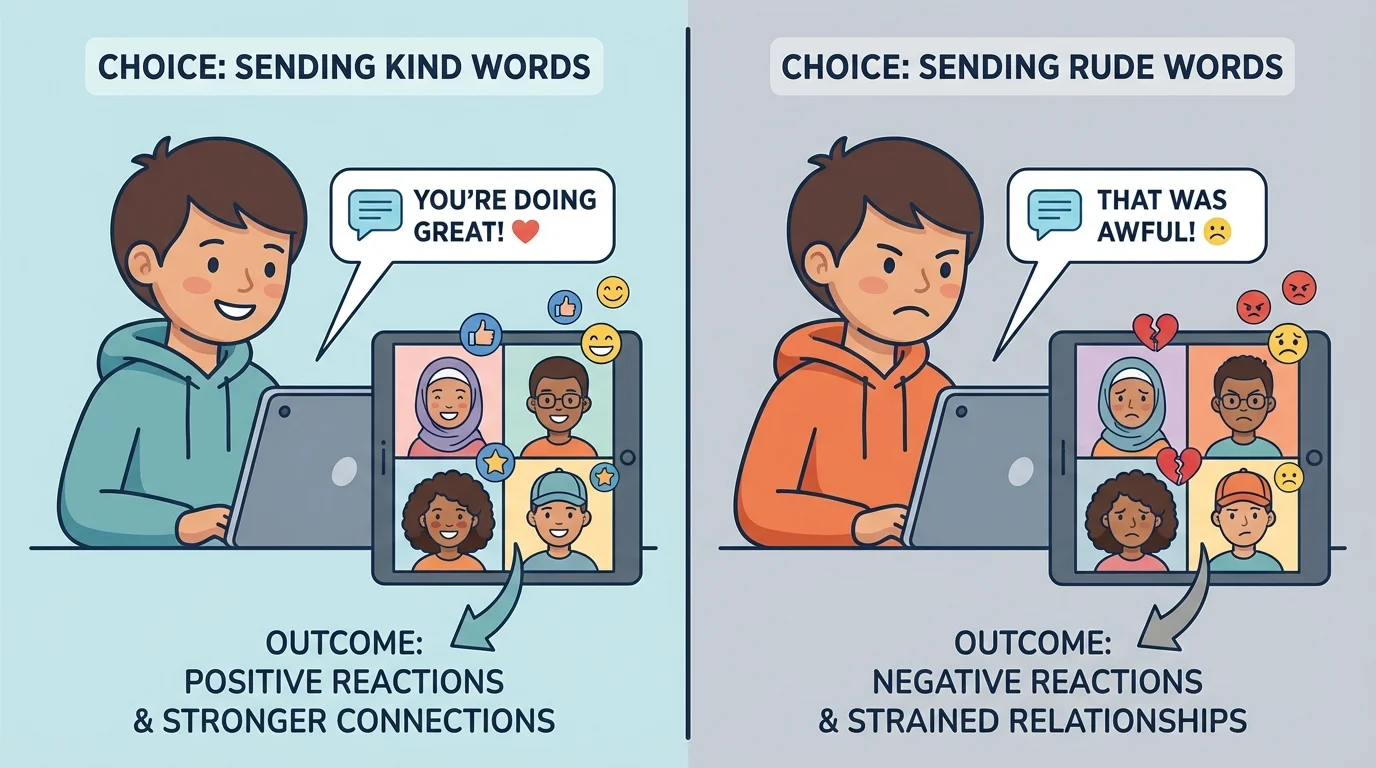
[Figure 2] Your choices matter when you talk to people on a video call, in a game chat, or in a message. Kind choices online matter just as much as kind choices in person.
If you wait your turn to speak on a video call, others can hear clearly. If you interrupt again and again, people may feel frustrated. If you send a friendly message, someone may smile. If you send something mean, that can hurt feelings even through a screen.
You also make choices about your time. You can choose to finish getting ready before screen time, or you can keep delaying. Finishing first can help your day feel calm. Waiting too long can make the day feel rushed.
Here are some everyday choices and outcomes:
| Choice | Possible Outcome |
|---|---|
| Put dirty dishes in the sink | The kitchen stays cleaner |
| Leave toys on the stairs | Someone may trip |
| Use kind words in a game | Others enjoy playing with you |
| Grab the first thing you want | Someone else may feel upset |
Table 1. Examples of everyday choices and possible outcomes.
Later, when you think about your own messages, remember that words on a screen still have real effects on people's feelings.
Your brain gets stronger at making good choices when you practice. Each time you stop and think, you are building a helpful habit.
You do not have to be perfect. You just need to keep practicing kind and thoughtful choices.
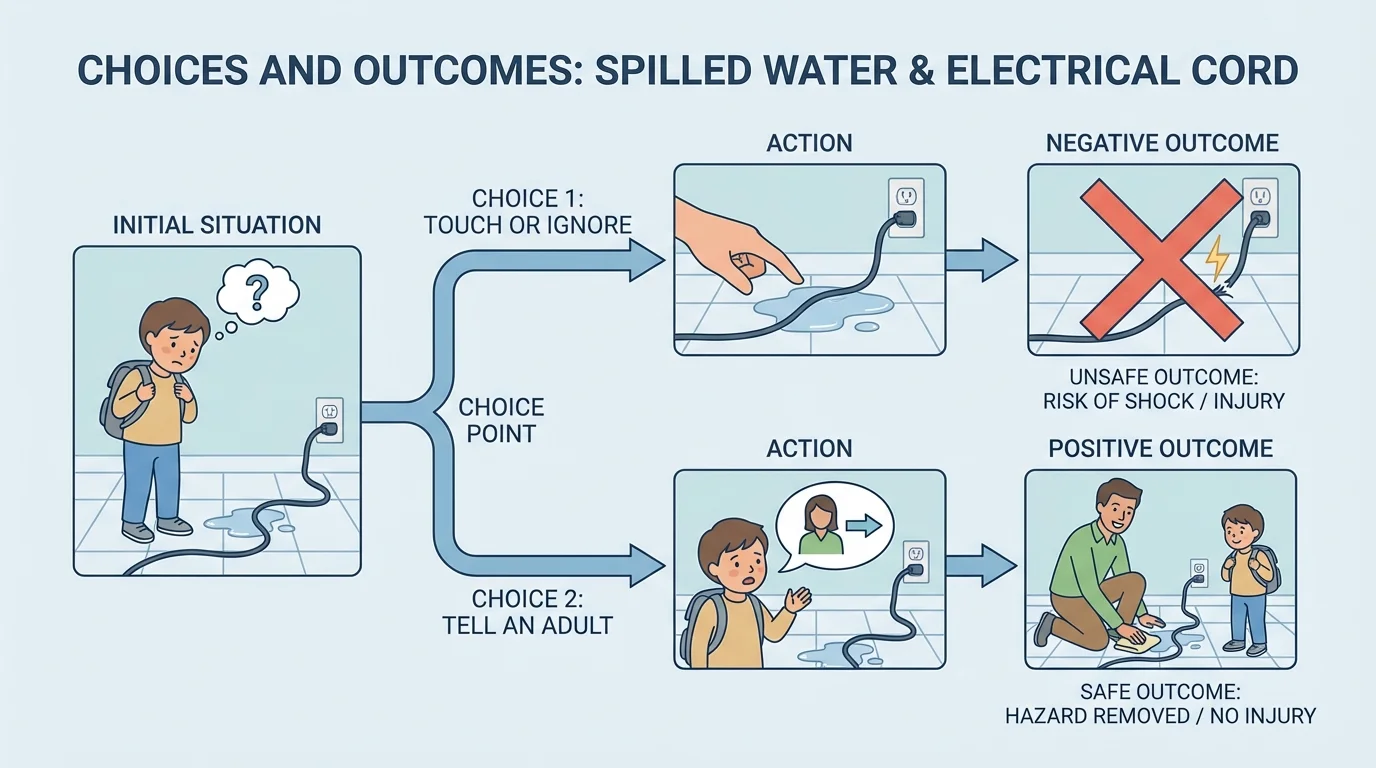
[Figure 3] Some choices are mostly about comfort, but some choices are about safe choices that protect your body, your feelings, and other people.
For example, if you see spilled water near a cord, a safe choice is to move away and tell a trusted adult. An unsafe choice is to touch the cord or the spill by yourself. The outcomes can be very different, and telling an adult about danger can be much safer than trying to fix a risky problem alone.
If someone online asks for your name, address, or a photo, a safe choice is to tell a trusted adult right away. An unsafe choice is to answer without checking first. Safe choices help protect you.
Sometimes a safe choice is not the fastest choice. It may take extra time to ask for help, clean up carefully, or wait for an adult. But safe choices often lead to better outcomes.
You already know how to ask a trusted adult for help. That is an important safety skill. Using that skill is a strong choice when something feels wrong, confusing, or unsafe.
When you are not sure, ask yourself: "Is this safe? Is this kind? Can a trusted adult help me?" Those questions are part of problem solving.
Everyone makes mistakes. You might choose to rush, grab, shout, or ignore directions. Then the outcome may not be what you wanted. That does not mean you are bad. It means you have a chance to learn.
If a choice does not go well, try these steps. First, stop. Next, notice what happened. Then, fix what you can. You might say sorry, clean up a mess, or ask for help. Last, think about a better choice for next time.
For example, if you slam a door because you are angry, the outcome may be a loud scare or even a broken thing. You can take responsibility by calming down, checking for damage, and using gentle hands next time.
Learning from mistakes is part of growing. When you change your next choice, you change your next outcome too.
"Stop and think before you act."
— A smart rule for everyday life
That simple rule helps with toys, words, screens, and safety.
One choice matters, but repeated choices matter even more. If you keep choosing to put your shoes away, your home stays tidy more often. If you keep choosing to whine instead of asking calmly, people may find it harder to help.
These repeated choices become habits. A habit is something you do again and again. Good habits often lead to helpful outcomes over time.
Think again about [Figure 1]. A single good choice can help once, but many good choices in a row can make your whole day go better. That is why practice matters.
Try This: Before one choice today, whisper to yourself, "What may happen next?" Then make your choice slowly.
Try This: When you finish an activity, choose one small helpful job, like putting away one toy, one book, or one cup.
Try This: If you feel stuck, choose three words: "I need help." Asking for help is a strong choice.
