A community can be as small as your family, your building, your street, your library group, or a children's group in town. It is a group of people who share places and help one another, as shown in [Figure 1]. When you do small kind things, you help others feel calm, welcome, and cared for.
People feel safe when they know others will be careful, kind, and fair. People feel included when they are not left out. Even a young child can help make this happen. You do not need to do big jobs. Small actions matter every day.
Community means a group of people who live, work, play, or spend time in the same places.
Safe means protected from harm.
Included means welcomed and not left out.
When people feel safe and included, they are more likely to smile, join in, ask for help, and help others too. When people feel left out or worried, they may feel sad, lonely, or scared. That is why your choices matter.
A community action is a simple helpful thing you do for people around you. It might be holding a door with an adult nearby, saying hello to a new neighbor, using quiet feet in a shared space, or helping clean up a park with your family. These actions tell others, "You matter here."
Helping does not mean doing everything by yourself. It means noticing what people need and making a safe, kind choice. A child can help by greeting others, moving carefully, and making room. Those are simple actions, but they can change how a place feels.
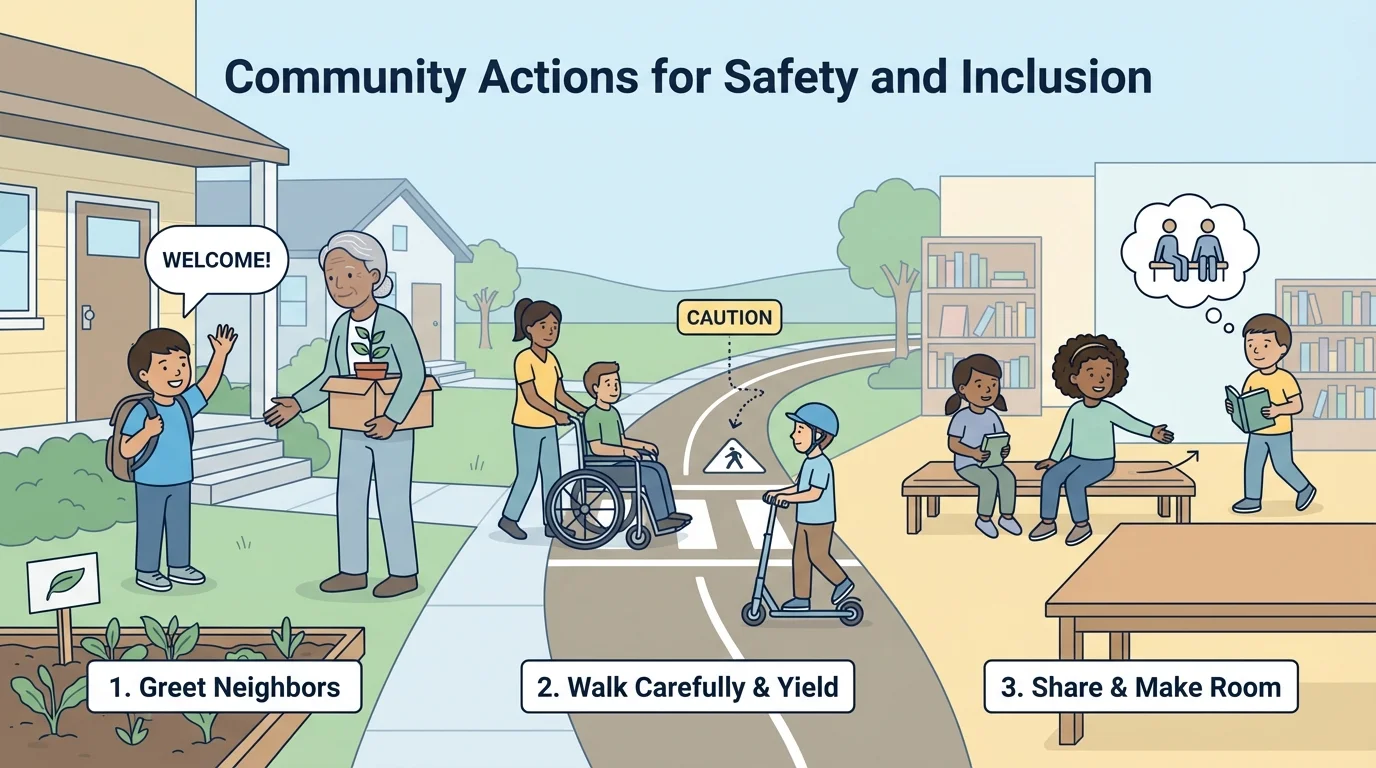
You can help your community by following rules that protect people. For example, you can use walking feet in a shared hallway at home or in an apartment building, keep your hands to yourself at a club, and put toys away so no one trips. Safety often begins with careful choices.
Kind actions can spread. When one person feels welcomed, that person often welcomes someone else too.
You can also help by noticing feelings. If someone looks nervous, shy, or left out, you can smile, wave, or say, "You can sit with us," or "Want to join?" You do not have to fix every problem. You just have to be kind and pay attention.
At home, you can help people feel safe by cleaning up spills, putting sharp objects out of reach of young children, and telling an adult if something is broken. You can help people feel included by inviting a sibling or cousin into a game and taking turns.
In your neighborhood or at community places, you can say hello, listen when others speak, and use respectful words. If your family joins a food drive, a park cleanup, or a coat collection, you are helping people you may not even know. That is a caring part of being in a community.
Real-life example
Maya sees a new child at a library story group sitting alone.
Step 1: Maya notices the child looks unsure.
Step 2: She asks an adult, "Can I say hi?"
Step 3: She smiles and says, "Want to sit by me?"
Step 4: She makes space and shares the crayons when it is time to color.
The new child feels more welcome, and the group feels friendlier.
If Maya ignored the child, the child might feel lonely. One small invitation can make a big difference. Helping others feel included is not about being perfect. It is about trying.
Sometimes you want to help, but you are not sure what to do. A simple plan makes it easier, as [Figure 2] shows. You can remember five easy steps: notice, think safe, ask an adult, help kindly, and check in.
Step 1: Notice. Look around. Is someone alone? Is there a mess someone could slip on? Is someone being left out?
Step 2: Think safe. Ask yourself, "Can I help safely?" Never touch dangerous things, run into traffic, or handle an emergency alone.
Step 3: Ask an adult. A trusted adult can guide you. This could be a parent, caregiver, coach, group leader, or librarian.
Step 4: Help kindly. Use calm words and gentle actions. You can offer a seat, share supplies, or invite someone to join.
Step 5: Check in. Look again. Does the person seem better? Is the area safer? If not, tell an adult more.
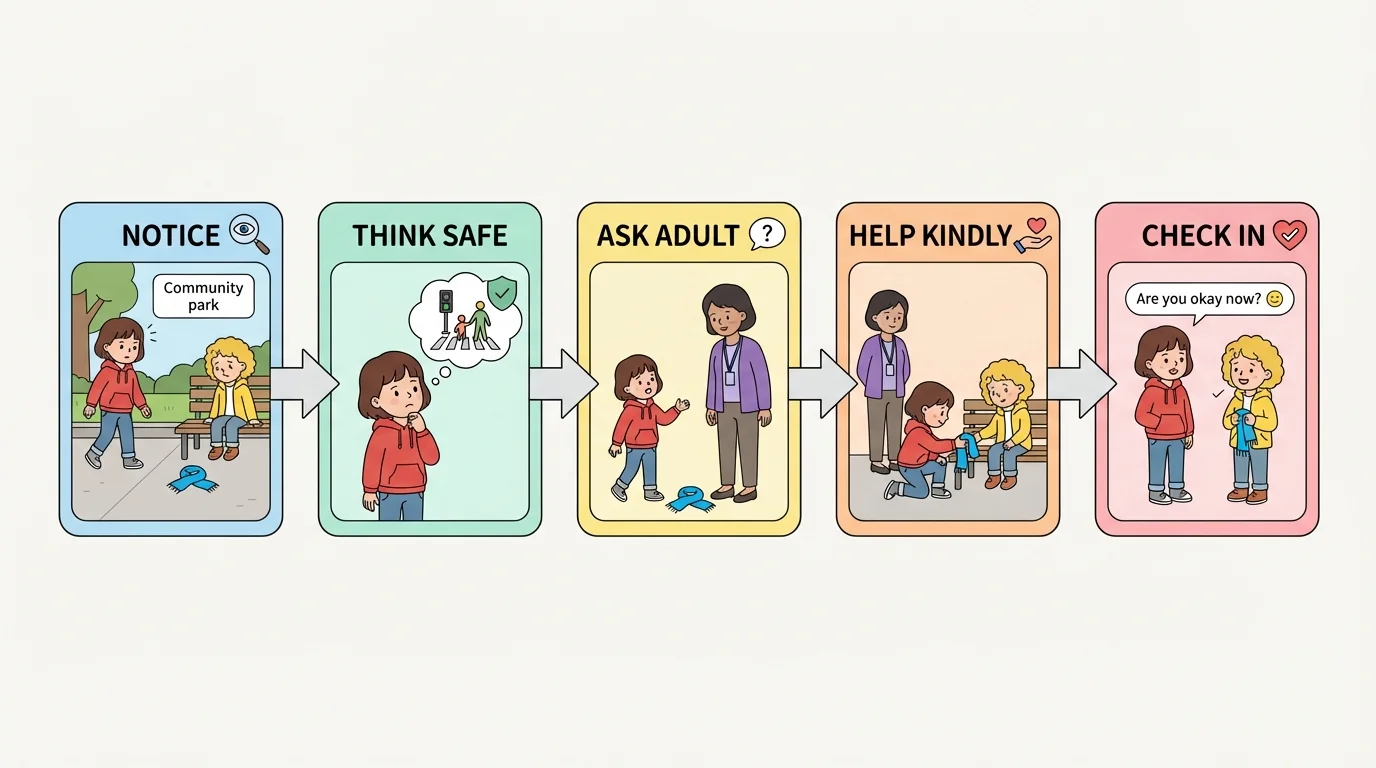
This plan is useful because not every problem needs the same answer. A lonely person may need friendly words. A broken object may need adult help right away. A community action should always be kind and safe.
Safe helping means knowing your job. Your job is to notice, care, and tell a trusted adult when needed. An adult's job is to handle danger, make rules, and solve big problems.
Later, when you help in other places, the same plan still works. As we saw in [Figure 2], helping starts with noticing and thinking before acting. That keeps everyone safer.
Safety and inclusion matter online too. In video calls, online clubs, and game chats, your words can make someone feel welcome or hurt. You can help by waiting your turn, not talking over others, and using kind messages.
If someone is new in an online group, you can say, "Hi, glad you are here," or "Want to play with us?" If someone is speaking on a video call, you can listen and let them finish. If you disagree, you can still be respectful.
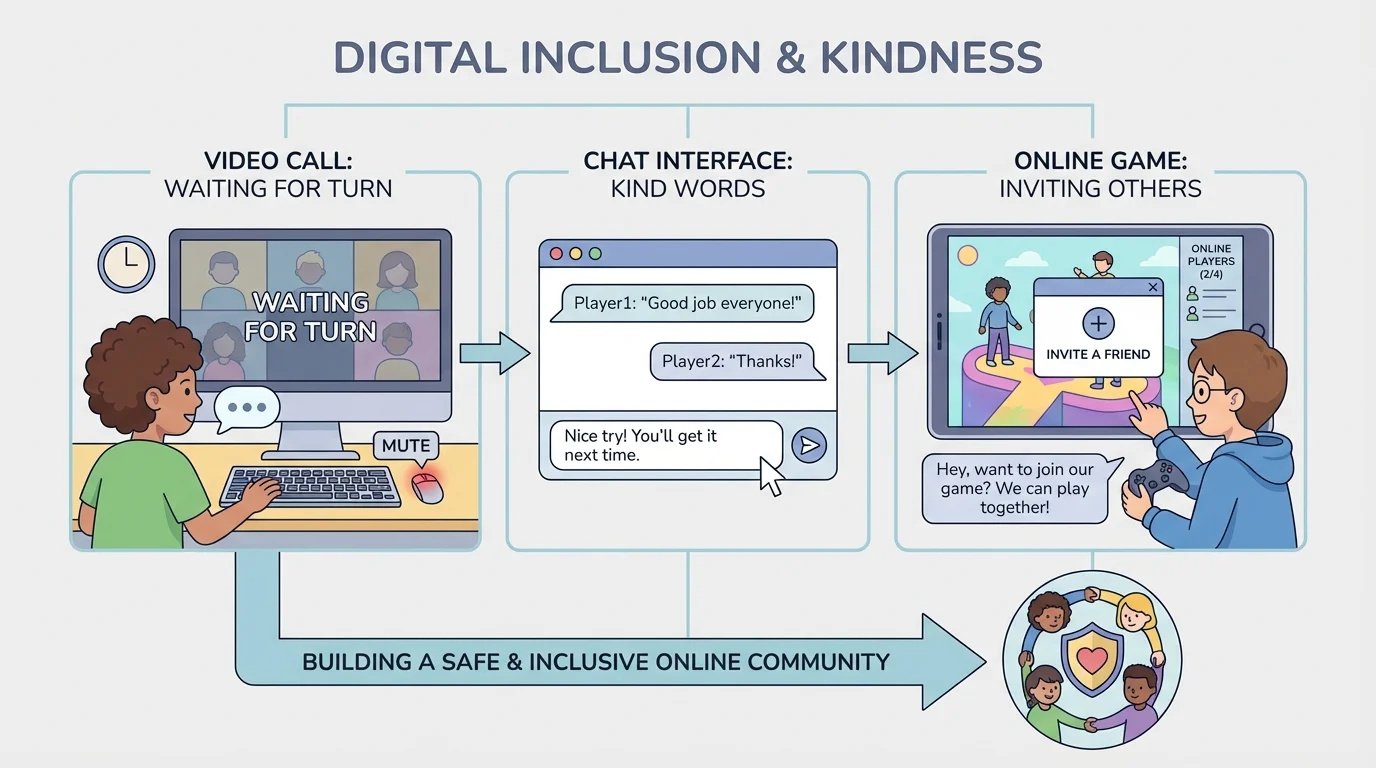
Never share private information like your address, phone number, or passwords. If someone says something mean, scary, or confusing online, do not answer alone. Take a screenshot if an adult asks, leave the chat, and tell a trusted adult right away.
You already know that words can help or hurt. Online words count just as much as spoken words.
Online inclusion can be simple: invite someone into a game, write kindly in the chat, and do not laugh when someone makes a mistake. The child in [Figure 3] shows good digital manners by waiting, listening, and welcoming others.
Some situations are too big for a child to handle alone. Tell an adult right away if someone is hurt, lost, being bullied, left out again and again, or doing something dangerous. Tell an adult if you see threats, hateful words, or unsafe online behavior too.
You are not tattling when you are trying to keep someone safe. Reporting danger is a responsible choice. A trusted adult can step in, protect people, and decide what to do next.
"Kindness means helping someone feel they belong."
It is also okay to ask for help when you feel unsafe or left out. You are part of the community too. Safe and inclusive communities care about everyone.
You do not need to be older to make a difference. You can smile, include others, listen, share, clean up, follow safety rules, and tell an adult when needed. These are simple actions, but they build trust.
Think about what happens when people choose kindness. A new child feels brave enough to join. A shared space stays neat and safe. An online group feels friendly instead of mean. A person who was left out feels seen.
Helping others feel safe and included is something you can practice every day. Each small action says, "You belong here, and I care." That is how stronger communities grow.
