What helps children do a job well? It is not being the fastest. It is not being perfect. It is using good work habits every day. Good work habits help you when you clean up, make art, help cook, join an online lesson, or finish a small job at home.
Work habits are the ways you act while doing something important. When you listen, try, and finish, other people can trust you. You also feel proud because you keep going and complete what you started.
Work habits are helpful ways of acting when you do a job or task. Good work habits include listening, trying, and finishing.
If you do not listen, you may miss the directions. If you stop too soon, the job stays undone. If you keep trying, you learn more. These habits matter now when you are young, and they will matter later when you help in your community or have a job when you are older.
[Figure 1] Listen means paying attention with your ears, eyes, and body. During online learning or when an adult gives directions at home, good listening means being calm and ready. You look at the speaker or screen, keep your body still enough to pay attention, and wait until the directions are done.
Listening can sound like this: "Put the crayons in the box." "Wash your hands first." "Click the blue button." When you listen carefully, you know what to do next.
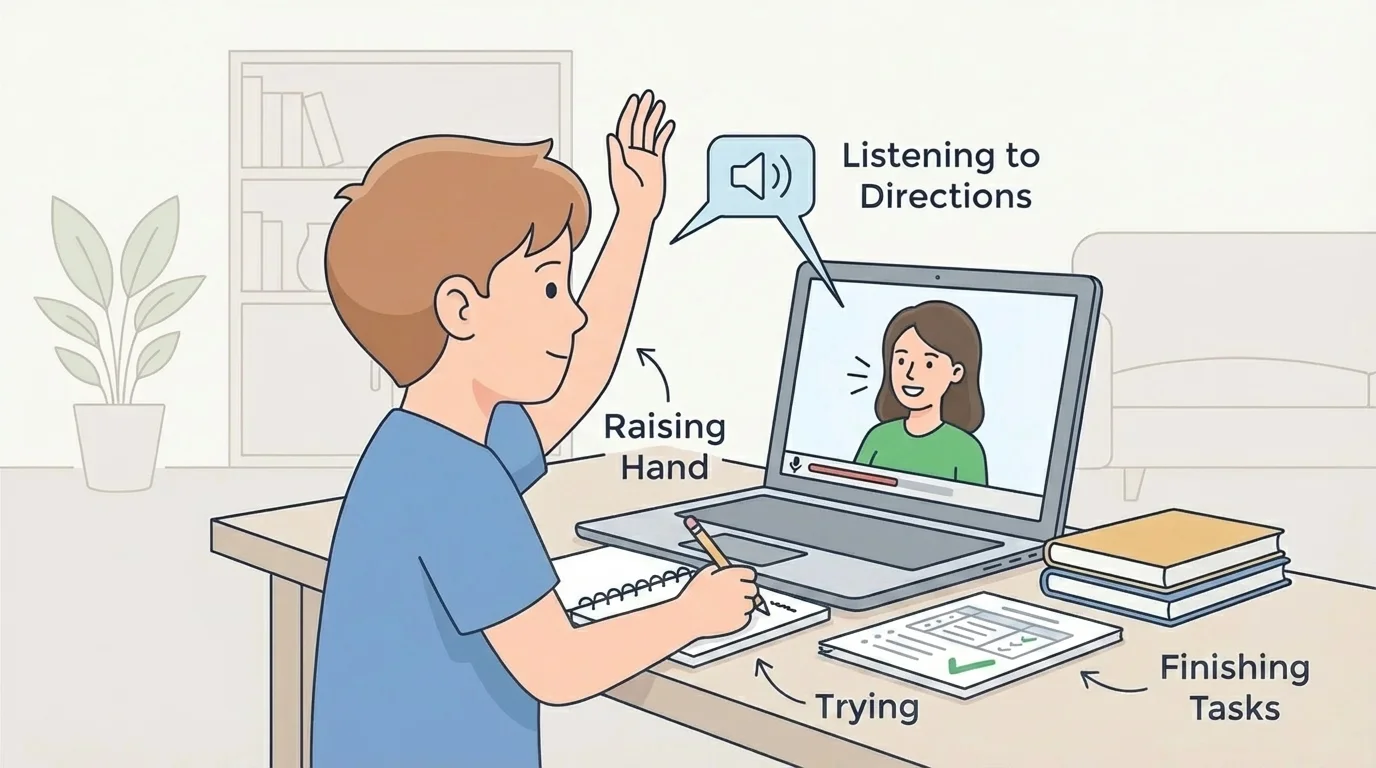
Good listening habits are simple. First, stop what your hands are doing. Next, look and listen. Then, think about the directions. Last, do the job. If you are not sure, you can ask, "Can you say that again, please?" Asking politely is part of listening too.
Example: Listening at home
Step 1: An adult says, "Please put your shoes by the door."
Step 2: You stop, look, and hear the whole direction.
Step 3: You carry your shoes to the door.
This shows good listening because you heard the direction and did it.
Later, when you are doing another task, the same listening skills still help. A calm body and watching carefully also help when you watch a short video lesson, follow a recipe with an adult, or learn rules for a game.
Effort means using your energy to do something, even when it feels hard. Trying your best does not mean getting everything right the first time. It means you keep going, make a safe guess, and try again.
Sometimes a zipper gets stuck. Sometimes a block tower falls. Sometimes you click the wrong thing on a screen. That is okay. People learn by trying. A mistake is not the end. It is a sign to slow down and try another way.
Trying helps your brain grow. When you practice, your brain and body learn what to do. The first try may be wobbly. The next try is often better. Small tries build big skills.
Good trying can sound like this: "I can try again." "I need help, please." "I am not done yet." Asking for help is not quitting. It is a smart way to keep working.
When you try, people notice. An adult may see that you kept working on your puzzle. A coach may see that you practiced a move again. One day, a boss may notice that you do not give up easily. That is a strong work habit.
[Figure 2] To finish a task means you do the job all the way to the end. A task usually has three parts: start the job, keep working, and clean up or turn it in when done. Finishing helps people know they can count on you.
A finished task might be putting all the books back on the shelf, not just one. It might be drawing your picture and putting the markers away. It might be completing your online activity and clicking submit with help from an adult if needed.
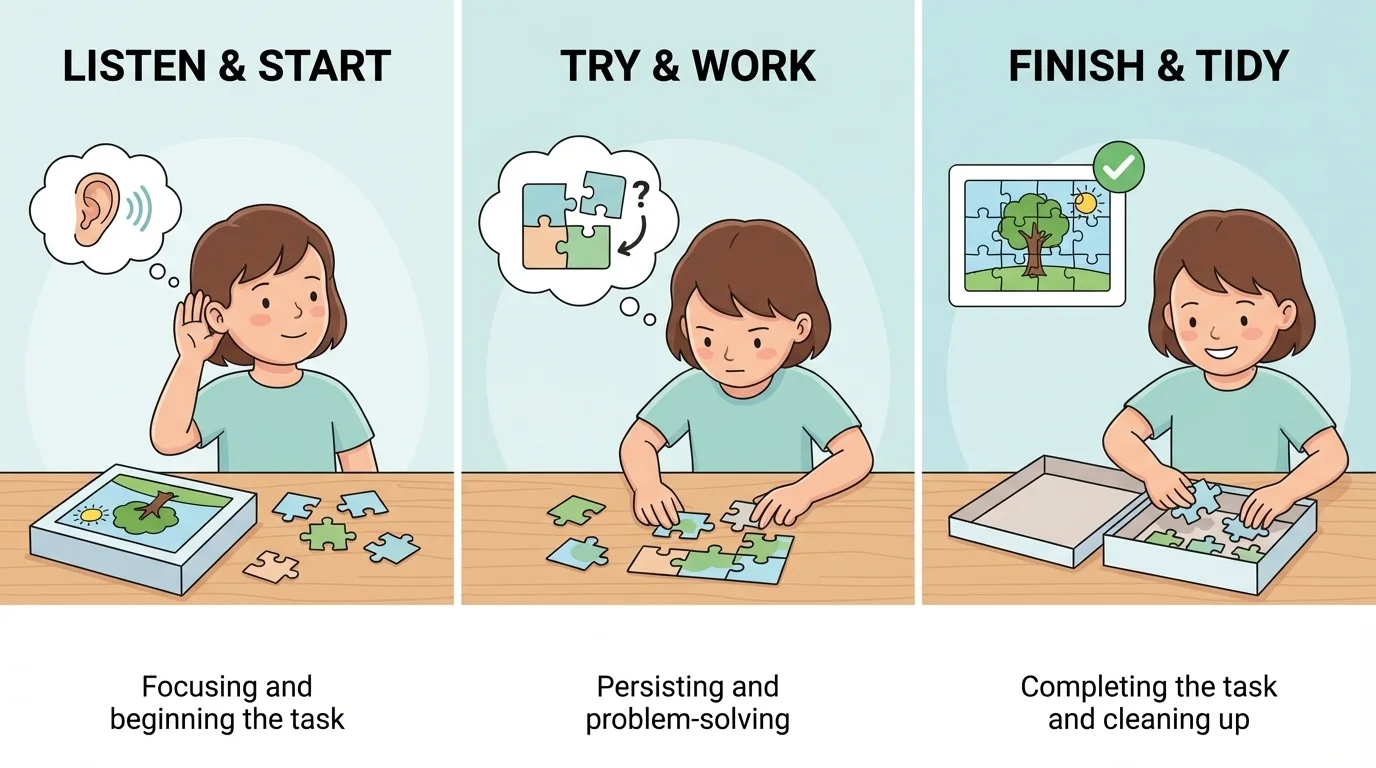
Sometimes children start fast but stop in the middle. That can leave a mess or an unfinished job. Finishing means staying with the work until it is really done.
Example: Finishing a small job
Step 1: Pick up the paper scraps after an art project.
Step 2: Put crayons and scissors in the right place.
Step 3: Check the table and floor.
The task is finished when the space is clean and the supplies are put away.
That three-part sequence works for many jobs: feeding a pet with help, matching socks from the dryer, or finishing a simple online assignment. Start, keep going, and end neatly.
You can use good work habits in many places. At home, you might listen when someone says how to set napkins on the table. In a community activity, you might try a new song or movement. During online learning, you might wait, watch, and follow the steps on the screen.
Here are some examples of strong habits:
| Situation | Good Work Habit |
|---|---|
| Cleaning up toys | Listen to the direction, pick up toys, and finish by putting all of them away. |
| Drawing a picture | Try even if it is tricky, then put art tools back. |
| Online lesson | Look at the screen, listen for directions, and complete the activity. |
| Helping cook | Listen for each step, try carefully, and help clean up at the end. |
Table 1. Everyday situations and the good work habits that fit each one.
Many grown-ups say they trust workers who finish small jobs well. Being dependable starts with little tasks when you are young.
Good habits do not need to be big. Even small jobs count. Putting your cup in the sink, closing the cap on the glue, and returning a book to its place are all ways to practice.
Sometimes you may feel frustrated, tired, or distracted. That happens to everyone. Good work habits help you get back on track.
You can do these simple steps. Stop your body. Take a slow breath. Listen again. Try one small part. Ask for help if you need it. Then keep going. Doing one little part can help a big job feel easier.
"I can try again."
— A strong work mindset
If you leave a task every time it gets hard, the job may never get done. If you stay calm and try one more time, you often find that you can do more than you thought.
Good habits grow when you practice them often. You do not have to be perfect. You just need to keep working on them. Listening, trying, and finishing are habits you can use every day.
A simple mental checklist can help: Did I listen? Did I try? Did I finish? If the answer is yes, you used strong work habits. Those habits help at home now, and they prepare you for bigger responsibilities later.
You already know how to follow simple directions and help with small jobs. Good work habits make those things easier and stronger.
Try This: The next time you have a small job, stop and listen first. Then try your best. Last, make sure the job is really done before you leave.
