Have you ever noticed that small jobs can make a big difference? When you put away your crayons, plug in your learning device, or help choose the day on the calendar, you are doing more than a chore. You are practicing being someone others can count on. That is a very important life skill.
In online school, your learning space may be a table, a desk, or a quiet corner at home. Even though you are not in a school building, you still have ways to help. These helpful jobs can make your day smoother, kinder, and more organized.
A classroom job is a small helpful task you do for your learning space. In online learning, that might mean helping at home before, during, or after your lessons. It can also mean helping during a class video call in simple ways, like being ready when it is your turn to speak.
Classroom job means a regular helpful task that supports learning. Responsibility means doing what you are supposed to do. Teamwork means people helping one another to reach a goal together.
When you do a job again and again, you learn good habits. Good habits help you at school, at home, and later when you are older and have bigger jobs to do.
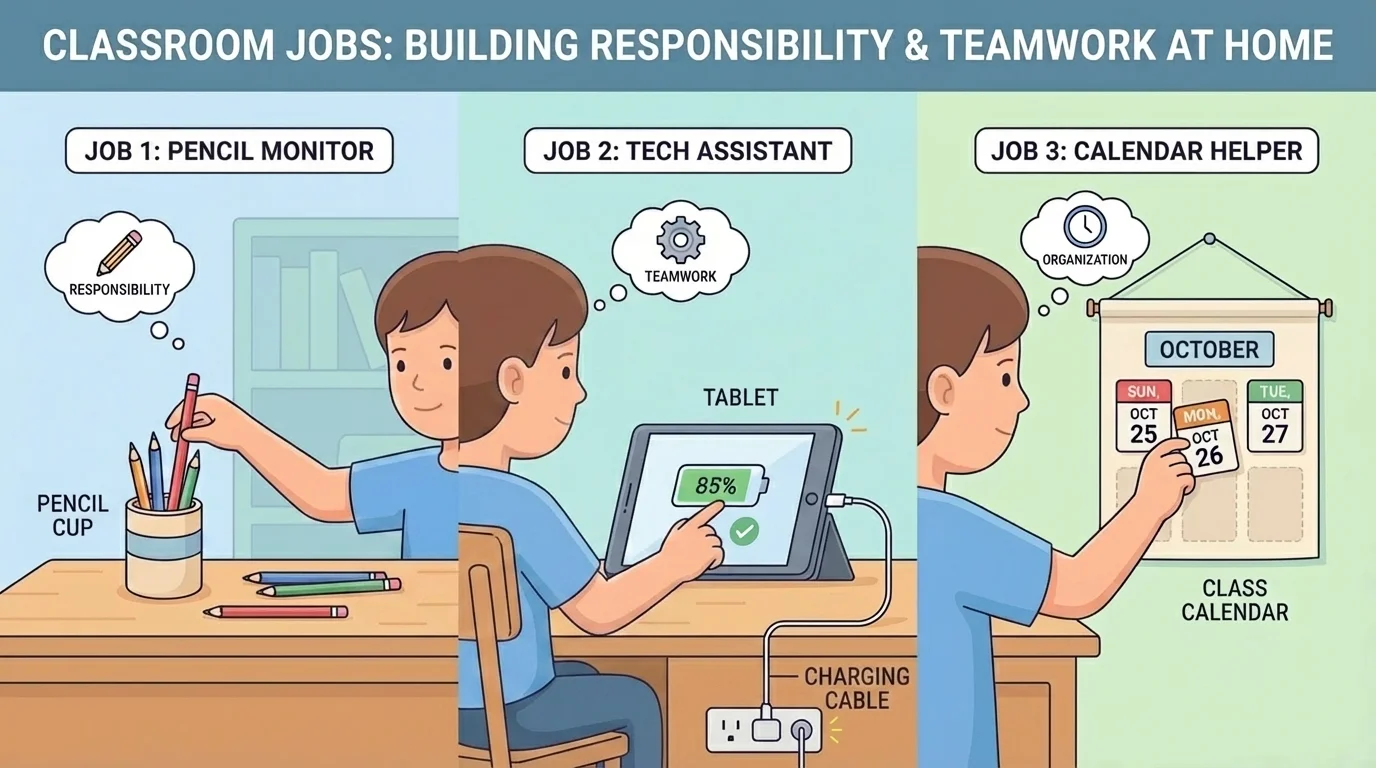
Some classroom jobs in a home learning space are simple but important. As shown in [Figure 1], a supply helper puts pencils, paper, books, or headphones in the right place. A calendar helper checks the date or helps point to the day's plan. A tech helper makes sure the tablet or computer is charged and ready.
Other jobs can help keep your space calm and clean. A tidy-up helper puts away art tools after class. A water bottle helper checks that your drink is nearby before the lesson begins. A kind-message helper reminds others to use polite words in a chat or on a video call. These different jobs show that helping can happen in many small ways at home.
You may also help with living things. If your learning routine includes caring for a class plant at home or checking a pet's water after your schoolwork, that job teaches care and follow-through. A job does not have to be big to be important.
Many grown-up jobs start with the same skills children practice in small daily tasks: showing up, being prepared, and finishing what needs to be done.
When each person does one helpful part, the whole day can go better. That is one reason jobs matter.
Responsibility grows when you know your job and do it without lots of reminders. If your job is to put your notebook on the desk before class, doing it each day shows that you are learning to be dependable.
Being responsible also means doing the job carefully. If you rush and toss markers all over the table, the job is not really finished. If you place them neatly back in the box, you are showing care. Responsible people try to finish the job the right way.
Why responsibility matters
When people trust you to do a job, they feel calm because they know they can count on you. If jobs are forgotten again and again, people may feel stressed or delayed. Responsibility helps everyone feel more ready.
Think about a simple morning example. If you remember to charge your device at night, class can start on time. If you forget, learning may be interrupted. One small action can help a whole morning go smoothly.
As shown in [Figure 2], teamwork means you are not just thinking about yourself. You are thinking about how your actions help other people too. In an online class, teamwork can mean waiting for your turn to talk, listening while someone else shares, or helping a family member set up materials before a lesson. Shared roles show that a team works best when everyone has a part.
Teamwork also includes being kind and fair. If two children both want the same helper job, they can take turns. One child might be the calendar helper today, and the other child tomorrow. Taking turns is part of working well with others.
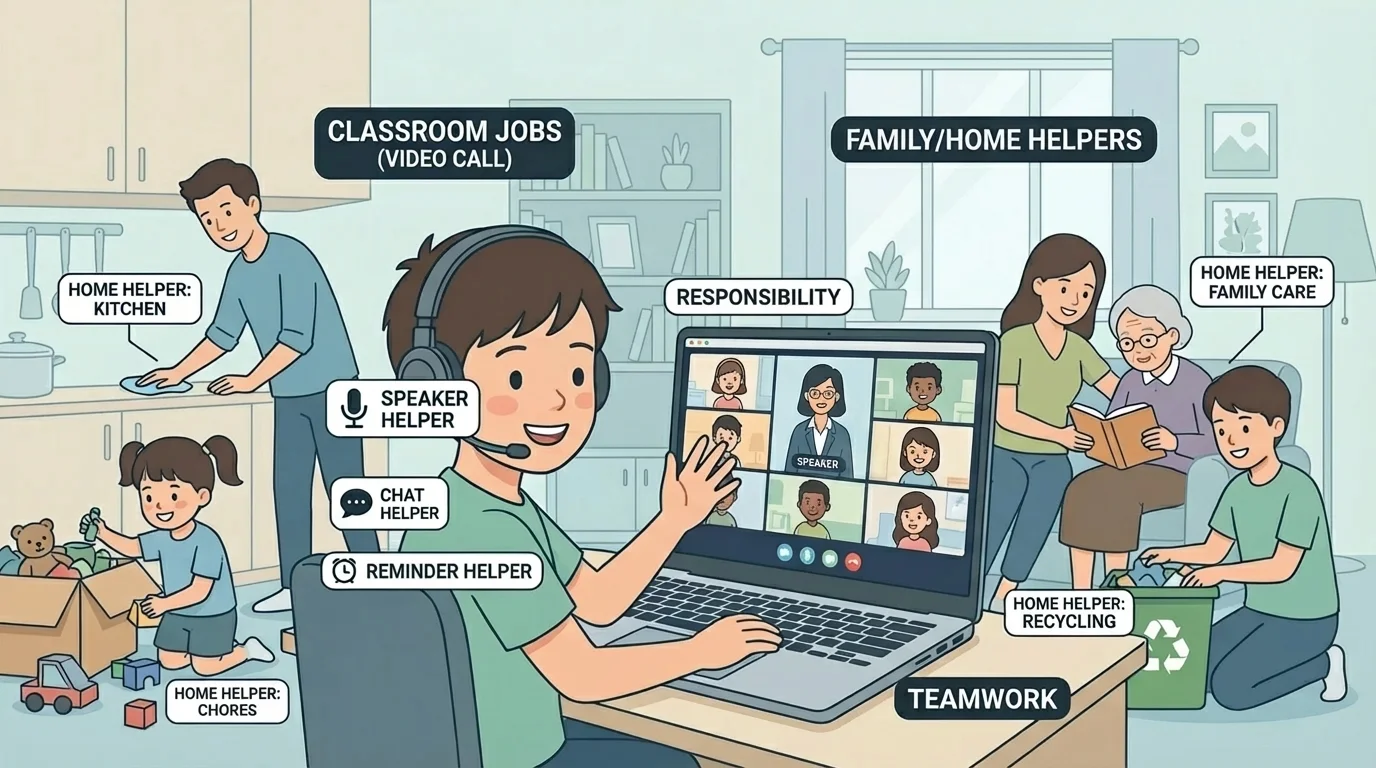
Sometimes teamwork happens with words. You might say, "I can help clean up," or "You can go first." Those simple words help people feel included. Good teamwork makes people feel seen, safe, and supported.
Later, when you work with others in sports, clubs, jobs, or family life, these same teamwork habits will help you. As shown in [Figure 1], different people may do different jobs, but every job helps the group.
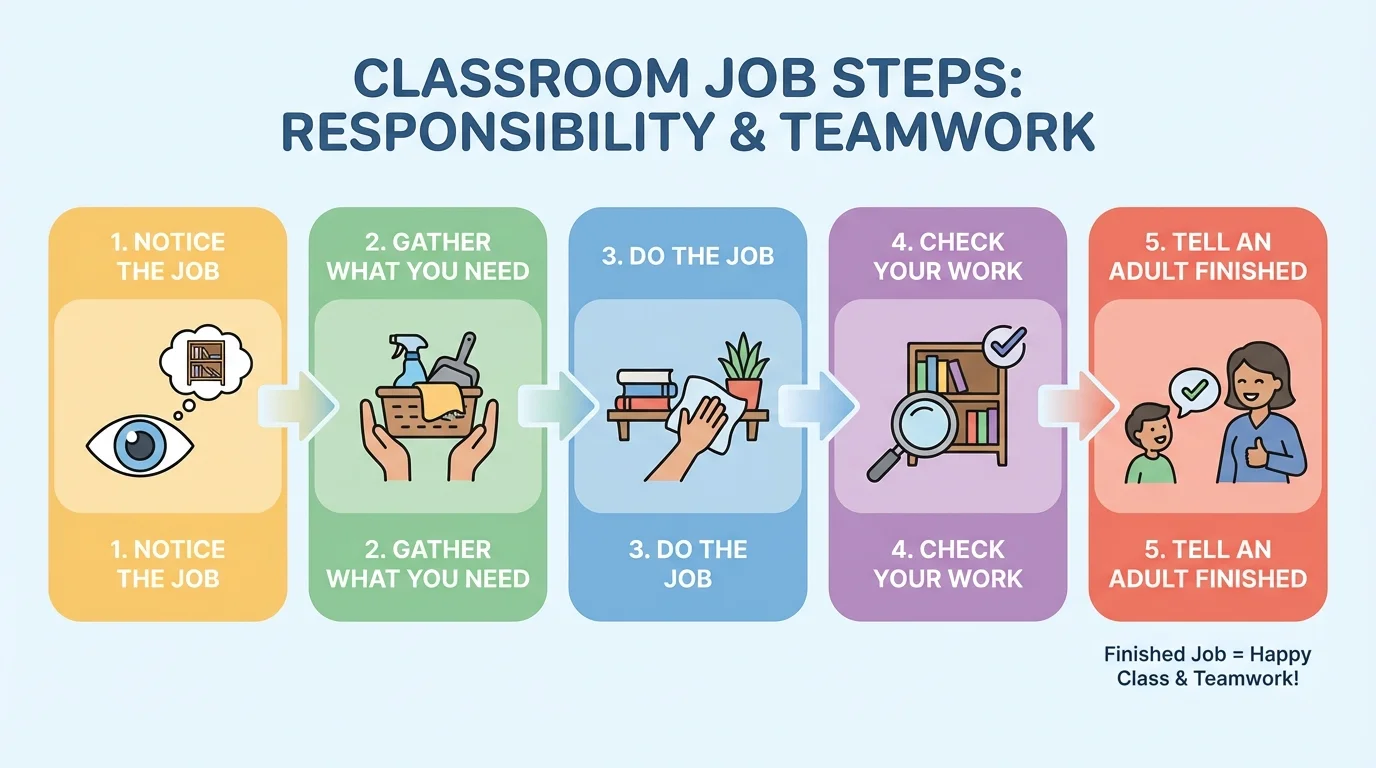
Doing a job well is easier when you follow a simple routine. As shown in [Figure 3], the steps help you remember what to do from start to finish so your job gets done in a careful way.
First, notice the job. Next, get what you need. Then do the job. After that, check your work. Last, tell an adult if the job is finished or if you need help. These steps help you stay calm and organized.
Example: putting away art supplies after class
Step 1: Notice the job
You see crayons, glue, and paper left on the table.
Step 2: Gather what you need
You find the crayon box, the paper folder, and the trash bin.
Step 3: Do the job
You place crayons in the box, papers in the folder, and scraps in the trash.
Step 4: Check your work
You look at the table and make sure it is clear.
Step 5: Report or ask
You say, "I finished cleaning up." If you are not sure where something goes, you ask.
Here are helpful tips: start right away, use gentle hands, finish all the parts, and put things in the right place. These are the same kinds of habits adults use in real jobs.
"When everyone helps, everyone does better."
Try This: Pick one small job you can do each learning day, such as placing your headphones in the same spot after class or checking your seat and table before a lesson begins.
Sometimes you may forget your job. Sometimes you may feel tired, grumpy, or distracted. That happens to everyone. What matters is what you do next.
If you forget, stop and fix it as soon as you remember. If the job feels too big, do one part at a time. If you feel upset, take a slow breath and ask for help with calm words. The routine in [Figure 3] still works when a job feels tricky because it breaks the task into simple parts.
You already know how to follow directions at home, take turns, and clean up your own things. Classroom jobs use those same skills in a regular, helpful way.
Mistakes do not mean you are bad at jobs. They mean you are still learning. The more you practice, the easier responsibility becomes.
Classroom jobs are practice for the future. Grown-ups need to arrive ready, care for tools, work with others, and finish tasks. A child who learns these habits early is building strong job skills for later life.
For example, a cook must put tools back where they belong. A nurse must remember important steps. A store worker must help customers politely. An office worker must keep devices ready and working. These grown-up jobs all use responsibility and teamwork.
Right now, your job may be small: charge a device, tidy a table, or help with a schedule. But small jobs build big skills. When you practice being helpful today, you are getting ready for tomorrow.
