Have you ever felt sad when someone talked over you and did not hear your words? It feels much better when someone really listens. Careful listening helps people understand thoughts, feelings, and needs. When you listen well, you can know what another person means, and they can feel respected and safe with you.
Communication means sharing ideas, feelings, and information. Talking is one part of communication, but listening is another important part. If you only talk and do not listen, it is hard to understand another person. Careful listening helps people solve problems, follow directions, and be kind to each other.
When you listen carefully, you can notice more than words. You may hear if someone sounds happy, tired, worried, or excited. This helps you know how to respond kindly. For example, if your brother says, "I need help," and you listen carefully, you can tell if he wants help building a tower, finding a toy, or feeling better after a hard moment.
Listening carefully means paying attention to a person's words, voice, and message without interrupting. Understand means knowing what someone is trying to say or show.
Listening carefully also helps in online life. When you are on a video call with a teacher, family member, club leader, or friend, you need to listen so you know when it is your turn and what the other person is saying.
[Figure 1] shows that careful listening involves your ears, eyes, body, and brain working together. You do not have to be perfectly still like a statue, but your body should show, "I am paying attention."
Some signs of careful listening are: looking at the person or screen, staying quiet while they talk, waiting for your turn, and thinking about their words. You can also nod, stay calm, and keep your hands busy only with something quiet that does not distract you.
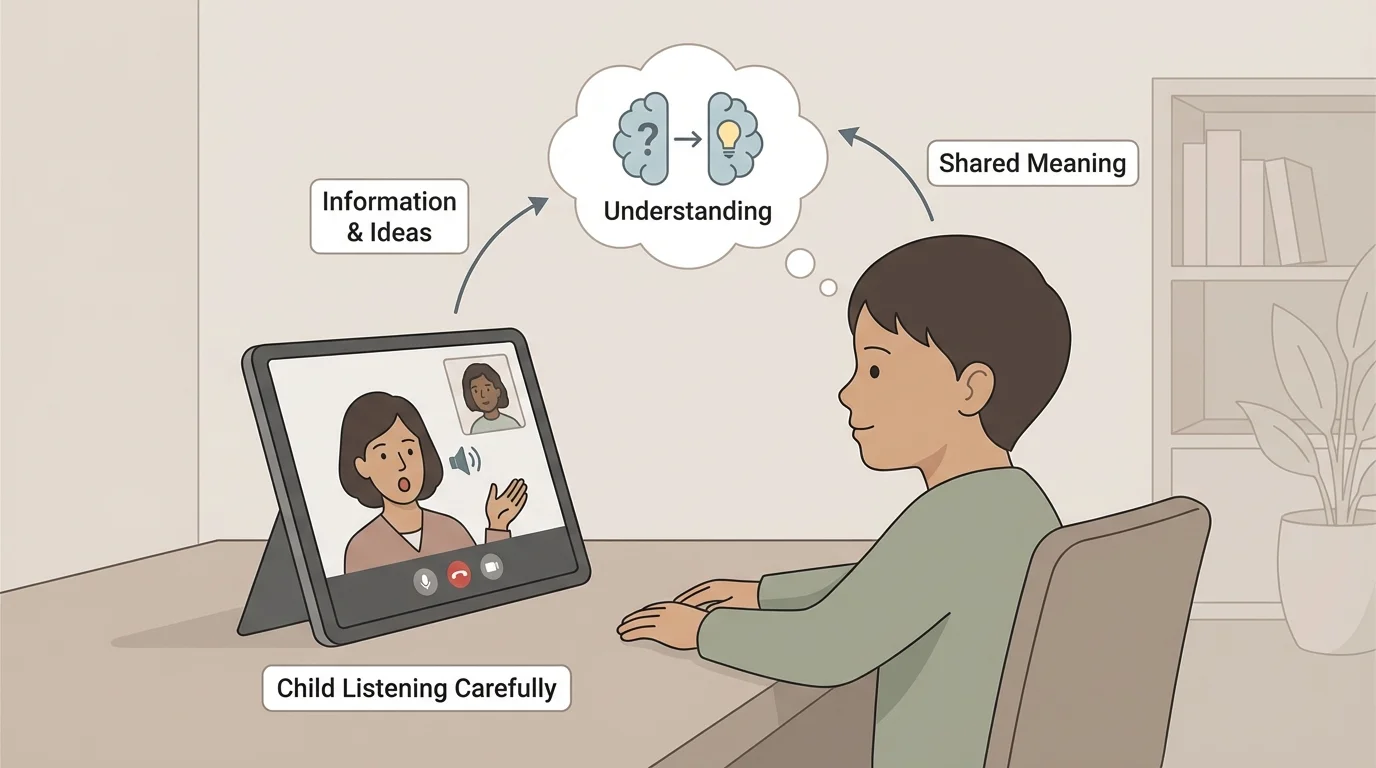
Careful listening is not the same as hearing. Attention means your mind is focused. You can hear sound and still not pay attention. For example, a parent may say, "Please put your shoes by the door," but if your mind is only on your game, you may not understand the direction.
You can use easy steps each day when someone is speaking to you.
Step 1: Stop what you are doing if you can. Put down the toy, pause the game, or turn your body toward the speaker.
Step 2: Look and listen. Face the person or the screen and listen for the important words.
Step 3: Wait. Let the person finish before you speak.
Step 4: Think. Ask yourself, "What is this person telling me?"
Step 5: Answer kindly. You can say, "Okay," "I understand," or ask a question if you need help.
A simple listening plan
Step 1: Grandma says on a video call, "Please show me your drawing after I finish talking."
Step 2: You keep your picture in your lap and listen until she is done.
Step 3: Then you say, "Now can I show you?"
This helps both people feel heard.
These steps are useful at home, in clubs, on team practice, at music lessons, and during online meetings. Good listening helps you know what to do next.
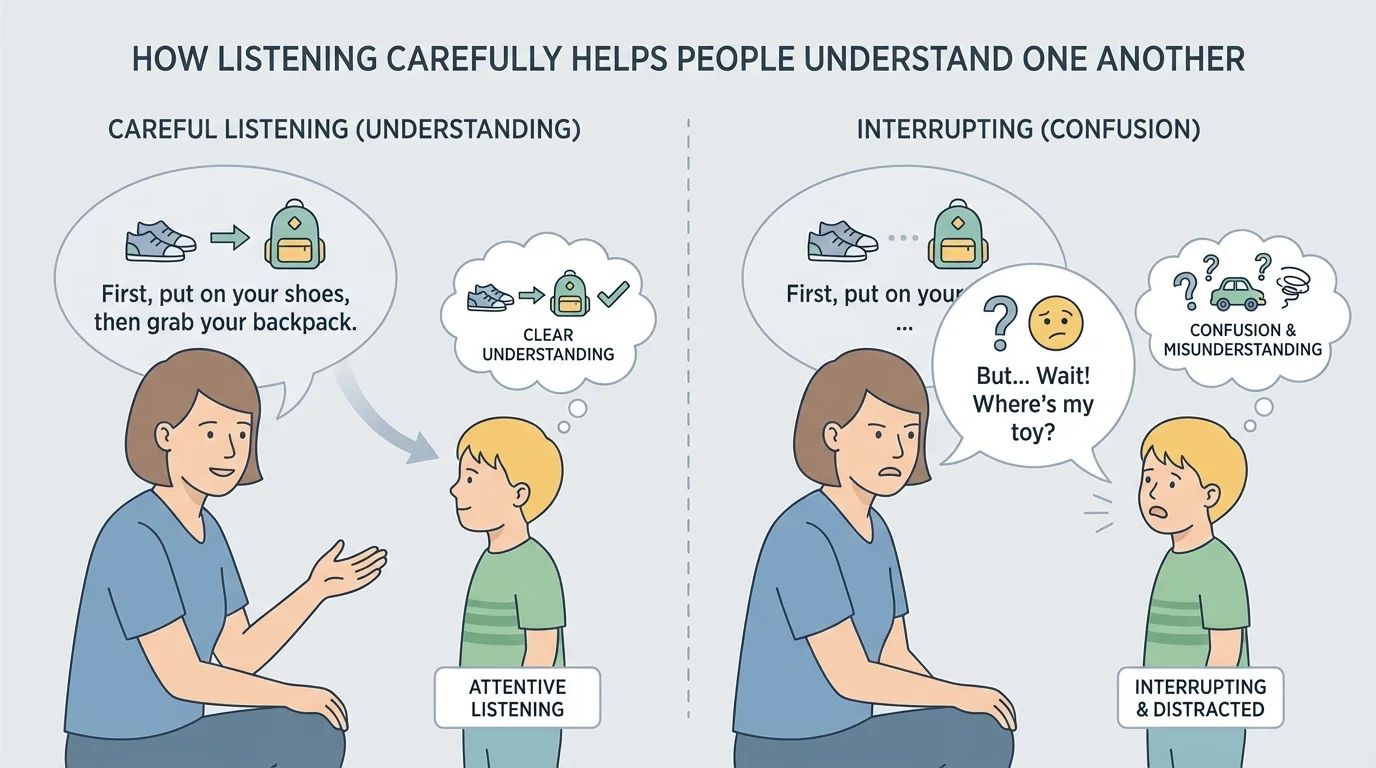
[Figure 2] illustrates how listening changes what happens next in everyday life and shows the difference between listening and interrupting. When people feel heard, they are more likely to stay calm and work together.
Think about this example. A grown-up says, "First wash your hands. Then come help mix the batter." If you listen carefully, you know the order. If you interrupt and run to the bowl right away, you may miss the first step and need to start again. This contrast shows why listening matters.
Listening also helps with feelings. If a friend says, "I feel sad because my kite ripped," careful listening helps you know that your friend may want comfort, not jokes. You might say, "I'm sorry. Do you want help fixing it?" That kind answer shows respect.
In a game or sport, listening helps everyone work as a team. If a coach or leader says, "Wait for the signal," careful listening keeps the group safe and ready. Later, the same idea helps you remember that listening first often prevents mistakes and confusion.
Your brain works hard when you listen. It is not just staying quiet. It is hearing words, thinking about meaning, and getting ready to respond kindly.
When listening goes poorly, people may feel upset, ignored, or confused. When listening goes well, people feel important and understood.
Sometimes you listen and still feel confused. That is okay. Good listeners ask for help in a calm way.
You can say, "Can you say that again, please?" or "Do you mean I should clean up now?" This is called asking for clarification. To clarify means to make something clearer.
Another smart trick is to repeat the message in your own words. You can say, "First I feed the dog, and then I put away the bowl?" This helps the other person check if you understood.
Listening and understanding work together. Listening carefully is the first step. Then your brain thinks about the message. When you ask a question or repeat back the idea, you make sure your understanding matches what the speaker meant.
If you are excited and want to speak right away, take a slow breath and wait. Waiting your turn is part of listening too.
Listening gets stronger with practice. You do not have to be perfect. Each time you stop, listen, think, and answer kindly, you build a strong habit.
Try This: When someone at home talks to you today, pause your hands and look at them before you answer.
Try This: On your next video call, keep your microphone muted while the other person talks, then wait for your turn.
Try This: If you are unsure, use one helpful question: "Can you say that again?"
Careful listening helps people feel close. It helps families, friends, and teammates understand one another better. When you listen, you show, "Your words matter to me."
