Have you ever wanted a snack, a product, or a new routine just because you saw it online more than once? That happens to almost everyone. Many health choices feel personal, but they are often shaped by what you watch, what other people say, and what you do again and again. The good news is that when you notice these influences, you become stronger at making choices that truly help your body and mind.
Your health choices include the small decisions you make every day. You choose what to eat, when to sleep, how much water to drink, whether to move your body, how to handle stress, how long to stay on a screen, and how to care for your body. Some of these choices happen fast, almost without thinking. Others are shaped by what you see online, what family members and friends say, and what has become part of your routine.
That does not mean you have no control. It means you need to notice what is influencing you. Once you spot the influence, you can ask, "Is this good for me?" That question can protect your energy, mood, safety, and health.
Health choices are decisions that affect your body, mind, and safety. Influence means something that affects the way you think or act. A choice can be influenced by people, media, feelings, routines, and the situation you are in.
Sometimes an influence is helpful. A video might teach you a fun stretching routine. A friend might remind you to drink water. A habit like washing your hands before eating can protect you from germs. Other times an influence is not helpful. An ad may make a sugary drink look like a great everyday choice. A group chat may pressure someone to stay up too late. A habit of grabbing chips whenever you feel bored can become hard to break.
When people hear the word "health," they often think only about food or exercise. Health is bigger than that. It includes your body, your feelings, your relationships, and your safety. A health choice can be choosing fruit instead of candy, but it can also be choosing to log off a device when you need sleep or telling an adult when something online feels unsafe.
Here are some common health choices you make:
Good health choices do not have to be perfect. They just need to move you in a healthy direction more often than not. A healthy life is built from many small decisions.
Media includes videos, ads, games, websites, social media posts, livestreams, and in-app messages. These messages can shape what you want to eat, wear, buy, or try. Media is powerful because it is repeated often and designed to catch your attention.
Some media messages are useful. You might learn a healthy recipe, find a calming breathing exercise, or watch a video about bike helmet safety, as shown in [Figure 1]. But some messages are trying to sell something, get clicks, or make a risky idea seem normal. A commercial might show people having fun while drinking something with lots of sugar. An influencer might promote a product without explaining whether it is truly healthy. A challenge video might make a dangerous stunt look easy.
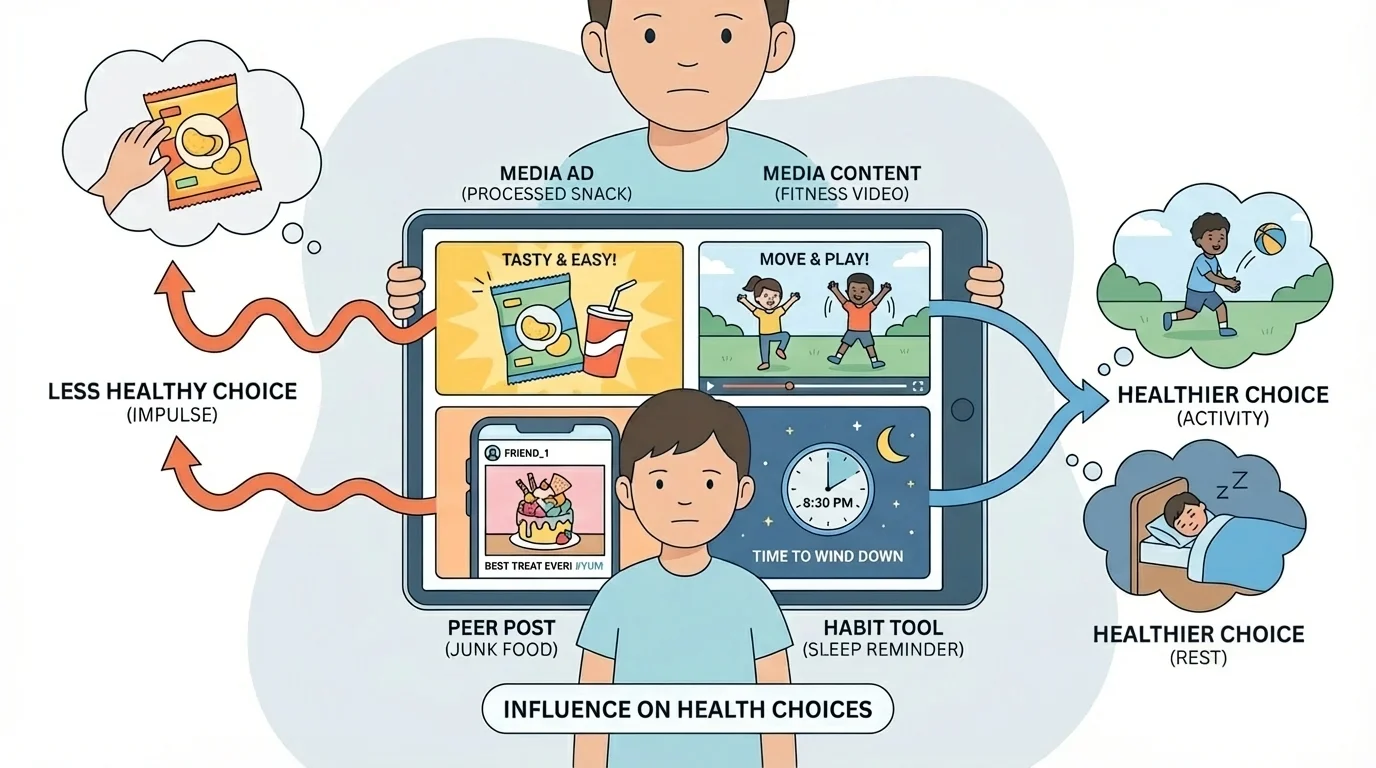
Media can also affect how you feel about your body. Photos and videos are often edited, filtered, or carefully posed. If you compare your real life to someone else's polished post, you may feel unhappy with yourself even when nothing is actually wrong. That can lead to unhealthy choices, like skipping meals, overthinking your appearance, or believing you must look a certain way to be accepted.
A smart way to handle media is to ask a few questions: Who made this? Why did they make it? Are they teaching, entertaining, or selling? Is the message safe, balanced, and true? If a video tells you to try something extreme, painful, or secret, that is a sign to stop and check with a trusted adult.
Many ads are designed to connect a product with fun, popularity, or success. That means the message is often more about feelings than facts.
You do not need to fear media. You need to use it wisely. Choose creators and channels that share reliable, kind, and safe messages. If something makes you feel pressured, ashamed, or tempted to do something risky, that is a clue to unfollow, scroll away, or ask questions.
The people around you also matter, as illustrated in [Figure 2]. Peer pressure happens when someone your age, or a group, pushes you toward a choice. That pressure can be direct, like "Come on, do it," or indirect, like everyone in a group chat acting as if something unhealthy is normal. People around you can push choices in helpful or harmful directions.
Not all peer pressure is bad. Friends can have a positive influence too. A friend might invite you to go for a walk, remind you to wear protective gear, encourage you to sleep earlier before an important day, or support you when you choose not to join a risky challenge. Positive pressure helps you make choices that protect your health.
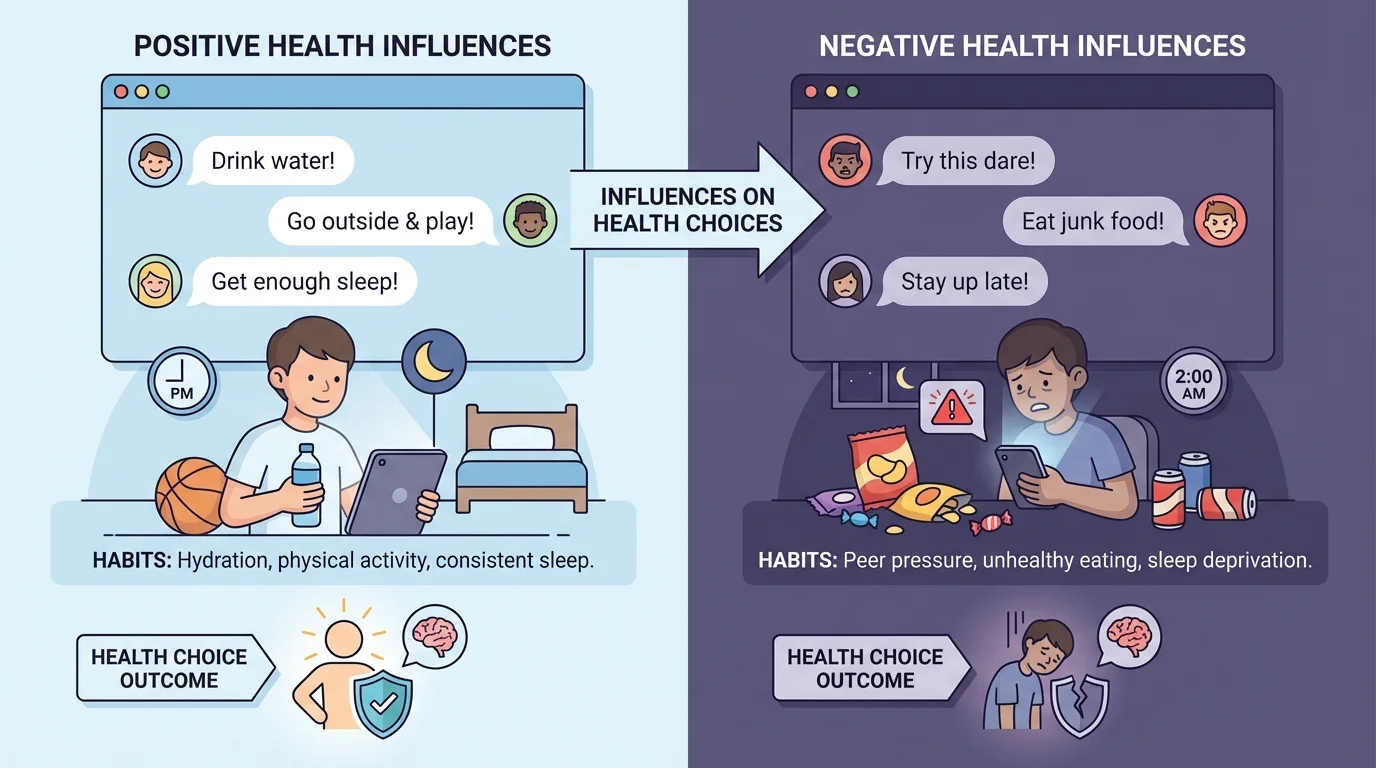
Sometimes you may go along with others because you want to belong. That is a normal human feeling. Most people want to be included. But belonging should not cost you your safety, sleep, comfort, or well-being. If people laugh at healthy choices, dare you to do something unsafe, or push you to hide something from an adult, that is not real support.
Adults can influence you too. Family members, coaches, leaders, doctors, and online creators may shape what you think is normal. Some adults model healthy choices, like eating balanced meals, limiting screen time before bed, and speaking calmly when upset. Other adults may have habits that are not healthy. You can learn from both kinds of examples by asking, "What happens because of this choice?"
One strong skill is learning how to say no. You do not need a long speech. You can say, "No thanks," "I'm not doing that," "That seems unsafe," or "I'm logging off now." Then leave the chat, switch the topic, or contact a trusted adult if needed. The more you practice, the easier it gets.
Real-life example: handling pressure in a group chat
A group chat starts sharing a challenge to stay awake as late as possible and post proof.
Step 1: Pause instead of answering right away.
Quick replies can pull you into choices you would not make if you stopped to think.
Step 2: Check the health effect.
Losing sleep can hurt your mood, focus, and energy the next day.
Step 3: Use a simple response.
You might type, "I'm going to sleep. I want to feel good tomorrow."
Step 4: Protect yourself.
Mute the chat, put the device away, and tell an adult if the pressure keeps going.
Choosing your relationships carefully matters. Spend more time with people who respect your limits, tell the truth, and make healthy choices feel normal.
A habit is an action you do so often that your brain starts to repeat it with less thinking. Habits are powerful because they can make healthy choices easier or make unhealthy choices feel automatic.
Many habits start with a cue, as shown in [Figure 3]. A cue is something that triggers the action. For example, boredom may lead to snacking. Seeing your toothbrush after breakfast may lead to brushing your teeth. Feeling stressed may lead someone to scroll on a device for a long time. After the action comes a reward, such as tasting something enjoyable, feeling relaxed, or hearing praise. When the brain likes the reward, it wants to repeat the routine.
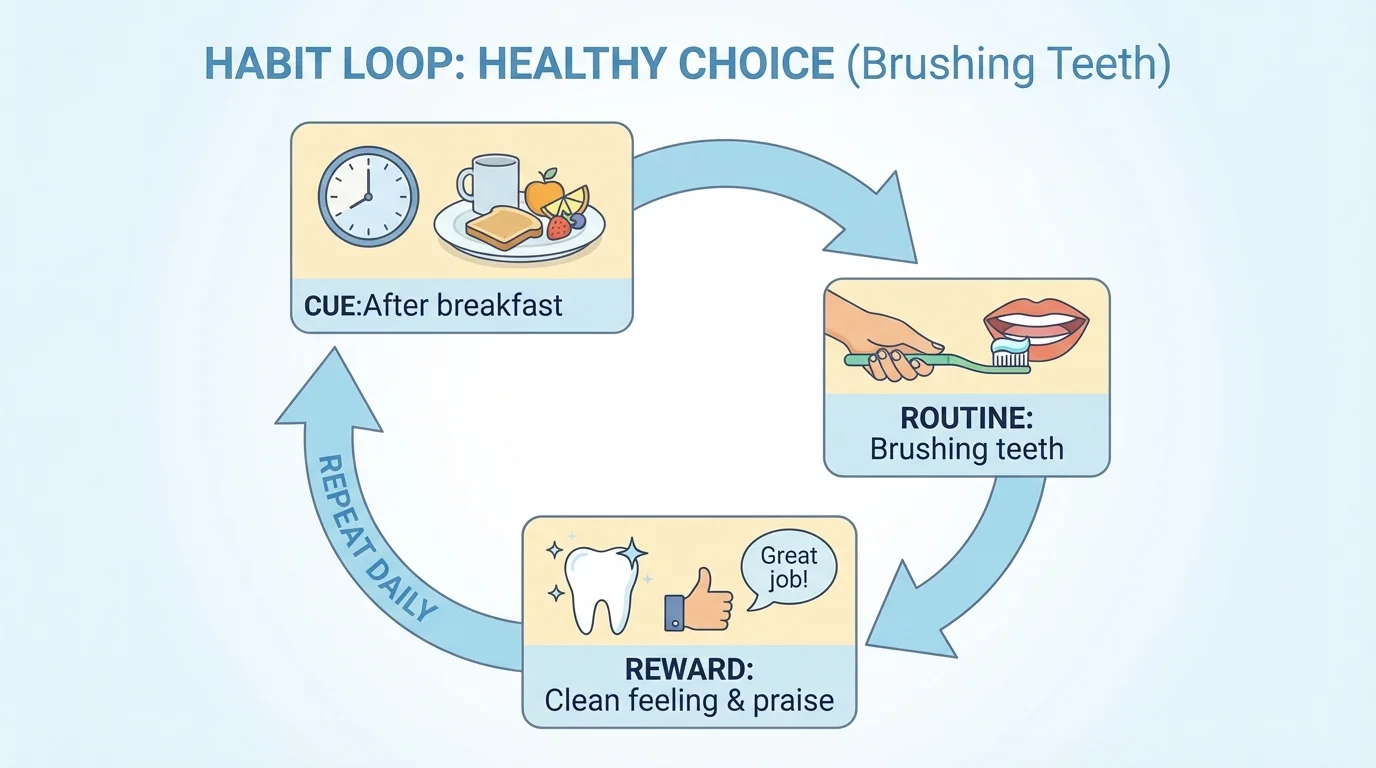
This pattern is sometimes called a habit loop: cue, action, reward. Healthy habits include washing hands, drinking water, moving your body daily, getting enough sleep, wearing sunscreen when needed, and taking breaks from screens. Unhealthy habits can include skipping breakfast, staying up too late, doom-scrolling, or choosing sweets every time you feel upset.
The good news is that habits can change. You do not always have to use a lot of willpower. Often, it helps to change the cue or swap the routine. If you always grab a sugary snack while watching videos, put a water bottle nearby first. If you forget to brush your teeth at night, place your toothbrush where you will see it. If you stay up too late because your device is near your bed, charge it in another room or ask an adult to help set a device bedtime.
Small repeated choices matter a lot. If you choose one extra glass of water each day, that can become normal. If you go to sleep just a little earlier each night, your body can feel better over time. Healthy habits are not about being perfect. They are about making the healthy choice the easy choice.
Why habits feel strong
Your brain likes to save energy. When you repeat an action many times, your brain starts to treat it like a shortcut. That is helpful when the habit is healthy, but it can be a problem when the habit hurts you. Changing a habit works best when you make the new action simple, clear, and easy to repeat.
The habit loop in [Figure 3] also explains why reminders work. A note on the fridge, a filled water bottle on your desk, or a bedtime alarm can act as cues that guide you toward a healthy routine before an unhealthy one takes over.
When media, people, or habits pull on you, a quick pause-and-check system can help before you copy a trend or say yes. You do not need a complicated plan. You need a few clear questions.
Use this check:
Step 1: Pause. Slow down for a moment. Fast choices can become risky choices.
Step 2: Ask if it is safe. Could this hurt your body, sleep, feelings, or privacy?
Step 3: Ask if it is true. Is this advice from a reliable source, or just something popular online?
Step 4: Think about later. How will you feel in an hour, tomorrow, or next week?
Step 5: Ask whether you would hide it. If you would be nervous to tell a trusted adult, that is an important warning sign.
Step 6: Choose, leave, or ask for help. Healthy choices become easier when you know these are your options.
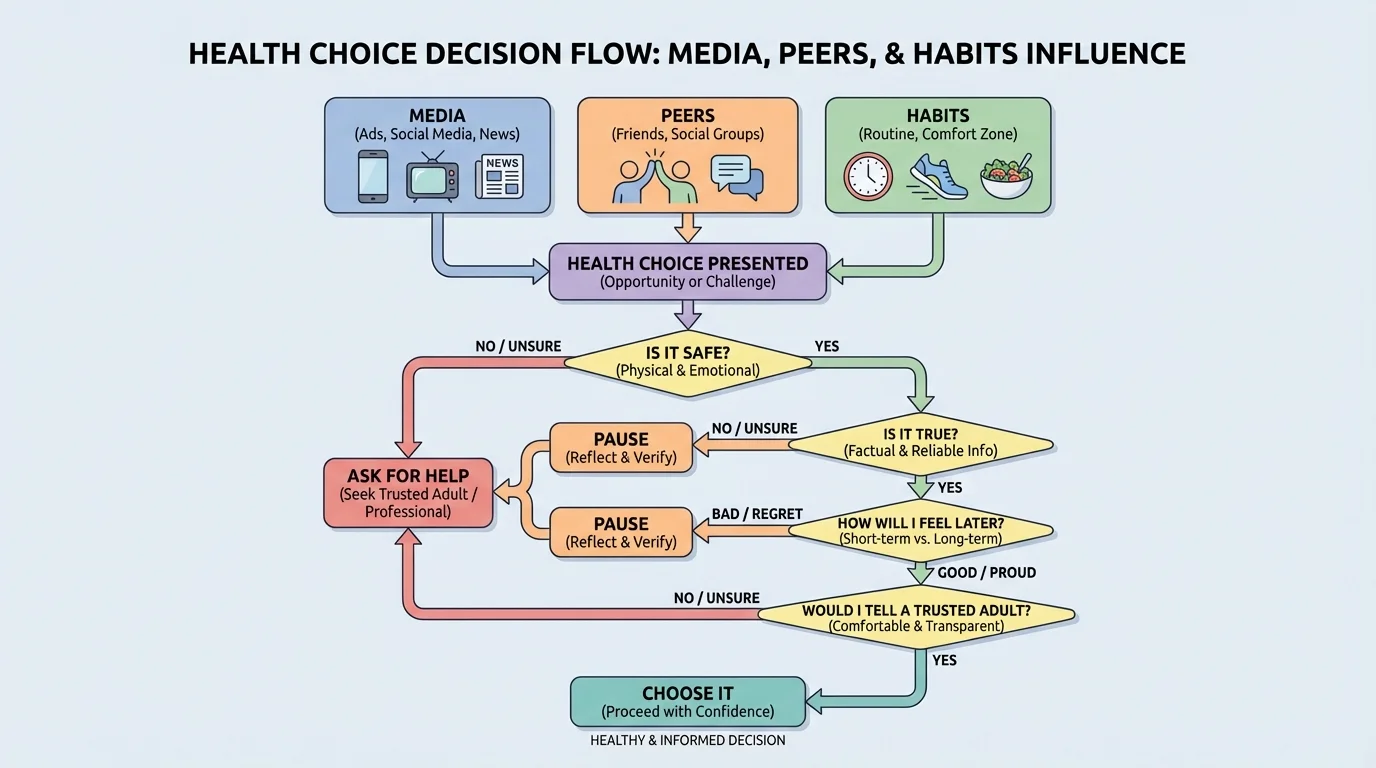
This check is especially useful for trends, products, food claims, and dares. Something can be popular and still be unsafe. Something can look fun and still be harmful. Popularity is not proof.
| Question | If the answer is yes | If the answer is no |
|---|---|---|
| Is it safe? | You may keep checking | Stop and do not do it |
| Is it true? | Look for trusted sources | Do not trust it yet |
| Will I feel okay later? | The choice may be healthy | Rethink the choice |
| Would I tell a trusted adult? | That is a good sign | Pause and ask for help |
Table 1. A simple decision check for health choices.
The questions in this quick check can be used in just a few seconds. The goal is not to overthink every little choice. The goal is to catch the important ones before they turn into problems.
Let's connect these ideas to situations you might actually face at home, online, or in your community.
Situation 1: A video says a certain snack is "healthy" because it is trendy. Media can make foods look better than they are. Check the message. Is it balanced, or is it selling something? Ask a trusted adult, read reliable information, and pay attention to how the food makes your body feel. A healthy choice is not based only on promotion or popularity.
Situation 2: Your friends want to keep chatting late into the night. This is where peers and habits can team up. If you keep doing it, staying up late becomes normal. But your body needs sleep to grow, focus, and manage emotions. Use a clear message, leave the chat, and make an evening routine that supports bedtime.
Situation 3: You always grab sweets when you are bored. That does not mean you are weak. It may mean you have a habit loop. Change the cue or the routine. Prepare a different snack, drink water first, or choose an activity that helps with boredom, like drawing, stretching, reading, or going outside for a few minutes.
Situation 4: A creator promotes a product for changing your body fast. Be careful. Pressure from media about body image, as shown in [Figure 1], can push people toward unhealthy choices. Healthy bodies come in different shapes and sizes. Fast fixes and extreme promises are warning signs.
Situation 5: Someone dares you to do something that feels wrong. The peer pressure example in [Figure 2] reminds you that belonging should not require risk. Say no, leave, and tell an adult if the situation seems unsafe or keeps happening.
Situation 6: You forget basic self-care when you get busy. This is where routines help. The habit loop from [Figure 3] works best when you connect a new habit to something you already do. For example, after breakfast, brush your teeth. After playing outside, wash your hands. After dinner, fill your water bottle for the next day.
Try This: build one healthier habit
Step 1: Pick one small goal.
Examples: drink more water, go to bed earlier, stretch once a day, or wash your hands before meals.
Step 2: Choose a cue.
Attach the habit to something you already do, like breakfast or brushing your teeth.
Step 3: Make it easy.
Put the water bottle where you can see it or lay out what you need ahead of time.
Step 4: Notice the reward.
Pay attention to the clean, calm, or energized feeling that comes after the healthy action.
Step 5: Repeat.
Small actions become powerful when you do them often.
When something goes wrong, avoid saying, "I failed." Instead say, "I'm learning what influences me." That mindset helps you restart instead of giving up.
You can shape your environment so healthy choices become easier. Follow creators who share honest, safe, encouraging messages. Spend time with people who respect your boundaries. Ask adults for facts when you are unsure. Keep helpful items easy to reach, like water, toothbrushes, helmets, and healthy snacks. Put limits around things that pull you away from health, like late-night screen use or unsafe trends.
A trusted adult is an important part of your healthy influence team. This could be a parent, guardian, older relative, doctor, coach, counselor, or community leader. Asking for help is not a weakness. It is a smart health skill. If media makes you feel bad about yourself, if peers pressure you, or if a habit feels hard to change, tell someone who can support you.
"A strong choice is not just what feels good now. It is what helps you stay healthy later."
You are not expected to make every choice perfectly. You are learning. The goal is to notice influence, think clearly, and choose what protects your body, mind, and safety. Every time you pause, question, and choose wisely, you build a stronger, healthier life.
