Have you ever noticed that some parts of your day happen again and again? You wake up, get dressed, eat, brush your teeth, and get ready for the day. When you do these things in the same order, they become a routine. A routine helps your body and brain know what comes next.
A routine is a set of simple steps you do often. Routines help you feel ready, calm, and proud. When you follow a routine, you are more likely to remember your shoes, wash your hands before eating, and brush your teeth well. When routines are skipped, you may feel rushed, messy, or uncomfortable.
Think about a morning with no routine. You might forget socks, miss breakfast, or start your day with unbrushed teeth. Now think about a morning with a routine. You know what to do first, next, and last. That saves time and helps you take care of yourself.
Routine means a group of steps you do in the same order again and again. Daily care means the things you do to keep your body clean, healthy, and comfortable.
You do not have to do everything perfectly. The goal is to practice simple habits until they feel easy.
Food routines help you get ready to eat and clean up when you are done. A simple routine for meals follows the same order each time: wash hands, sit safely, eat, and clean up.
[Figure 1] Before you eat, wash your hands with soap and water. Rub the soap on the front of your hands, the backs of your hands, between your fingers, and around your thumbs. Then rinse and dry your hands. Clean hands help keep germs away from your food.
When it is time to eat, sit in a safe place. Use a plate, bowl, cup, or napkin if needed. Take bites that are not too big. Chew before you talk. Drink carefully so you do not spill.
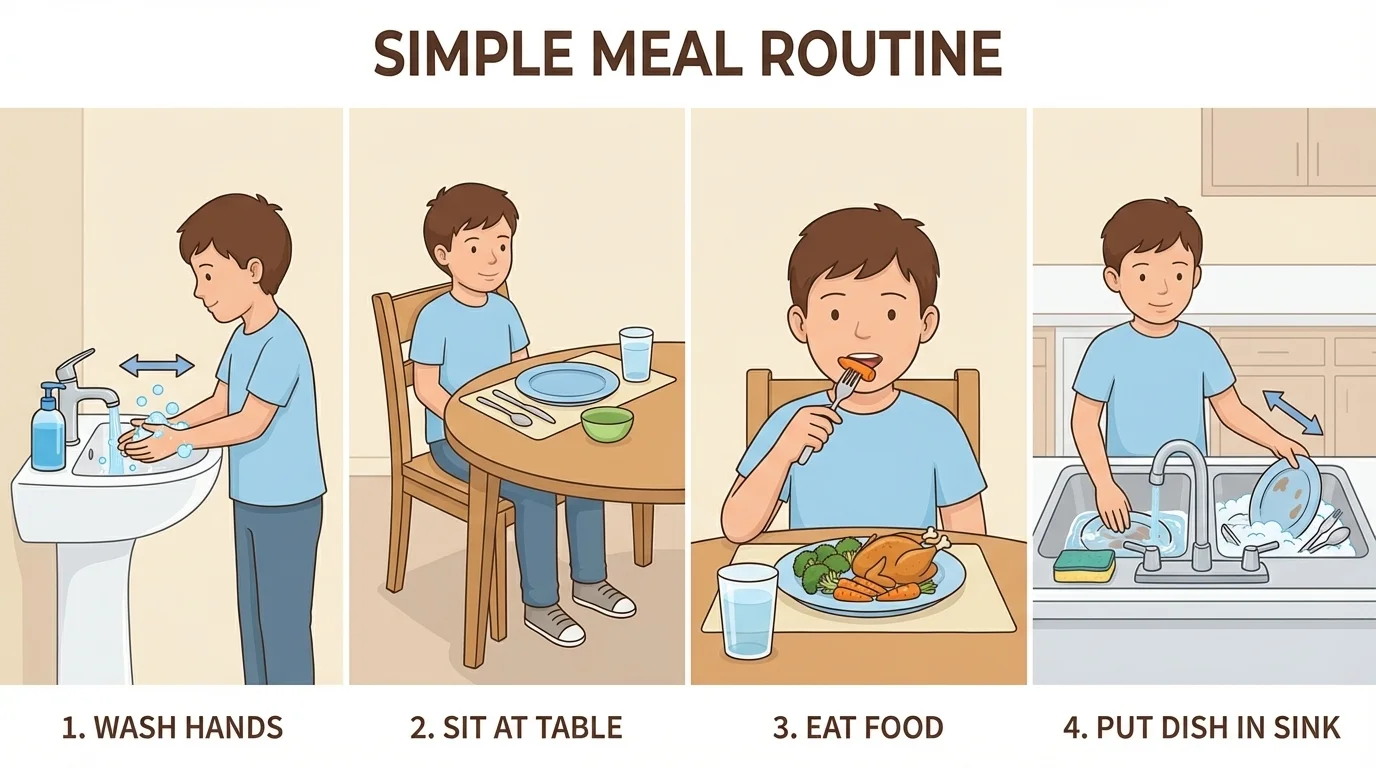
After you eat, your job is not over. A good food routine includes cleaning up. You can throw away trash, put your dish in the sink, wipe the table with help, and push in your chair. These steps keep your space neat and ready for the next meal.
A food routine also includes making simple healthy choices. Try to eat foods from different groups, like fruit, vegetables, grains, and protein. You do not need to make big decisions alone. Someone can help you choose if needed. Your job is to practice good habits like trying a bite, drinking water, and listening to your body when you feel full.
Example: A simple snack routine
Step 1: Wash your hands.
Step 2: Sit down with your snack and drink.
Step 3: Eat carefully and use a napkin if needed.
Step 4: Throw away trash and put dishes away.
This helps you stay clean, safe, and responsible.
Later in the day, the same idea still works. The meal order in [Figure 1] reminds you that washing and cleaning up are part of eating, not extra jobs.
Try This: Before your next meal, say the steps quietly to yourself: wash, sit, eat, clean.
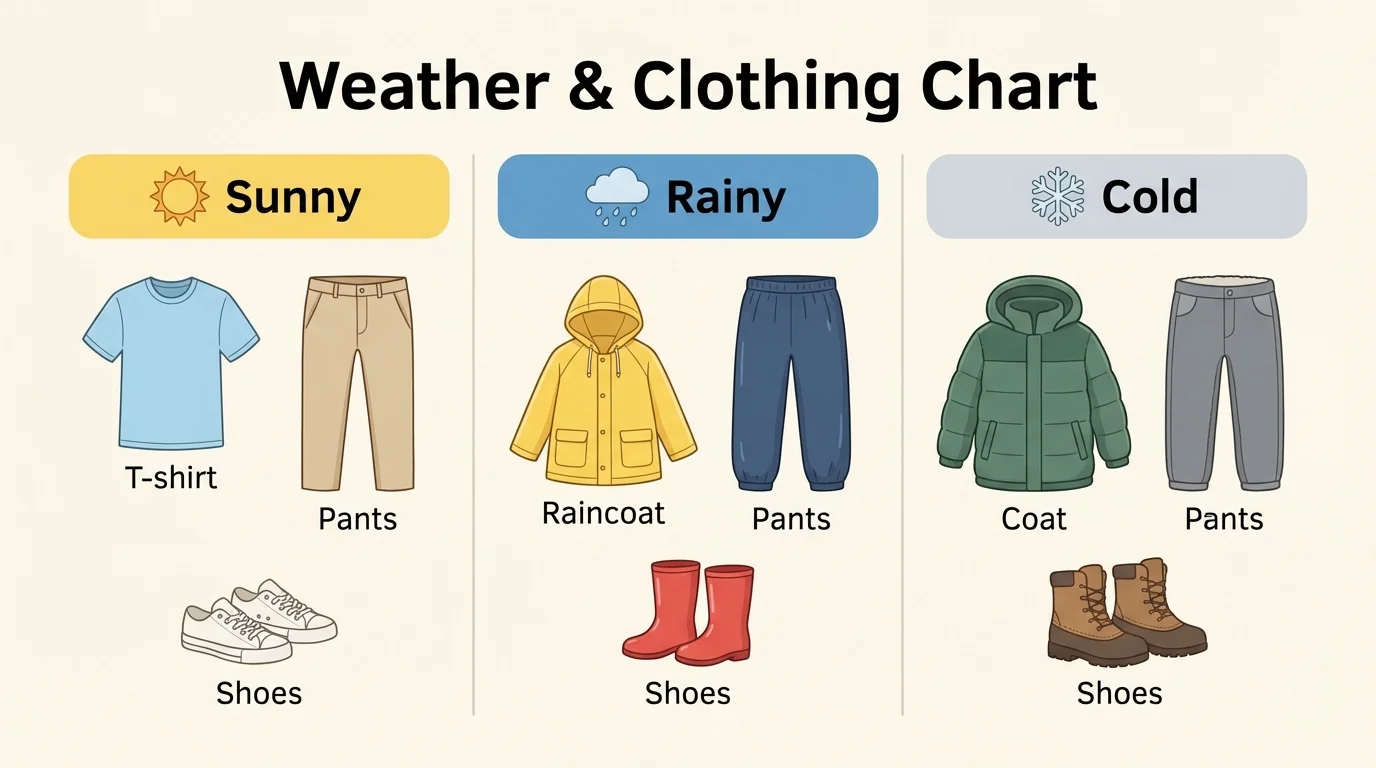
[Figure 2] Your clothing routine helps you get dressed for comfort, safety, and weather. A simple weather check helps you choose what to wear, and the chart illustrates how sunny, rainy, and cold days need different clothes.
Start by asking, "Is it warm, cool, rainy, or cold?" If it is cold, you may need a coat. If it is rainy, you may need rain boots or a raincoat. If it is warm, lighter clothes may feel better. Choosing the right clothes helps your body stay comfortable.
It also helps to get dressed in an order. First put on underwear if you wear it. Next put on your shirt and bottoms, like pants or shorts. Then add socks. Last, put on shoes. If you need a coat, hat, or sweater, put those on near the end.
Clothing routines include what happens after you change clothes, too. Dirty clothes go in a hamper or laundry basket. Clean clothes can be folded, hung up, or placed in a drawer. Shoes belong in one spot, not in the middle of the floor.
When your clothes are in the right places, it is easier to find them next time. That means less searching and more independence.
Clothes match the job
You wear clothes for more than style. Clothes help protect your body, keep you warm or cool, and help you move safely. Sneakers may be better for playing than slippery shoes. A coat helps on a cold day. Pajamas help your body know it is time for sleep.
If you forget what to wear, look around and ask an adult for a clue. You can check outside from a window, or ask, "Do I need a coat today?" The clothing choices in [Figure 2] remind you that different days need different clothes.
Try This: Put tomorrow's clothes in one spot before bedtime.
[Figure 3] Daily care keeps your body clean and comfortable. Many people do the same care steps each morning and night, and the figure shows a helpful order: brush teeth, wash face, comb hair, and use a tissue when needed.
Brushing your teeth is an important daily care habit. Put toothpaste on your toothbrush with help if needed. Brush the front, back, and top of your teeth. Spit into the sink and rinse if that is part of your routine. Clean teeth help your mouth stay healthy.
Washing your face can help you feel fresh. Use water and a clean cloth if needed. If your hands are dirty, wash them with soap and water. If your nose is runny, use a tissue. Then throw the tissue away and wash your hands again.
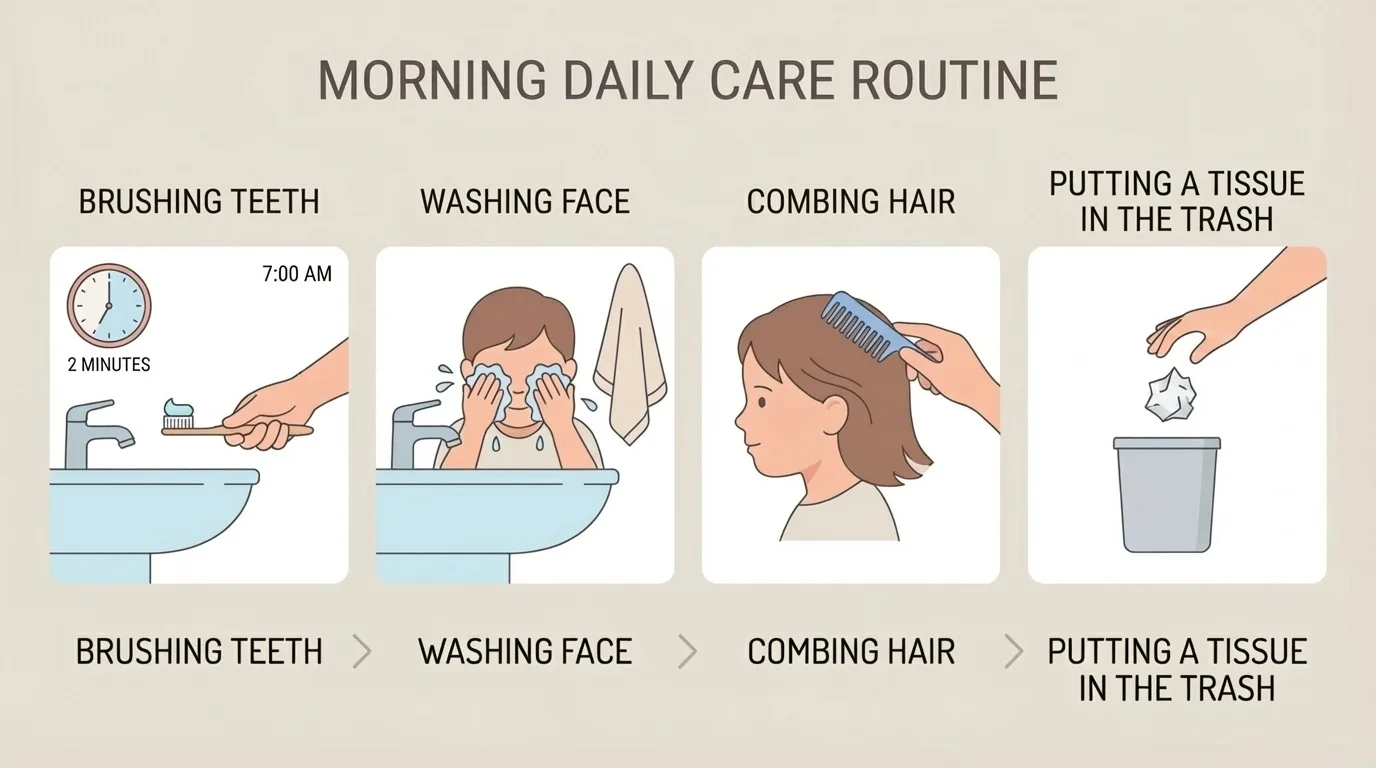
Hair care is part of daily care, too. You can use a comb or brush to fix tangles and keep hair neat. Some children need help from an adult. That is okay. Practicing still helps you learn.
Baths or showers are also daily care, even if they do not happen at the exact same time every day. Use soap and water with adult help as needed. Put on clean clothes after your bath or shower. This helps you feel comfortable and clean.
Your teeth need care every day because food can stay on them even when your mouth feels fine. Brushing helps remove that food and keeps your mouth healthier.
At night, daily care helps your body get ready for rest. Pajamas, tooth brushing, and hand washing send your body a calm message: bedtime is coming. The order in [Figure 3] can help you remember that body care happens one step at a time.
Try This: Put your toothbrush, comb, and tissues in the same place so they are easy to find.
Now you can put these routines together. In the morning, you might wake up, use the bathroom, wash your face, brush your teeth, get dressed, and eat breakfast. At night, you might put dirty clothes away, put on pajamas, brush your teeth, wash your hands, and get ready for bed.
When you do your steps in the same order every day, your routine becomes easier to remember. You do not need to rush. You only need to do one step, then the next step.
Example: A morning routine you can follow
Step 1: Get out of bed and use the bathroom.
Step 2: Wash your face and hands.
Step 3: Brush your teeth and comb your hair.
Step 4: Put on your clothes and socks.
Step 5: Eat breakfast and clean up.
This routine helps you begin the day feeling ready.
You can even use simple words to remember your routine: wash, brush, dress, eat. Short words are easier to keep in your mind.
Everybody forgets sometimes. You might forget to wash your hands, leave your socks on the floor, or skip brushing your hair. Forgetting does not mean you failed. It means you should stop, go back, and do the missing step.
If you feel mixed up, stay calm. Ask yourself, "What comes next?" If you still do not know, ask someone for help. You can say, "I forgot my next step. Can you help me remember?" That is a smart choice.
"One small step at a time can make a big habit."
Practicing simple routines helps you care for your food, clothes, and body every day. Each little step matters. Small habits help you grow stronger, cleaner, and more independent.
