Have you noticed how many people help your day go well? When you wake up, eat food, learn online, get mail, or ride in a car, many workers are helping. A job is work a person does to help others and earn money. Some jobs help you learn. Some jobs help keep people safe, healthy, clean, and fed.
People have different jobs because communities need many kinds of help. One person may teach. Another person may fix things. Another person may grow food. No one job does everything. When workers do their jobs well, life feels easier. When jobs are not done, people may feel confused, hungry, sick, or unsafe.
Community means the people who live and work near you and help one another. Worker means a person who does a job. Tool means an object a worker uses to do a job.
You can start noticing jobs all around you. The person bringing a package, the person helping at a store, and the person checking your health all have important work to do. Even if you do not see every worker, their jobs still help your life.
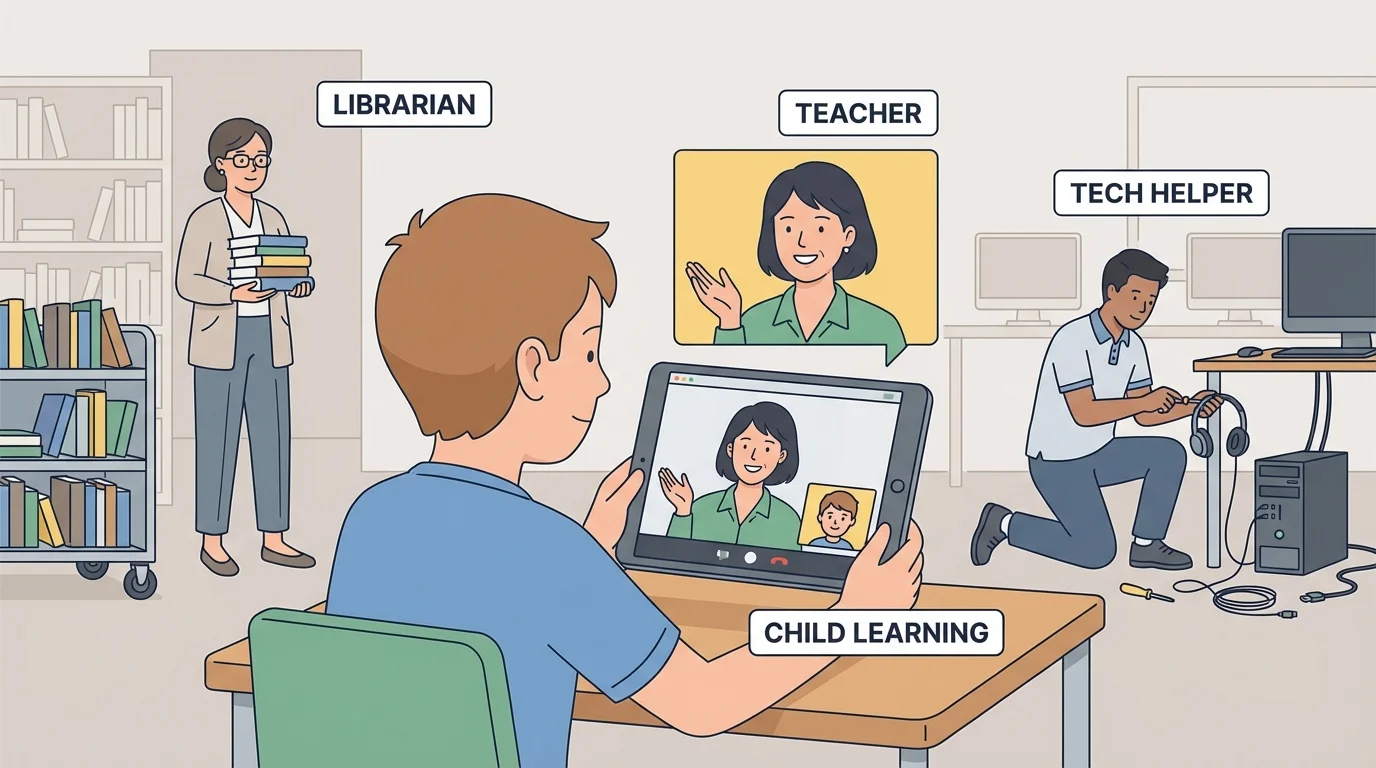
Learning from home still means many people help you. In online school, as [Figure 1] shows, different helpers make learning work in different ways. A teacher talks with you, explains ideas, and helps you practice. A tutor may give extra help. A librarian helps people find books and stories. A technology helper fixes problems with devices, sound, or internet tools.
Your teacher might speak to you in a live video lesson or send directions online. A librarian may help your family choose books from a library. A technology helper may show how to reconnect headphones or open the right app. These jobs all support learning.
When these helpers do their jobs well, you can hear directions, see your lesson, and enjoy stories and activities. If the sound is not working and no one helps fix it, learning can stop for a while. That is why these jobs matter.
You can help these workers too. Listen carefully. Use kind words. Wait your turn to speak on a video call. Put books back where they belong. Tell a grown-up if your device is not working. These small actions make learning smoother for everyone.
Real-life example: getting ready for online learning
Step 1: Find your learning tool.
Get your tablet, computer, or headphones.
Step 2: Ask who helps.
You might say, "My teacher helps me learn," or "A tech helper fixes the sound."
Step 3: Show respect.
Use a calm voice, listen, and say "thank you."
As you saw in [Figure 1], school help does not have to happen in one building. People can still teach, guide, and support you through screens, books, and messages.
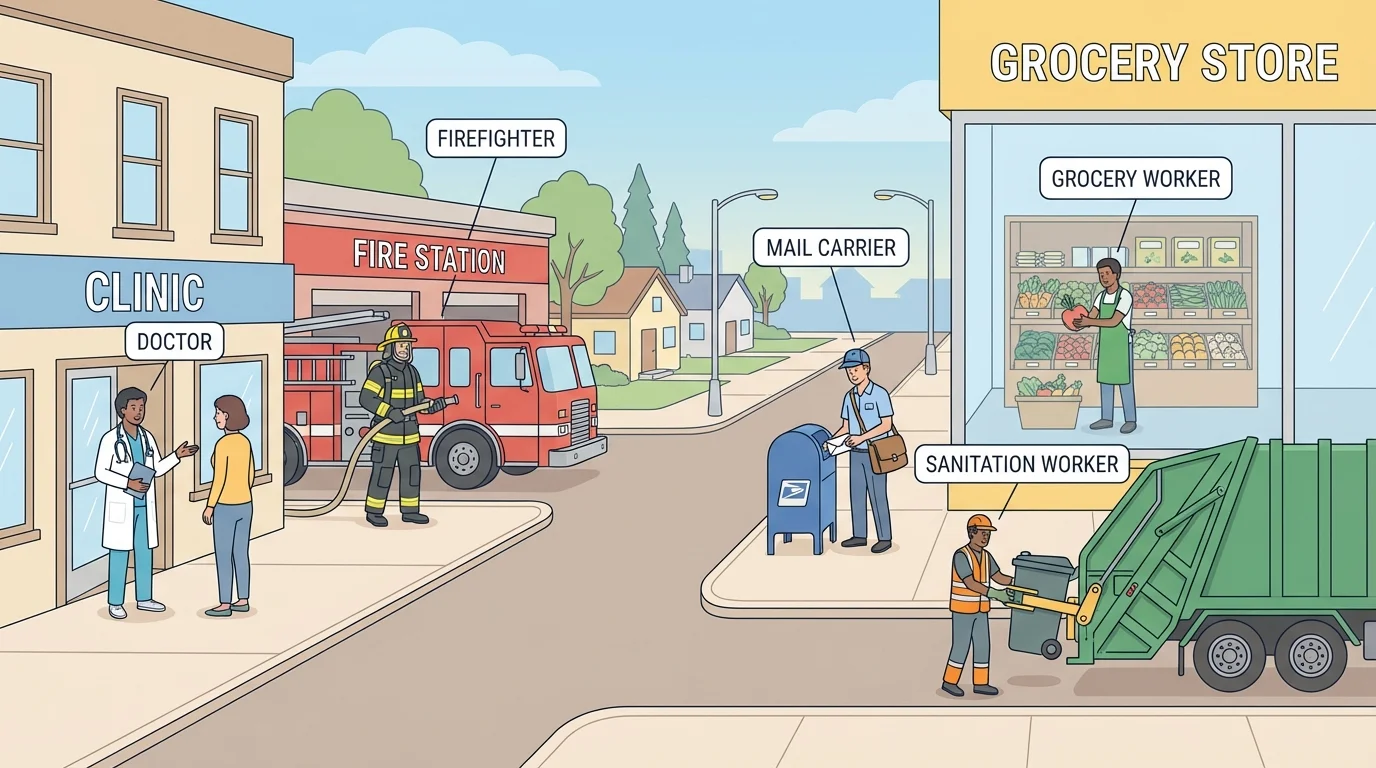
Many community workers help every day, as [Figure 2] illustrates in one busy neighborhood. A community helper is a worker who helps people in the places where they live. These jobs keep people safe, healthy, clean, and cared for.
A doctor or nurse helps people when they are sick or hurt. A firefighter helps in emergencies and works to keep people safe. A police officer helps protect people and respond to problems. A mail carrier brings letters and packages. A grocery worker puts food on shelves and helps families buy what they need.
Some workers help in ways you may not always notice right away. A farmer grows food. A builder makes homes and other buildings. A sanitation worker takes away trash so places stay cleaner. A bus driver or train driver helps people travel. All of these jobs are important.
If these workers do their jobs well, your food can arrive, trash can be picked up, and people can get help in emergencies. If these jobs are not done, the community has bigger problems. That is why every helpful job matters.
| Worker | What the worker does | How it helps you |
|---|---|---|
| Doctor | Checks health | Helps you feel better |
| Firefighter | Helps in emergencies | Keeps people safer |
| Mail carrier | Delivers mail | Brings letters and packages |
| Grocery worker | Stocks and sells food | Helps families buy meals |
| Sanitation worker | Collects trash | Helps keep places clean |
Table 1. Examples of community workers, what they do, and how their jobs help people.
Later, when you see neighborhood workers again, remember the busy scene in [Figure 2]. It shows that many different jobs can happen in the same place, and each one helps in a special way.
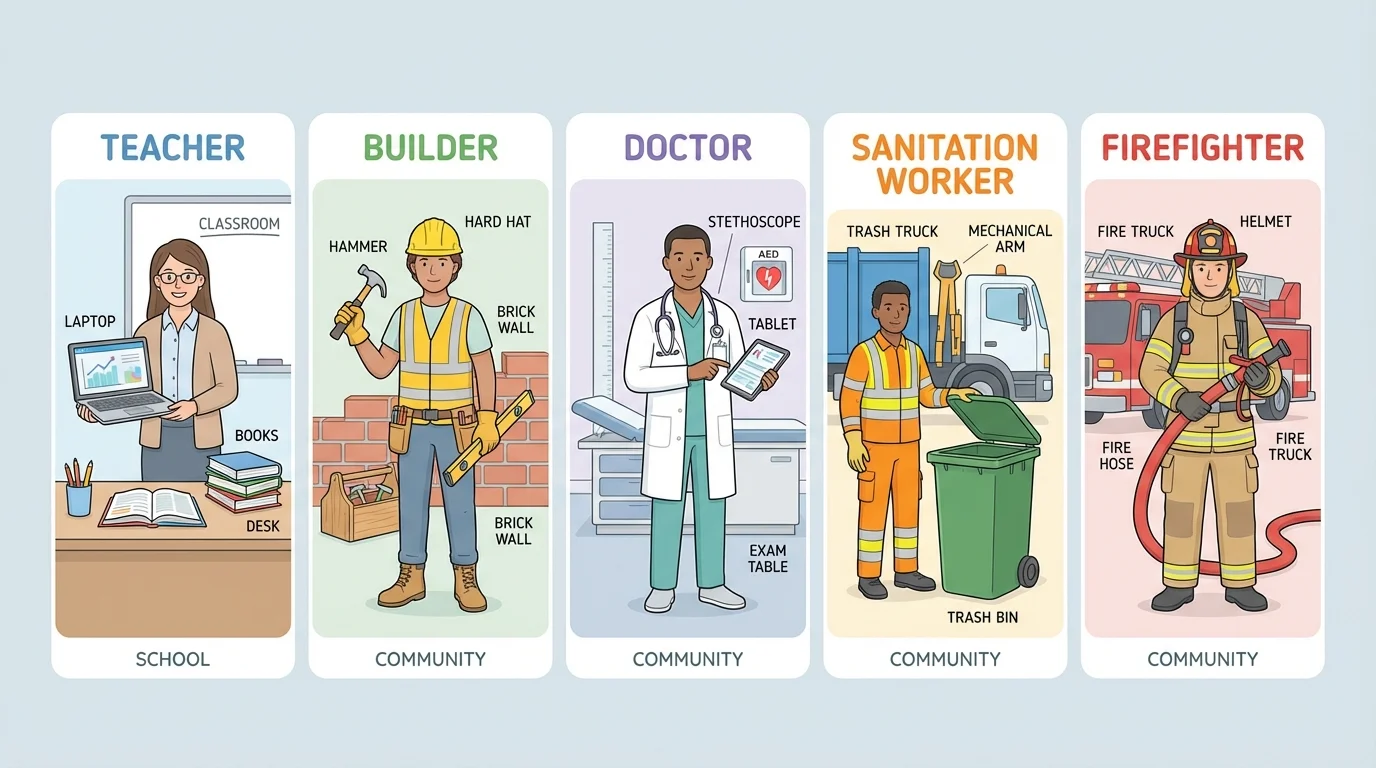
Workers use tools and skills to do their jobs, as [Figure 3] shows. A teacher may use books, a computer, or a whiteboard. A doctor may use a stethoscope. A builder may use a hammer and wear a hard hat. A sanitation worker may use a big truck. A firefighter may use a hose and safety gear.
Workers also need skills. Skills are things people learn to do well. A teacher needs to explain clearly. A doctor needs to listen and care. A builder needs to measure and fix. A grocery worker needs to organize items. A mail carrier needs to know where to go.
You already practice some job skills now. You can listen, follow directions, put things away, share, and ask for help. These are important skills for many future jobs.
Many grown-ups use more than one skill at the same time. A worker may need to listen, speak kindly, solve a problem, and use tools all in one day.
When you look back at [Figure 3], you can match each worker to a tool. This helps you see that jobs are not all the same. Different work needs different objects and different kinds of practice.
You do not need to be a grown-up to start building respect for workers. You can look, listen, and say kind words. If a delivery person brings a package, you can wave. If a librarian helps find a book, you can say "thank you." If a grocery worker is stocking food, you can give space and use a calm voice.
Try This: The next time you go somewhere with a grown-up, name one worker you see and say what that person is doing. You might say, "The mail carrier is bringing letters," or "The doctor is helping people feel better."
Try This: During your online learning day, notice one person helping your school work. It might be your teacher, a family member, or a technology helper. Say one thankful sentence.
Why respect matters
When you notice workers and treat them kindly, you build good habits. Respect helps communities feel safer and friendlier. It also reminds you that all helpful work has value.
A simple thank-you can make a person feel seen. Ignoring helpers or being rude can make work harder for them. Kindness is a real skill you can practice every day.
You do not have to choose a future job now, but you can start wondering. Maybe you like helping people. Maybe you like animals, books, building, cooking, fixing, drawing, or driving. The things you enjoy may connect to jobs later.
Try This: Tell a grown-up one job you think looks interesting. Then say why. You might say, "I like the firefighter job because helping people is important," or "I like the librarian job because I love books."
As you grow, you will learn more skills. You may practice speaking, cleaning up, caring for others, using tools safely, and solving problems. Those skills can help with many jobs in the future.
"Helping work is important work."
Every job does not look the same, but many jobs share one big idea: people use their work to help other people. When you notice jobs at school and in the community, you begin to understand how the world works around you.
