Who decides if a town gets a new playground, safer crosswalks, cleaner parks, or a better library? In many communities, the answer is people do, by choosing leaders in elections. Elections are one of the most important ways citizens help shape the places where they live. When people vote, they help choose specific people to speak for them and make decisions for the whole community.
Local government is the part of government that works closest to the people. It helps take care of community needs near home. Local government may help with parks, roads, libraries, schools, police, firefighters, trash collection, and other services. In a city, town, or county, local leaders make rules and decisions about these everyday needs.
[Figure 1] Because local government is nearby, its decisions can affect students and families every day. If a road has big potholes, if a park needs new swings, or if a school crossing needs a guard, local leaders may be the people who help solve those problems.
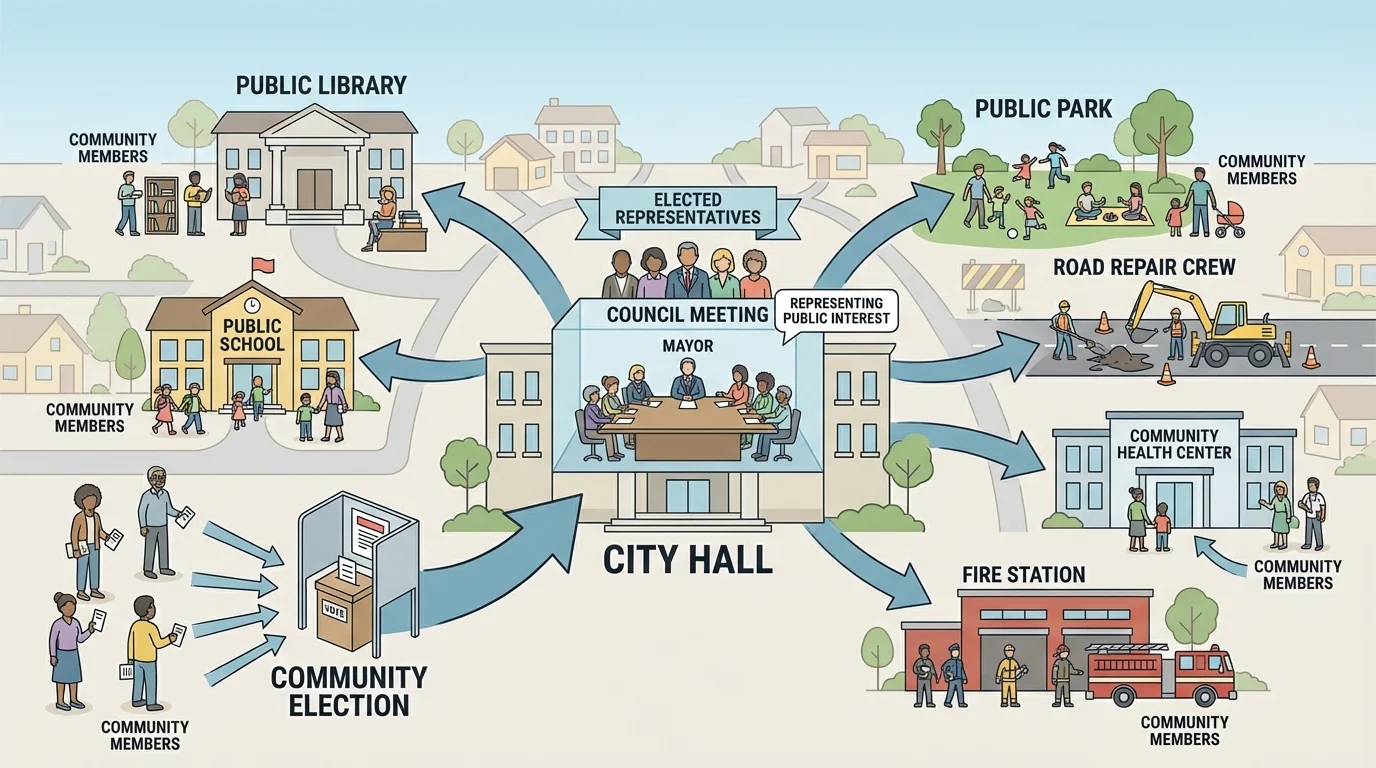
Local government has different representatives and officials. Some are elected by voters, and some are hired for special jobs. Elected leaders are chosen by the people. This gives citizens a voice in deciding who should help lead the community.
An election is a process in which people vote to choose leaders.
A candidate is a person who wants to be elected to public office.
The public interest is what is good for the whole community, not just one person or one small group.
When people choose leaders through elections, they are not just picking a name. They are choosing someone they hope will listen, think carefully, and make fair decisions for everyone.
An election is a way for people to choose leaders by voting. In local government, elections help decide who will fill important jobs in a town, city, or county. The person who wants the job is a candidate. The people who are allowed to vote are called voters.
Voters usually mark their choices on a ballot. A ballot is the paper or digital form used to vote. After voting ends, election workers count the votes. The candidate with the most votes often wins, depending on the rules in that place.
Elections are important because they let people take part in government. Instead of one person choosing all the leaders, many citizens share in the decision. This makes local government more connected to the people it serves.
Some communities vote for leaders of school boards, city councils, or mayors. These leaders make decisions that can affect students' schools, buses, sports fields, and libraries.
Even though third graders are usually too young to vote, they still live with the results of local elections. That is why learning about elections helps students understand how communities work.
A representative is a person chosen to speak and act for other people in government. In local government, elected representatives are supposed to listen to the people in their community and make decisions that help the community.
This is where the idea of the public interest matters. A good local representative should think about what helps the whole town, city, or county. That does not mean every person gets exactly what they want every time. It means leaders should try to be fair and think about the needs of many people.
For example, suppose one group wants all town money spent on one sports field, but many neighborhoods need safer sidewalks, better streetlights, and cleaner parks. A leader serving the public interest would need to think about the needs of the whole community, not only one group.
Elections give people a chance to choose candidates they believe will represent them well. If voters think a candidate is honest, responsible, and cares about the community, they may vote for that person. If they think another candidate does not listen or is unfair, they may choose someone else.
Different communities elect different local officials. One common job is the mayor, who helps lead a city or town. Another is the city council member, who helps make local laws and decisions. Some places elect school board members, who make decisions about public schools. Other communities may elect county leaders or sheriffs.
Each elected office has its own duties. A mayor may help plan city projects. A city council may decide on rules about parks, roads, or public safety. A school board may help decide about school buildings, supplies, and policies.
| Local role | What the person may help decide |
|---|---|
| Mayor | City leadership, community projects, public services |
| City council member | Local laws, spending, roads, parks, safety |
| School board member | School policies, buildings, student resources |
| County official | Services for larger areas outside or around towns and cities |
Table 1. Examples of elected local government roles and the kinds of decisions they may make.
When voters choose people for these jobs, they are choosing who will help guide important parts of community life. That is why elections are serious and important.
Local elections follow a process, and [Figure 2] shows the main steps from the start of a campaign to the final vote count. First, a person decides to run for office and becomes a candidate. Next, the candidate tells people about ideas and goals. This is called a campaign.
During a campaign, candidates may give speeches, visit neighborhoods, answer questions, or share plans in flyers, signs, or debates. Voters learn about the candidates so they can make a good choice.
Then comes voting. On election day, or sometimes before election day, voters cast ballots for the candidates they choose. After voting ends, the ballots are counted carefully. The winner is announced after the count is complete.
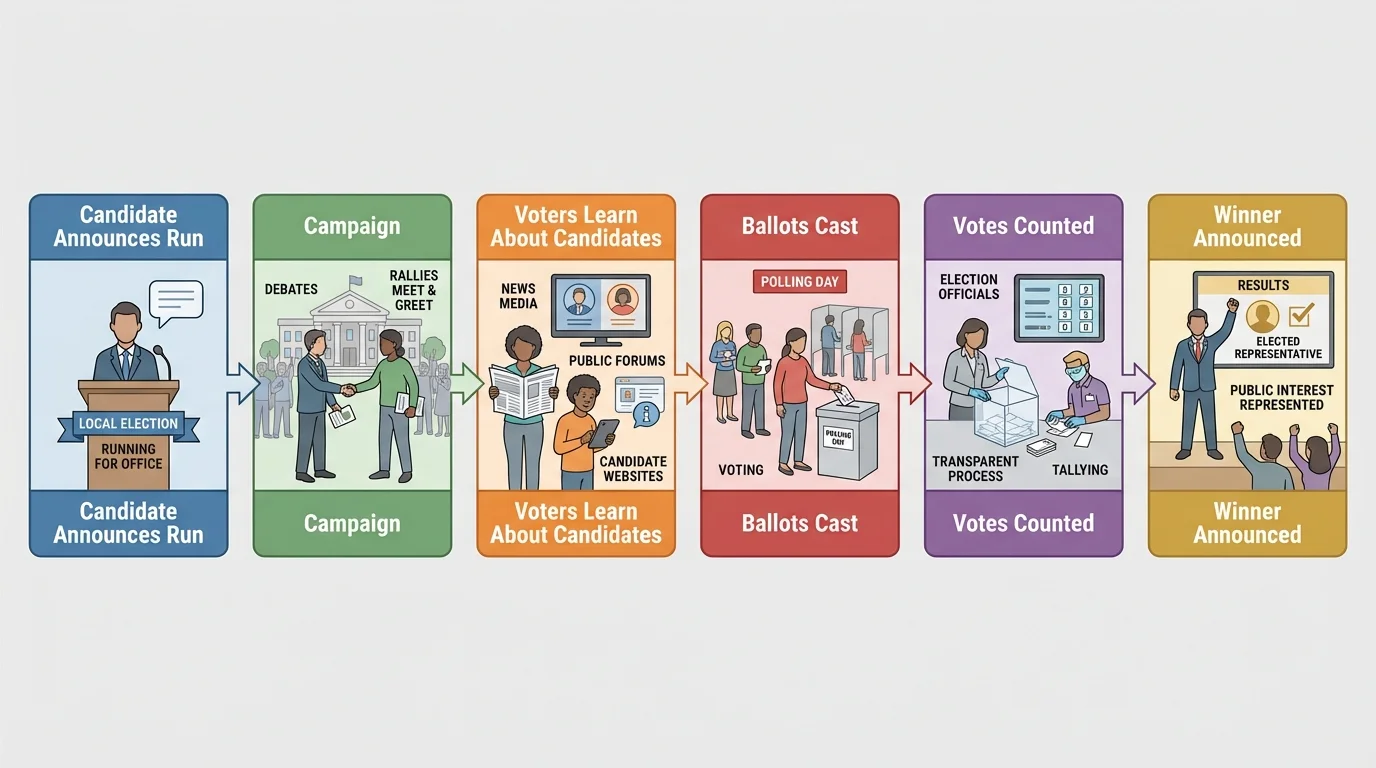
This process matters because it gives everyone a fair way to choose leaders. Instead of arguing or guessing who should lead, the community uses rules and voting to decide.
Later, when students think back to the election steps in [Figure 2], they can see that learning about candidates comes before voting. That is important because a smart vote is based on information, not just on a friendly smile or a colorful sign.
Why learning before voting matters
Voters should try to find out what each candidate believes, how that person has acted, and whether that person seems ready to solve community problems. Elections work best when people make thoughtful choices.
In a strong community, elections are not random. They are careful choices about who should have the responsibility to lead.
Serving the whole community can be tricky. A strong candidate for local office should care about the public interest. That means trying to make choices that are fair, helpful, and responsible for the whole community.
[Figure 3] Voters may ask questions such as: Does this candidate listen to different people? Does this candidate tell the truth? Does this candidate have ideas for improving the community? Does this candidate care about safety, schools, parks, roads, and other shared places?
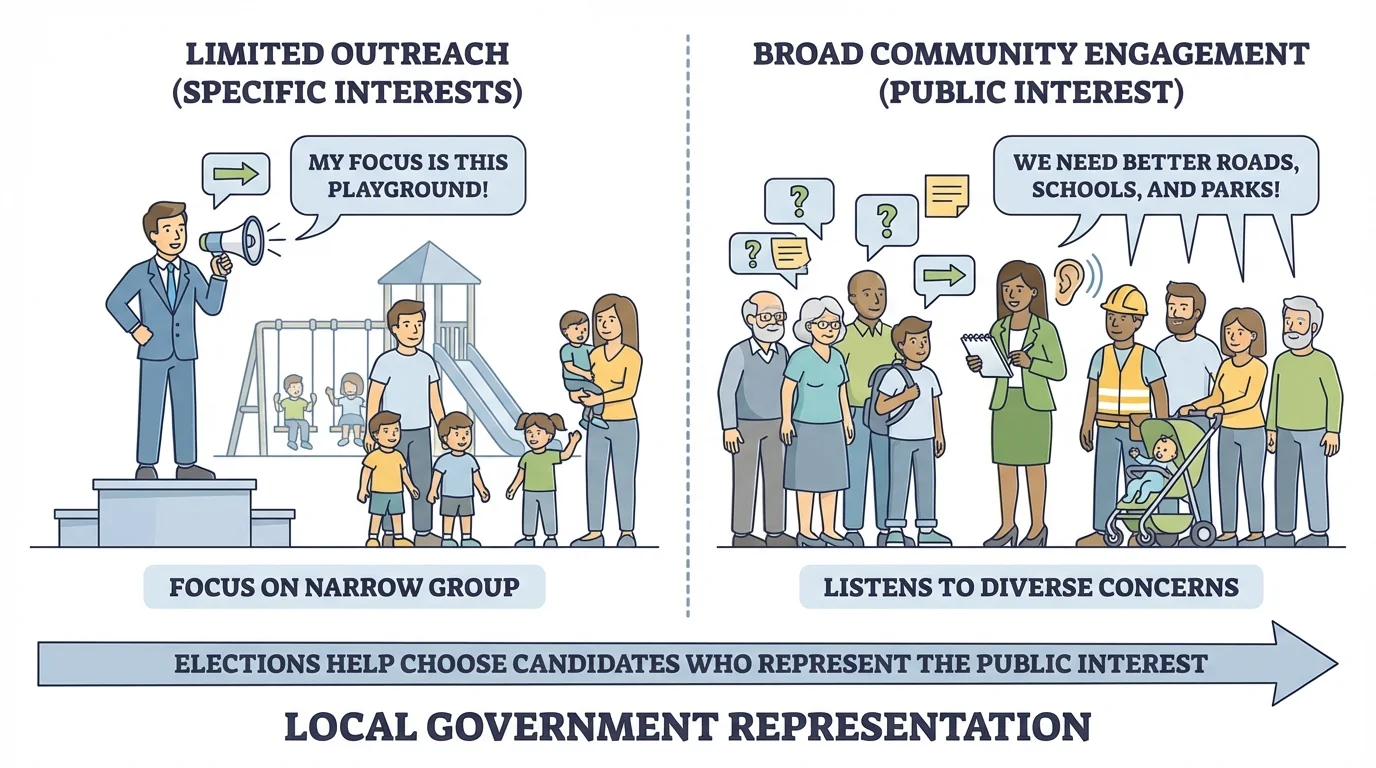
A candidate who promises to help only friends or only one neighborhood may not be acting for the public interest. A candidate who listens to many groups and tries to solve problems for the whole town is more likely to serve as a good representative.
Think about a town that has money for only one big project. One candidate says, "I will only fix the street where my friends live." Another candidate says, "I will study where repairs are needed most and choose the place that helps the most people stay safe." The second candidate is thinking more about the public interest.
Community example
A town must choose between adding flowers to one small corner of town or repairing a broken sidewalk near a school.
Step 1: Think about who is affected.
The flowers would look nice, but the broken sidewalk affects many children and families walking to school.
Step 2: Think about safety and fairness.
Repairing the sidewalk helps more people and improves safety.
Step 3: Connect this to elections.
Voters may choose a candidate who notices the bigger need and makes fair choices for the community.
This is one way elections help choose leaders who represent the public interest.
As students compare the two kinds of candidates in [Figure 3], they can see that representation is not just about winning votes. It is about using power to help the community in fair ways.
Fair elections are important because people need to trust the results. If citizens believe elections are honest, they are more likely to respect the winner, even if their favorite candidate does not win.
Fair elections have clear rules. Eligible voters should have the same chance to vote. Votes should be counted carefully. People should not be forced to vote for someone. Candidates should follow the law.
Another important idea is peaceful change in leadership. After an election, the winner takes office according to the rules. This helps communities solve disagreements without fighting. Elections are one way democracy works in daily life.
"Voting is a way people use their voice in government."
When elections are fair, local government can better reflect the people it serves. That helps leaders stay connected to the community.
Local elections may sound like something adults handle far away, but they affect ordinary life. If a city council decides to repair playground equipment, families notice. If a school board chooses to improve school buildings, students notice. If a mayor supports cleaner parks and safer roads, everyone can see the difference.
Suppose a town has three big needs: a new library roof, safer crosswalks, and better trash pickup. Different candidates may have different plans. One candidate may care most about roads. Another may care most about libraries. Voters listen, compare, and decide which person they trust to balance community needs wisely.
This does not mean every elected leader will make every person happy. Communities have many needs, and leaders often must make hard choices. But elections give people a peaceful and organized way to choose who will make those choices.
Rules help groups work together. Just as a classroom uses rules so everyone can learn, a community uses election rules so people can choose leaders fairly and peacefully.
Because local government works close to home, even small decisions can matter a lot. A new stop sign, a cleaner park, or a better school bus route can all come from choices made by elected local leaders.
In elections, people often disagree about which candidate is best. That is normal. One family may care most about school issues, while another cares most about road repairs or public safety.
In a democracy, people can have different opinions and still follow the same election rules. After everyone votes, the candidate with the most votes may win, depending on the election rules. The community then moves forward with the chosen leader.
Even when one side wins, leaders should still remember all the people in the community, including those who voted differently. Serving the public interest means trying to represent everyone, not just supporters.
This is one of the most important roles of elections: they choose specific people for office, but they also remind those people that they are responsible to the public.
Children may not vote yet, but they are future citizens. They can learn how local government works, notice community problems, ask thoughtful questions, and talk with trusted adults about local issues.
For example, a student may notice that a park needs repairs or that a crosswalk near school feels unsafe. These observations matter because local leaders often make decisions about those exact issues. Understanding elections helps students see how communities solve problems together.
As they grow older, students will be able to vote in elections and choose candidates for local office. Learning now helps them become informed, responsible voters later.
Elections matter because they let the public choose leaders who represent them. In local government, that means choosing people to make decisions about schools, parks, roads, libraries, and safety. Through voting, communities select representatives who should work for the public interest and help make everyday life better.
