Have you ever worn boots on a rainy day and sandals on a hot day? People make choices like that because place matters. The land, the weather, and the things around us help decide how people live each day.
A environment is the world around us. It includes land, water, plants, animals, and weather. Some places have tall mountains. Some places have sandy beaches. Some places are very cold. Some places are very hot. Different places look and feel different, as [Figure 1] shows.
Geographic features are parts of Earth like hills, rivers, lakes, deserts, and oceans. Climate is the kind of weather a place usually has over a long time. A place may have a cold climate, a hot climate, or a wet climate.
People look at their place and make choices. If there is lots of water, people may use boats. If there is lots of snow, people may wear heavy coats. If the land is flat, people may ride bikes more easily.
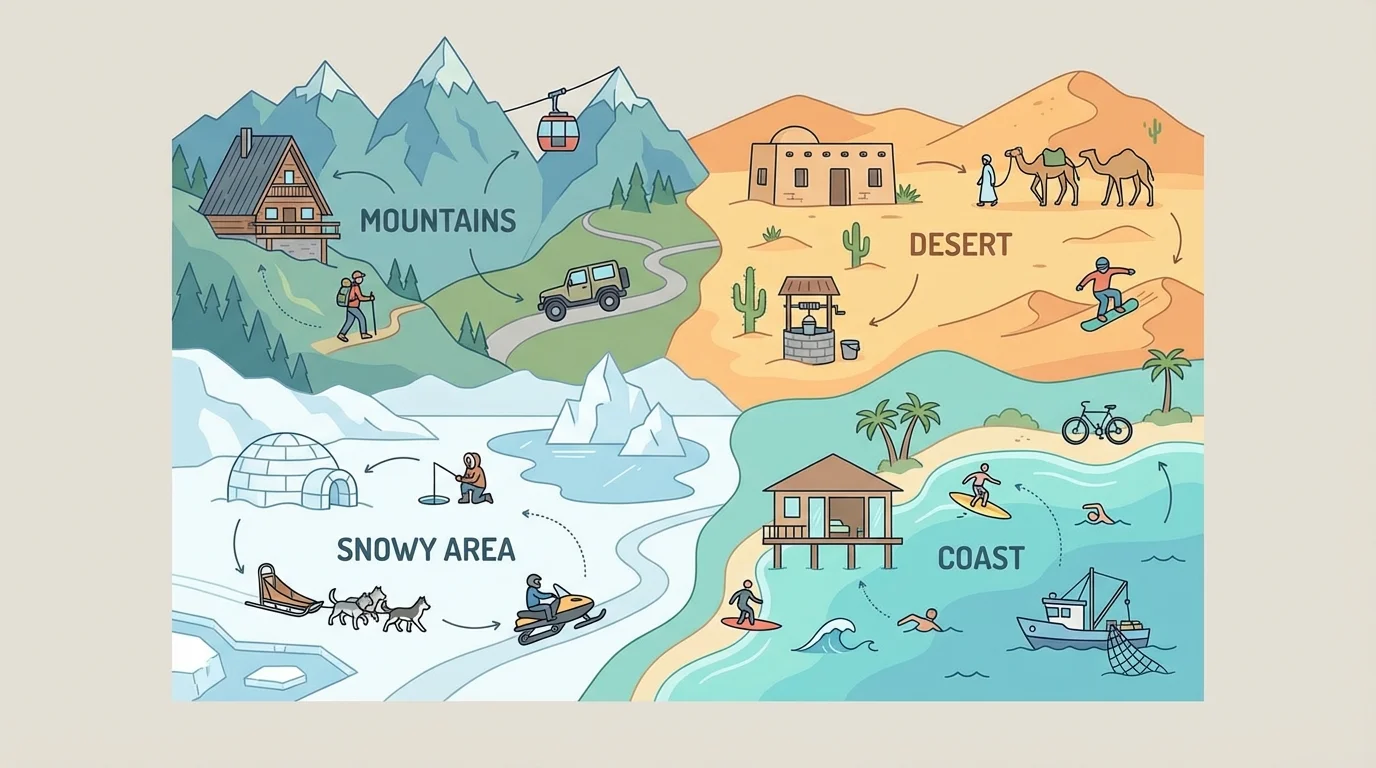
Environment is everything around living things.
Geographic features are natural parts of Earth, like mountains, rivers, and deserts.
Climate is the kind of weather a place usually has over many years.
When we learn about places, we learn why people may not all live the same way. A snowy place and a sunny beach are both real places, but life in each one can be very different.
Food often comes from what can grow or live in a place. In places near oceans or rivers, people may eat more fish. In places with rich soil, people may grow fruits and vegetables. In dry places, people may grow plants that need less water.
Clothes also match the climate. In cold places, people wear hats, coats, mittens, and boots to stay warm. In hot places, people may wear lighter clothes to stay cool. When it rains a lot, raincoats and umbrellas are helpful.
People do not all eat the same foods or wear the same clothes because their environments are different. The cold, heat, rain, and land around them can help shape daily life.
Some people who live near icy places eat foods that help give them energy and warmth. People in warm places often enjoy foods and drinks that help them feel cool.
A child in a cold place might drink warm soup on a snowy day. A child in a warm place might enjoy juicy fruit after playing outside. Both children are making choices that fit their place.
People build homes and choose ways to travel that fit the land and weather, as [Figure 2] illustrates. A home in a snowy place may have a steep roof so snow can slide off. A home in a hot place may have thick walls or shady spaces to help keep it cool.
Some places have lots of roads, so people travel by car or bus. Some places have deep snow, so people may use sleds, skis, or snowmobiles. In places with many rivers or canals, boats can be important. In deserts, people may walk, ride in vehicles, or travel with animals that can handle heat.
Shelter means a safe place to live. Shelter is not the same everywhere. People use what works best for their environment. That is a practical way to live in harmony with the environment.
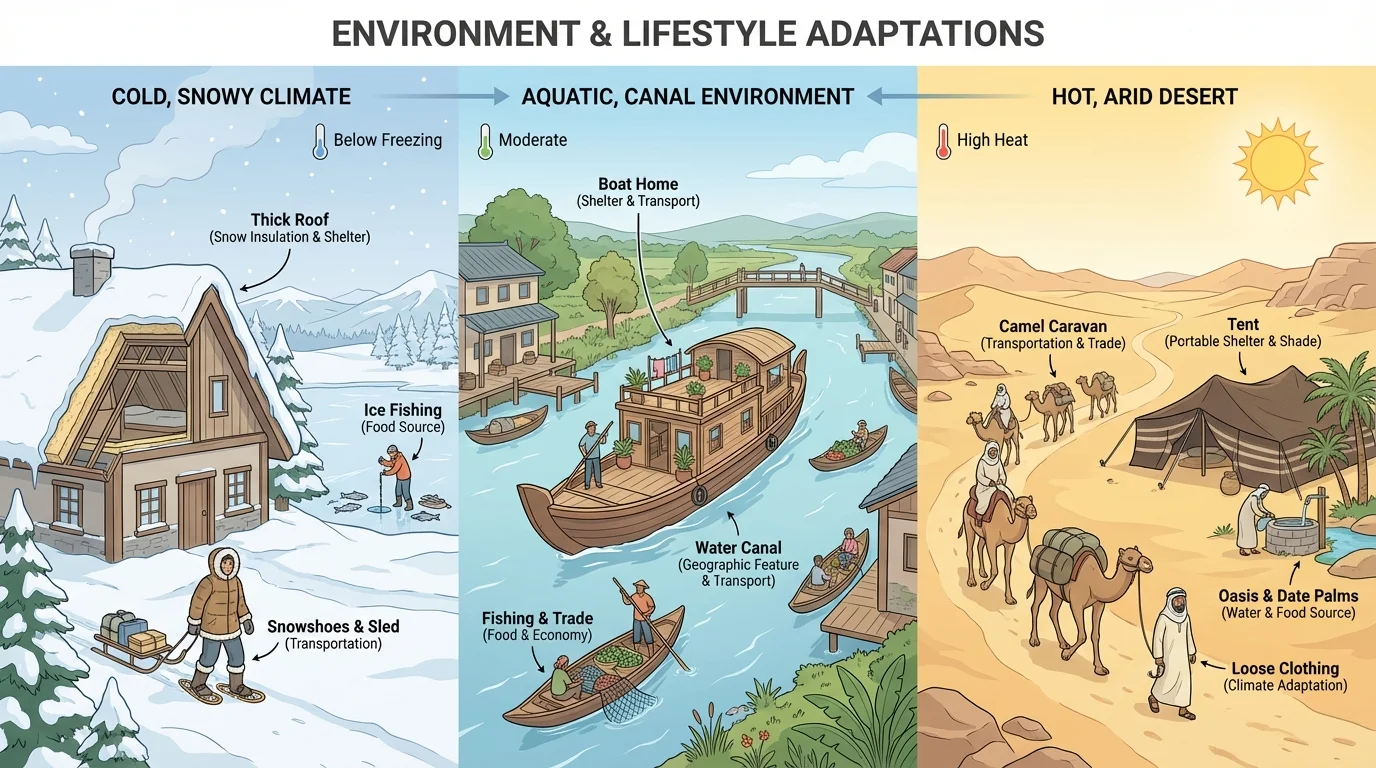
People adapt to place by changing what they build and how they move. When the land is wet, dry, cold, or steep, people find ways to stay safe and make life easier.
A mountain road may twist and turn. A flat road may be straight. A rainy place may need bridges. A place near water may have docks. We can think of [Figure 2] as a reminder that one kind of place may need boats, while another may need warm, sturdy homes.
Weather helps decide what children can do outside, and [Figure 3] shows that play can look different in different climates. In snowy places, children may play in the snow, skate, or ski. In warm places, children may swim or play outside for much of the year.
Sports can match the place too. Soccer is easy to play on open fields. Ice hockey works best where there is ice. Surfing happens near ocean waves. If it is stormy or too hot, some activities may move indoors.
School life can change too. On very snowy days, travel to school may be harder. In rainy places, children may bring boots or raincoats. In hot places, students may drink lots of water and spend recess in shady areas.
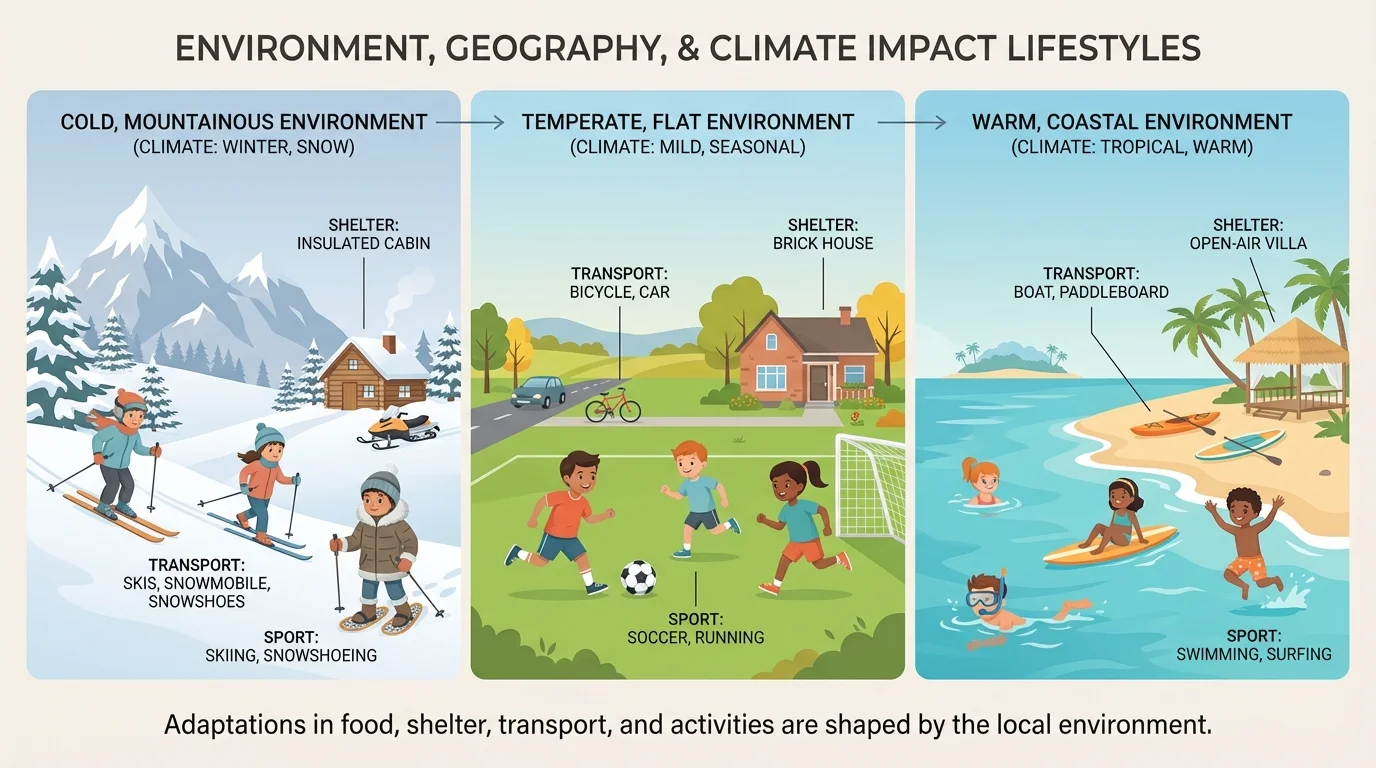
Example: Same age, different place
Step 1: A child in a cold place gets ready for school with a coat, boots, and gloves.
Step 2: A child in a rainy place gets ready with a raincoat and umbrella.
Step 3: A child in a hot place wears light clothes and drinks water.
Each child is getting ready in a way that fits the climate.
Later, when we think about games and sports, [Figure 3] reminds us that children do not always play the same way because places are not all the same.
Let us look at a few kinds of places. In a cold, snowy place, people may wear thick clothes, live in warm homes, and travel carefully on icy roads. In a hot desert, people may rest in the shade, wear loose clothing, and save water.
In a rainy tropical place, plants can grow well, and people may use roofs that protect from heavy rain. In a city near water, people may use bridges, ferries, or boats. The environment helps shape work, food, transportation, and fun.
| Place | What it may be like | How life may change |
|---|---|---|
| Snowy place | Cold and icy | Warm clothes, heating in homes, snow travel |
| Desert | Hot and dry | Need shade, save water, light clothing |
| Rainy place | Wet and cloudy | Raincoats, umbrellas, roofs for rain |
| Coast or river place | Near water | Fishing, boats, bridges |
Table 1. Examples of how different places can shape daily life.
As we saw in [Figure 1], Earth has many kinds of places. People are clever because they learn how to live well in each one.
No place is exactly like another place. That is why people around the world may eat different foods, live in different homes, ride in different ways, and play different sports. Their choices often fit the land, weather, and climate around them.
When we look at a mountain, a desert, a river, or a snowy field, we can ask, "How would people live here?" That question helps us understand geography and people at the same time.
