Have you ever wanted to do something all by yourself, like put your toys away, get dressed, or learn to zip your coat? That is how goals begin. A goal is something you want to do or get better at. Big things can start with very small steps.
A goal is something you want to do. It can be something for today, like washing your hands by yourself. It can also be something for later, like learning to ride a bike or feeding a pet with help.
Goal means something you want to do, learn, or finish. Step means one small action that helps you get there.
Goals help you grow. When you choose a goal, you are being responsible. You are saying, "This is something I want to work on." That is an important life skill.
You do not need a huge goal. For you, a good goal is small and clear. You might say, "My goal is to put my cup in the sink," or "My goal is to say hello on a video call."
It is easier to start with one small goal, as [Figure 1] shows with simple choices you can do at home. When a goal is small, it feels easier to try. Small goals help you practice and feel proud.
Here are some good small goals for you: put books on a shelf, brush teeth with help, put dirty clothes in a basket, or say "thank you." These are real things you can do in your day.
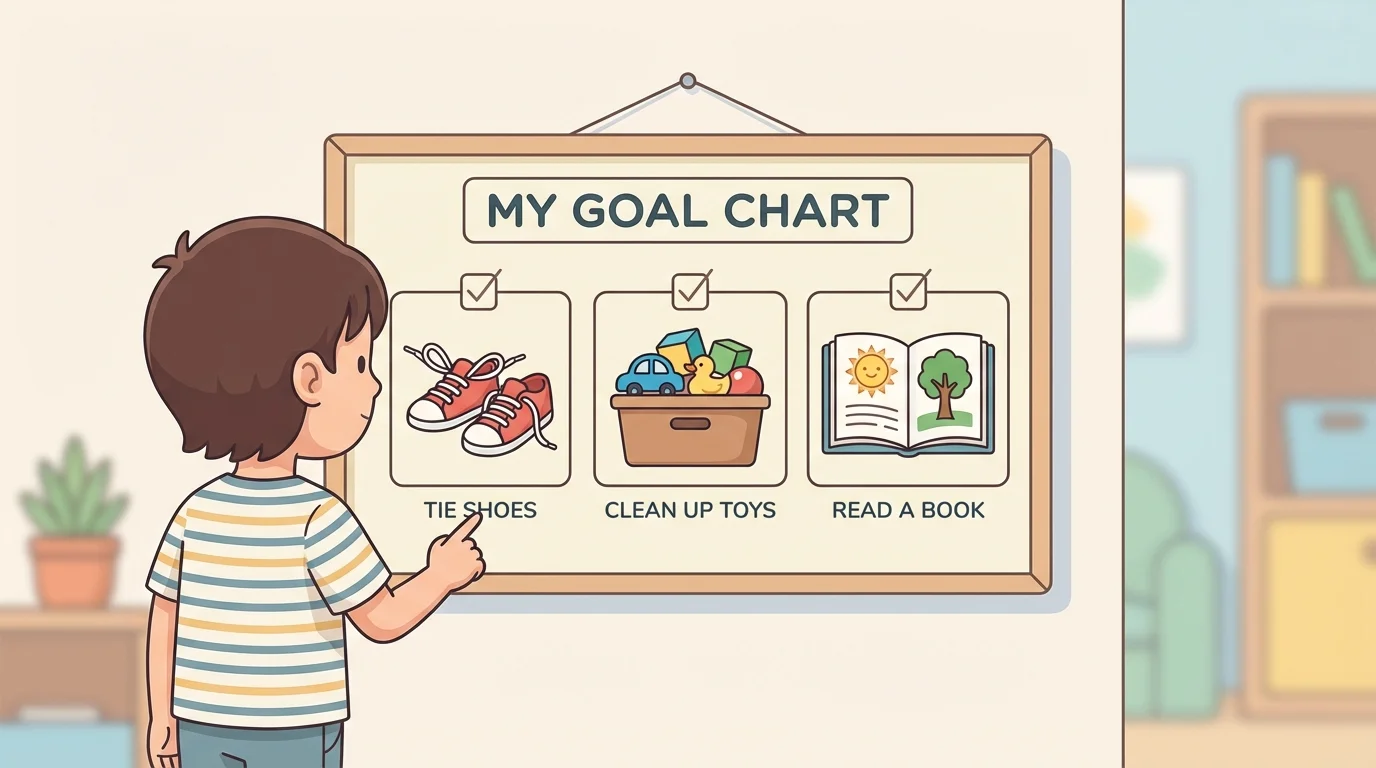
A goal should be easy to understand. Instead of saying, "I want to do everything better," you can say, "My goal is to pick up my crayons." That makes your plan clear.
Example goal choices
Step 1: Think of one thing you want to do.
"I want to clean up my blocks."
Step 2: Say the goal in simple words.
"My goal is to put my blocks in the bin."
This goal is small, clear, and easy to practice.
When you pick one goal, you can pay attention to it. Later, when that goal feels easy, you can pick another one. That is how small choices help build your future.
A step is one small thing you do. Many goals are easier when you break them into one or two steps, as [Figure 2] shows. You do not have to do everything at once.
If your goal is "put toys away," your steps can be very simple. First pick up the toys. Then place them in the box. Two steps are enough for many goals.
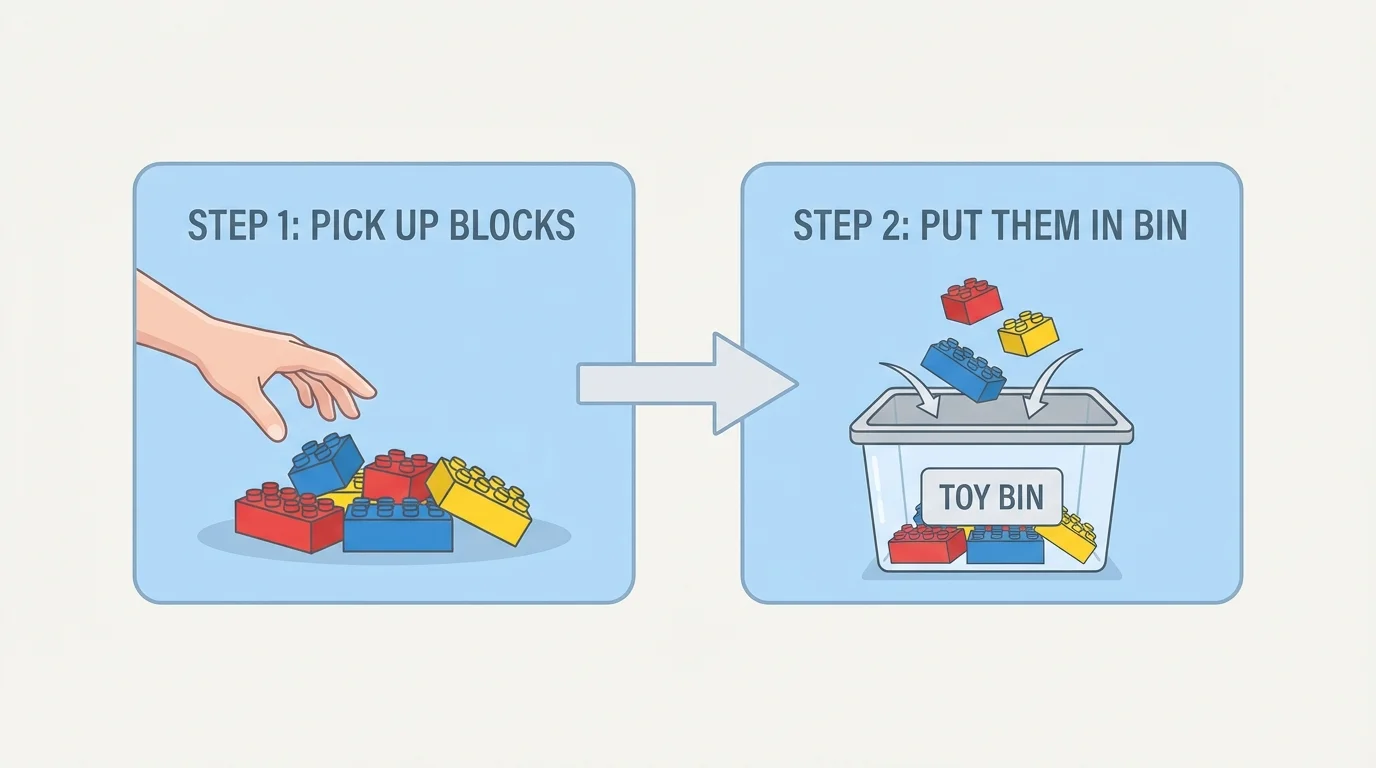
Here are more examples: If your goal is to get ready for bed, step one can be putting on pajamas. Step two can be placing your book on the bed. If your goal is to help at snack time, step one can be carrying a napkin. Step two can be putting it on the table.
Small steps make big things easier. When you split a goal into tiny actions, your brain knows what to do first. That helps you feel calm and ready instead of confused.
You can even say your steps out loud: "First I pick up. Then I put away." Simple words help you remember. Later, when you think again about [Figure 2], you can see how one goal becomes a little path with just a few actions.
Sometimes goals are easier with help from your community. Your community can be family members, neighbors, coaches, club leaders, or a teacher talking with you online. Helpers cheer for you and show you what to do.
[Figure 3] shows that support can make tasks easier. If your goal is to learn how to button your shirt, a grown-up can show you once, then let you try. If your goal is to speak clearly on a video call, someone can practice with you before the call starts.
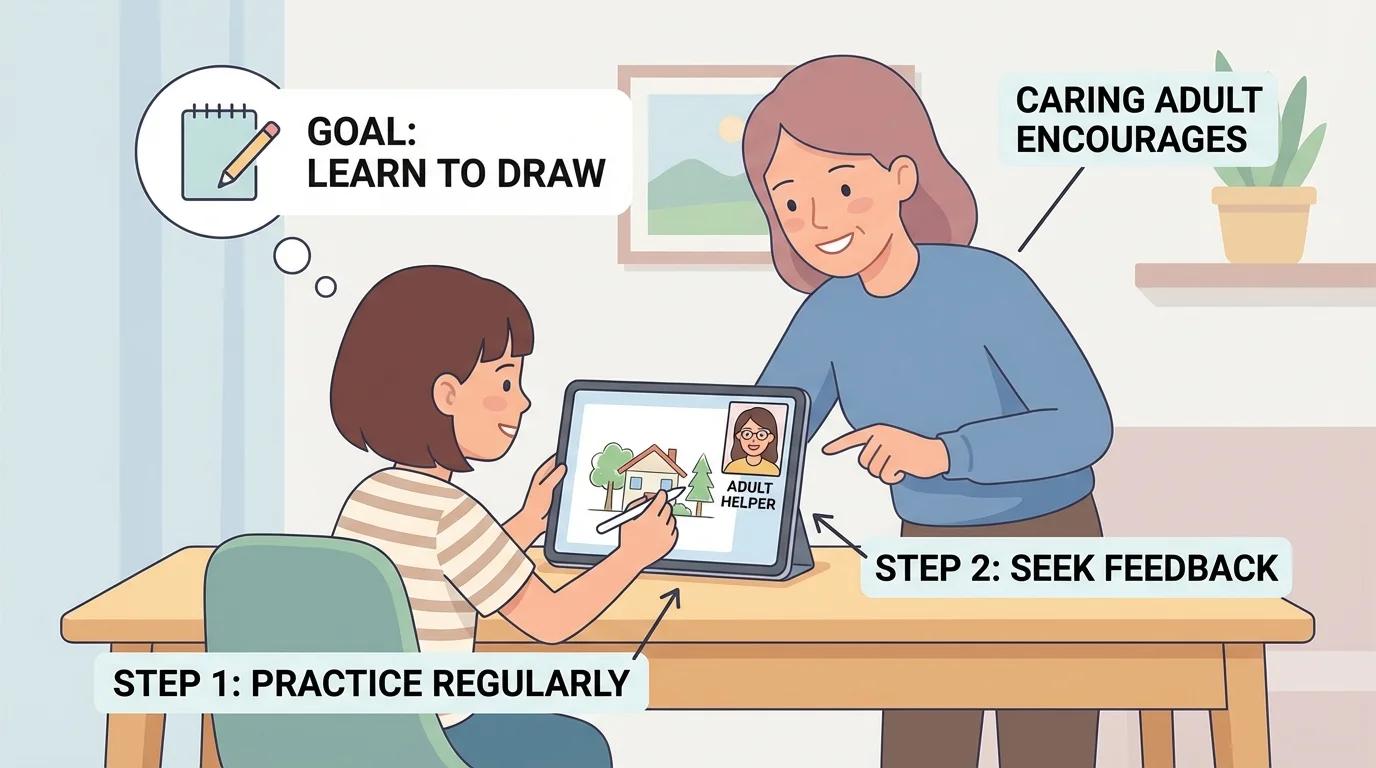
Trying again matters. The first try may be hard. The second try may be better. That is okay. Reaching a goal does not mean being perfect. It means you keep going.
Your brain grows when you practice. Each time you try a small step again, you are helping yourself learn.
When people help each other, everyone grows stronger. That is why goal setting is also part of being in a caring community. You work on your goal, and other people can help you feel safe, brave, and ready.
Your future is the time ahead of you. Tomorrow is part of your future. Next week is part of your future too. Small goals today help you do more things by yourself later.
If you learn to hang up your jacket now, later you may remember other jobs too. If you learn to say kind words now, later you can make strong friendships. If you practice cleaning up now, later you can take care of your room and your things.
"Little by little, a little becomes a lot."
That is why goals matter. A little step today can help you tomorrow. You do not need many steps. One or two good steps are a great start.
You can use this simple plan: name the goal, name one step, and if needed, name one more step. Then try. Ask for help if you need it. Keep going.
Real-life goal ideas
Goal: Put shoes by the door.
Step 1: Take off shoes.
Step 2: Place them by the door.
Goal: Get ready for an online activity.
Step 1: Sit in your spot.
Step 2: Turn on the device with help.
Goal: Be kind during play.
Step 1: Use gentle words.
Step 2: Take turns.
Each of these goals is clear and useful. They help you at home, with other people, and as you grow. That is how responsibility begins: with one good goal and one or two small steps.
