Have you ever smiled widely when a song starts, but felt quiet when it is time for a puzzle? That is how your thoughts and feelings help you learn about what you like. Knowing your favorite activities is part of getting to know yourself. When you know what you enjoy, it is easier to join in, ask for help, and make good choices during your day at home.
A favorite is something you like a lot. A preference is a choice you like better than another choice. You may like story time more than coloring. You may like dancing more than sitting still. These choices help grown-ups understand how to support your learning.
Favorite means the thing you like best. Preference means what you choose when you like one thing more than another. Choice means picking between two or more things.
At home, your school day may include listening during a video call, singing, drawing, moving your body, looking at pictures, or helping with a simple activity. All of these can teach you something important. It is okay if some feel extra fun and some feel less fun.
During school time, you may notice that some activities feel extra exciting. You might love singing hello songs, listening to a story, building with blocks, making art, matching colors, or doing a movement break.
Some children like quiet activities. Some like active activities. Some like looking, some like touching, and some like talking. Your preference can be different from someone else's, and that is okay.
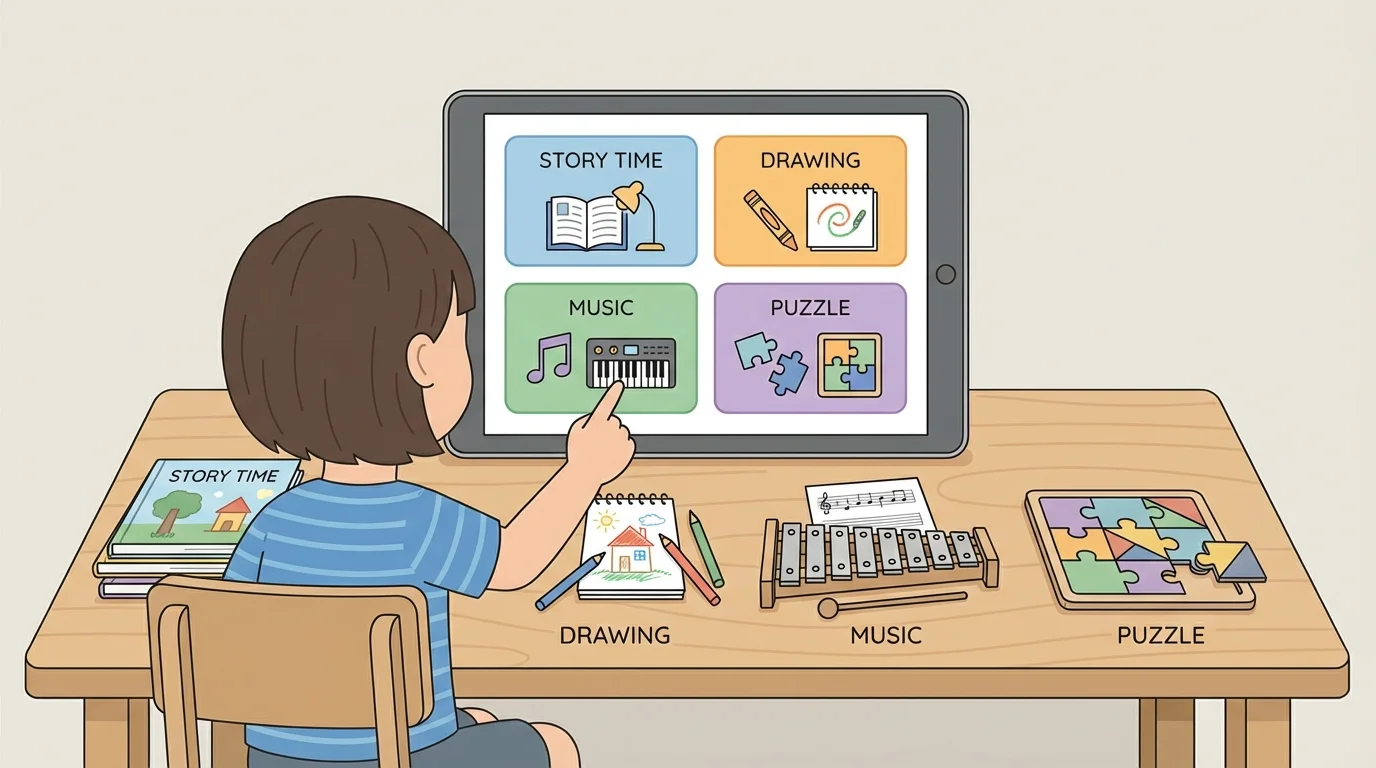
You may also have favorite parts of an activity. Maybe you like turning pages in a book, tapping a drum, picking a crayon, or showing your work on camera. Small favorites matter too. They help you feel happy and ready to learn.
Many young children learn better when they feel interested and comfortable. Liking an activity can help you pay attention longer and join in more.
When a grown-up knows your favorites, school time can go more smoothly. If you always feel upset during one kind of task, that is helpful to notice too. It does not mean you are bad at it. It means you may need a different way to try.
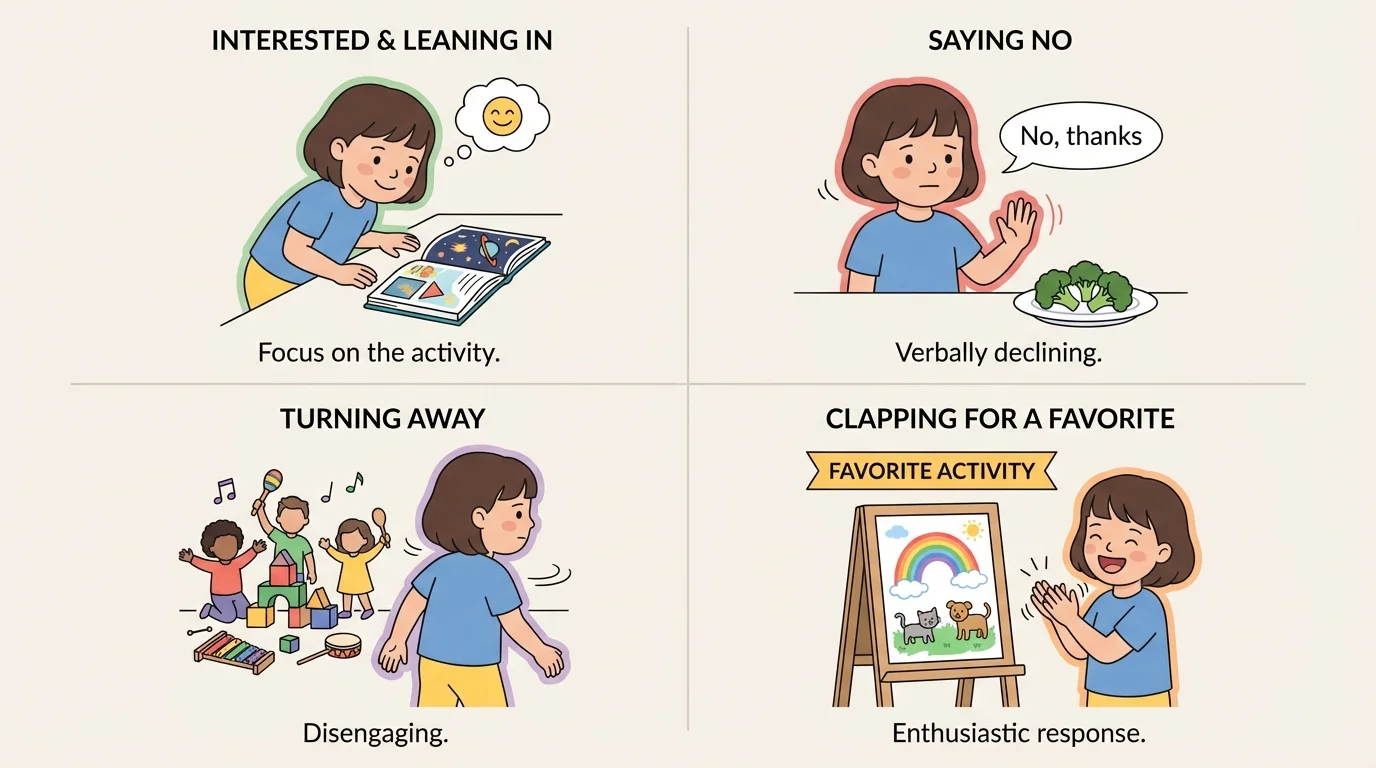
[Figure 2] Your choice does not only come from words. Your body can help tell what you like. You might smile, clap, lean closer, laugh, or ask for more when you enjoy something.
You might also show that you do not like something right now. You may turn away, look upset, say no, hide your hands, or stop paying attention. These are clues. Grown-ups can help you notice them and put them into words.
Feelings can be clues too. If an activity makes you feel calm, excited, proud, or curious, you may like it. If it makes you feel frustrated, tired, or worried, you may not like it yet, or you may need help.
Your body gives helpful messages. When you are very young, your face, voice, and body often show your preferences before your words do. Learning to notice these signs helps you understand yourself and helps others support you better.
You can practice noticing with simple questions: "Do I want more?" "Do I feel happy?" "Do I want to stop?" These little check-ins help you learn about yourself. Your actions give clues that are important.
Words are powerful. You can use simple words to share what you like during learning time. This helps your parent, caregiver, or online teacher know what works well for you.
You can say, "I like songs." "I want crayons." "More story, please." "No thank you." "I want blocks." "I need help." These are short, clear ways to share your needs and likes.
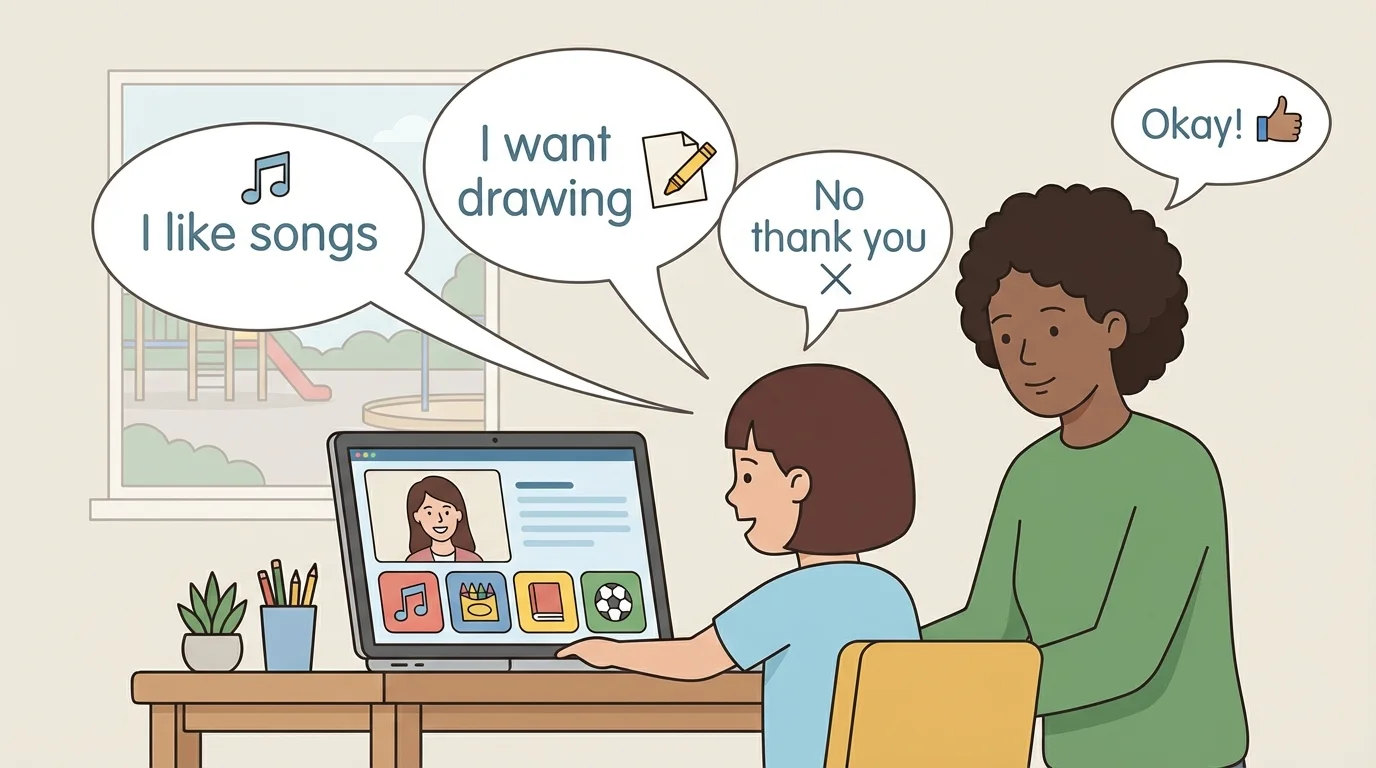
If speaking feels hard, you can point, nod, shake your head, or hold up a choice. A grown-up might offer two choices: a book or a song, paint or playdough, or time to sit and listen or stand and move. Picking one is a good way to show your preference.
Real-life example
A caregiver is setting up online school choices for the morning.
Step 1: The grown-up gives two choices.
"Do you want story time or music?"
Step 2: The child notices their feeling.
The child smiles and points to music.
Step 3: The child uses words or gestures.
"Music, please."
Step 4: The grown-up responds.
"You chose music. That is your preference right now."
This builds self-awareness and communication at the same time.
Being clear helps your day go better. When you can show what you want, adults can help faster. When you cannot show it, you may feel upset longer. That is why using simple words or gestures is such an important life skill.
It is wonderful to know your favorite activities. It is also good to try new ones. Sometimes you do not like something the first time, but later it becomes fun when you understand it more or feel more comfortable.
You can think, "This is not my favorite yet." That is a kind way to leave room for growing. Maybe today you choose songs. Another day you may enjoy sorting shapes or tracing lines.
You do not have to love every activity to be successful. Learning includes fun, practice, patience, and trying again.
A grown-up can help by giving small choices and short turns. For example, you might do a favorite song first, then try a new game for a little while. This helps you feel safe while still learning.
[Figure 4] On a video call or in a group activity, you may notice that another child likes something different. You may want to sing, while another child wants to draw. Both choices can be okay.
It is kind to let other people have their own likes. You can listen, wait for turns, and say simple respectful words like, "You like that," or "My turn next."
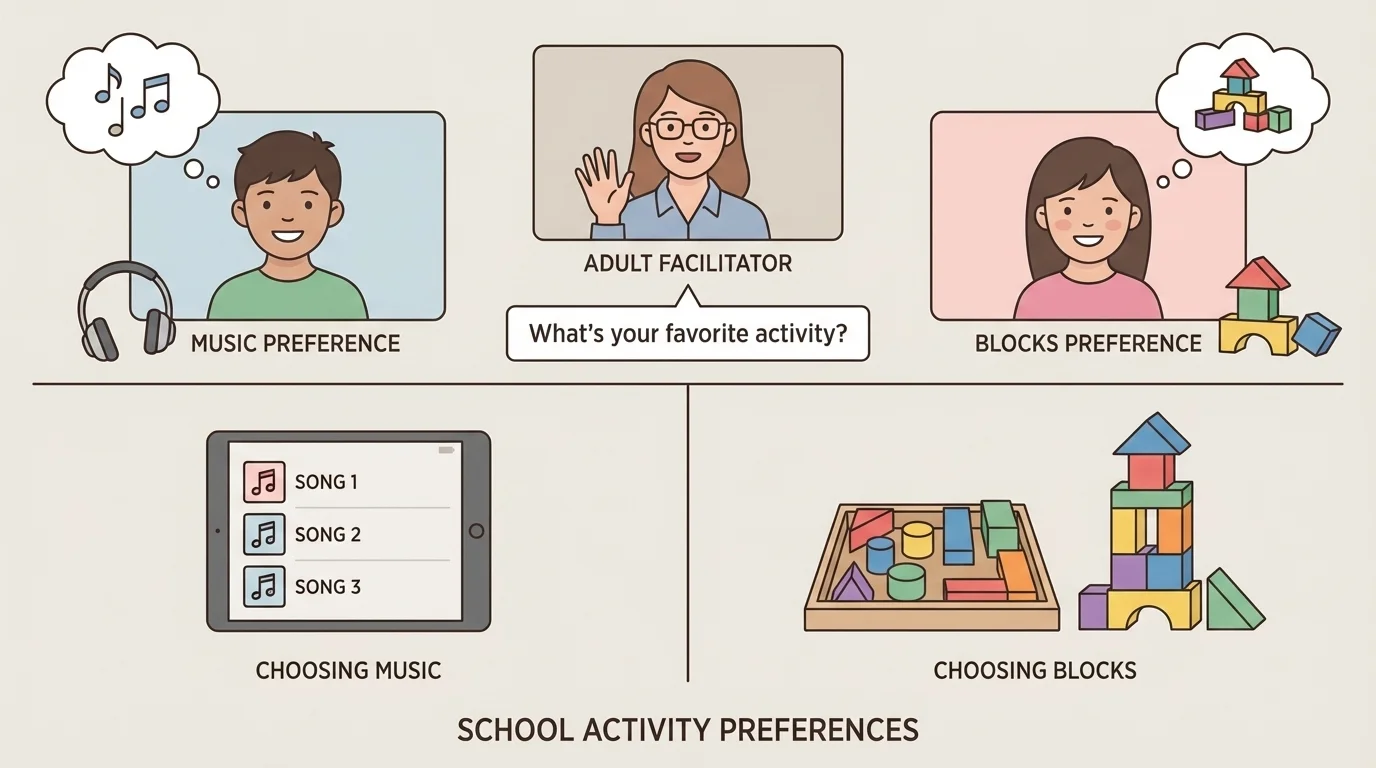
Respecting differences helps you build self-awareness and caring relationships. Knowing your own preference is important, and so is understanding that someone else may choose differently.
Later, when you work with others, this skill helps you share, take turns, and solve little problems. Different choices do not have to cause a problem when everyone is treated kindly.
You can practice this skill every day at home. Ask for two choices when possible. Notice how your body feels. Use short words. Listen when others share their likes too.
Try This: When a grown-up offers two activities, pause for a moment. Look, feel, and choose. Then say or show your answer: "I like this one," "Not that one," or "This is my favorite."
Try This: After an activity, tell a grown-up one simple thought: "I liked it," "I want more," "I need help," or "I did not like that." These little sentences help you grow.
Try This: If your favorite activity is not available, pick your next-best choice. This teaches flexibility. You can still have a good learning time even when the first choice is not possible.
"I can learn about what I like, and I can tell others kindly."
Knowing your favorites, noticing your feelings, and speaking up are all parts of understanding yourself. That is a big job, and you can practice it a little more each day.
