Colorado is famous for snowy mountains, rushing rivers, forests, farms, and major cities. But a beautiful state can still have hard problems to solve. A family in a city may worry about traffic. A farmer may worry about water for crops. A firefighter may worry about dry forests. A hiker may want to protect wildlife. All of these are real concerns, and sometimes they connect in surprising ways.
When people in a state try to solve a public problem, they are dealing with a civic issue. A civic issue is a problem that affects many people and needs community action, government action, or both. Good citizens learn to listen, ask questions, and think about more than one side of an issue.
Civic issue means a problem that affects the community and may require public decisions. Perspective means the way a person looks at an issue based on experiences, needs, and values. Solution means a plan or action that helps solve a problem.
Colorado has many strengths. It has rich farmland, famous parks, important rivers, and growing towns and cities. It also has challenges that come from weather, geography, and the needs of many different people. To understand Colorado's problems, it helps to know a little about the state itself.
No state is exactly the same. Colorado has high mountains, dry areas, forests, and large cities. Because of that, the problems people face in Colorado may be different from the problems in a state with more rain or fewer mountains. Leaders in Colorado must think about nature, money, safety, and fairness at the same time.
People do not always agree about what should happen. For example, one group may want more homes built so families can afford to live in a town. Another group may worry that new building will use up open land or put pressure on roads and schools. Neither side is automatically wrong. Each side may be protecting something important.
This is why studying multiple perspectives matters. In civics, students learn that solving problems is not just about picking the loudest voice. It is about considering evidence, understanding needs, and trying to reach decisions that help the whole community.
Colorado is the source of rivers that flow into other states, so decisions made in Colorado about water can matter far beyond its borders.
That idea makes Colorado especially important. What happens in one place may affect people many miles away. A smart solution often needs planning, teamwork, and compromise.
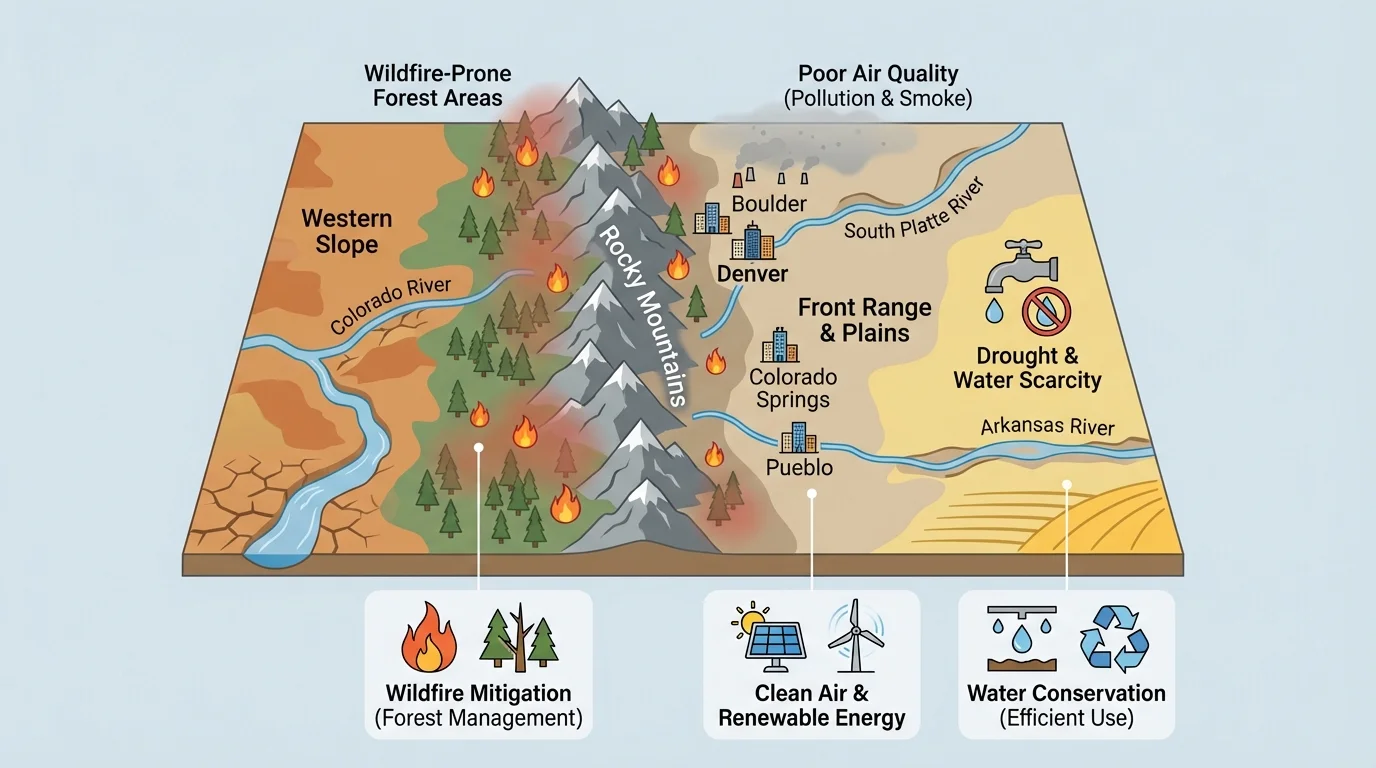
Colorado's geography shapes many of its problems, as shown in [Figure 1], which highlights the state's mountains, plains, rivers, and growing urban areas. Snow falls in the mountains, rivers carry water across the state, and many people live along the Front Range, where cities such as Denver and Colorado Springs have grown quickly.
The western part of the state includes mountains and valleys. The eastern part has wide plains that support farming and ranching. Forests cover some mountain areas, while drier land appears in others. Because the land is so varied, people use it in many ways: farming, skiing, hiking, mining, building homes, and running businesses.
Colorado's population has grown over time. More people can mean more workers, more ideas, and more businesses. But more people also mean more homes, more roads, more water use, and more waste. Growth can be exciting, but it can also create stress for communities.
For this reason, Colorado leaders often ask difficult questions. How should land be used? How can nature be protected while towns grow? How can people share resources fairly? These questions appear again and again in state and local decisions.
| Part of Colorado | Important Features | Possible Issues |
|---|---|---|
| Mountains | Snow, forests, tourism | Wildfires, crowded recreation areas, habitat loss |
| Plains | Farms, ranches, open land | Water supply, drought, land use changes |
| Front Range cities | Many homes, schools, jobs | Traffic, air pollution, housing costs |
| River valleys | Water for people and farms | Water shortages, pollution, competing uses |
Table 1. This table compares major parts of Colorado, their features, and common issues.
Looking back at [Figure 1], it becomes easier to see why one state can have very different problems in different places. A problem in a forest town may not look the same as a problem in a busy city neighborhood.
One of Colorado's biggest challenges is drought, which means a long time with less water than normal. Colorado can be dry, and snow in the mountains does not always provide enough water for every need. One river may support homes, farms, fish, and recreational activities such as rafting, as shown in [Figure 2].
Water is needed for drinking, washing, farming, and business. Farmers need water for crops and animals. Cities need water for homes, schools, and parks. Rivers and lakes also need enough water to support fish and other living things. When there is less water, people must decide how to share it.
Different groups may see the issue differently. A farmer may say, "Without water, we cannot grow food." A city resident may say, "Homes and schools need safe water every day." A person who cares about wildlife may say, "Rivers need enough water for fish and birds." These are all important perspectives.
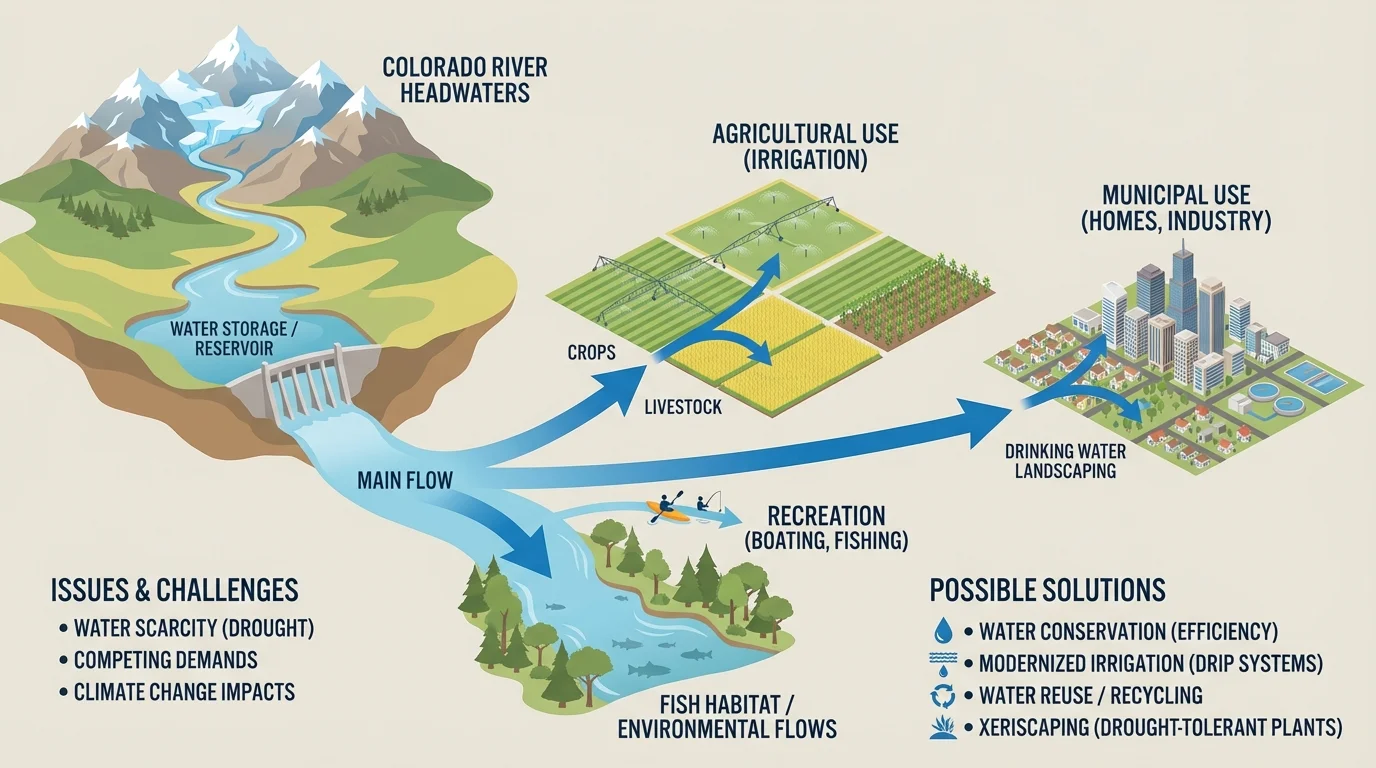
Possible solutions include saving water, fixing leaking pipes, using less water on lawns, and choosing plants that need less watering. Farmers can sometimes use newer watering systems that waste less water. Cities can teach residents to conserve water, which means to use it carefully and avoid waste.
Why water decisions can be hard
Water is a limited resource. If one group uses more, there may be less for others. Leaders must think about health, food production, jobs, recreation, and nature. A good solution tries to balance these needs instead of helping only one group.
Another solution is better planning for dry years. Communities can store water, protect rivers, and make rules about smart water use. Students can help too by turning off water when brushing teeth and learning why every drop matters.
Later, when people debate lawns, farms, or river protection, [Figure 2] helps us remember that the same water system often serves many users at once. That is why water arguments can be emotional and complicated.
Colorado also faces serious wildfire danger. Dry weather, hot temperatures, and windy conditions can make fires spread quickly. Communities near forests face special risks, as shown in [Figure 3], where homes are located close to trees and brush.
Wildfires can destroy homes, harm wildlife habitat, and fill the air with smoke. They can also force families to leave quickly for safety. Firefighters work hard to stop fires, but large fires can still be difficult to control.
People may have different ideas about what should be done. Some think more trees and brush should be cleared near communities. Others worry that too much cutting could harm forests or change the beauty of the land. Some people want stricter rules for campfires and fireworks, while others think those rules should be limited.
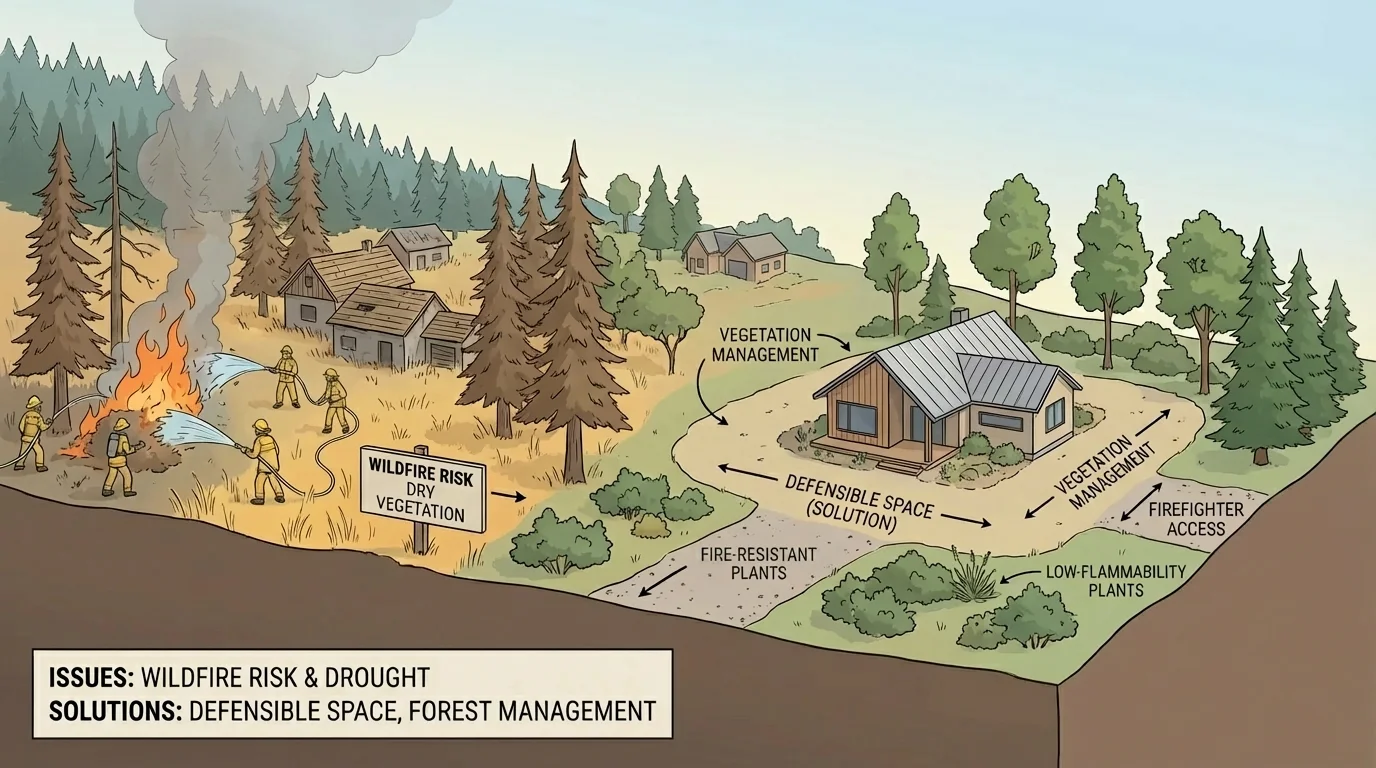
Possible solutions include creating defensible space, which is a safer area around a home where dry plants and flammable materials are removed. Communities can improve emergency alerts, prepare evacuation plans, and teach fire safety. Forest experts can also remove some dead trees and use carefully planned controlled burns in certain places to reduce fuel loads that can feed large fires.
People can help in simple ways. They can follow fire bans, put out campfires completely, avoid parking hot cars on dry grass, and listen to emergency instructions. These actions may seem small, but together they can save lives and homes.
Case study: A mountain town prepares for fire season
A Colorado town near a forest wants to lower wildfire risk without closing the forest to everyone.
Step 1: The town studies the problem.
Residents, firefighters, forest workers, and town leaders identify places where dry brush is thick and where homes are most at risk.
Step 2: The town hears different perspectives.
Some residents want stronger clearing rules. Others want to protect trees and scenery. Firefighters focus on safety.
Step 3: The town chooses several solutions.
It improves alerts, creates defensible space near homes, teaches safety rules, and clears only the highest-risk areas first.
This kind of shared plan does not remove all risk, but it lowers danger while respecting different concerns.
When we return to [Figure 3], we can see that wildfire is not only a nature problem. It is also a community planning problem about where people live and how prepared they are.
As more people move to some parts of Colorado, the need for housing grows. New neighborhoods can bring jobs and energy, but they can also raise home prices and rent. Growing towns change quickly, as shown in [Figure 4], where homes, roads, schools, and open land appear close together.
Many families want safe, affordable places to live near schools and jobs. But when there are not enough homes, prices can rise. That can make it hard for teachers, firefighters, and other workers to live in the communities they serve.
People may disagree about solutions. Some want more apartments, townhomes, and houses built. Others worry that more building will increase traffic, crowd schools, and reduce open space. Some people want stricter rules about where building can happen. Others think those rules can make housing too expensive.
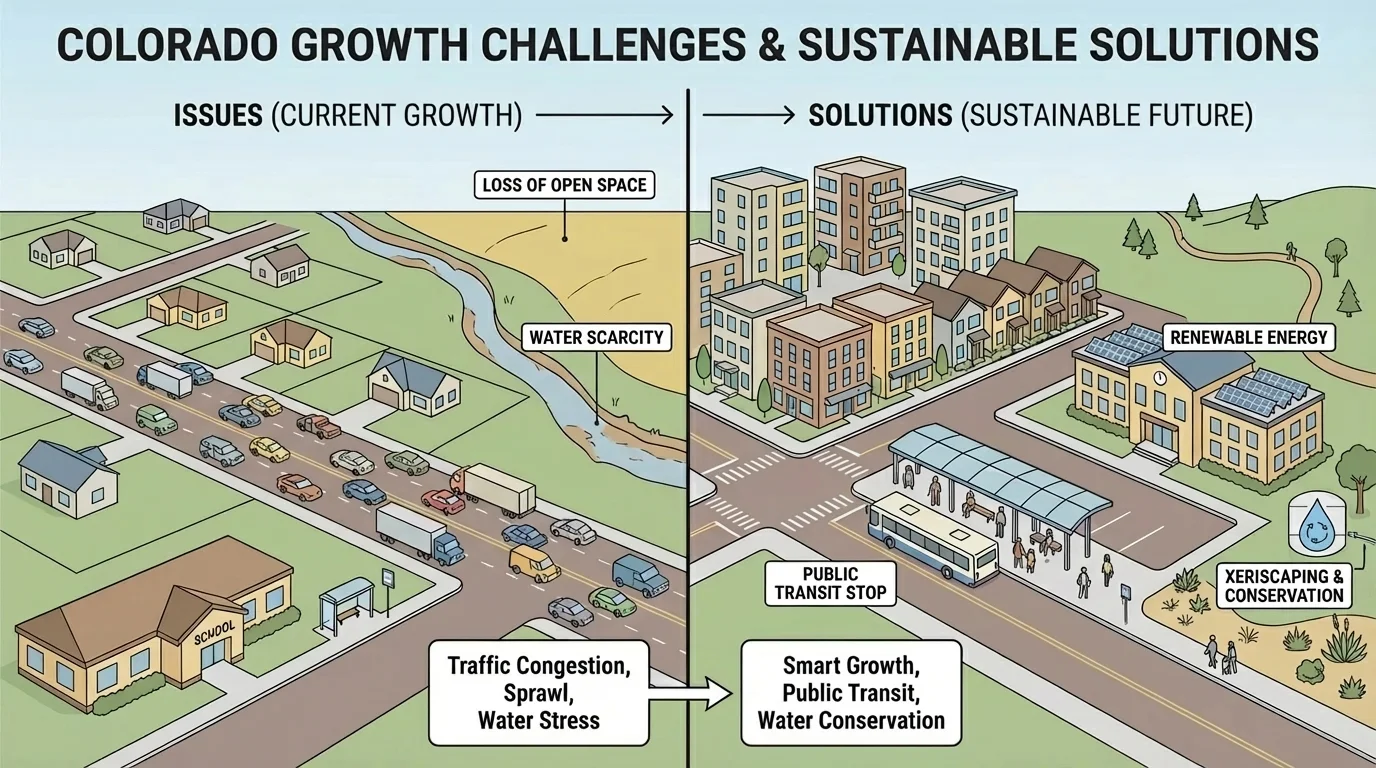
Possible solutions include building different kinds of housing, improving public transportation, and planning neighborhoods carefully. A town might allow more homes near stores, schools, or bus routes. It might also protect certain parks or open spaces while choosing other areas for growth.
Local governments can work with builders and residents to make plans that fit the community. The goal is not just "more buildings" or "no buildings." The goal is thoughtful growth that considers families, workers, traffic, and nature.
State and local governments make rules and plans that affect daily life. City councils, mayors, county leaders, and state lawmakers often share responsibility for solving public problems.
Looking again at [Figure 4], we can see why housing questions connect to many other issues. A new neighborhood may need roads, water, buses, playgrounds, and school space, not just houses.
Another Colorado issue is air quality, which means how clean or polluted the air is. Cars, trucks, factories, smoke from wildfires, and certain weather conditions can all affect the air. In some places, mountains and weather patterns can trap pollution close to the ground.
Poor air quality can make it harder for people to breathe, especially children, older adults, and people with asthma. It can also make outdoor exercise less healthy on some days. This matters in a state where many people enjoy being outside.
Transportation is part of the problem and part of the solution. More cars can mean more traffic and more pollution. But people still need ways to get to work, school, stores, and parks.
Possible solutions include cleaner buses, more bike paths, carpooling, and better public transit such as buses and trains. Communities can also encourage electric vehicles and design neighborhoods where people can walk to more places.
Smoke from a wildfire can travel far from the flames, so a fire in one area can affect the air in communities many miles away.
Different people may value different transportation choices. Some want wider roads to reduce traffic. Others want more buses and trains. Some people live where public transit is easy to use, while others live far away and depend on cars. Strong solutions often include several choices instead of just one.
Colorado's animals and outdoor places are important to many people. Elk, deer, birds, fish, and many other species need healthy habitats. But roads, buildings, pollution, and heavy use of parks can affect where animals live and move.
A habitat is the natural home of a plant or animal. When a habitat is broken into smaller pieces by roads or buildings, animals may have a harder time finding food, water, or safe paths. This can be a problem as communities expand.
People often agree that nature matters, but they may disagree about how to protect it. Some want stricter limits on building in sensitive areas. Others worry that too many limits can slow growth or hurt business. Recreation businesses may want people to visit parks, while conservation groups may want fewer people in fragile places.
Possible solutions include protecting key wildlife corridors, keeping trails well managed, teaching visitors to respect nature, and planning roads and buildings carefully. Leaders can also study how land is used so they can protect important habitats while still meeting human needs.
"Good citizenship means caring for the places we share."
Outdoor spaces are part of Colorado's identity. They support tourism, family fun, and healthy ecosystems. Protecting them is not only about beauty. It is also about keeping the state livable for people and wildlife.
None of these issues has a perfect answer. Water, wildfire safety, housing, air pollution, and habitat protection all involve choices. In civics, students learn that governments help make those choices, but citizens matter too.
People can attend meetings, write letters, learn facts, vote when they are old enough, and listen respectfully to others. Even students can help by asking good questions, caring for natural resources, and understanding different viewpoints.
A good decision often begins with evidence. Leaders may study maps, weather reports, budgets, and community needs. Then they compare options. One choice may be faster but cost more money. Another may protect nature better but require changes in how people live.
This is where compromise becomes important. A compromise is an agreement in which each side gives up something to reach a fair solution. Compromise does not mean every person gets exactly what they want. It means people work toward a plan they can accept.
Example of multiple perspectives
A town wants to build more housing near a bus line.
Step 1: One perspective
Families may support the idea because they need affordable homes.
Step 2: Another perspective
Nearby residents may worry about traffic, parking, or losing quiet open space.
Step 3: A possible compromise
The town builds some homes, adds trees and sidewalks, improves the bus stop, and protects a nearby park.
This approach tries to solve one problem without ignoring other concerns.
When students study Colorado issues, they are not only learning facts about one state. They are learning how communities face hard decisions. They are learning that public problems usually have many causes, many effects, and many viewpoints.
