People often decide whether to trust you long before they know everything about you. They notice the little things: whether you tell the truth, whether you include others fairly, and whether you speak kindly even when you disagree. These small actions may seem ordinary, but they shape something powerful: how safe, reliable, and caring other people believe you are.
Trust and reputation matter a lot. They affect friendships, family responsibilities, team activities, online groups, and the way adults see you. If people know you as someone who is truthful, fair, and respectful, they are more likely to believe you, work with you, and entrust you with responsibility. If they see the opposite, they may become cautious around you. That is why learning to make strong character choices is a practical life skill, not just a nice idea.
Trust is the belief that someone will act in a truthful, safe, and dependable way. Reputation is the overall picture people form about your character based on what you repeatedly say and do.
Three important qualities help build trust and a strong reputation: honesty, fairness, and respect. These qualities work together. Honesty helps people believe your words. Fairness helps people feel included and treated justly. Respect helps people feel valued and safe. When you practice all three, others start to see you as a person they can count on.
You do not need to be in a big, dramatic situation for character to matter. It matters when you text a friend, when you help at home, when you play a game, when you borrow something, or when you post a comment online. Character shows up in everyday moments. In fact, small moments often matter most because they happen again and again.
Suppose your parent asks whether you finished a chore. If you say yes even though you only did half, that may save you from getting corrected for a minute. But later, when the truth is discovered, your parent may wonder whether they can trust your answers next time. Or suppose you are playing an online game and make fun of someone after they lose. Even if you think it is a joke, that person may see you as disrespectful and may not want to play with you again.
Strong character is like planting seeds. One honest choice may seem small, but repeated honest choices grow into trust. One respectful message may seem simple, but repeated respect grows into a good reputation. The opposite is also true. Repeated lying, rude comments, or unfair behavior create a pattern that other people notice.
Your reputation can spread even when you are not around. Family members, neighbors, coaches, club leaders, and friends often share what they have noticed about whether someone is dependable, kind, and fair.
This does not mean you have to be perfect. Everyone makes mistakes. What matters is the pattern of your choices and what you do after a mistake. People usually trust someone more when that person admits an error honestly and works to fix it.
Honesty means telling the truth, not cheating, and not trying to trick people. It also means being honest about what you did, what you know, and what you need help with. Honest people do not pretend to have finished something they did not finish. They do not take credit for someone else's work. They do not make up stories to avoid consequences.
Sometimes honesty feels hard because the truth can be uncomfortable. You may worry that you will get in trouble or disappoint someone. But dishonesty usually creates a bigger problem later. A lie often leads to another lie to cover the first one, and then trust starts to break.
Honesty includes more than just words. It also includes actions. If you promise to feed a pet, return a borrowed item, or join a video call at a certain time, honesty means following through or admitting quickly if you cannot. Being honest about your limits is part of being trustworthy.
Real-life honesty example
You accidentally knock over a drink near a device at home.
Step 1: Stop and tell the truth.
Say clearly what happened instead of hiding the spill.
Step 2: Warn someone right away.
This helps protect the device and prevents more damage.
Step 3: Help fix the problem.
Bring a towel, unplug only if an adult says it is safe, and ask what to do next.
Even though the accident was a mistake, your honest response shows responsibility.
Honesty online is especially important. People cannot always see your face or hear your tone. That means your words matter even more. Do not pretend to be someone else. Do not share fake stories just to get attention. Do not edit the facts to make yourself look better. Online actions can stay visible for a long time, so honesty protects your reputation.
Try This: The next time you make a small mistake, tell the truth quickly before anyone has to ask. Notice how this feels. Quick honesty often stops a small problem from growing into a bigger one.
Fairness means treating people in a just and balanced way. It does not always mean everyone gets exactly the same thing. Sometimes fairness means everyone gets what they need, everyone follows the same rules, or everyone gets a real chance to be heard.
For example, if three children are sharing turns on a game, fairness might mean each person gets the same amount of time. If one person had technical problems and lost a turn unfairly, fairness might mean helping them get another chance. Fairness is about making things right, not always making them identical.
Fair people avoid favoritism. They do not let friendship decide every choice. If you are choosing teams, fairness means not always picking only your closest friends and leaving others out. If you are helping decide a rule in a club or game, fairness means asking whether the rule works for everyone, not just for you.
Fairness also matters in arguments. If you only tell your side and hide the part where you were rude too, that is not fair. If you blame someone without hearing their explanation, that is not fair either. Being fair means listening carefully before deciding what happened.
| Situation | Unfair Choice | Fair Choice |
|---|---|---|
| Sharing snacks | Taking the biggest share first | Making sure everyone gets a reasonable amount |
| Group decision | Ignoring quieter people | Giving each person a chance to speak |
| Playing a game | Changing rules to help yourself win | Keeping the same rules for everyone |
| Telling about a conflict | Leaving out your part | Explaining the whole story honestly |
Table 1. Examples of unfair and fair choices in everyday situations.
Try This: When making a choice that affects others, pause and ask, "Would this still seem okay if I were the other person?" That question can help you notice unfairness before it happens.
Respect means treating people as important. It shows in your words, your tone, your actions, and the way you handle other people's feelings, space, time, and belongings. Respect does not require you to agree with everyone. It means you disagree without treating them badly.
Respect can look simple, but it is powerful. It means not interrupting during a video call. It means not mocking someone's idea in a group chat. It means asking before posting a photo of someone else. It means returning borrowed items in good condition. It means speaking politely even when you are annoyed.
Respect also includes boundaries and privacy. If a friend tells you something personal and asks you not to share it, respect means keeping that confidence unless safety is at risk and a trusted adult needs to know. If a sibling wants some quiet time, respect means not bothering them on purpose. If someone says a joke hurt their feelings, respect means listening instead of saying, "It was only a joke."
Respect does not mean weakness. You can be respectful and still be strong. You can say, "I do not agree," "Please stop," or "That was not okay," without yelling or insulting anyone. Respect means handling problems in a way that protects both truth and dignity.
Respect is especially important when people are different from you. They may have different interests, beliefs, cultures, abilities, or ways of speaking. Respect means you do not make fun of these differences. Instead, you stay curious, thoughtful, and kind.
Try This: Before sending a message, read it one more time and ask, "Would this sound respectful if someone sent it to me?" If the answer is no, rewrite it.
Trust grows step by step, as [Figure 1] illustrates. People usually do not trust someone because of one grand speech. They trust because they have seen a pattern: you tell the truth, you keep promises, you treat others fairly, and you show respect even when it is inconvenient.
Think of trust like stacking blocks. Each honest act adds a block. Each fair choice adds another. Each respectful action adds another. Over time, the tower becomes strong. But lying, cheating, gossiping, or being cruel can knock blocks down quickly. That is why trust can take a long time to build and a short time to damage.
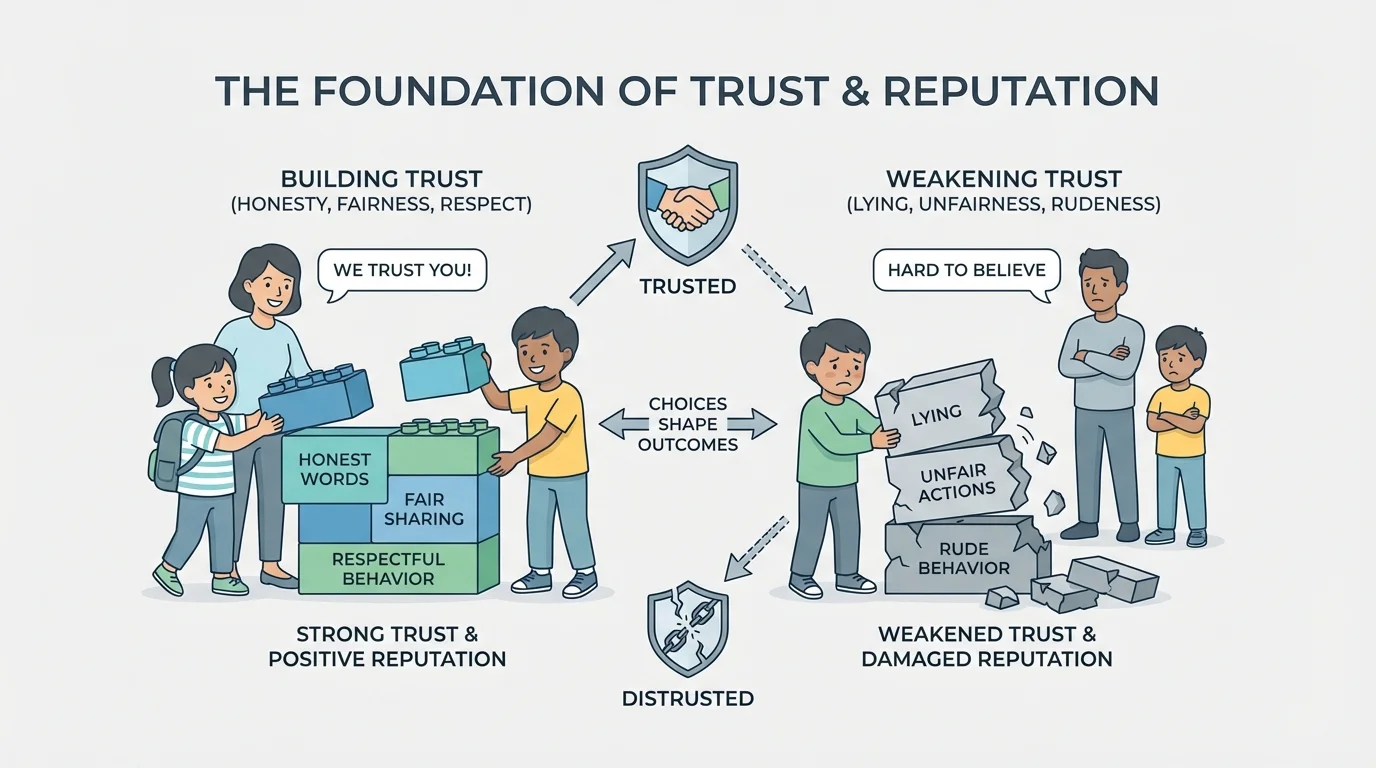
When trust is broken, people may feel disappointed, hurt, or unsure. They may watch your actions more carefully. They may ask more questions. They may not want to rely on you until they see change. That reaction is normal. Trust is valuable, so people protect it.
The good news is that trust can often be repaired. Repair usually takes more than saying "sorry." It takes honest words plus changed behavior. If you lied about finishing a job, repair may mean admitting it, completing the task properly, and being truthful the next several times without reminders.
How to repair trust
Step 1: Admit what happened clearly.
Avoid excuses like "It was not a big deal" or "Everyone does it."
Step 2: Apologize sincerely.
Name the action and its effect: "I was not honest, and that made it hard to trust me."
Step 3: Ask how to make it right.
You may need to replace something, redo a task, or give someone space.
Step 4: Show change over time.
As we see in [Figure 1], trust rebuilds through repeated good actions, not through one quick promise.
One important truth to remember is that rebuilding trust can be slow. If someone does not trust you immediately after you apologize, that does not always mean they are being mean. It may mean they need time and proof. Patience is part of responsibility.
[Figure 2] Your reputation is built from patterns. People watch what you repeatedly do. One bad day does not define you, but repeated behavior sends a message. If you are usually truthful, fair, and respectful, people begin to describe you that way. If you often gossip, cheat, or ignore others' feelings, that becomes part of your reputation too.
Reputation matters because other people use it when making decisions. A parent may trust you with more freedom. A coach or club leader may choose you for extra responsibility. A neighbor may feel comfortable asking for your help. Friends may include you more often because they know you are dependable.
Online behavior is part of reputation too. Comments, usernames, shared photos, and messages can shape what others think of you. A joke that seems funny for a moment can make you look mean or careless later. A thoughtful message, on the other hand, can show maturity and kindness.
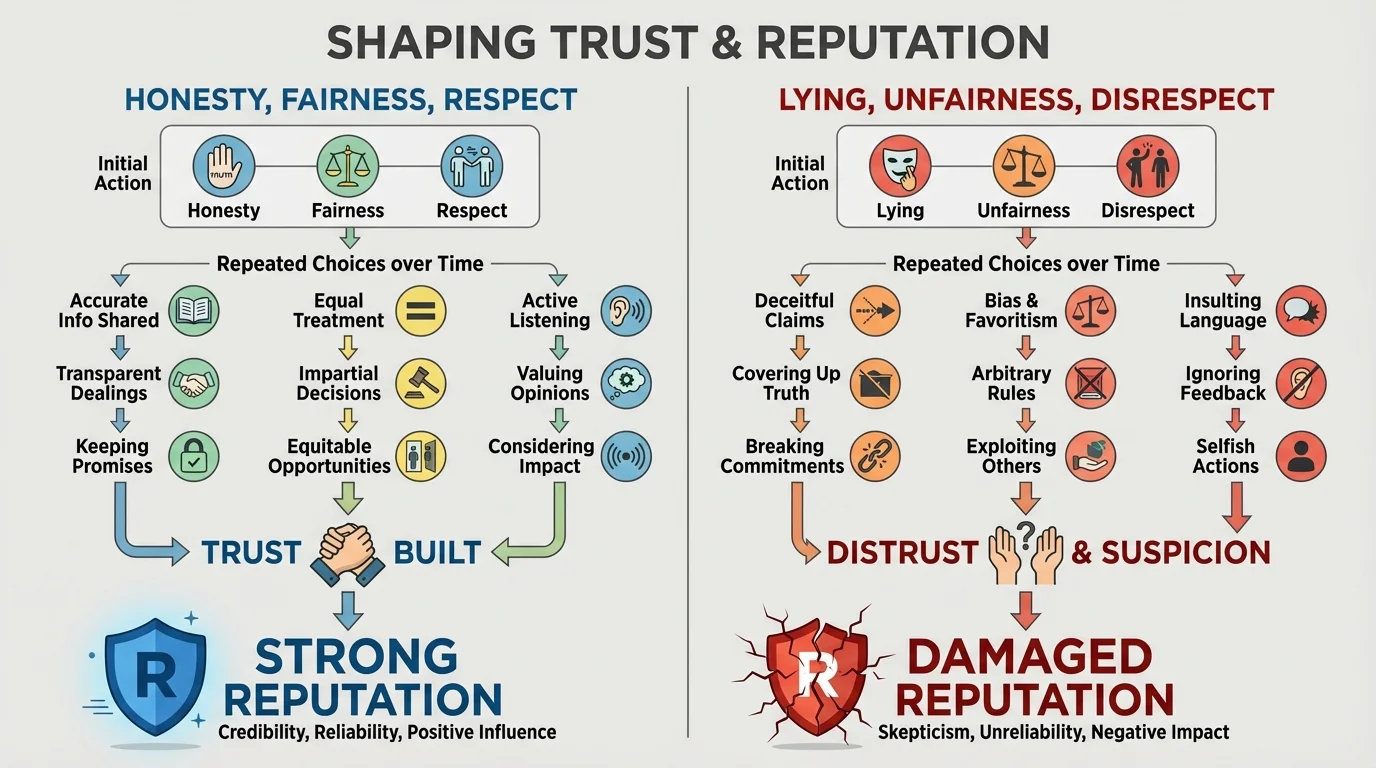
Sometimes people think reputation is about popularity. It is not. Popularity can change quickly and may depend on trends or attention. Reputation is deeper. It is about character. A person can be quiet and still have a strong reputation because others know they are honest, fair, and respectful.
Reputation also connects to your future. The habits you build now can follow you into later friendships, volunteer work, teams, leadership roles, and someday jobs. Adults often remember young people who are dependable and respectful. Character opens doors.
"Character is what you do when no one is watching."
That quote matters because reputation is not just about looking good. If you only act kindly when someone important is watching, people will eventually notice the difference. Real character means doing the right thing even in private messages, during games, or when it would be easier to hide the truth.
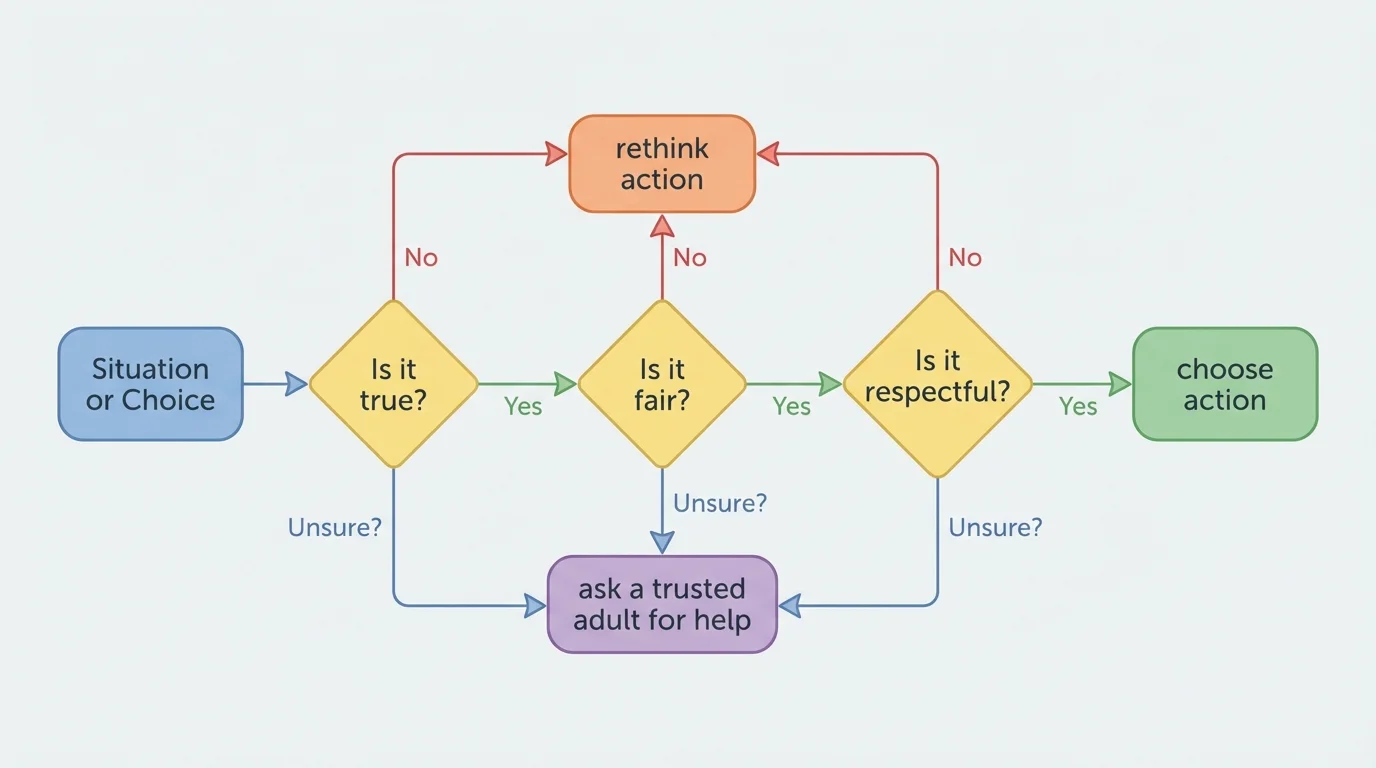
[Figure 3] When you are unsure what to do, a simple decision path helps. You can stop and ask three questions: Is it true? Is it fair? Is it respectful?
This is useful because many problems happen fast. Someone sends a rude message. A friend wants you to cover up a mistake. A sibling blames you unfairly. You may feel upset, embarrassed, or angry. In those moments, slowing down helps your character lead instead of your feelings taking over.
Here are some practical ways to use these ideas in daily life.
In a group chat: Do not forward rumors. Do not leave someone out on purpose. If a joke turns mean, do not join in. If you made a hurtful comment, delete it if possible, apologize, and stop the behavior.
At home: Be honest about chores, messes, and accidents. Be fair when sharing space, snacks, or screen time. Be respectful by knocking, asking before borrowing, and using a calm tone.
During games or sports: Follow the rules even when you might lose. Admit if the ball was out or if you made the mistake. Respect others by avoiding trash talk and congratulating effort, not just winning.
When borrowing something: Ask first. Use it carefully. Return it on time and in good condition. If something breaks, tell the truth immediately. That combination of honesty and respect protects trust.
When there is conflict: Tell the full truth, not just the part that helps you. Listen to the other side. Avoid insults. Focus on solving the problem instead of trying to "win" the argument.
Quick decision guide
Step 1: Pause before acting.
Take a breath so you do not react too fast.
Step 2: Check the facts.
Ask yourself whether what you are saying is completely true.
Step 3: Think about others.
Ask whether the choice is fair and whether it shows respect.
Step 4: Choose your next move.
If you are unsure, ask a trusted adult before posting, sending, blaming, or deciding.
If a situation feels confusing, asking for help is a strong choice, not a weak one. Trusted adults can help you think through what is honest, fair, and respectful, especially when emotions are high.
The choices you make now are practice for bigger responsibilities later. A person who learns honesty now is more ready to handle money responsibly later. A person who learns fairness now is more ready to lead a team later. A person who learns respect now is more ready to build healthy friendships and solve conflicts wisely.
These qualities also help you feel better about yourself. When you know you told the truth, treated people fairly, and showed respect, you carry less guilt and less stress. You do not have to remember lies or worry about being "found out." Strong character brings peace of mind.
There will be times when honesty, fairness, and respect are not the easiest choices. You may be tempted to hide a mistake, take an unfair advantage, or say something rude because you are angry. In those moments, remember that easy choices can have costly results. Honest, fair, respectful choices may take more courage, but they build the kind of trust and reputation that lasts.
Every day gives you another chance to shape how people experience you. You do not need to impress everyone. You need to practice the habits that make you trustworthy. Tell the truth. Treat people justly. Show that others matter. Over time, those habits become your character, and your character becomes your reputation.
