Your body and your mind are a team. When your stomach is hungry, your eyes are sleepy, or your feelings are big, learning can feel hard. When your body is cared for and your mind feels calm, learning feels easier, safer, and more fun.
Being ready to learn means your body feels okay and your mind feels prepared. You can listen, look, think, and try. You do not have to feel perfect. You just need a good start.
Sometimes you may feel ready fast. Sometimes you may need a little help first. That is normal. A child learning at home might need a drink of water, a hug, a deep breath, or a quiet spot before a lesson begins.
Body clues are signs your body gives you, like feeling hungry, thirsty, sleepy, wiggly, or needing the bathroom. Feeling clues are signs from your mind and heart, like feeling calm, worried, excited, or upset.
If you notice your clues, you can do something helpful. That is called self-awareness. Self-awareness means noticing what is happening inside you.
Your body gives you important messages, and [Figure 1] shows many of the things that help before online learning starts. If you are sleepy, hungry, thirsty, too still, or uncomfortable, it is harder to pay attention.
Here are some things that help your body feel ready: sleep, food, water, bathroom time, movement, and a comfortable learning space.
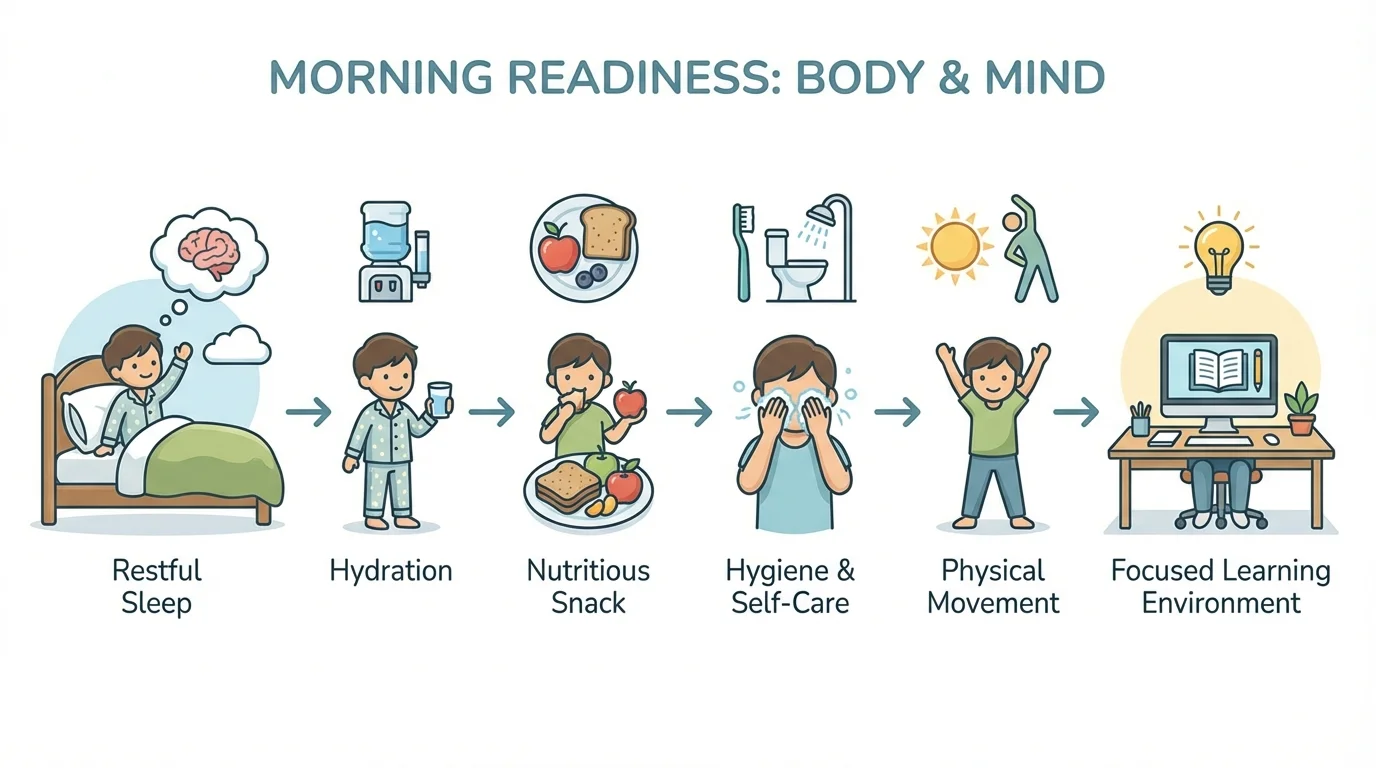
Sleep helps your brain wake up. When you sleep well, it is easier to listen and remember. If you are very tired, you may stare at the screen and miss directions.
Food gives your body energy. A simple breakfast or snack can help. For example, fruit, yogurt, toast, or another healthy food from home can help your body feel steady.
Water helps too. A dry mouth, headache, or tired feeling can happen when you need a drink. Keeping water nearby can make learning easier.
Bathroom time matters. If you need the bathroom, it is hard to focus on a story or directions. Going before learning starts can help.
Movement wakes up your body. You might stretch, march in place, wiggle your fingers, or do a few jumps. As we saw in [Figure 1], even a short movement break can help your body settle for learning.
A comfortable space helps your body too. Sit where you can see and hear well. If the room is too noisy or your chair feels uncomfortable, your body may feel bothered.
Your brain works better when your body has rest, food, water, and movement. Small things can make a big difference.
When these needs are met, you are more likely to look at the screen, hear instructions, and try your best.
Your mind needs help getting ready too. A calm mind can think, listen, and solve problems. A worried or upset mind may want to hide, cry, or leave.
Some things that help your mind are focus, knowing what will happen next, feeling safe, and having words to ask for help. If you know, "First I log in, then I listen, then I do my work," your mind can relax.
Feelings are important clues. You may feel happy, excited, shy, frustrated, or sad. All feelings are okay. What matters is what you do next. You can take a slow breath, hold a stuffed animal, ask a grown-up for help, or say, "I need a minute."
Calm first, then learn
When feelings are very big, learning is harder. A calm body can help calm the mind. Simple tools like breathing, stretching, quiet time, or asking for support help your mind get back to learning.
Your mind also does better with simple directions. Too many toys, loud sounds, or lots of talking can make it hard to focus. Reducing distractions can help you listen better.
[Figure 2] shows a quick check to help you remember before you begin. Ask yourself: "Is my body ready? Is my mind ready?"
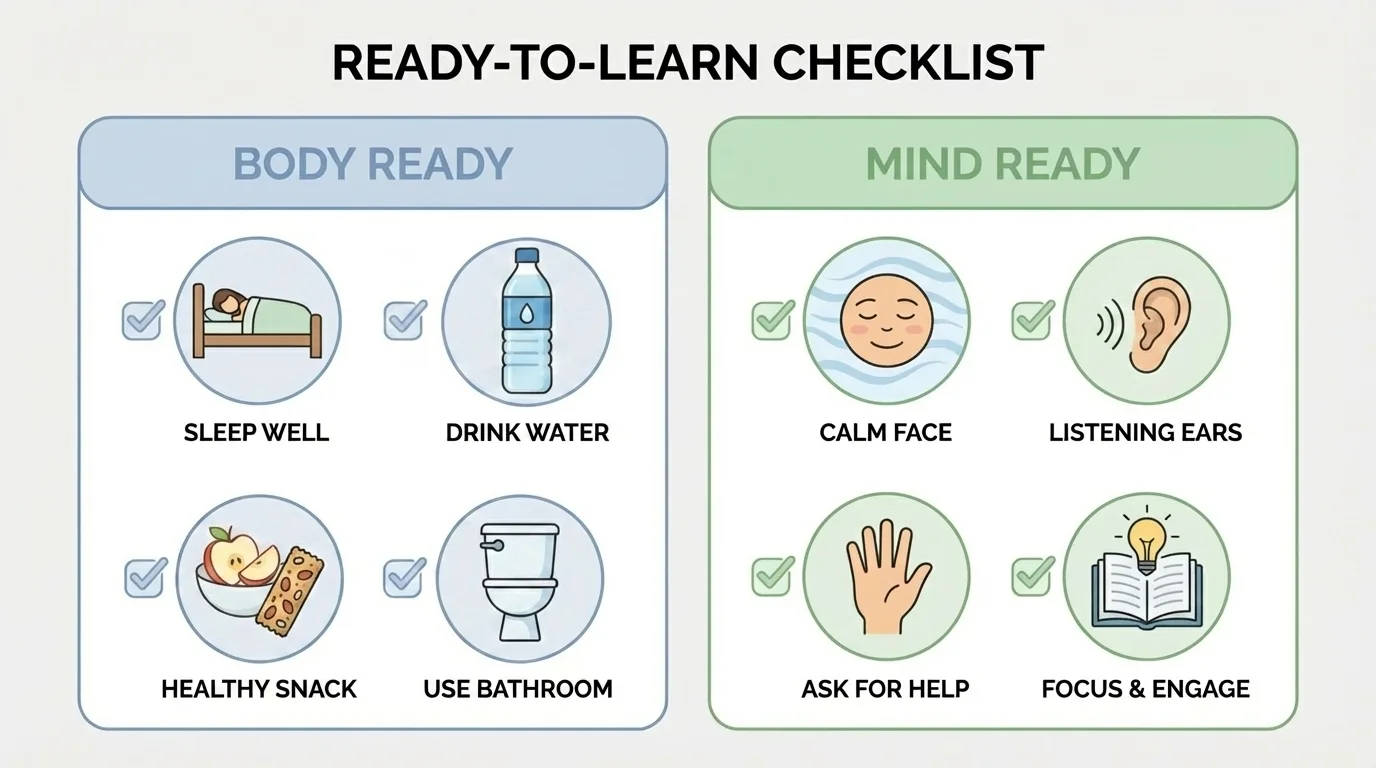
You can think about these questions:
| Body | Mind |
|---|---|
| Did I sleep? | Do I feel calm? |
| Did I eat or have a snack? | Do I know what to do first? |
| Did I drink water? | Can I listen and look? |
| Did I use the bathroom? | Do I need help from a grown-up? |
| Did I move my body? | Am I in a quiet spot? |
Table 1. A simple body-and-mind checklist to use before learning starts.
If one answer is "no," that is okay. You are not in trouble. It just means you know what to do next.
Example: Getting ready before a video lesson
Step 1: Check your body.
You notice you are thirsty and wiggly.
Step 2: Help your body.
You take a drink of water and do a quick stretch.
Step 3: Check your mind.
You feel a little nervous, so you take a slow breath and sit with a trusted grown-up nearby.
Step 4: Start learning.
Now your body and mind feel more ready.
This kind of check can become part of your routine. The more you practice, the easier it gets.
Sometimes you may not feel ready even after trying. That happens to everyone. Maybe you are sick, very tired, sad, or upset. The helpful thing is to notice it and tell a trusted grown-up.
You can use simple words: "I am hungry." "I need a break." "I feel worried." "I need help." These words help other people understand what you need.
Looking back at [Figure 2], you can see that one small fix can help a lot. A drink, a snack, a bathroom break, a cuddle, or a quiet minute may change how ready you feel.
"When I know what I need, I can help myself get ready."
Asking for help is strong and smart. It helps you grow.
Here are some real-life times when body and mind readiness matter:
Before a live online class: You put your water nearby, sit in your spot, and take one deep breath.
Before drawing or writing: You use the bathroom first so your body is comfortable.
Before listening to a story: You move your body for a minute so you can sit more calmly after.
Before talking on a video call: You feel shy, so you hold a favorite soft toy and stay near a grown-up.
Before doing a hard task: You say, "Please help me start," instead of giving up.
These small choices help you learn, play, talk, and grow. They also help you understand your own needs. That is an important part of growing up.
