What if you could help your future self? You can. One way is by making goals. A goal is something you want to learn, do, or get better at. Goals help you know what to do next. They can be small, and that is wonderful. Small goals help you grow one step at a time.
A goal is a plan for something important to you. Maybe you want to learn more letter sounds, remember to put your pencil away, or get ready to log in on time for online school. When you have a goal, you are saying, "This matters to me, and I will practice it."
Goal means something you want to do or learn. Practice means trying again and again so you can improve. Ready means prepared to begin.
Goals are not about being perfect. Goals are about trying. If you forget one day, you can try again the next day. That is called growing.
You can make different kinds of goals, as [Figure 1] shows. Some goals are for learning. Some goals are for growing as a person. Some goals help you get ready for the next school year. All three matter because school is not only about lessons. It is also about habits, kindness, and being prepared.
A learning goal is about what you want to learn. You might say, "I want to practice writing my name," or "I want to listen to a story and talk about it." A growing goal is about how you act and feel. You might say, "I want to use calm words," or "I want to keep trying when work feels hard." A ready-for-next-year goal is about being prepared. You might say, "I want to put my school things in one place," or "I want to remember my password with help from a grown-up."
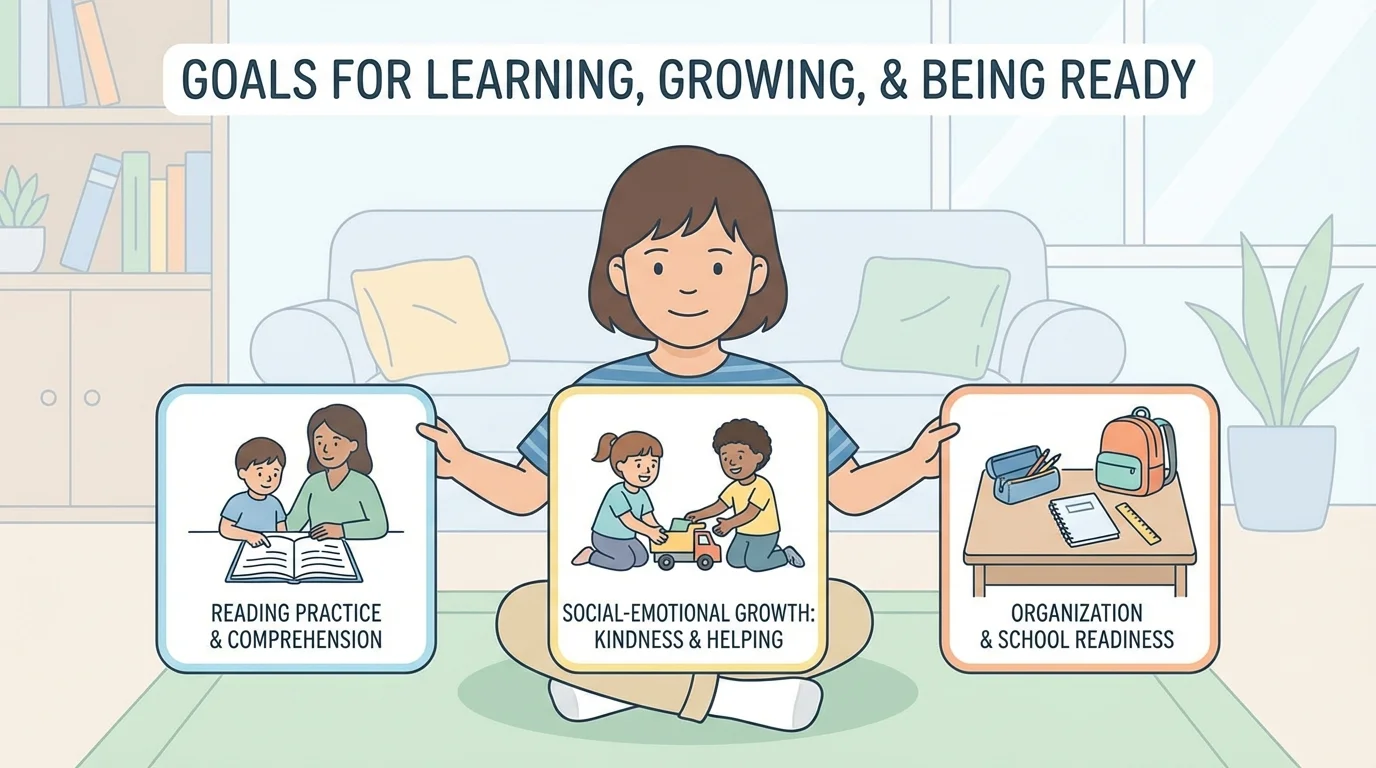
These goals can happen at home, during online lessons, or in your community. For example, if you join a library story time or a music class, you can practice listening, waiting for your turn, and speaking kindly. Those are big skills for next year.
Simple goal ideas
Step 1: Learning goal
"I will practice one letter or one number each day."
Step 2: Growing goal
"I will take a deep breath when I feel upset."
Step 3: Ready-for-next-year goal
"I will put my headphones and notebook in the same spot after school."
When you use all three kinds of goals, you strengthen your thinking, your character, and your habits.
A good goal is simple, clear, and small enough to practice, as [Figure 2] explains. If a goal is too big, it can feel confusing. If it is small, you know how to begin.
Step 1: Pick one thing you want to get better at. Step 2: Say it in easy words. Step 3: Think of one tiny action you can do today. For a five-year-old, a tiny action might be opening your school app with help, hanging up your headphones, or saying "I can try."
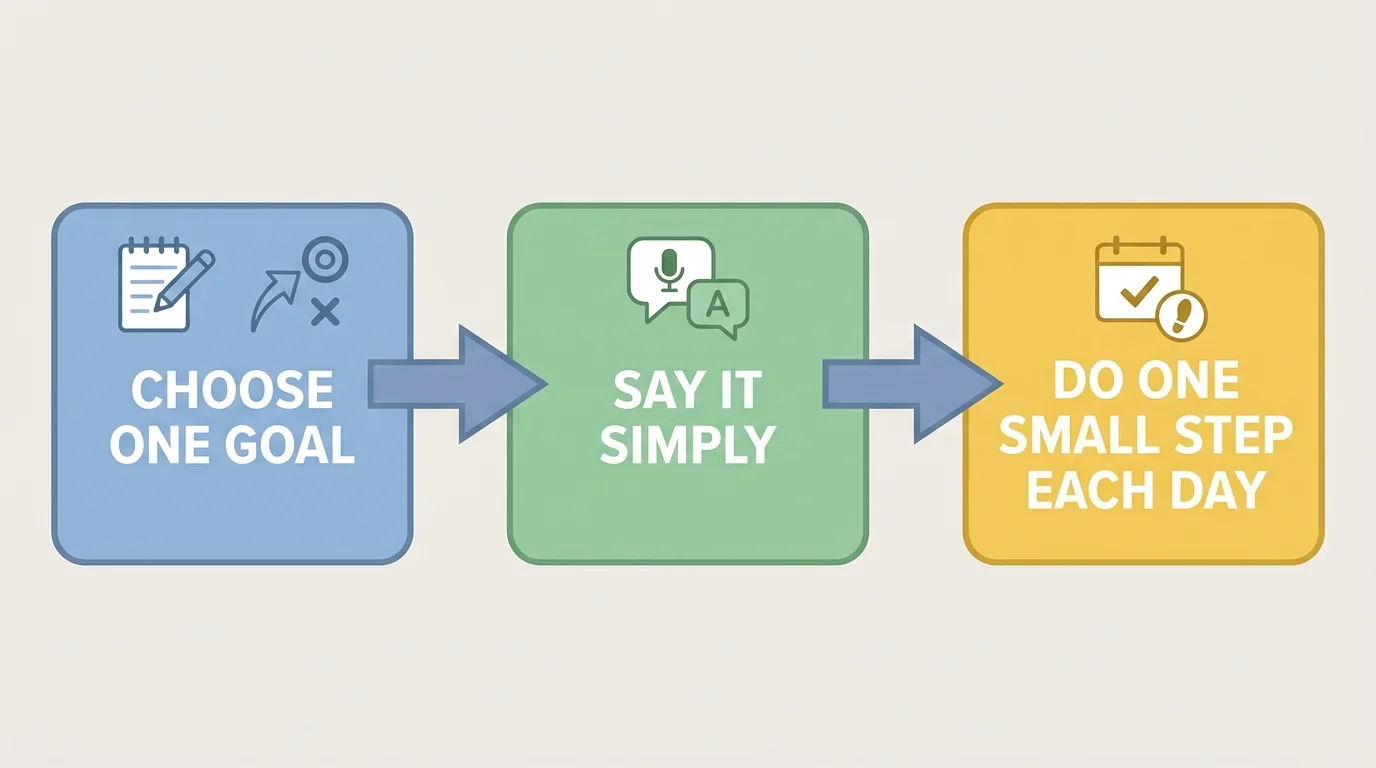
Here are good goal sentences: "I will sit and listen for a little longer." "I will ask for help with kind words." "I will clean up my learning space." These goals tell you exactly what to practice.
Small goals work
When you do one tiny step many times, it becomes easier. Small actions can turn into strong habits. That is why putting supplies away, logging in calmly, or practicing a skill for a few minutes helps so much.
If you say, "I want to be the best," that is hard to measure. If you say, "I want to put my crayons away after art," that is clear. Clear goals help you know when you did it.
You do not have to work on goals alone. Your community, shown in [Figure 3], is the group of people who help you and care about you. Your community might include family members, a teacher you see on video, a librarian, a coach, or a trusted neighbor.
A helper can remind you, cheer for you, or practice with you. A grown-up might help you make a quiet learning space. A teacher might praise you for trying. A friend in an online club might remind you to take turns speaking. Helpers make goals easier to follow.
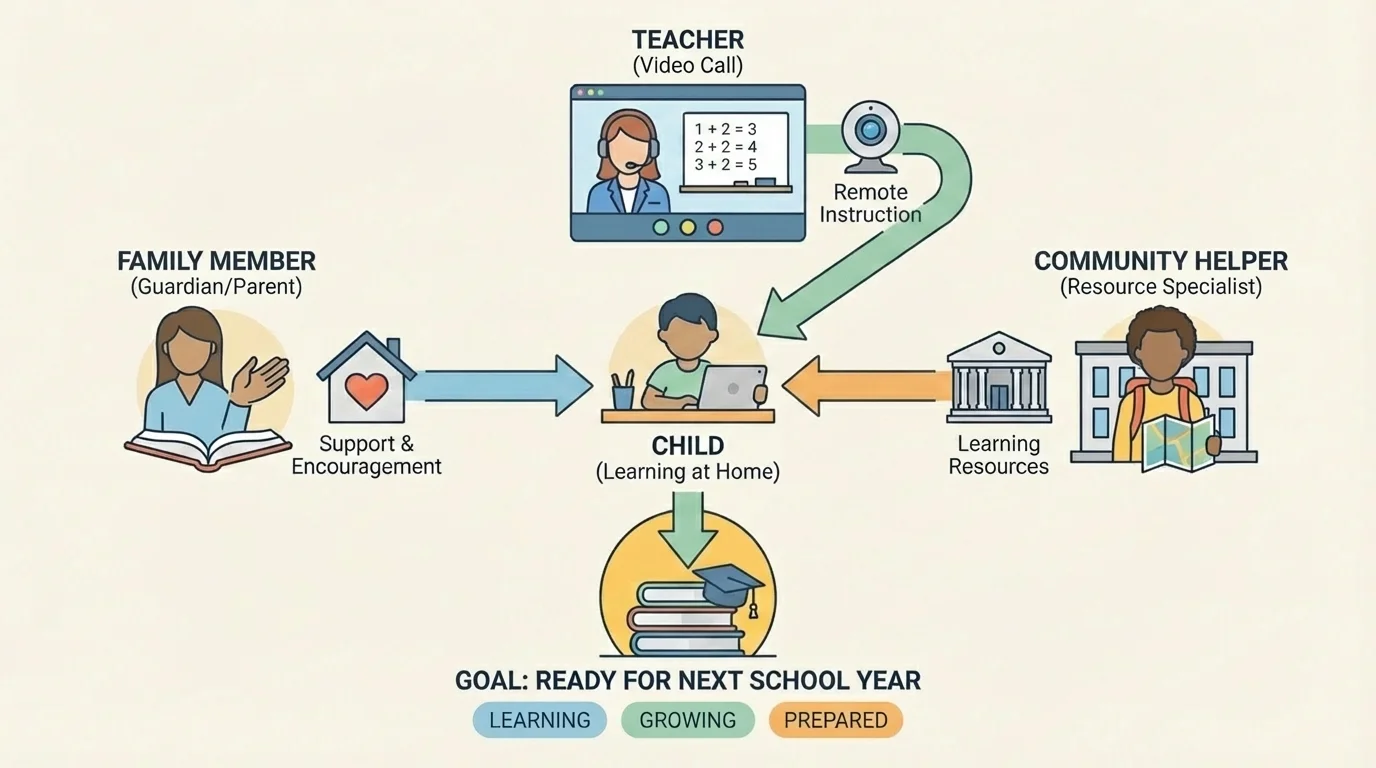
It is responsible to ask for help. It is not a sign that you cannot do something. It means you are learning how to grow. You can say, "Please help me remember," or "Can you practice with me?"
Children often do better with goals when the goal is spoken out loud and practiced the same way each day. A simple routine helps the brain remember.
Later, when you think about next year, the support in [Figure 3] still matters. People around you can help you feel brave, prepared, and proud.
Big growth often comes from tiny steps. A daily routine, like the one in [Figure 4], helps you remember what to do. When you repeat small actions, they become easier and faster.
Tiny steps can be: putting your device in the same place, washing hands before learning, listening when someone else is talking, or finishing one short task before playtime. These are real-life skills. They help at home now, and they help with next year too.
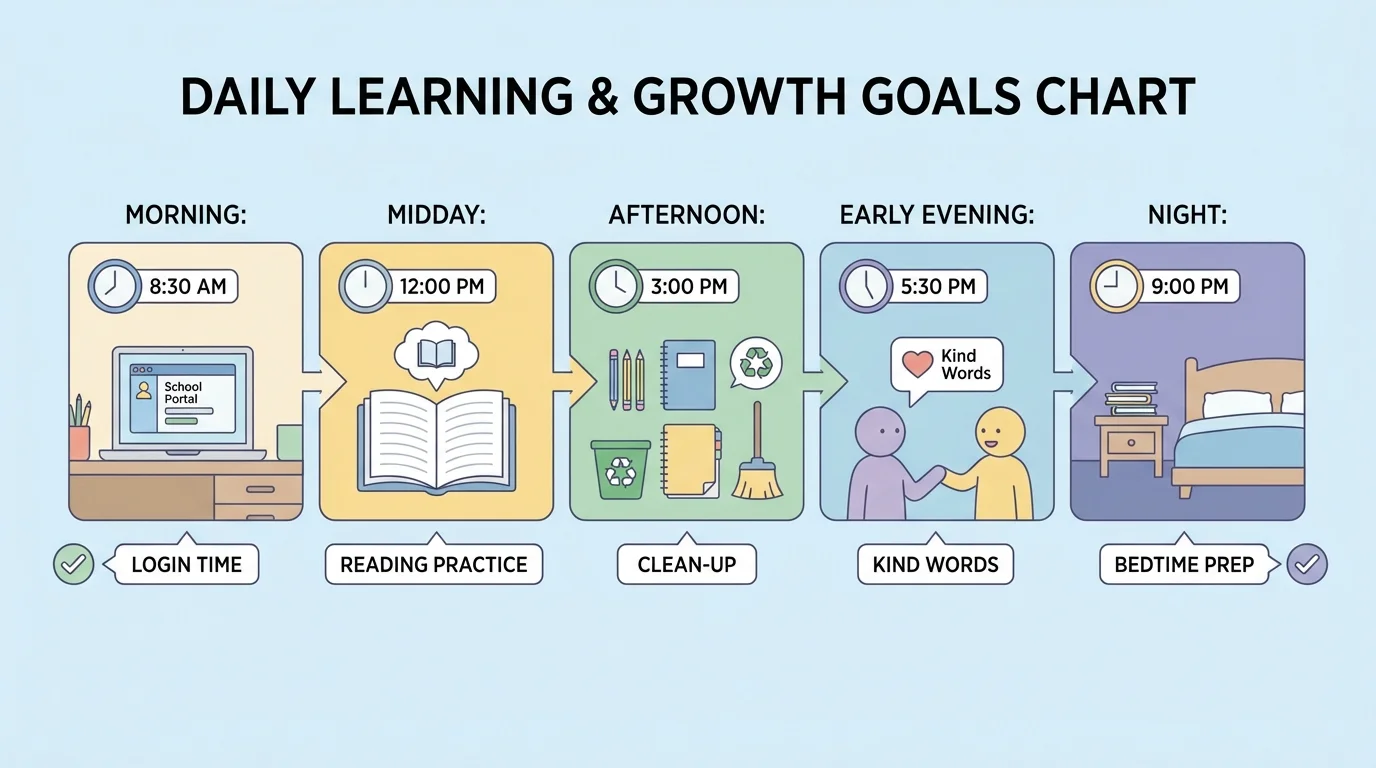
Here is a helpful way to think: one goal, one step, every day. You do not need to do everything at once. Maybe today you practice zipping your bag. Tomorrow you practice greeting your teacher politely on a video call. The small steps in [Figure 4] show how a day can hold many chances to practice.
Try This
Step 1: Choose one small job, like putting your notebook away.
Step 2: Do it at the same time each day.
Step 3: Let a grown-up notice your effort and celebrate your hard work.
When you keep practicing, you become more independent. That means you can do more things by yourself.
Sometimes goals feel tricky. You may forget. You may feel frustrated. That happens to everyone. The important thing is to pause, breathe, and start again.
If a goal feels too hard, make it smaller. Instead of "I will always stay calm," try "I will take one deep breath when I feel mad." Instead of "I will do all my work alone," try "I will start one task and ask for help if I need it." Smaller goals are kinder and more useful.
"I can try again."
— A powerful growth thought
When you try again, you are building confidence. Confidence grows when you see that effort helps you improve.
Being ready for the next school year does not mean knowing everything already. It means having good habits, asking for help, and believing you can learn new things. That is what being ready for the future means for young children.
A responsibility is something that is your job to do. Your responsibilities might be putting away supplies, listening during online learning, speaking kindly, and trying your best. These responsibilities help you now and later.
You already know many things that help with goals: listening, taking turns, cleaning up, and practicing. Goals help you use those skills on purpose.
As you grow, your goals may change. One year you may work on holding a pencil. Another year you may work on reading more words or managing your time better. Goals grow with you.
When you name goals for learning, growing, and getting ready for next year, you are taking care of your present self and your future self. That is a strong and caring thing to do.
