Have you ever seen someone hand coins or bills to a cashier? That little exchange is a big idea. Money helps people get things. We use money to buy food, clothes, toys, books, and many other things we need or want.
Money is something people use to pay for things. Money can be coins, bills, or numbers in a bank account that grown-ups use with a card or phone. A family might use money to buy apples, milk, shoes, or soap.
Money is what people use to pay for goods and services. Goods are things we can touch, like a ball or a banana. Services are jobs people do for others, like cutting hair or fixing a car.
Money has a purpose: it helps people trade in an easy way. Instead of swapping a toy for a sandwich, people can use money. Then they can choose what to buy.
People get money in different ways. One important way is through work, as [Figure 1] shows. A grown-up may teach, drive a bus, cook in a restaurant, or help sick people at a hospital. After doing the job, the person earns money. Another way money is obtained is through a gift.
A child may receive money as a gift for a birthday, a holiday, or a special celebration. That money is not earned from a job. It is given by someone else, such as a parent, grandparent, or family friend.
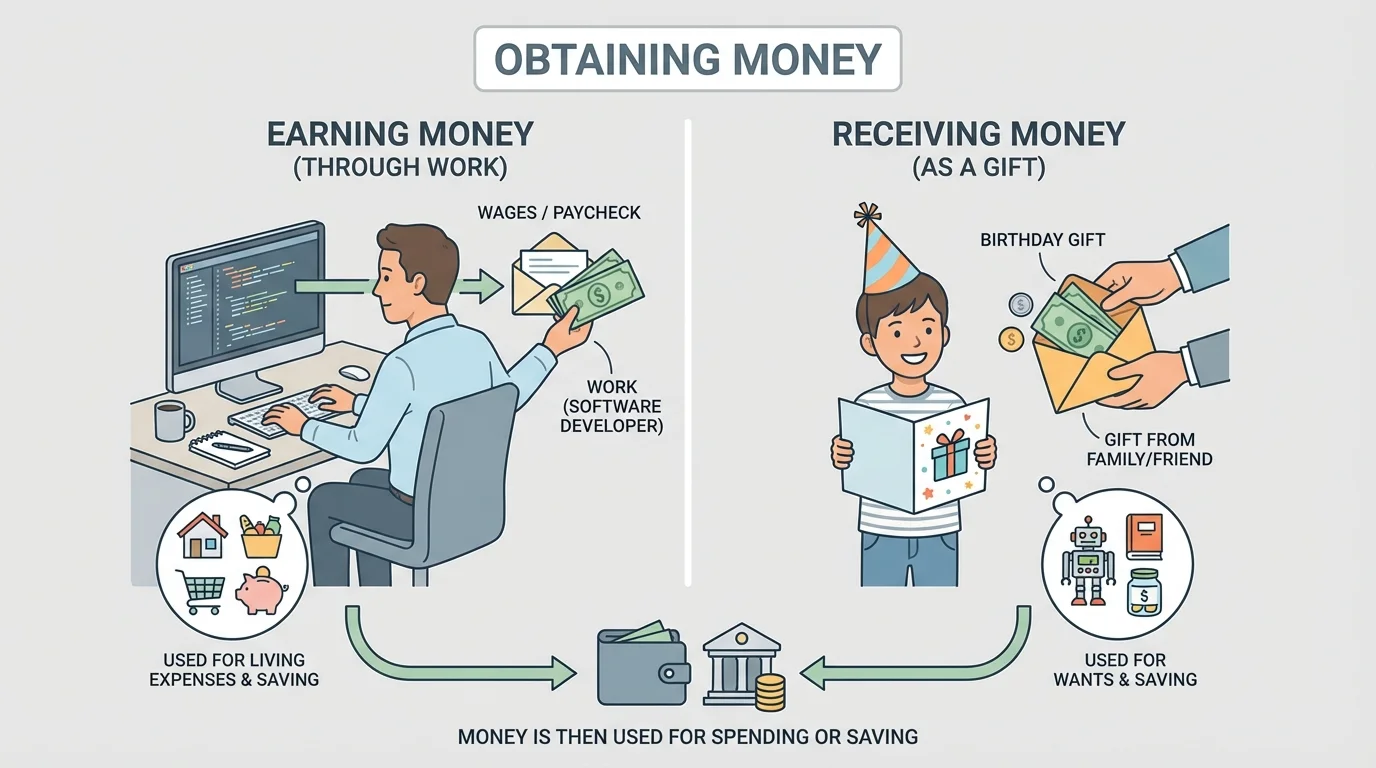
Sometimes children notice that adults also get money by selling something they made, but for this topic the easiest examples are work and gifts. Work means doing a job and earning money. A gift means someone gives money kindly.
Some jobs pay every day, some pay every week, and some pay every month. The money still comes from doing work.
When we think about where money comes from, it helps us understand why people make choices about it. If money is earned by working, people often use it carefully. If money is received as a gift, people can still choose carefully how to use it.
As [Figure 2] illustrates, money is used to buy goods and services. A family may use money to buy bread, fruit, or a warm coat. Those are goods. A family may also use money to pay a dentist or a bus driver. Those are services.
People use money for things they need and things they want. Food, a home, and clothes are needs. A stuffed animal or a game may be a want. Both needs and wants can cost money.
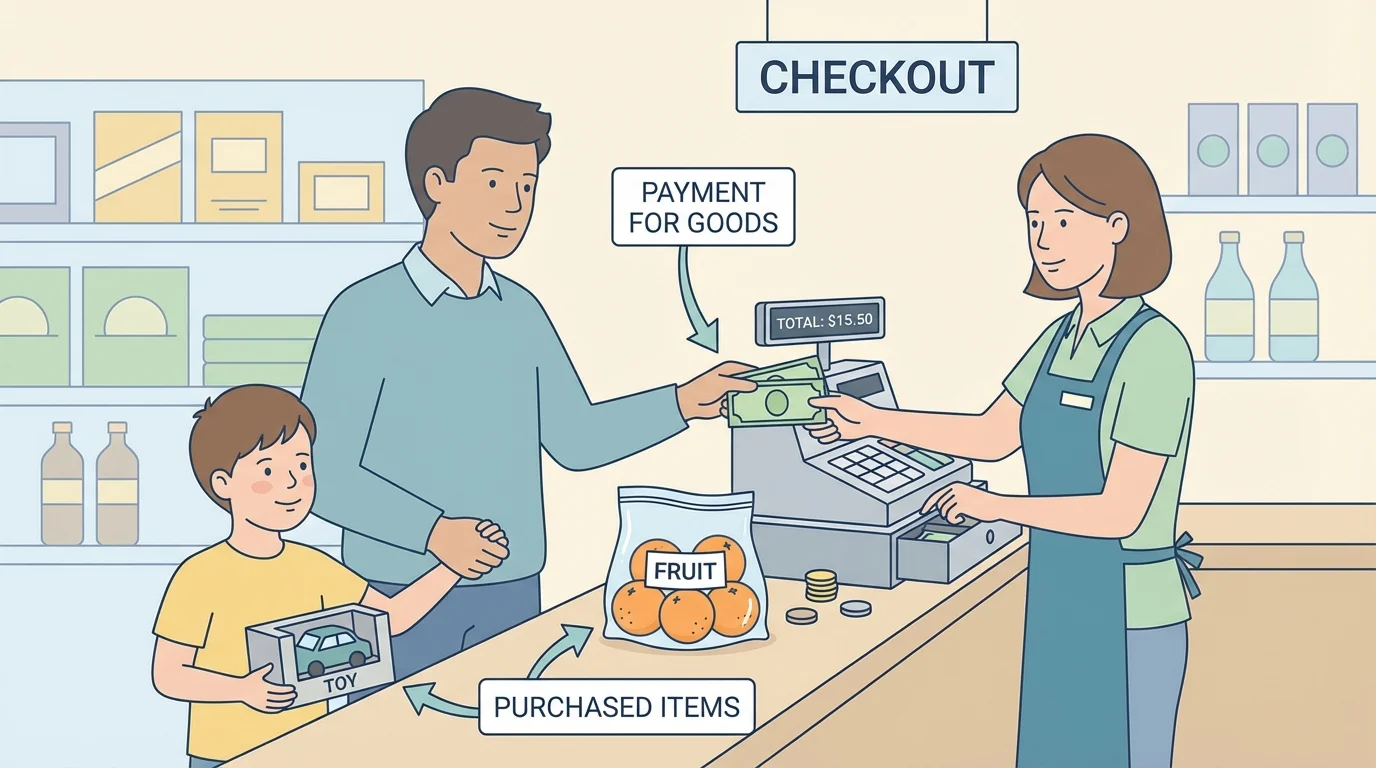
At a store, money goes from the buyer to the seller. Then the buyer receives the item or service. This exchange shows how money is used to get something from the store.
Using money means making choices. People cannot always buy everything at once. They decide what is most important first. Many families pay for needs before wants.
If a family has enough money for milk and bread, they may buy those first. Later, they might buy a toy or a treat. This is part of using money wisely.
Sometimes people spend money right away. As [Figure 3] shows, sometimes they save money for later. Saving means keeping money now so it can be used another time.
For a young child, saving can look like putting coins in a jar or piggy bank. If a child gets a $1 gift, the child might spend it on a sticker now or keep it to help buy something later with an adult.
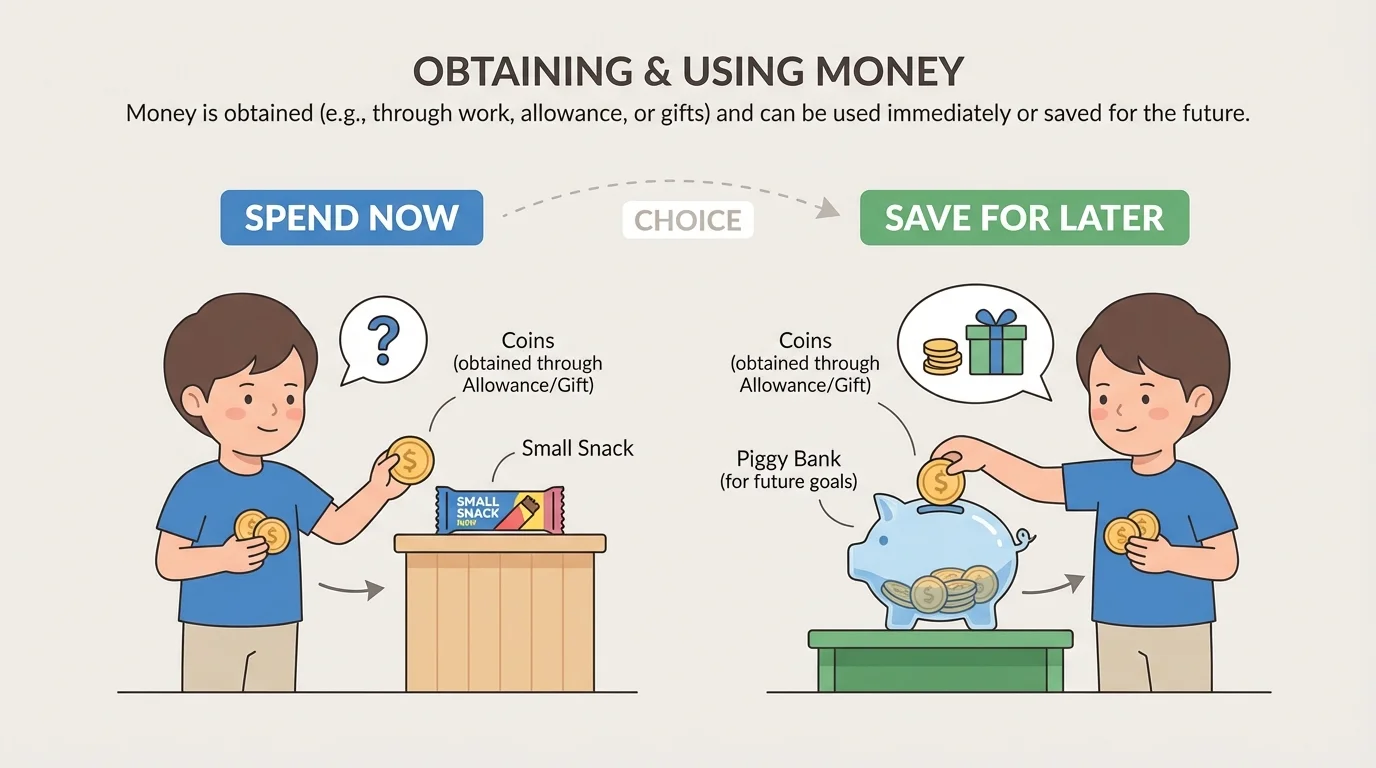
Saving does not mean never using money. It means waiting. Later, the saved money can be used for something important or special. This idea helps children understand simple planning.
Everyday example
Step 1: Maya gets a gift of $2 from her grandparent.
Step 2: She can use the money to buy crayons now.
Step 3: She can also keep the money in a jar to use later.
Maya obtained money as a gift. She can choose how to use it.
We can connect this idea back to [Figure 3]. The picture shows that one choice is to spend now, and another choice is to save for later.
Children often see money used by adults. A parent may pay for groceries. A cashier takes the money. A worker earns money from doing a job. All of these people are part of everyday money use.
Money moves from one person to another when something is bought or when a job is done. For example, a baker makes bread and earns money when people buy the bread. A doctor helps patients and earns money for that service.
You already know that people need food, clothing, and shelter. Money is one way families get many of the things they need.
Children may not have jobs, but they can still notice where money comes from and how it is used. They may receive money as gifts, and they can learn to make simple choices with help from adults.
Here are some simple examples. A firefighter works and earns money. A child gets birthday money from an aunt. A family uses money to buy bananas. A family pays a barber for a haircut. These are all examples of how money is obtained and used.
Another example is a trip to the market. A grown-up brings money, chooses apples and bread, and pays the seller. The seller receives money for the goods. The family receives the food.
Money is important because it helps people live, care for others, and choose what to buy. Learning where money comes from and how it is used is one of the first steps in understanding personal financial literacy.
